

Politics
2025 proved to be ‘year of failures and setbacks’ for India: report

- India sufferred historic military setback against Pakistan.
- New Delhi failed to strike trade deal with Washington.
- Indian rupee touched all-time low of 91.14 against US dollar.
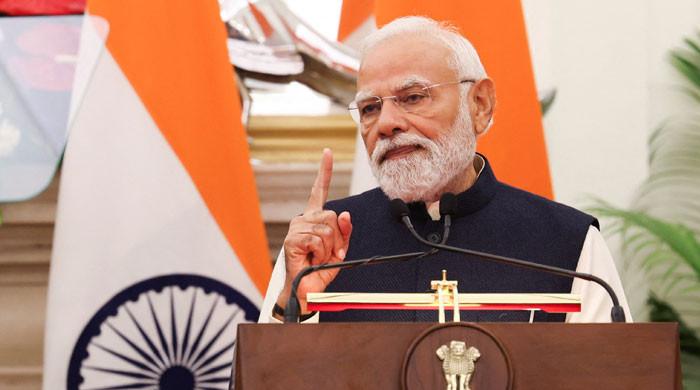
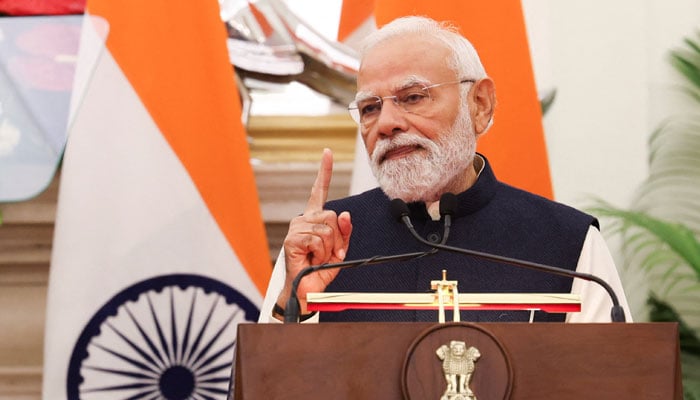
The past year proved to be a “year of crisis” for India, marked by a historic military setback against Pakistan, a weakening currency, and growing economic uncertainty, The Financial Times reported in its 2025 annual review.
Due to failed strategic autonomy, India was compelled to simultaneously maintain relations with the United States (US), China, and Russia, read the report.
The report adds that the US-India trade agreement was postponed several times, while the imposition of American tariffs placed additional economic pressure on New Delhi.
Similarly, the limited implementation of GST reforms also hindered economic growth. It further said that the Indian rupee continued to depreciate against the US dollar during 2025.
Operation Sindoor backfired as Trump taunts
Earlier this year, Pakistan and Indian engaged in a military showdown, the worst between the old foes in decades, which was sparked by an attack on tourists in IIOJK’s Pahalgam area, which New Delhi alleged was backed by Pakistan.
Islamabad denied involvement in the Pahalgam attack, which killed 26 men and offered to participate in a neutral probe into the deadly incident.
During the clashes, Pakistan downed seven Indian fighter jets, including three Rafale, and dozens of drones. After at least 87 hours, the war between the two nuclear-armed nations ended on May 10 with a ceasefire agreement brokered by the US.
Pakistan’s historic victory in the four-day skirmishes played a significant role in bringing Islamabad and Washington closer.
In the months since the ceasefire, US President Donald Trump has taunted India through his growing friendship with Pakistan’s Chief of Defence Forces (CDF) and Chief of the Army Staff Field Marshal Asim Munir.
US-India trade deal
Few things have attracted more ink than the US-India trade deal that never happened. In the beginning, after Trump’s election victory, there was much jubilation in New Delhi about getting a friendly administration in the White House.
In February, Modi was one of the first foreign leaders to visit Washington. It seemed then that India would be one of the first countries to sign a trade agreement with Trump, too.
A deal was expected in May, then June, then July . . . and then talks began to stall.
In August, Trump’s reciprocal tariffs kicked in, and by the end of the month, he had announced an additional 25% tariff to punish India for buying Russian oil.
Commerce Secretary Rajesh Agarwal said that there was a fair expectation that both countries would be able to agree on a lower reciprocal tariff and that India was “positively engaged” with the US on the deal.
Trump and Modi have spoken to each other in the past fortnight, and both sides have put out warm, fuzzy statements.
By August, when it began to look like a trade deal with the US was not going to be a shoo-in, the Modi government decided it was time to focus on domestic growth.
The Indian rupee, which has been on a downward slide, got a bruising this year. It lost 6% in 2025, touching an all-time low of 91.14 against the US dollar.
Ties with China and Bangladesh
Ties between New Delhi and Dhaka have deteriorated since the ousted prime minister, Sheikh Hasina, fled the pro-democracy uprising and sought refuge in India.
On the other hand, India has failed to improve its ties with China despite recalibrating its foreign policy.
Prime Minister Narendra Modi travelled to China for the first time in seven years and met President Xi Jinping. The two countries reaffirmed their commitment to “co-operation based on mutual respect, mutual interest and mutual sensitivity”.
Both parties, however, are still wary of each other.
India accuses China for providing support to Pakistan during the recent four-day war.
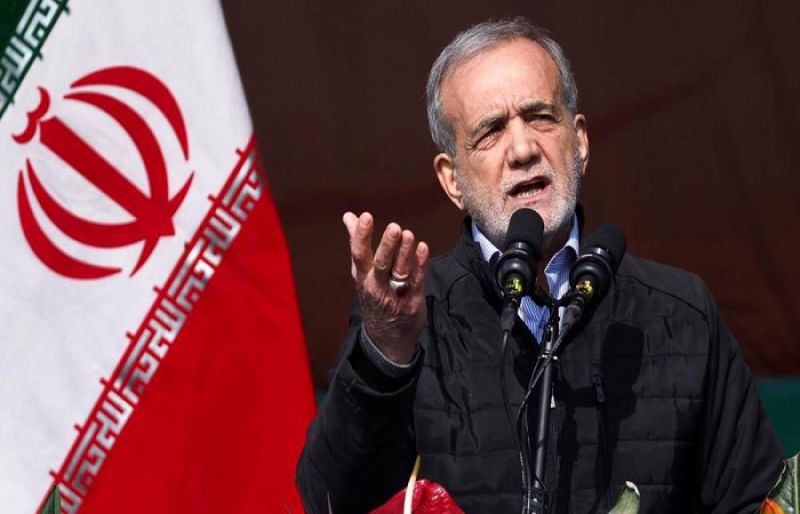
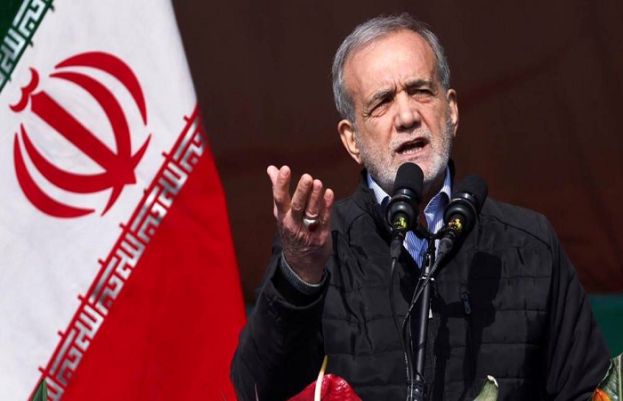
The Islamic Republic of Iran has invariably welcomed dialogue and agreement, but Washington’s constant breach of commitments, naval blockade and military threats remain the main obstacles to genuine negotiations, President Masoud Pezeshkian said on Wednesday.
In a post on X, the president reiterated Tehran’s openness to diplomacy while calling out Washington’s contradictory behavior.
“The Islamic Republic of Iran has welcomed dialogue and agreement and continues to do so,” Pezeshkian wrote.
“Breach of commitments, blockade and threats are the main obstacles to genuine negotiations. The world sees your endless hypocritical rhetoric and contradiction between claims and actions,” he added.
The United States and Israel launched their illegal, unprovoked war of aggression against Iran on February 28, assassinating Leader of the Islamic Revolution Ayatollah Seyyed Ali Khamenei and striking military installations and civilian infrastructure, including schools, hospitals and bridges.
Since then, Iran has demonstrated its responsible approach by agreeing to a two-week ceasefire brokered by Pakistan, despite having the upper hand on the battlefield after 100 waves of decisive retaliatory strikes under Operation True Promise 4.
Despite the ceasefire, Washington keeps highlighting a naval blockade of Iranian ports. Tehran considers it illegal under international law and a clear violation of the truce.
The United States has also threatened further military action, while its officials have issued contradictory statements about their commitment to diplomacy.
Iranian officials have said no decision has been made yet on whether to take part in a second round of negotiations in Islamabad, citing US violations of the ceasefire, including the naval blockade.
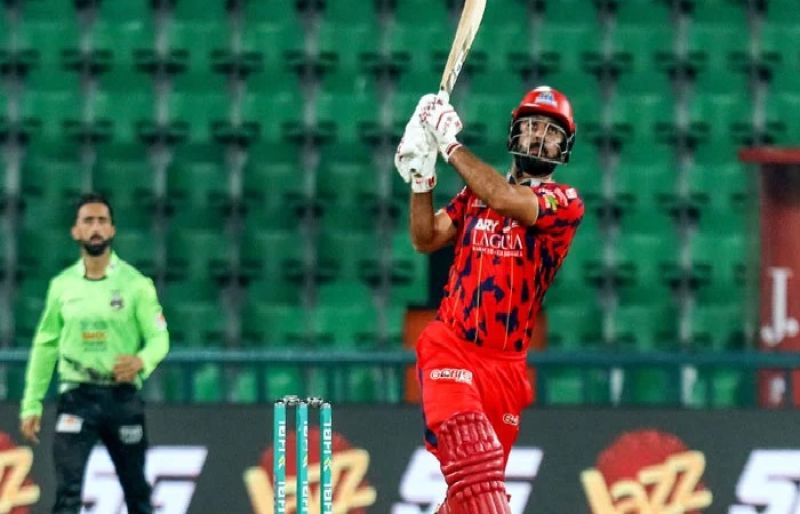
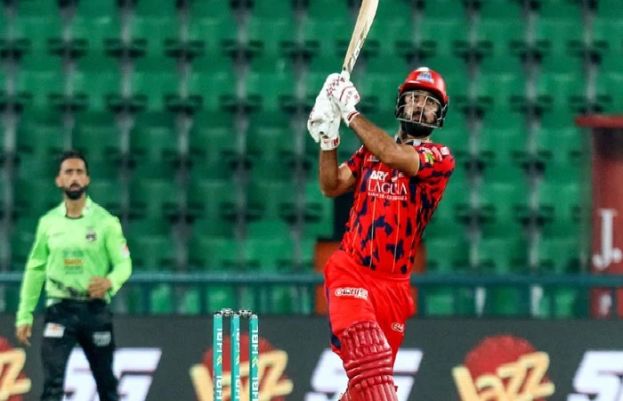
A composed half-century from captain David Warner, supported by a late surge from Khushdil Shah, guided Karachi Kings to a five-wicket win over Lahore Qalandars in Pakistan Super League (PSL) 11 encounter at Lahore’s Gaddafi Stadium on Thursday.
Set to chase a daunting 200-run target, the visitors knocked off the winning runs for the loss of five wickets and eight balls to spare to keep their playoff hopes alive.
The Kings got off to a shaky start to the pursuit as Ubaid Shah dismissed right-handed opener Jason Roy (nine) in the second over with just 10 runs on the board.
Warner then shared brief partnerships with Reeza Hendricks and Salman Ali Agha, who could contribute 10 and 14, respectively.
The skipper then received ample support from the other end in the form of Moeen Ali, and the experienced duo put together 58 runs at a brisk pace before Ubaid struck again, dismissing the latter, who made a 17-ball 39, laced with four sixes and a four.
The Kings then suffered another setback nine deliveries later as wicketkeeper batter Azam Khan, who scored 14 off eight balls, was cleaned up by Daniel Sams.
His dismissal paved the way for Khushdil Shah to walk out and bat at No.7, and the left-handed batter turned the game on its head with belligerent hitting, the highlight of which was the pulsating 18th over, bowled by Shaheen Shah Afridi, which went for 23 runs.
With just 11 runs required off 12 deliveries, Khushdil hit Haris Rauf for back-to-back sixes and steered the Kings over the line in the penultimate over.
Khushdil remained unbeaten with a swashbuckling 14-ball 44, comprising five fours and two sixes, while Warner top-scored with 63 not out from 44 deliveries, laced with 10 boundaries, including a six.
Ubaid was the pick of the bowlers for the Qalandars, taking three wickets for 41 runs in his four overs, while Daniel Sams and Haris Rauf made one scalp apiece.
Khushdil was named Player of the Match for a match-winning 44 off just 14 balls.
Kings captain David Warner’s decision to field first backfired as the holders piled up 199/6 in their 20 overs, courtesy of a century-plus partnership between Fakhar and Shafique.
The Qalandars, however, had a shaky start to their innings as Warner sent back young opener Mohammad Farooq (18) with a direct hit in the third over with just 24 runs on the board.
Fakhar was joined by Shafique in the middle, and the duo steered the Qalandars into a commanding position by knitting a 110-run partnership for the second wicket off just 61 deliveries until the former was dismissed by Moeen Ali in the 14th over.
The left-handed opener made a brisk 61 off 41 deliveries, hitting five fours and three sixes.
Moeen struck again in his next over, getting rid of Charith Asalanka (zero), and brought the total down to 148/3.
Shafique, on the other hand, was cleaned up by debutant Rizwanullah in the next over and walked back after top-scoring for the Qalandars with a 36-ball 62, studded with five fours and three sixes.
With the scoreboard reading 160/4 in 16.5 overs, all-rounders Sikandar Raza and Daniel Sams (20) stitched a handy 23-run partnership, which culminated with the latter’s run-out on the fifth delivery of the penultimate over.
Meanwhile, Raza remained unbeaten with a 12-ball 18 and ensured adding crucial runs to the Qalandars’ total at the backend with captain Shaheen Shah Afridi, who made 10 off four.
Moeen was the standout bowler for the Kings as he took two wickets for just 26 runs in his four overs, while Rizwanullah and Hasan Ali made one scalp.
- Pentagon says US forces boarded tanker carrying Iranian oil.
- Says it will continue maritime enforcement against illicit networks.
- Ceasefire only meaningful if not violated through blockade: Ghalibaf.
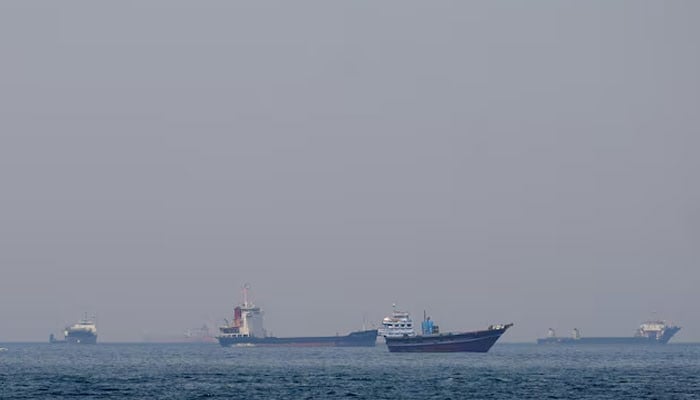
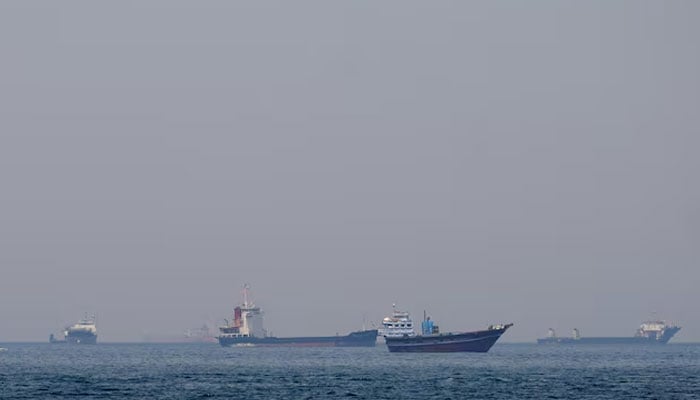
TEHRAN: President Donald Trump ordered the US Navy on Thursday to destroy any Iranian boat caught laying mines in the Strait of Hormuz, putting more pressure on a fraying ceasefire as disruption from the Gulf stand-off battered the world economy.
Trump’s announcement came after the US fleet boarded a vessel in the Indian Ocean that was transporting oil from Iran and after a senior Iranian official said Tehran had banked its first proceeds from the tolls it exacts on shipping through the strait.
With plans for renewed peace talks in Pakistan hanging in the balance, more fuel-hungry airlines cancelled flights, oil prices climbed higher once again and the keenly-watched S&P Global PMI index showed eurozone business activity shrinking for the first time in 16 months.
“I have ordered the United States Navy to shoot and kill any boat, small boats though they may be… that is putting mines in the waters of the Strait of Hormuz,” Trump posted.
Iran vowed it would keep the strait closed to all but a trickle of approved vessels for as long as the US Navy blockades its ports, brushing off demands from Trump to both reopen Hormuz and surrender its enriched uranium.
The US responded to Iran’s action by imposing its own blockade of Iranian ports, and on Thursday the Pentagon announced on social media that US forces had “carried out a maritime interdiction and right-of-visit boarding of the sanctioned stateless vessel M/T Majestic X transporting oil from Iran, in the Indian Ocean”.
The post included footage of US military personnel rappelling from helicopters onto the deck of a large tanker.
The statement said the US would “continue global maritime enforcement to disrupt illicit networks and interdict vessels providing material support to Iran, wherever they operate”.
‘Not possible’
While strikes around the region have mostly ceased since the two-week-old truce began, there has been no letup in the confrontation over Hormuz, with both sides seeking economic leverage — only for Trump to announce an indefinite ceasefire to create space for more talks.
“A complete ceasefire only has meaning if it is not violated through a naval blockade,” said Iran’s parliamentary speaker Mohammad Bagher Ghalibaf, who led Tehran’s delegation at a first round of talks in Pakistan.
“Reopening the Strait of Hormuz is not possible amid a blatant violation of the ceasefire.”
Ghalibaf’s deputy, Hamidreza Hajibabaei, said Iran received its first revenue from tolls it is imposing on ships seeking to cross Hormuz, a route that in peacetime accounts for a fifth of the world’s oil and gas flows, and other vital commodities.
Analysts said Tehran, in particular its hardline leaders associated with the Islamic Revolutionary Guards Corps (IRGC), believes that Iran’s blockade gives it sufficient economic leverage to force Washington to back down on its main demands in peace talks.
And some, such as Danny Citrinowicz of the Tel-Aviv Institute for National Security Studies, criticised Israel and the US for misreading the Iranian government’s position.
“Tehran has consistently demonstrated a willingness to absorb economic pain while holding firm on what it views as core national interests. There is little reason to believe this time will be different,” he said in a social media post.
“Rather than moving toward concession, Iran is positioning itself to escalate.”
A brief from the Soufan Centre think tank said Iran’s hardliners “argue that a prolonged elevation of global energy prices and mounting global shortages of some goods will increasingly pressure Trump to accede to Iran’s positions, end the war, and eventually withdraw US forces from the region.
“Trump and his team calculate the opposite — that the US blockade of Iran’s seaborne trade, which carries all of its oil exports, will quickly cripple Iran’s economy and force Iran to accept US demands.”
Peace talks
On Wednesday, Trump told the New York Post that talks could resume in Pakistan within two to three days, even though Iran has not confirmed participation and Vice President JD Vance put his travel to Islamabad on hold on Tuesday.
Iran’s Revolutionary Guards on Wednesday said they forced two ships to the Iranian shore from the Strait of Hormuz.
The US military’s Central Command said, prior to Thursday’s announcement, that its forces blockading Iran’s ports had so far “directed 31 vessels to turn around or return to port”.
After agreeing the ceasefire with Iran, the United States helped broker a truce between Israel and Lebanon, including Hezbollah.
Despite the declared truce, Israeli strikes killed five more people on Wednesday, Lebanese media said.
Israel and Lebanon will hold a second round of talks in Washington on Thursday, during which Beirut will request a one-month extension of the ceasefire during the meeting, according to a Lebanese official.
Israeli attacks on Lebanon have killed more than 2,450 people since the start of the war, according to Lebanese authorities.


UK’s clothing exports down 7.6% to $293 mn in Jan-Feb

Top stocks to buy today: Stock recommendations for April 24, 2026 – check list – The Times of India

Mariska Hargitay expresses love for Christopher Meloni’s ‘Law & Order’ series

-

 Fashion1 week ago
France’s LVMH Q1 revenue falls 6%, shows resilience amid Iran war
-

 Entertainment1 week ago
Is Claude down? Here’s why users are seeing errors
-

 Sports1 week ago
PSL 11: Peshawar Zalmi win toss, opt to field first against Quetta Gladiators
-

 Tech1 week ago
The Deepfake Nudes Crisis in Schools Is Much Worse Than You Thought
-
 Business1 week ago
Standard Life buys rival in £2b deal to create savings giant
-

 Tech1 week ago
CYBERUK ’26: UK lagging on legal protections for cyber pros | Computer Weekly
-

 Fashion1 week ago
Raymond unveils luxury Chairman’s Collection Store in Mumbai
-
 Business1 week ago
PepsiCo earnings beat estimates as North American food business improves