

Business
2026 is the year of obesity pills. Here’s how they could reshape the GLP-1 market


The booming GLP-1 space was built on weekly injections. In 2026, new obesity pills will push the market into its next chapter.
Patients are already getting their hands on the first GLP-1 pill for obesity from Danish drugmaker Novo Nordisk — a once-daily drug that shares the same brand name as its popular injection Wegovy. A GLP-1 pill from the company’s chief rival Eli Lilly isn’t far behind, with a U.S. approval expected within months.
For some people, pills may serve as a more convenient — and potentially cheaper — alternative to today’s blockbuster injections. The cash prices of Novo Nordisk’s Wegovy pill range from $149 to $299 per month, depending on the dose, which is slightly less than the newly lowered cash prices of injections.
While the pills aren’t expected to bring more weight loss than weekly shots, based on separate clinical trials, some health experts say expanding the range of treatments could still be a major win for patients.
Pills could attract new patients to seek obesity treatment for the first time, expanding the broader weight loss and diabetes drug market and potentially boosting sales for Novo Nordisk and Eli Lilly. The new users may include people who are afraid of needles, as well as patients who could benefit from existing injections but don’t view their condition as severe enough to warrant a weekly shot.
“I think that there are a lot of people out there who have never tried these GLP-1 drugs and are maybe waiting for the pills to come out,” said Dr. Eduardo Grunvald, medical director of the UC San Diego Health Center for Advanced Weight Management. “It’s kind of a natural preference for some people and even some prescribers.”
“Secondly, if you have to pay out of pocket, the pills are going to be a bit less expensive than the injections, so that’s another reason,” he said.
The logo of pharmaceutical company Novo Nordisk is displayed in front of its offices in Bagsvaerd, on the outskirts of Copenhagen, Denmark, Nov. 24, 2025.
Tom Little | Reuters
It’s unclear exactly how many people are currently using GLP-1s in the U.S., especially for obesity. But around 1 in 8 adults said they were taking a GLP-1 drug to lose weight or treat another chronic condition as of November, according to a poll from health policy research organization KFF.
Now, pills are emerging as the next battleground for Novo Nordisk and Eli Lilly, which established the GLP-1 space that some analysts say could be worth almost $100 billion by the 2030s. In August, Goldman Sachs analysts forecast that pills could capture roughly 24% — or about $22 billion — of the global weight-loss drug market by 2030.
Here’s how obesity pills could reshape the space.
Pills could expand the market
Oral drugs may pull new patients into the obesity treatment market.
“I believe that this will quite a bit expand the market,” Novo Nordisk CEO Mike Doustdar told CNBC in late December. “We know from our own family members and circles of friends that there are many people who still would not rather take an injection … for this group of people, having a pill option is important.”
Pills could prompt some people to start obesity treatment because “they think it’s somehow more acceptable or approachable” than an injection, said Dr. Caroline Apovian, co-director of the Center for Weight Management and Wellness at Brigham and Women’s Hospital.
That doesn’t mean a pill will be the best fit for everyone. But once patients enter the health-care system for treatment, doctors can guide them through all options – whether that’s an injection, metabolic surgery, or structured diet and exercise programs, Apovian said.
UCSD’s Grunvald said uptake of obesity pills is likely to be driven by primary care physicians, who treat the majority of eligible patients and may be more comfortable prescribing an oral drug.
Grunvald said obesity medicine specialists, who care for only about 5% to 10% of eligible patients, are more likely to continue favoring injections, which appear more effective than pills based on separate clinical trials.
Deborah, a 53-year-old librarian in St. Louis, Missouri, said she is curious about the new Wegovy pill in part because of its convenience factor. She declined to provide her last name due to concerns about stigma associated with GLP-1s.
Deborah said she would consider an oral GLP-1 because she is already accustomed to taking pills for other prescriptions. She said an oral drug would also bring other benefits, like making travel easier because it won’t require refrigeration, like injections do.
She said she is also interested in the potentially lower costs of pills. Deborah has been taking weekly injections of Wegovy since June, and was paying $449 per month in cash before Novo Nordisk lowered that price to $349 per month.
Pills cost slightly less
Cost could be a factor for other patients, too.
Novo Nordisk’s pill appears to have among the lowest cash prices in the market, at $149 per month for the starting dose and $299 per month for the two highest doses. Eli Lilly’s rival pill is expected to have similar pricing for cash-paying patients.
Those users will also be able to access the starting dose of both pills for $149 per month through President Donald Trump‘s direct-to-consumer website, TrumpRx, under a deal both companies struck with his administration in November.
Obesity injections have long been hard for patients to get, due in part to spotty insurance coverage and list prices of roughly $1,000 per month. Both Novo Nordisk and Eli Lilly have moved to address those concerns by cutting cash prices for their injectable drugs to less than half that amount.
A combination image shows an injection pen of Zepbound, Eli Lilly’s weight loss drug, and boxes of Wegovy, made by Novo Nordisk.
Hollie Adams | Reuters
Eli Lilly in December said the highest doses of single-dose vials of Zepbound will cost $449 per month for cash-paying patients, while Novo Nordisk in November said nearly all doses of Wegovy will cost $349 per month in cash.
Those prices are closer to the cost of Novo Nordisk’s pill, which may still be expensive for some. But Grunvald said the roughly $150 monthly difference between the highest doses of Zepbound and Novo’s pill “could be a big difference for many people” willing to pay out of pocket.
Patients with insurance coverage for Novo Nordisk’s oral drug can pay as little as $25 per month for the treatment. But pills likely won’t move the needle to boost insurance coverage of GLP-1s for obesity in the U.S.
The direct-to-consumer cash prices of Novo Nordisk’s oral drug are likely “significantly less” than what employers and middlemen called pharmacy benefit managers would pay to cover the drugs, said John Crable, senior vice president of Corporate Synergies, an insurance and employee benefits brokerage and consultancy.
Crable said it is unclear how much the pill will ultimately cost payers such as employers since those prices are not publicly disclosed. But if they mirror injection costs — often higher than $1,000 per month — employers may be reluctant to add the drug to their formularies, he said.
Some companies that already offer coverage of obesity injections could add the pills this year. But Crable said some employers have actually dropped coverage of GLP-1s for obesity in 2026 due to their high costs.
“I don’t see employers being highly motivated to add what is probably going to be another high volume, very high cost drug to their formulary when the direct-to-consumer pricing for it is so much cheaper,” Crable said.
Injections are here to stay
Drugmakers have tried to make a case that patients using injections can switch easily to oral drugs. Eli Lilly in December released data showing that patients who initially took Wegovy or Zepbound shots maintained the majority of their weight loss after switching to the company’s pill.
But Apovian, of Brigham and Women’s Hospital, said cost would be the only real reason to move patients who are doing well on injections to a pill.
“If the [cash price] is similar, I always prefer the injectables because I believe that the weight loss is better and the side effects are less,” she said.
Apovian said she wants to see real-world data on how pills perform compared with injections, but separate late-stage trials already offer some clues.
Zepbound has shown average weight loss of more than 20% in late-stage studies. That’s higher than results seen with both the Wegovy injection and pill as well as Eli Lilly’s oral drug in separate trials.
In those same studies, about 7% of patients or less stopped treatment due to side effects from the Zepbound and Wegovy injections.
The Wegovy pill showed similar discontinuation rates, while about 10.3% of patients taking the highest dose of Eli Lilly’s oral drug stopped treatment because of side effects.
Leerink Partners analyst David Risinger said patients with obesity who need to lose a larger percentage of their body weight will likely stick with injections, unless they have a fear of needles.
Pills, he said, could primarily attract new patients who are overweight or mildly obese and want to achieve only “modest” weight loss.
Some patients currently using weekly injections may try pills, Risinger added, though not all will find a daily oral option more convenient.
That includes Karen Galante, 42, of Horsham, Pennsylvania, who is taking a compounded version of semaglutide – the active ingredient in Wegovy – which she said is priced similarly to Novo Nordisk’s new pill.
Galante said she does not plan to switch.
“It’s hard enough for me to remember to take my vitamins every day,” she said. “I like the set-it-and-forget-it of taking one shot a week.”
More than enough room for Novo, Lilly
Risinger said he expects both pills from Novo Nordisk and Eli Lilly to “take off like a rocket” this year.
He noted that uptake will be greater for the Wegovy pill initially since Eli Lilly’s drug, orforglipron, is likely still months away from entering the market.
But Risinger said he believes Eli Lilly’s pill will ultimately generate higher sales because patients could consider it more convenient.
Eli Lilly’s orforglipron is a small-molecule drug that is absorbed more easily in the body and doesn’t require dietary restrictions like Novo Nordisk’s pill, which is a peptide medication. Patients are supposed to drink no more than four ounces of water with the Wegovy pill and must wait 30 minutes before eating or drinking anything else each day.
But Novo Nordisk’s CEO Doustdar has argued that those dietary requirements won’t hinder uptake. He told CNBC in December it has not been an issue for the more than a million people who are taking the lower-dose version of the pill for diabetes, marketed as Rybelsus, which entered the market in 2019.
“Simply sip and go, and you’re going to be fine,” Doustdar said. “These people are waking up in the morning and taking their pill with a glass of water, and then they do their normal daily routine half an hour later and move on with their life.”
He also called the company’s drug the “most efficacious pill,” saying that no other products in development have been able to show its same level of weight loss in a late-stage trial.
The highest dose of Novo Nordisk’s Wegovy pill helped patients lose up to 16.6% of their weight on average at 64 weeks in one late-stage study. That’s comparable to the injectable form of the drug.
There are no head-to-head studies directly comparing that pill with Eli Lilly’s. In one of Eli Lilly’s late-stage trials, the highest dose of its pill helped patients lose 12.4% of their body weight on average at 72 weeks.
Despite that difference in efficacy, Risinger said the two pills are viewed as promoting roughly similar levels of weight loss. Some patients may also not need to take the highest dose of either pill, he added.
In an August note, Goldman analysts said they expect Eli Lilly’s pill to have a 60% share — or roughly $13.6 billion — of the daily oral segment of the market in 2030. They expect Novo Nordisk’s oral semaglutide to have a 21% share — or around $4 billion — of that segment. The analysts said they expect the remaining 19% slice to go to other emerging pills.
More competitors emerge
Other drugmakers are racing to bring their own oral options to the market, including Pfizer, AstraZeneca, Structure Therapeutics and Viking Therapeutics.
Risinger highlighted Structure’s daily oral GLP-1, which will enter phase three trials later this year. Shares of Structure soared more than 100% on Dec. 9 after it released midstage data showing that its pill, aleniglipron, helped patients with obesity lose more than 11% of their weight at 36 weeks, when adjusted for placebo.
Additional trial data showed that a higher dose of the pill could deliver greater efficacy – more than 15% weight loss – surpassing the results seen with the highest dose of Eli Lilly’s orforglipron. Still, the tolerability data, or how well patients tolerated Structure’s treatment, appeared to be worse than that of Eli Lilly’s pill.
In a release at the time, Structure CEO Raymond Stevens said the pill could be “potentially best-in-class” for an oral small-molecule GLP-1.
Risinger said he expects that pill and another oral GLP-1 from AstraZeneca could launch as soon as late 2028.
He said potential pills that are taken weekly, as opposed to daily, and have “compelling profiles could tilt the balance more towards orals” in the market.
Risinger pointed to privately held Verdiva Bio, which is developing several oral peptide treatments designed to be taken once a week. That company has an ongoing phase two trial on an oral GLP-1.







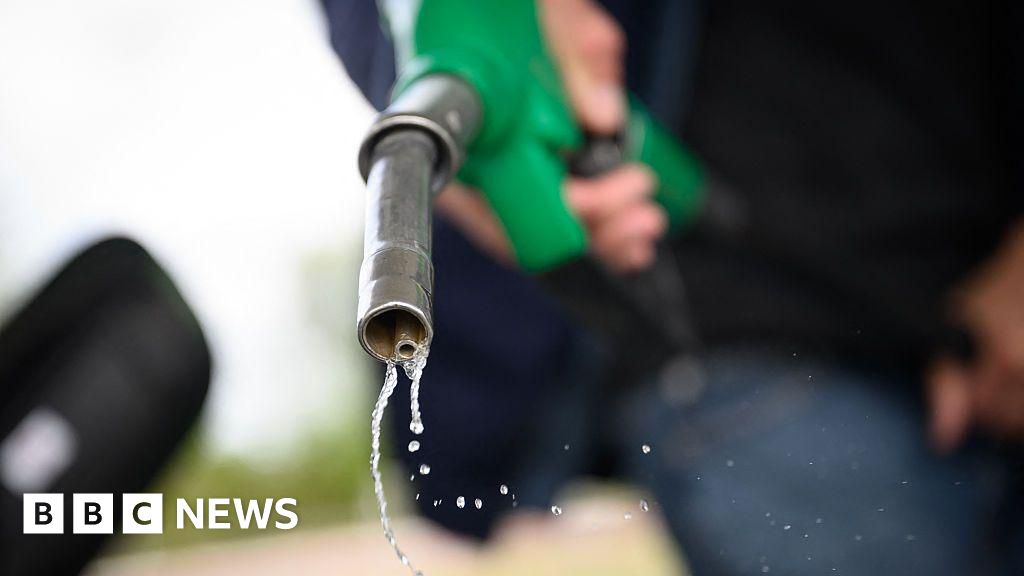
Energy markets have seen wild swings since the US and Israel attacked Iran on 28 February.
Source link

Gold and silver prices declined in both international and domestic markets, reflecting a broader downward trend in precious metals.
In the international bullion market, the price of gold fell by $49 per ounce, settling at $4,788.
According to the All-Pakistan Gems and Jewellers Sarafa Association (APGJSA), in the local market, gold prices also recorded a significant drop. The price per tola decreased by Rs4,900 to reach Rs501,162. Similarly, the price of 10 grams of gold declined by Rs4,201, settling at Rs429,665.
Silver prices also followed a downward trajectory. The price per tola of silver fell by Rs145 to Rs8,417 while the price of 10 grams of silver dropped by Rs124, reaching Rs7,216.
Read More: Gold, silver prices rise again in local and international markets
Gold and silver prices recorded an increase on Saturday in both international and local markets after declining on Friday, following a three-day upward trend in global and domestic markets.
According to the All Pakistan Sarafa Gems and Jewellers Association (APSGJA), in the international bullion market, the price of gold rose by $45 per ounce to reach $4,837. In the local market, the price of gold per tola increased by Rs4,500 to Rs506,062, while the rate for 10 grams rose by Rs3,858 to Rs433,866.
Silver prices also moved higher, with the per tola rate increasing by Rs118 to Rs8,562. Similarly, the price of silver per 10 grams rose by Rs101 to Rs7,340.
Business
Stocks to buy: What’s the outlook for Nifty for April 20-April 24 week? Check list of top stock recommendations – The Times of India

Stock market recommendations: APL Apollo Tubes, and HDFC Asset Management Company are Sudeep Shah, Head – Technical Research and Derivatives, SBI Securities’ top stock picks for this week. Below are his stock picks and also views on Nifty.Nifty ViewThe benchmark index Nifty continues to inch higher; however, this phase of the rally is notably different, as the spotlight has shifted away from the headline index. While Nifty has extended its pullback rally for the second consecutive week and closed in the green, the real strength is emerging beneath the surface. The broader markets have taken the lead, with Nifty Midcap 100 and Nifty Smallcap 100 delivering a robust rally and clearly outperforming the frontline index. Both indices have decisively moved above their key moving averages, signalling trend strength, whereas Nifty is still trading below its 100day and 200day EMA. Most importantly, Nifty Midcap 100 is now just a short distance away from its alltime high, suggesting that the next leg of opportunity may be unfolding beyond the conventional largecap space.Focusing back on Nifty, the index has been sustaining above its 50day EMA for the last three trading sessions, while the 20day and 50day EMA have started to edge higher, reflecting improvement in the shortterm trend. Meanwhile, the downward momentum in the 100day and 200day EMA has slowed considerably, indicating a stabilisation in the mediumterm structure. Momentum indicators further support the constructive bias, with the daily RSI trading above the 57 mark and moving higher, and the daily MACD histogram signalling strong bullish momentum.Collectively, these technical factors suggest that the pullback rally is likely to continue in the short term. On the upside, the 24650–24700 zone is expected to act as a crucial hurdle for the index. A sustainable breakout above 24700 could lead to an extension of the pullback rally towards 25000, followed by 25200 in the near term. On the downside, the 24050–24000 zone will serve as immediate support, and as long as the index remains above the 24000 mark, the ongoing pullback rally is likely to stay intact.Bank Nifty ViewThe banking benchmark Bank Nifty also ended the week on a positive note, indicating the continuation of its ongoing pullback rally. However, over the last three trading sessions, the index has struggled to decisively cross its 200day EMA, suggesting a phase of consolidation near a key long-term resistance zone. This price behaviour reflects hesitation at higher levels and points towards a pause in momentum after the recent recovery.This consolidation largely indicates a degree of caution among market participants, as investors appear to be awaiting clarity on the Q4 earnings outcome of major banking heavyweights, namely ICICI Bank and HDFC Bank. With both results scheduled over the weekend, the index is likely to witness a directional move post the earnings announcements, depending on earnings performance and management commentary.From a technical perspective, the index continues to maintain a constructive short-term setup, as it is trading above its 20day and 50day EMA, reflecting underlying strength. Momentum indicators remain supportive, with the daily RSI placed above the 55 level and trending higher, suggesting improving buying momentum and positive shortterm bias.Looking ahead, the 57000–57100 zone is expected to act as a crucial resistance area, as it coincides with both the prior swing high and the 100day EMA, making it an important supply zone. A sustainable move above 57100 could lead to a further extension of the pullback rally towards 57800, followed by 58500 in the short term. On the downside, the 55800–55700 zone is placed as an important support band, and any dip towards this region is likely to attract buying interest as long as the structure remains intact.Stock recommendations:APL Apollo TubesAPL Apollo Tubes has shown strong bullish intent after a 14.5% pullback from its early April lows near the 200-day EMA, indicating solid support at lower levels. The recent consolidation between 2072–1961 acted as a base, with the stock now delivering a decisive breakout on strong footing. A positive DI crossover on ADX signals clear buyer dominance, while the MACD nearing a move above the zero line with rising histogram bars points to strengthening momentum.The overall setup suggests the stock is well-positioned to extend its uptrend in the near term. Hence, we recommend to accumulate the stock in the zone of 2110-2090 with a stoploss of 2020. On the upside, it is likely to test the level of 2255 in the short term.HDFC Asset Management CompanyHDFC Asset Management Company has exhibited strong bullish momentum, closing Friday’s session with an impressive 4.89% gain. The stock has surged nearly 26% from its March lows, indicating robust buying interest. Momentum indicators remain firmly supportive, with RSI sustaining above 60, reflecting strength. Additionally, a positive DI crossover on ADX highlights clear buyer dominance, while rising MACD histogram bars with the MACD line above the zero mark further reinforce the ongoing uptrend. The overall structure suggests the stock is well-positioned to extend its upward trajectory. Hence, we recommend to accumulate the stock in the zone of 2800-2770 with a stoploss of 2690. On the upside, it is likely to test the level of 2990 in the short term.(Disclaimer: Recommendations and views on the stock market, other asset classes or personal finance management tips given by experts are their own. These opinions do not represent the views of The Times of India)


Germany’s BOSS secures landmark Australian Open partnership

Prego Has a Dinner-Conversation-Recording Device, Capisce?

Long energy disruptions to raise pressures on SEA nations: S&P Global

-

 Fashion4 days ago
France’s LVMH Q1 revenue falls 6%, shows resilience amid Iran war
-

 Sports1 week ago
The case for Man United’s Fernandes as Premier League’s best
-

 Entertainment1 week ago
Palace left in shock as Prince William cancels grand ceremony
-
 Business1 week ago
UK could adopt EU single market rules under new legislation
-

 Entertainment5 days ago
Is Claude down? Here’s why users are seeing errors
-

 Fashion1 week ago
Energy emerges as biggest cost driver in textile margins
-

 Sports1 week ago
Lamar Jackson hits back at critics with faithful message on social media
-
 Business1 week ago
Delta Air Lines unveils first new Delta One suite in premium cabin arms race