

Business
Gen Z and social media are helping men’s makeup go mainstream. The beauty industry is trying to capitalize


Pixdeluxe | E+ | Getty Images
It often starts small.
A dab of concealer. A tinted moisturizer. Maybe a brow gel that goes from borrowed to bought. For many men, like Daniel Rankin, makeup has transformed from something taboo into a tool to make them look less tired and more put together.
“I remember thinking, ‘Am I really doing this?'” Rankin, a 24-year-old advertising agent from New York who likes to shop at Sephora, told CNBC. “But once I tried it, it just became normal.”
In front of bathroom mirrors and in gym locker rooms, more men are now adding cosmetics to their routines, industry experts told CNBC. The men’s makeup market is now one of the most lucrative — and largely untapped — growth opportunities left in beauty, and specialty retailers like Ulta Beauty and Sephora along with big-box companies like Target and Walmart all see opportunity.
“Men’s beauty is one of the last categories left where brands can likely still see easy double-digit growth potential simply by showing up,” said Delphine Horvath, professor of cosmetics and fragrance marketing at the Fashion Institute of Technology.
Men’s grooming sales in the United States topped $7.1 billion in 2025, up 6.9% year over year, according to market research firm NielsenIQ. The global market was valued at $61.6 billion in 2024 and projected to surpass $85 billion by 2032, with the biggest growth driven by the skin-care sector, according to Fortune Business Insights.
Much of the momentum is coming from Gen Z.
In the U.S., 68% of Gen Z men ages 18 to 27 used facial skin-care products in 2024, a sharp jump from 42% just two years earlier, according to data from market intelligence firm Mintel.
“This is no longer niche,” said Linda Dang, CEO of Canada-based Asian beauty retailer Sukoshi. “Men are forming routines, that usually starts at skin care and then expands further, they are no longer just buying random products. That’s what makes this market so valuable.”
Bloomberg | Bloomberg | Getty Images
Unlike one-off grooming purchases, makeup encourages repeat use and experimentation. A man who starts with concealer often adds primer, setting powder or tinted SPF over time, said Farah Jemai, global marketing associate lead at beauty brand Unleashia.
“When men discover makeup that works, they don’t use once and never again,” Jemai told CNBC. “They restock.”
Market researchers estimate that in 2022, about 15% of U.S. heterosexual men ages 18 to 65 were already using cosmetics and makeup, while another 17% said they would consider it, according to Ipsos. Industry experts say those figures are likely higher in 2026.
Openness to cosmetics has grown, as the share of U.S. men who say they never wear makeup has fallen from more than 90% in 2019 to about 75% in 2024, Statista survey data show.
Retailers cater to men
Beauty conglomerates and startups alike are responding to the growth in men’s beauty.
Ulta Beauty and and Sephora have begun integrating men’s complexion products into gender-neutral, skin care-first displays rather than having “Men’s” aisles. Those gender-specific displays can feel intimidating or stigmatizing to some men, Horvath said.
Big-box retailers like Walmart and Target have also expanded their men’s cosmetics or grooming offerings.
For example, in 2025, Target partnered with online streaming collective AMP, Any Means Possible, to launch TONE. The men‑forward personal care brand debuted in Target stores nationwide in July, leveraging AMP’s massive Gen Z male following across YouTube and Twitch.
Online — where much of the growth and discovery is happening — many beauty brands are pouring money into influencer partnerships to increase engagement and sales on TikTok Shop and Amazon.
“So many brands are now putting most of their marketing budget into influencer marketing to meet people where they already are online and make it easier to click ‘buy,'” said Janet Kim, a vice president at K-beauty brand Neogen.
Others are leaning into digital education to teach men what different items do.
The brand War Paint sells makeup products like concealer pens, tinted moisturizers and anti-shine powders that feature QR codes on the packaging. Scanning them launches video tutorials explaining what each product does — without forcing customers to ask questions in a store.
“The biggest barrier isn’t price, it’s uncertainty,” Dang said. “Men want to know what a product does and how to use it without feeling awkward.”
But the path to mass adoption isn’t guaranteed.
Industry analysts warn that social stigma remains high and inflation threatens to curb spending on experimental, nonessential goods. Retailers also face a steep learning curve: It is difficult to scale a market when the core customer doesn’t know how to use the product.
Target’s SoHo store has an eye-catching “Beauty Bar” that shows off fragrances, makeup items and more.
Courtesy of Target
The emergence of men’s makeup
While men have worn makeup for centuries, from ancient Egypt to Elizabethan England, the modern commercial men’s makeup movement traces its roots to the mid-2010s.
In 2016, CoverGirl made history by appointing then 17-year-old YouTuber James Charles as its first-ever “CoverBoy,” placing a male face on a mass-market cosmetics brand for the first time.
Still, beauty conglomerates largely focused on women until recently, Sukoshi’s Dang said. Now, a broader cultural reset around masculinity is taking place and companies are racing to monetize it, FIT’s Horvath said.
Social media has been the single biggest accelerant, Dang said.
On TikTok and Instagram, male creators post step-by-step makeup routines, product breakdowns and before-and-after results that often emphasize subtle changes rather than dramatic looks. Hashtags tied to men’s grooming and makeup have amassed billions of views, with #mensgrooming alone surpassing 26 billion views on TikTok.
“TikTok democratized the ‘how-to,'” said Dang. “You don’t have to ask your sister or guess anymore. You just scroll, see a guy who looks like you fixing his acne in 30 seconds, and click ‘buy.’ It removed the gatekeepers.”
Gen Z men are also more comfortable rejecting rigid gender categories and more skeptical of marketing that frames products as inherently masculine or feminine, Horvath said.
At the same time, makeup has increasingly been folded into a broader wellness and optimization culture — sometimes referred to as “looksmaxxing” — that includes fitness tracking, supplements, hair-loss prevention and longevity routines.
“Many men have started framing grooming and, for some, makeup as maintenance, not vanity,” Horvath said. “That reframing removes stigma and unlocks spending.”
Celebrity influence has further accelerated adoption, with stars like Harry Styles, Brad Pitt and Dwayne “The Rock” Johnson launching their own skin care and makeup brands, mirroring the trend of celebrity saturation largely seen in spirits.
Johnson’s brand Papatui, which launched at Target in 2024 and spans skin, hair, body and tattoo care, was created in response to ongoing questions about his grooming regimen. It now competes directly with legacy names like Clinique, L’Oréal and Kiehl’s.
CoverGirl James Charles
Source: COVERGIRL
Moving ahead
As the market matures, a debate is forming: Do men want “men’s makeup,” or do they just want makeup?
Horvath said there is a “bifurcation” in how companies are marketing their products.
Brands like War Paint and Stryx argue that men need products designed for their thicker, oilier skin, and packaged in masculine, tool-like containers that feel at home in a gym bag.
But Gen Z consumers are increasingly gravitating toward gender-neutral brands like LVMH co-owned Fenty Beauty, The Ordinary and Haus Labs. For them, labels that say “For Men” can feel outdated or even patronizing, Horvath said.
“In ten years, I don’t think we’ll be talking about ‘men’s makeup’ anymore,” Horvath said. “We will just be talking about makeup. The gender binary in beauty is dissolving, and the sales data is finally catching up to the culture.”



Energy markets have seen wild swings since the US and Israel attacked Iran on 28 February.
Source link
Business
Stocks to buy: What’s the outlook for Nifty for April 20-April 24 week? Check list of top stock recommendations – The Times of India

Stock market recommendations: APL Apollo Tubes, and HDFC Asset Management Company are Sudeep Shah, Head – Technical Research and Derivatives, SBI Securities’ top stock picks for this week. Below are his stock picks and also views on Nifty.Nifty ViewThe benchmark index Nifty continues to inch higher; however, this phase of the rally is notably different, as the spotlight has shifted away from the headline index. While Nifty has extended its pullback rally for the second consecutive week and closed in the green, the real strength is emerging beneath the surface. The broader markets have taken the lead, with Nifty Midcap 100 and Nifty Smallcap 100 delivering a robust rally and clearly outperforming the frontline index. Both indices have decisively moved above their key moving averages, signalling trend strength, whereas Nifty is still trading below its 100day and 200day EMA. Most importantly, Nifty Midcap 100 is now just a short distance away from its alltime high, suggesting that the next leg of opportunity may be unfolding beyond the conventional largecap space.Focusing back on Nifty, the index has been sustaining above its 50day EMA for the last three trading sessions, while the 20day and 50day EMA have started to edge higher, reflecting improvement in the shortterm trend. Meanwhile, the downward momentum in the 100day and 200day EMA has slowed considerably, indicating a stabilisation in the mediumterm structure. Momentum indicators further support the constructive bias, with the daily RSI trading above the 57 mark and moving higher, and the daily MACD histogram signalling strong bullish momentum.Collectively, these technical factors suggest that the pullback rally is likely to continue in the short term. On the upside, the 24650–24700 zone is expected to act as a crucial hurdle for the index. A sustainable breakout above 24700 could lead to an extension of the pullback rally towards 25000, followed by 25200 in the near term. On the downside, the 24050–24000 zone will serve as immediate support, and as long as the index remains above the 24000 mark, the ongoing pullback rally is likely to stay intact.Bank Nifty ViewThe banking benchmark Bank Nifty also ended the week on a positive note, indicating the continuation of its ongoing pullback rally. However, over the last three trading sessions, the index has struggled to decisively cross its 200day EMA, suggesting a phase of consolidation near a key long-term resistance zone. This price behaviour reflects hesitation at higher levels and points towards a pause in momentum after the recent recovery.This consolidation largely indicates a degree of caution among market participants, as investors appear to be awaiting clarity on the Q4 earnings outcome of major banking heavyweights, namely ICICI Bank and HDFC Bank. With both results scheduled over the weekend, the index is likely to witness a directional move post the earnings announcements, depending on earnings performance and management commentary.From a technical perspective, the index continues to maintain a constructive short-term setup, as it is trading above its 20day and 50day EMA, reflecting underlying strength. Momentum indicators remain supportive, with the daily RSI placed above the 55 level and trending higher, suggesting improving buying momentum and positive shortterm bias.Looking ahead, the 57000–57100 zone is expected to act as a crucial resistance area, as it coincides with both the prior swing high and the 100day EMA, making it an important supply zone. A sustainable move above 57100 could lead to a further extension of the pullback rally towards 57800, followed by 58500 in the short term. On the downside, the 55800–55700 zone is placed as an important support band, and any dip towards this region is likely to attract buying interest as long as the structure remains intact.Stock recommendations:APL Apollo TubesAPL Apollo Tubes has shown strong bullish intent after a 14.5% pullback from its early April lows near the 200-day EMA, indicating solid support at lower levels. The recent consolidation between 2072–1961 acted as a base, with the stock now delivering a decisive breakout on strong footing. A positive DI crossover on ADX signals clear buyer dominance, while the MACD nearing a move above the zero line with rising histogram bars points to strengthening momentum.The overall setup suggests the stock is well-positioned to extend its uptrend in the near term. Hence, we recommend to accumulate the stock in the zone of 2110-2090 with a stoploss of 2020. On the upside, it is likely to test the level of 2255 in the short term.HDFC Asset Management CompanyHDFC Asset Management Company has exhibited strong bullish momentum, closing Friday’s session with an impressive 4.89% gain. The stock has surged nearly 26% from its March lows, indicating robust buying interest. Momentum indicators remain firmly supportive, with RSI sustaining above 60, reflecting strength. Additionally, a positive DI crossover on ADX highlights clear buyer dominance, while rising MACD histogram bars with the MACD line above the zero mark further reinforce the ongoing uptrend. The overall structure suggests the stock is well-positioned to extend its upward trajectory. Hence, we recommend to accumulate the stock in the zone of 2800-2770 with a stoploss of 2690. On the upside, it is likely to test the level of 2990 in the short term.(Disclaimer: Recommendations and views on the stock market, other asset classes or personal finance management tips given by experts are their own. These opinions do not represent the views of The Times of India)
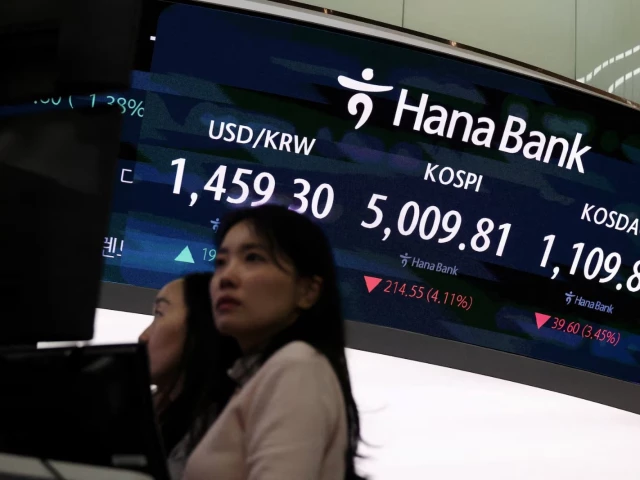
United States stock index futures inched lower on Monday after a record rally on Wall Street last week as dimming prospects of an end to the Iran conflict prompted investors to curb their risk appetite.
Iran opened the Strait of Hormuz on Friday, prompting a buying frenzy across markets, with the S&P 500 and the Nasdaq hitting record highs for the third consecutive session. They also marked their biggest weekly jumps since May.
However, Tehran reimposed the closure of the waterway following the escalation in tensions, after the US said it had seized an Iranian cargo ship that tried to run its blockade. Iran’s foreign ministry said on Monday that there were no plans for a second round of negotiations with the US, as the blockade undermined the talks and differences over Tehran’s nuclear program remained.
Oil prices jumped 5% on Monday, with US energy stocks higher in premarket trading. Exxon Mobil and Chevron gained 2% and 1.9%, respectively, while Occidental Petroleum added 2.5%.
Read: Iran rules out second round of US talks ‘for now’
“Near-term escalation to gain an upper hand in negotiations cannot be ruled out,” said Mohit Kumar, an economist at Jefferies. “Our view remains that we are moving towards a deal. We are at a stage where it is not in the interest of either party to carry on with the war. The MAGA base of Trump does not want to continue, and Trump wants a deal. For IRGC, the objective is survival.”
At 04:50am ET, Dow E-minis were down 303 points, or 0.61%, S&P 500 E-minis were down 35.75 points, or 0.50%, and Nasdaq 100 E-minis were down 140.5 points, or 0.52%.
The CBOE Volatility Index, known as Wall Street’s “fear gauge”, gained after falling for the last eight sessions and was last up 2.25 points at 19.73, a one-week high. Meanwhile, futures tracking the small-cap Russell 2000 index slipped 0.9% after the index notched a record high on Friday.
Read More: KSE-100 turns negative amid US-Iran tensions, sheds 2,935 points
Quarterly earnings will be in focus as investors wait to assess the impact of the Iran war on corporate results and its fallout on the broader economy.
Defence giants Lockheed Martin and RTX, alongside tech stocks such as IBM and ServiceNow, are scheduled to report later this week. Tesla will kick off results from the so-called “Magnificent Seven” cohort on Wednesday.
Among premarket movers, Marvell Technology advanced 6% after The Information reported on Sunday that Alphabet’s Google is in talks with the chipmaker to develop two new chips to run AI models more efficiently. QXO shares, meanwhile, dipped 3.6% after the construction supplies distributor struck a $17 billion deal on Sunday to acquire building products distributor and installer TopBuild.


2026 growth in Africa to drop by up to 0.2% due to Iran war: Report

Who was Shamar Elkins? Louisiana gunman who killed 8 children in mass shooting

Indian reforms strengthen DGFT norms committees’ functioning: Ministry

-

 Fashion4 days ago
France’s LVMH Q1 revenue falls 6%, shows resilience amid Iran war
-

 Sports1 week ago
The case for Man United’s Fernandes as Premier League’s best
-

 Entertainment1 week ago
Palace left in shock as Prince William cancels grand ceremony
-
 Business1 week ago
UK could adopt EU single market rules under new legislation
-

 Entertainment5 days ago
Is Claude down? Here’s why users are seeing errors
-

 Sports1 week ago
Lamar Jackson hits back at critics with faithful message on social media
-

 Fashion1 week ago
Energy emerges as biggest cost driver in textile margins
-
 Business7 days ago
Delta Air Lines unveils first new Delta One suite in premium cabin arms race