

Business
$36b logistics loss sparks calls for digital overhaul | The Express Tribune

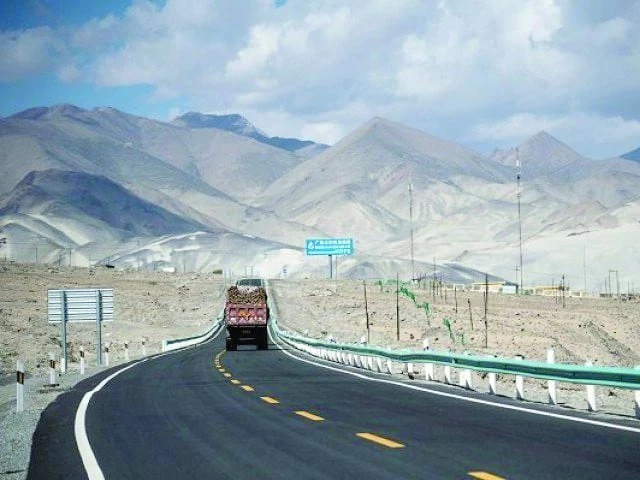
At CAREC forum, ADB announces plans to invest over $10b to support projects to build digitally connected region
While infrastructure projects have brought critical improvements in energy generation, transport connectivity and logistics, they have also saddled Pakistan with an increasing debt burden. photo: file
LAHORE:
Pakistan is losing an estimated $36 billion annually due to outdated, largely offline logistics systems – losses that experts say can be reversed only through rapid digitalisation and stronger public-private partnerships.
It was revealed during the Carec Business Forum in Bishkek, where global development partners, including the Asian Development Bank (ADB), renewed commitments to cross-border digital connectivity.
The losses in foreign trade due to the lack of digitisation in Pakistan were discussed during the international event where the ADB announced plans to invest over $10 billion by 2030 to support projects under the Central Asia Regional Economic Cooperation (Carec) framework, aiming to build a digitally connected and resilient region.
The urgency for transparency and traceability in trade has grown following the International Monetary Fund’s (IMF) recent identification of an $11 billion discrepancy in Pakistan’s trade data, urging Islamabad to modernise reporting and restore global trust.
Addressing the Carec Business Forum, galaxefi Founder and CEO Asif Pervez said Pakistan stands at a pivotal moment where technology-driven reforms can unlock significant trade gains and position the country as a digital trade hub for the entire Carec corridor.
“Pakistan cannot afford to lose $36 billion annually when technology offers a direct solution to overcome these systemic bottlenecks,” he said. “The government must act decisively to build a trusted digital ecosystem for regional trade.”
His remarks align with findings from the Carec Institute, which has consistently warned that the region’s major trade barrier is not physical infrastructure but the absence of a unified multimodal e-logistics system. While Pakistan Single Window (PSW) has digitised government procedures, nearly 70% of private logistics operations remain manual, keeping Pakistan uncompetitive across global supply chains.
ADB President Masato Kanda told delegates that countries which “connect faster and trade smarter” will lead the next wave of economic growth.
He announced that ADB will quadruple private-sector financing to $13 billion a year by 2030, dedicating 30% of future operations to regional connectivity and digital corridors. “This connectivity is designed with purpose making commerce smoother, greener and more inclusive,” he said.
Pakistan signed two major memoranda of understanding (MoUs) at the forum – the Carec Innovation and Venture Investment Catalyst Facility and the Carec Digital Corridor Initiative – both aimed at deepening digital cooperation.
“Pakistan must seize this moment,” Pervez stressed. “The technology, infrastructure and partnerships already exist. What we now need is decisive alignment from the public sector. This is how we eliminate $36 billion in losses and transform into a competitive regional force.”





Business
Life sciences lab real estate is clawing back from disaster. Here’s what that means for investors
Business
Trump administration in advanced talks for a rescue package for Spirit Airlines, source says

A Spirit commercial airliner prepares to land at San Diego International Airport in San Diego, California, U.S., January 18, 2024.
Mike Blake | Reuters
The Trump administration is in advanced talks for a financing package for Spirit Airlines as the carrier is facing the risk of a liquidation, according to a person familiar with the matter.
Spirit had been facing a potentially imminent liquidation, people familiar with the matter told CNBC last week, speaking on the condition of anonymity to discuss matters that had not yet been made public. The Dania Beach, Florida-based carrier in August filed for its second Chapter 11 bankruptcy in less than a year, after it struggled to increase revenue to cover rising costs.
President Donald Trump hinted at potential government aid on Tuesday, telling CNBC’s “Squawk Box“, “Spirit’s in trouble, and I’d love somebody to buy Spirit. It’s 14,000 jobs, and maybe the federal government should help that one out.”
The White House didn’t immediately comment.
“We are hopeful that the government will recognize the needs for emergency funds especially in the current economic environment,” a spokesperson for the Associated of Flight Attendants-CWA, which represents Spirit’s cabin crews, said in a statement. “The last thing our economy needs is tens of thousands more people out of work and the last thing the travelling public needs is fewer choices in air travel.”
The terms of the financing deal weren’t immediately known. The Wall Street Journal earlier reported that the talks were in an advanced stage.
The U.S. airline industry accepted more than $50 billion in taxpayer aid to weather the Covid-19 pandemic, which is still its biggest-ever crisis, but those funds weren’t handed to one specific airline. Some of the aid gave the U.S. government stock warrants for airlines.
Airlines also received a government bailout following the Sept. 11, 2001, terrorist attacks, but that money was also for more than one company. The U.S. in 2008-2009 also bailed out the auto industry during the financial crisis and took stakes in manufacturers.
The Trump administration has taken equity stakes in some companies it deemed critical to national security like Intel and USA RareEarth, though Spirit stands out as it is in bankruptcy.
In February, Spirit said it expected to exit bankruptcy in late spring or early summer, telling a U.S. court that it would shrink and focus its planes on high-demand routes and travel periods. Pilot and flight attendant unions had also made concessions, including going on furlough in recent months, in a bid to help Spirit survive.
But jet fuel prices have nearly doubled in some parts of the U.S. since then, further adding to challenges for Spirit and the rest of the airline industry.
As a low-fare airline that also faces competition from larger carriers with their own no-frills, basic economy offerings, it has grown harder for Spirit to cover expenses. Spirit had introduced extra-legroom seats and other premium options to try to cater to higher-spending customers.


5 AI Models Tried to Scam Me. Some of Them Were Scary Good
Tesla widens India bet with launch of Model Y L – The Times of India

Life sciences lab real estate is clawing back from disaster. Here’s what that means for investors

-

 Fashion6 days ago
France’s LVMH Q1 revenue falls 6%, shows resilience amid Iran war
-

 Entertainment1 week ago
Is Claude down? Here’s why users are seeing errors
-

 Sports1 week ago
PSL 11: Peshawar Zalmi win toss, opt to field first against Quetta Gladiators
-

 Tech1 week ago
The Deepfake Nudes Crisis in Schools Is Much Worse Than You Thought
-

 Tech1 week ago
Bremont Is Sending a Watch to the Moon’s Surface
-

 Tech1 week ago
Human-machine teaming dives underwater
-
 Business1 week ago
BP sees ‘exceptional’ oil trading result as Iran war sends crude costs soaring
-

 Fashion1 week ago
What no one is saying about the 2026 apparel slowdown