

Fashion
46% expect conditions to worsen in 2026: The State of Fashion 2026

Whereas in the past, fashion leaders facing the volatility of global affairs were uncertain about what lay ahead, now they seem to have accepted that constant change is simply the new normal.
‘Challenging’ has overtaken ‘uncertainty’ as the word executives polled in ‘The State of Fashion 2026’ report used most frequently to describe the industry in 2026, with tariffs cited as the topmost hurdle.
Forty-six per cent say they expect conditions to worsen next year, while 36 per cent view North America as unpromising or very unpromising.
A quarter believes industry conditions will improve in 2026.
Many leaders are feeling pessimistic and are not expecting an easy road ahead, with 46 per cent saying they expect conditions to worsen next year, compared with 39 per cent in last year’s survey.
By geography, 36 per cent view North America as unpromising or very unpromising, double last year’s share, according to the The State of Fashion 2026 report. The first such report was published in 2016.
But not everyone is so downbeat. Among those polled, a quarter believes industry conditions will improve, up from a fifth in 2025, suggesting some players see pockets of opportunity.
Sentiment towards China is finally picking up, even as conditions remain difficult: 28 per cent view the market there as unpromising in 2026, down from 41 per cent heading into 2025.
The fashion industry’s main agenda next year will be adapting to this new environment where trade, consumer behaviour and technology remain in rapid flux. Agile brands that can adapt quickly are likely to emerge as the winners, the report noted.
With turbulent conditions, including volatile input costs, supply chain disruptions and slow growth, straining fashion’s economic model, artificial intelligence (AI) is shifting from a competitive edge to a business necessity.
Companies are reshaping workforces accordingly, with some existing jobs becoming more AI-centric, enabling roles to shift towards higher-value creative and analytical tasks.
To harness this technological change, companies must redesign their processes and compete for AI talent—looking beyond the fashion ecosystem to find it—while protecting the essential creativity that makes fashion tick.
Business leaders must shift their focus from small pilots and experiments that can only deliver incremental change towards a more fundamental reassessment of how their organisations work. And while still nascent, agentic AI is reshaping how people work and collaborate, so fashion companies will need to figure out how they can harness this emerging technology too.
AI is also transforming how people shop. Customers are turning to large language models to search for products, compare offerings and receive tailored recommendations.
Some are already using AI as style and wardrobe consultants, seeking advice on what to buy and where to buy it, making fashion brands’ presence in AI chatbot responses the new search engine optimisation.
These dynamics will only grow more pronounced as agentic commerce accelerates in the second half of the decade, says the report.
Fostering customer loyalty is emerging as an important frontline in the battle for customers, with more than half of executives citing retention strategies as a key theme shaping the industry in 2026.
To retain—and attract—customers, brands will need to give them what they want, and increasingly that means offering value. While luxury players raised prices without corresponding improvements in product quality or creativity, design-led brands in the mid-market elevated their products and store experiences.
Now, the mid-market is the fastest-growing segment, replacing luxury as fashion’s main value creator. Meanwhile, smart eyewear that blends fashion and technology has become the fastest-growing accessory category, with further product launches expected in 2026.
High prices remain a significant hurdle for aspirational customers, and anyway, more and more would-be luxury shoppers are focusing on their personal wellness: body, mind and health—a trend the survey first called out in 2017. Next year will inevitably be yet another year of dislocation for fashion companies. In a flat market, only those companies that capture the hearts and minds of customers will manage to grow and gain market share, they report adds.
Fibre2Fashion News Desk (DS)










“We designed this collection with parents in mind. Shopping for a newborn, as a gift or for your own, should feel joyful and easy. Everything is intended to be mixed together and matched — it’s fun, it’s emotional, and the value is incredible.”. – Sarah Holme, Head of Design & Product Development for Old Navy.
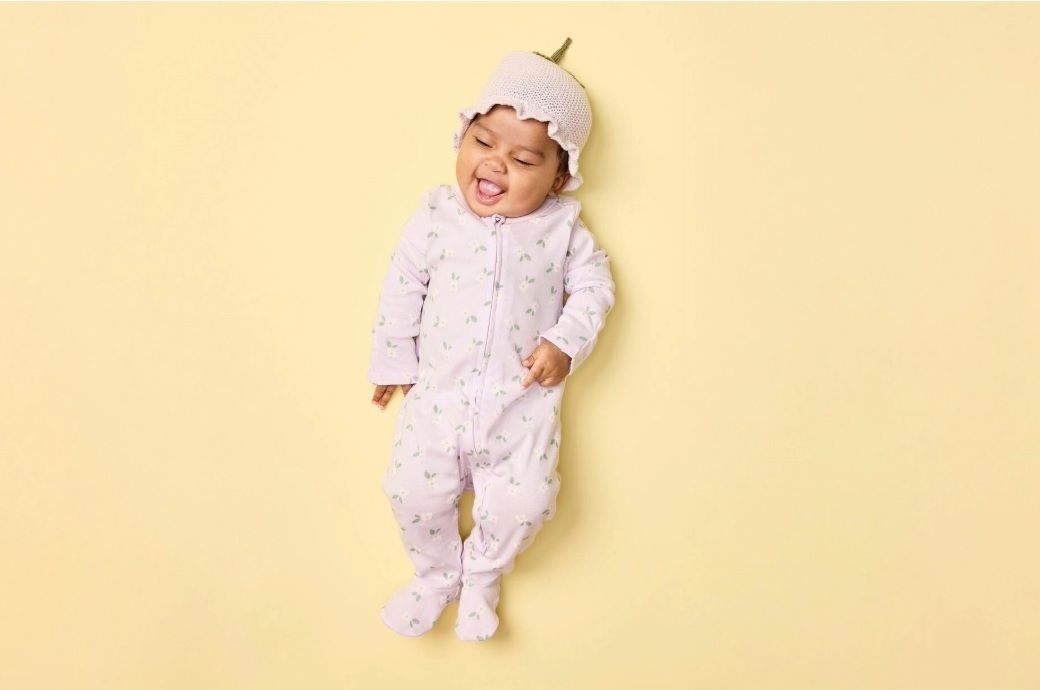
Old Navy has introduced Little Navy, a new collection of newborn essentials designed to simplify early-stage shopping and gifting.
The range includes layettes, hats, booties and mix-and-match basics in soft, seasonless colours and cosy fabrics.
Sized for babies up to 24 months, the line focuses on comfort, versatility, emotional appeal and strong value for modern parents.
Little Navy goes beyond onesies, offering layettes, hats, booties, and more, all in one convenient collection and no extra searching required. It features a soft, seasonless color palette, cozy fabrics, and versatile styles made for newborns and babies up to 24 months, with sizing that allows Little Navy to grow with baby.
Note: The headline, insights, and image of this press release may have been refined by the Fibre2Fashion staff; the rest of the content remains unchanged.
Fibre2Fashion News Desk (RM)
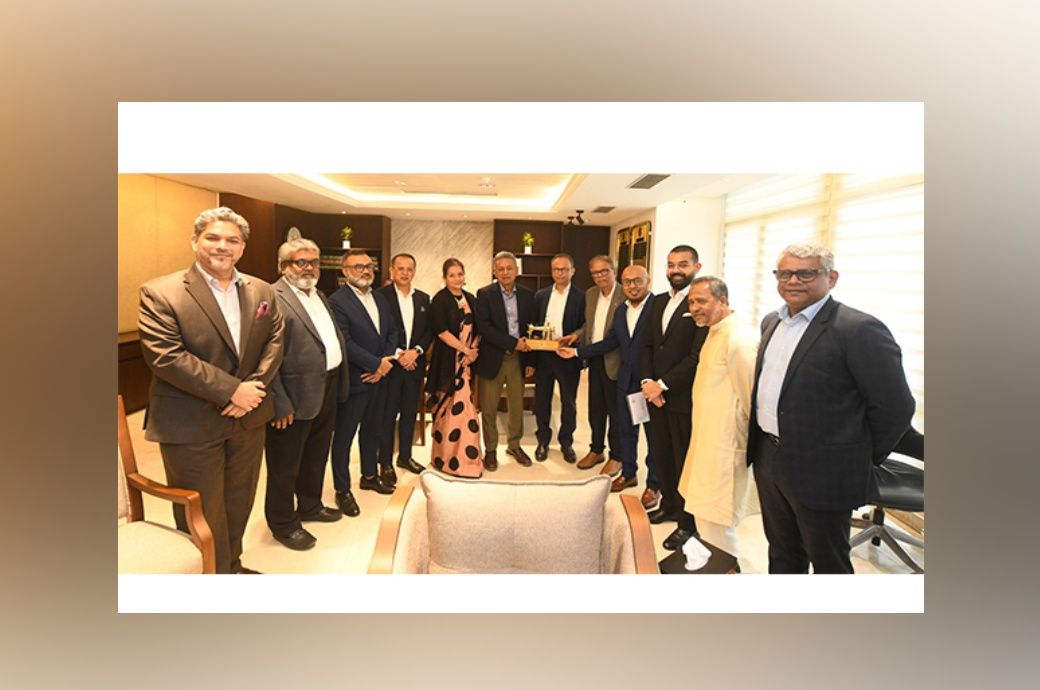
They said bank audit procedures have stalled numerous applications. Around Tk 57 billion in incentives for the textile and apparel sector remain unsettled in fiscal 2025-26, creating acute liquidity pressure and affecting exports.
Bangladesh trade body BGMEA representatives recently met Finance Minister Amir Khasru Mahmud Chowdhury and urged him to release pending cash incentives without waiting for quarterly release schedules and simplify the disbursement process.
They said bank audit procedures have stalled numerous applications.
They also raised concerns over loan rescheduling and working capital.
The authorities were requested to disburse incentives upon application submission instead of waiting for quarterly release schedules, according to a release from the trade body.
BGMEA vice president Mohammad Shihab Uddoja Chowdhury raised concerns over loan rescheduling and working capital. He said banks often reschedule loans to maintain non-performing loan ratios, but fail to provide the working capital factories need to resume operations.
He proposed that banks pair rescheduling with working capital support to create a win-win outcome, allowing factories to operate and repay loans. The finance minister agreed with the proposal.
BGMEA leaders also called for business facilitation and lower operational costs to help Bangladesh remain competitive in the global market. They sought policy support to remove obstacles in customs, ports and other administrative layers and to ensure an investment-friendly environment.
Fibre2Fashion News Desk (DS)

Bangladesh think tank Centre for Policy Dialogue has called for major reforms in business environment, tax collection, trade deals and FDI management, cautioning that the country’s post-election economic transition may be at risk without evidence-based decisions and strong accountability.
A CPD study identified ‘leaking revenue’ as the weakest area across all decision-making indicators.
Source link


What Is That Mysterious Metallic Device US Chief Design Officer Joe Gebbia Is Using?

Justin Timberlake legally attacks Long Island over driving footage

The ‘European’ Jolla Phone Is an Anti-Big-Tech Smartphone

-
 Business6 days ago
Households set for lower energy bills amid price cap shake-up
-

 Politics5 days ago
What are Iran’s ballistic missile capabilities?
-

 Entertainment1 week ago
Talking minerals and megawatts
-

 Sports1 week ago
Eileen Gu comments on Alysa Liu’s historic gold medal
-
 Business6 days ago
Lucid widely misses earnings expectations, forecasts continued EV growth in 2026
-

 Sports5 days ago
Sri Lanka’s Shanaka says constant criticism has affected players’ mental health
-

 Tech6 days ago
Here’s What a Google Subpoena Response Looks Like, Courtesy of the Epstein Files
-
 Business6 days ago
Income Tax Draft Rules 2026: Key Changes On How And When Pan Card Will Be Required?