

Business
5 takeaways from CNBC’s investigation into Walmart Marketplace


Walmart‘s online marketplace has become a key part of its strategy to grow profit faster than sales and better compete against its longtime rival, Amazon.
As the largest U.S. retailer with more than 4,600 locations nationwide, growing sales online is also critical for its future.
But a CNBC investigation found Walmart’s digital boom came as it made it easier for third-party sellers to join and sell on its marketplace, a strategy that has come with a cost.
Some consumers have received counterfeit, potentially dangerous products after shopping on the marketplace, CNBC found. The investigation also uncovered dozens of third-party sellers who had stolen the credentials of another business to set up an account, including some who were offering fake health and beauty items.
In the early days of Walmart’s online marketplace, former employees and sellers said it had strict policies for vetting third-party sellers and the products they offer. But over time, Walmart loosened those controls in a bid to woo sellers away from Amazon and appear more friendly than its rival, according to sellers, e-commerce consultants, and current and former employees.
When asked for comment on CNBC’s reporting, Walmart said “trust and safety are non-negotiable for us.”
“Counterfeiters are bad actors who target retail marketplaces across the world, and we are aggressive in our efforts to prevent and combat their deceptive behavior,” Walmart said. “We enforce a zero-tolerance policy for prohibited or noncompliant products and continue to invest in new tools and technologies to help ensure only trusted, legitimate items reach our customers.”
CNBC’s investigation uncovered new details about Walmart’s strategy to grow its online marketplace and the risks it took to take market share from Amazon.
Here are five takeaways from the investigation.
Stolen identities and product tests
During CNBC’s investigation into Walmart’s marketplace, it found at least 43 third-party sellers who had used the identity of another business to set up their account. Some of these sellers were impersonating large, publicly traded companies such as Thermo Fisher Scientific and Rockwell Medical, while others were smaller, private businesses, such as a New York grocery chain and a Chicago pizzeria.
CNBC purchased and tested six items for its investigation, all of them highly rated, deeply discounted beauty products offered by sellers that were impersonating legitimate businesses. All of them were fake, according to brands and lab testing.
Walmart trailers sit in storage at a Walmart Distribution Center in Hurricane, Utah on May 30, 2024.
George Frey | AFP | Getty Images
Some of the companies that were being impersonated on Walmart.com told CNBC they had received mysterious packages at their homes or businesses that they later realized were customer returns.
One of them, Lifeworks-ACS, received at least 14 returns and mailed them to CNBC for authentication. All of them were found to be counterfeit.
Employee pressure
During the Covid pandemic, Walmart’s marketplace boomed and the company gradually made it easier for sellers to join and list items on the platform, former employees said.
One of those former employees, Tammie Jones, said when she first joined Walmart’s seller vetting team, the requirements to join the marketplace were strict. But she said over time, there was pressure from management to approve more sellers, even when she had concerns about the applicant’s credentials or documentation.
“It got to a point where they were just like, ‘You know what? Just go ahead and approve everybody,'” said Jones. “They wanted that business, so they were willing to take a chance on it.”
Onboarding and product vetting
The requirements to join Amazon’s and Walmart’s marketplaces are different. Amazon often makes sellers conduct a video interview with a company employee, while Walmart’s marketplace does not list a video interview as a requirement to join.
Over time, Walmart also made changes to the documentation it requires sellers to submit during the application process. In the past, applicants were required to provide their employer identification number and both a W-9 and EIN form, according to a video of Walmart’s application uploaded in February 2022.
As recently as late March, applicants still needed to provide their EIN, but they were no longer required to upload their W-9 and EIN form, according to a video of Walmart’s seller application posted to YouTube on March 31.
At the time, the only document U.S. sellers were required to upload was a copy of their driver’s license or passport, according to the video. Additional IRS documentation was listed as “optional,” the video shows.
There are also differences in the documentation Amazon and Walmart require from sellers about the products they want to list. On Amazon, some sellers are asked to provide invoices showing how they sourced their products, which includes proof they purchased between 10 and sometimes as many as 100 units. The Walmart sellers CNBC spoke to, who were interviewed before Walmart changed some aspects of its vetting process in July, said they were rarely, if ever, asked to provide details on how they sourced their goods. Those who were asked to submit documents said they often only needed to show an invoice for one unit and occasionally, answer a few questions about their supplier.
Providing an invoice that only shows one unit, compared with 10 or 100, makes it easier for people to resell stolen or counterfeit goods, experts said.
Walmart’s changes
About three weeks after CNBC shared its reporting with Walmart, the company changed some of its marketplace vetting policies for beauty and personal-care products in late July.
In an email Walmart sent to some sellers, the company announced new restrictions for the category and said it would start requiring certain sellers to participate in an “enhanced vetting program” for those kinds of items. The changes would address some of the issues raised in CNBC’s reporting.
As part of the new program, some sellers would have to provide documentation for each personal-care or beauty item in their assortment, such as an invoice that demonstrates the product was sourced directly from a brand owner or manufacturer.
Numerous beauty and personal-care listings were taken down from the platform after the change, some sellers said.
Legal landscape
The nature of online marketplaces makes it difficult to get rid of counterfeit goods entirely, partially because of a lack of regulation. While selling counterfeit goods is a crime, platforms face almost no liability for facilitating their sale, as long as they take down listings for fake goods after brands bring them to their attention.
The Shop Safe Act, a bipartisan federal bill, is designed to curb the sale of fakes online by incentivizing platforms to better vet sellers and the products they’re offering. When platforms comply with certain anti-counterfeiting measures, they could be shielded from liability if a seller offers a fake product.
Brands widely supported the legislation, but it has so far failed to pass at least three times, partially because Walmart and other online marketplaces like Amazon, Etsy and eBay have lobbied against aspects of it, two U.S. Senate aides, who spoke on the condition of anonymity because the discussions were private, told CNBC. The legislation is expected to be reintroduced in the current Congress, they said.
In the absence of more concrete policy changes, legal experts said the argument that certain platforms could be held responsible for the sale of harmful products like counterfeit body lotion or faulty fire alarms is gaining momentum, even if they were technically sold by a third party.




A sign sits outside of the Centers for Disease Control and Prevention (CDC) Roybal campus in Atlanta, Georgia, U.S. March 18, 2026.
Megan Varner | Reuters
One American has tested positive for Ebola in the Democratic Republic of Congo in connection to the deadly outbreak in central Africa that global health agencies are racing to contain, the Centers for Disease Control and Prevention said on Monday.
The person was exposed as part of their work in Congo, developed symptoms over the weekend and tested positive late Sunday, Dr. Satish Pillai, the CDC’s Ebola response incident manager, told reporters on a call. The CDC and State Department are working to move that individual and six other Americans exposed to Ebola to Germany for treatment, care and monitoring.
But Pillai emphasized that no cases tied to the outbreak have been confirmed in the U.S., and that the overall risk to the American public and travelers remains low.
Still, the CDC also announced on Monday that for the next 30 days, it will restrict entry into the country for people without a U.S. passport who were in the Democratic Republic of the Congo, South Sudan or Uganda in the last three weeks.
The update came one day after the World Health Organization declared the Ebola epidemic a “public health emergency of international concern.” The outbreak does not meet the criteria of a “pandemic emergency,” but the WHO warned that the high positivity rate and increasing cases and deaths point toward a “potentially much larger outbreak” than what is being detected and reported.
As of Sunday, more than 300 suspected cases and 88 suspected deaths have been reported, primarily in Congo but also in neighboring Uganda, according to the CDC.
The specific virus involved in this outbreak, called Bundibugyo, has no vaccine or treatment. Historically, that virus has death rates ranging from 25% to 50%, the CDC added.
But agency officials told reporters on Monday that work is underway to develop a monoclonal antibody therapy as a potential treatment for this specific strain of Ebola.
Musk’s loss against OpenAI is the latest in a string of courtroom defeats.
Source link
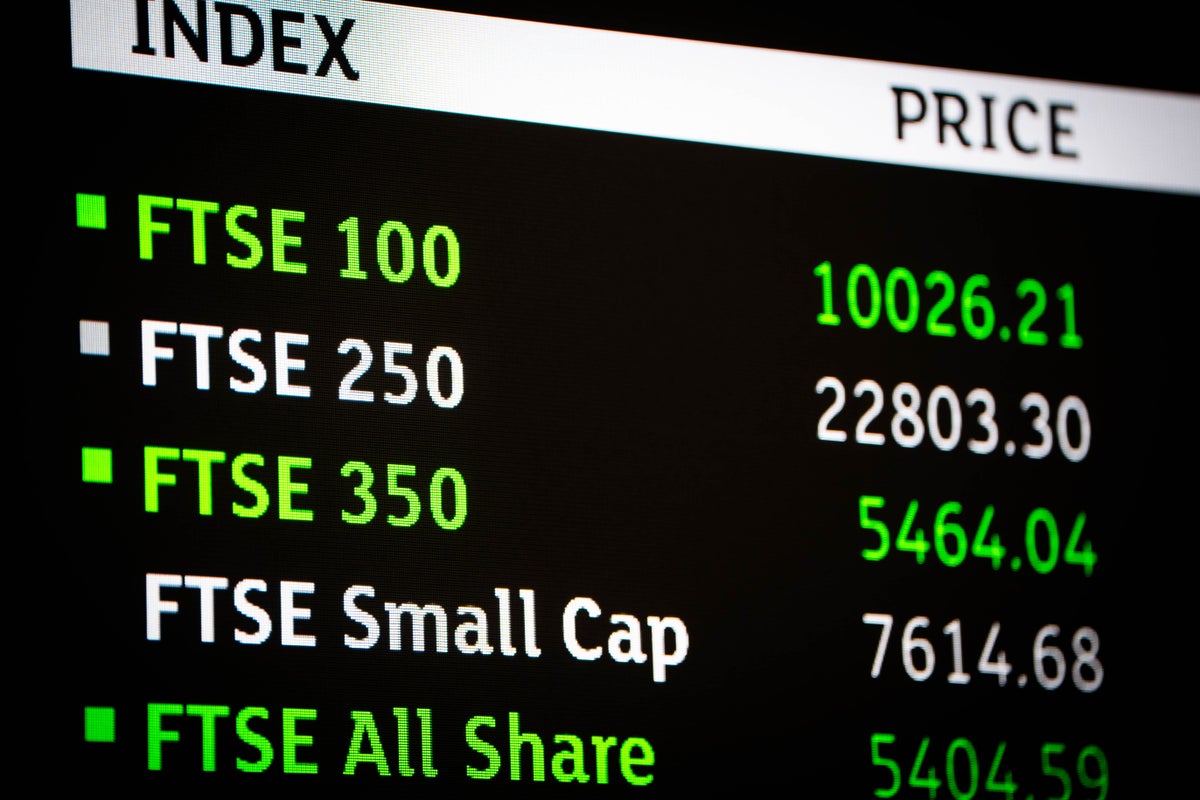
The FTSE 100 closed higher on Monday, recouping most of Friday’s hefty falls amid a calmer bond market and as Iran responded to the latest US peace proposal.
The FTSE 100 closed up 128.38 points, 1.3%, at 10,323.75. The FTSE 250 ended up 15.56 points, 0.1%, at 22,611.70, but the AIM All-Share fell 8.72 points, 1.1%, at 800.17.
Iran said it had responded to a new US proposal aimed at ending the war, adding that diplomatic exchanges continue despite Iranian media reports describing Washington’s demands as excessive, AFP reported.
Washington and Tehran have been swapping proposals in an effort to end the conflict, which the US and Israel launched on February 28, but they have held only a single round of talks despite a fragile ceasefire.
“As we announced yesterday, our concerns were conveyed to the American side,” foreign ministry spokesman Esmaeil Baqaei told a news briefing, adding that exchanges were “continuing through the Pakistani mediator”.
Mr Baqaei defended Iran’s demands, including the release of Iranian assets frozen abroad and the lifting of long-standing sanctions.
“The points raised are Iranian demands that have been firmly defended by the Iranian negotiating team in every round of negotiations,” he said.
But with no signs of clear progress, the oil price remained inflated and volatile.
Brent crude for July delivery was trading at 110.80 dollars a barrel on Monday, up compared to 108.83 at the time of the equities close in London on Friday.
After a frantic Friday, the bond markets calmed, while sterling also rebounded as investors weighed the latest political developments.
The yield on UK 10-year gilts traded at 5.14% compared to 5.17% at the same time on Friday.
The pound traded at 1.3397 dollars on Monday afternoon, up from 1.3319 on Friday. Against the euro, sterling firmed to 1.1506 euros from 1.1462 on Friday.
Prime Minister Sir Keir Starmer insisted he would not set out a timetable to leave No 10 as potential leadership challenger Andy Burnham vowed to “change Labour” if he is successful in his effort to return to Parliament.
The Prime Minister said he still wants to lead Labour into the next general election amid calls from within the party to set out a timetable for his exit.
Greater Manchester Mayor Mr Burnham hopes to be Labour’s candidate in the Makerfield by-election, which could provide him with a route back to the Commons to challenge for the party leadership and the keys to Downing Street.
Speaking to broadcasters in London, Sir Keir said he was not going to set out a timetable to stand down if Mr Burnham returns to Westminster.
He added: “I do want to fight the next election. Obviously, I recognise that after the local election results, the elections in Wales and Scotland as well, that the first task is obviously turning things around and making sure that my focus is in the right place.”
Meanwhile, the International Monetary Fund said growth in the UK economy will be stronger this year than previously thought.
The IMF updated its growth projections a month after warning of a sharp slowdown caused by the global energy shock from the US-Iran war.
The influential financial body said it was now predicting UK gross domestic product to rise by 1% in 2026, higher than the 0.8% growth it was forecasting last month.
Responding to the latest report, Chancellor Rachel Reeves said: “The IMF upgrading its growth forecasts and backing our fiscal strategy is yet more proof that this Government has the right economic plan.”
In Europe, equity markets on Monday, the Cac 40 in Paris ended up 0.4%, and the Dax 40 in Frankfurt advanced 1.5%.
In New York, the Dow Jones Industrial Average was down 0.1%, the S&P 500 fell 0.4%, and the Nasdaq Composite was 0.7% lower.
On the FTSE 100, Whitbread closed up 2.3% after Corvex Management urged the Premier Inn owner to put itself up for sale, slamming its recently announced new five-year strategic plan.
In a damning letter to Whitbread management, the New York-based activist hedge fund called the status quo “untenable” and said that the need to pursue “meaningful strategic and structural reform had become unignorable”.
As a result, Corvex, which holds a stake of around 7% in Whitbread, said the only “credible” path to unlocking value at Whitbread is a sale of the company.
Anglo America fell 1.4% as it struck a deal to sell its portfolio of steelmaking coal mines in Australia to Dhilmar for up to 3.88 billion dollars in cash.
The London-based mining house said Dhilmar will pay the FTSE 100-listing 2.3 billion dollars upfront, and the deal has a price-linked earnout of up to 1.58 billion dollars.
Anglo American chief executive officer Duncan Wanblad said: “This agreement represents another major step in the simplification of our portfolio ahead of completing our merger with Teck. Through this transaction, we will complete our exit from steelmaking coal.”
Susannah Streeter, chief investment strategist at Wealth Club, said: “This not only strengthens the balance sheet, ahead of its planned merger with Canada’s Teck Resources, but also keeps it exposed to future strength in coal prices.”
Capita shares rose 8.9% as the London-based outsourcing and business services company said adjusted revenue rose 2.9% on-year in the first four months of 2026, which it said was in line with expectations.
Looking ahead, Capita said it continues to expect a low to mid-single digit revenue climb in Capita Public Service and expects mid-teen revenue growth in its Pension Solutions business.
The biggest risers on the FTSE 100 were Centrica, up 7.70p at 196.95p, National Grid, up 43.50p at 1,231.50p, Pearson, up 37.00p at 1,136.50p, Relx, up 81.00p at 2,504.00p, and SSE, up 74.00p at 2,345.00p.
The biggest fallers on the FTSE 100 were 3i Group, down 128.00p at 2,082.00p, Airtel Africa, down 15.60p at 312.80p, Mondi, down 16.40p at 734.60p, Polar Capital Technology Trust, down 12.50p at 659.00p and Diploma, down 95.00p at 6,625.00p.
Tuesday’s global economic calendar has UK consumer and wholesale inflation figures, eurozone inflation data and the minutes of the last Federal Open Market Committee meeting.
Tuesday’s local corporate calendar has full-year results from business services group DCC, half-year numbers from supplier of specialised technical products and services, Doploma, and electricals retailer Currys.

CDC says American tests positive for Ebola in Africa, risk in the U.S. remains low
Elon Musk just lost another lawsuit. Will he keep fighting?

India will become history if it attempts any future misadventure, warns defence czar

-

 Entertainment6 days ago
Conan O’Brien hat tricks as Oscar host
-

 Tech1 week ago
Could Contact-Tracing Apps Help With the Hantavirus? Not Really
-

 Fashion5 days ago
Italy’s Zegna Group’s Q1 growth boosted by strong organic performance
-

 Entertainment1 week ago
Martin Short: Facing tragedy with joy
-

 Entertainment1 week ago
Tom Brady gets back at Kevin Hart during Netflix roast
-

 Sports1 week ago
Jacob Fatu unleashes vicious assault on Roman Reigns after World Heavyweight Championship loss at WWE Backlash
-

 Entertainment1 week ago
Martha Stewart: How to make an omelet
-

 Tech1 week ago
CUDA Proves Nvidia Is a Software Company