

Business
Divorce Costs Bite: 42% Men Borrow To Pay, 46% Women Quit Jobs After Marriage, Says Study


Last Updated:
A study finds divorce in India causes financial strain; men often take loans for alimony, while women’s net worth usually rises after settlements.

News18
Divorce in India is not just an emotional and social upheaval—it carries a heavy financial cost, often reshaping the lives of both men and women. A new study surveying 1,258 divorced individuals across Tier-1 and Tier-2 cities has highlighted the deep economic scars left behind by marital dissolutions.
One of the starkest findings is that 42% of men had to take loans to meet alimony or divorce-related expenses, according to 1 Finance Magazine study.
On average, men spent about 38% of their annual income on maintenance payments, significantly cutting into their savings and financial freedom.
Women, on the other hand, faced challenges of a different kind. Nearly 46% of women either quit their jobs or reduced their work intensity after marriage, leading to financial dependence on their spouses. Post-divorce, however, many saw an improvement in their financial position—49% reported an increase in net worth, often due to alimony settlements. Notably, more than half of women surveyed received over 50% of their husband’s net worth as part of the settlement, with some cases crossing even 100%.
The cost of divorce proceedings added to the strain. While 84% of women spent within the Rs 5 lakh bracket, almost half of the men reported expenses exceeding Rs 5 lakh. Beyond legal fees, costs included relocation, interim maintenance, and emotional health support.
Experts say the findings underline the urgent need for financial transparency and premarital money discussions. Clear agreements on household expenses, debt responsibilities, and savings goals could reduce future conflicts.
“Divorce isn’t just emotional; it’s financial too,” noted Aditi Mohoni as quoted by 1 Finance Magazine, a family lawyer, stressing the importance of early financial planning to mitigate long-term strain.

Varun Yadav is a Sub Editor at News18 Business Digital. He writes articles on markets, personal finance, technology, and more. He completed his post-graduation diploma in English Journalism from the Indian Inst…Read More
Varun Yadav is a Sub Editor at News18 Business Digital. He writes articles on markets, personal finance, technology, and more. He completed his post-graduation diploma in English Journalism from the Indian Inst… Read More
October 03, 2025, 17:46 IST
Read More

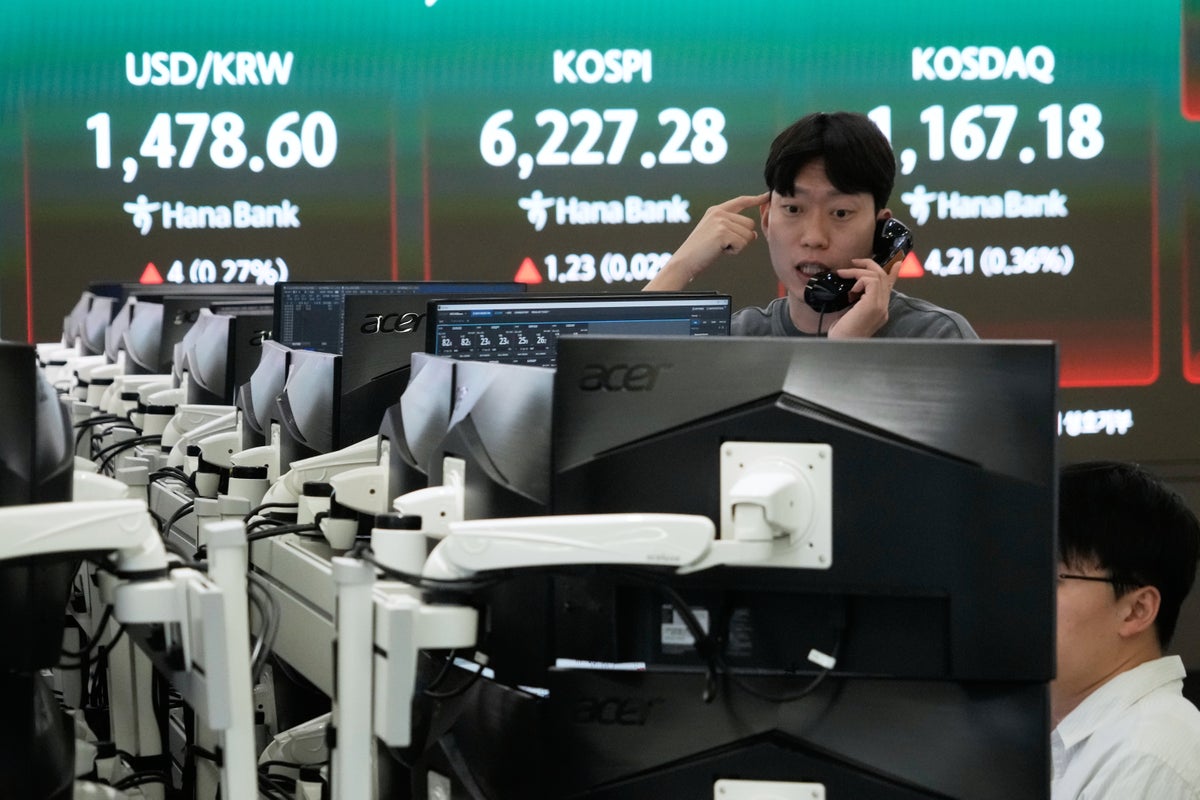
Oil prices remained below $100 a barrel on Friday as Wall Street set another record and Asian stocks headed for a second consecutive week of strong gains, with markets watching for signs that the Iran war ceasefire expiring next week would be extended.
Brent crude fell 1.1 per cent to $98.31 a barrel and US benchmark crude dropped 1.4 per cent to $89.90, after Donald Trump said the next meeting between the US and Iran could take place over the weekend and suggested he was open to extending the two-week ceasefire beyond its expiry next week.
Iran’s UN envoy said Tehran remained “cautiously optimistic” over negotiations with the US. A 10-day ceasefire between Lebanon and Israel also went into effect on Thursday.
Asian markets pulled back on Friday despite Wall Street setting another record the previous session. Tokyo’s Nikkei fell 1 per cent to 58,930 after hitting an all-time high on Thursday. South Korea’s Kospi was 0.6 per cent lower, Hong Kong‘s Hang Seng dropped 1 per cent and the Shanghai Composite edged down 0.1 per cent. Australia’s S&P/ASX 200 lost 0.3 per cent and Taiwan’s Taiex traded 0.5 per cent lower.
MSCI‘s broadest index of Asia-Pacific shares outside Japan remained close to its highest level since 2 March, the first trading day after the Iran war broke out. The index is up 14.5 per cent in April after dropping 13.5 per cent in March, with almost all stock markets now back to pre-war levels.
On Wall Street, the S&P 500 closed 0.3 per cent higher at 7,041 on Thursday, a day after eclipsing its previous all-time high set in January. The Dow Jones Industrial Average rose 0.2 per cent to 48,578 and the Nasdaq added 0.4 per cent to 24,102.
However, the speed of the recovery has surprised some analysts, who warned markets may be underpricing the risks.
“There’s quite a strong contrast between what policymakers and central bankers are saying about the risks that this conflict is creating versus what the market is implying,” Andrew Chorlton, chief investment officer for public fixed income at M&G, told Reuters.
“That seems somewhat complacent. It seems unlikely that there shouldn’t be some additional risk premium priced in, either to growth or to inflation.”
Others pointed to the strait as the critical test for whether the rally could hold.
“I think equity markets are remaining positive and some solid US earnings have helped, but — and it’s a big but — we need to see some concrete evidence that peace is going to last,” Nick Twidale, chief market strategist at ATFX Global, told Reuters.
“A full reopening of the Strait, or we could see some substantial corrections in global stocks in the coming days and weeks.”
The stakes on the energy side are rising. The head of the International Energy Agency warned on Thursday that Europe had “maybe six weeks or so” of jet fuel supplies remaining and that flight cancellations were coming “soon”.
The closure of the Strait of Hormuz has caused the worst oil price shock in history — Brent crude has surged roughly 40 per cent since the start of the Iran war in late February — and prompted the IMF to downgrade its global growth outlook, warning that a prolonged conflict could push the world to the brink of recession.
The US dollar, which had benefited from safe-haven demand in March, has since given up those gains, with the dollar index near its lowest level since 2 March after eight straight sessions of decline. The euro held at $1.1778 while the Australian dollar, considered a risk-sensitive currency, drifted near a four-year high. Gold edged up 0.1 per cent to $4,814.60 an ounce and silver gained 0.4 per cent to $79.04.
Business
Top stocks to buy today: Stock recommendations for April 17, 2026 – check list – The Times of India

Stock market recommendations: Reliance Industries, and Varun Beverages are the top stock recommendations by Bajaj Broking Research for April 17, 2026.Reliance IndustriesBuy in the range of ₹ 1330.00-1350.00
Reliance Industries stock has undergone a corrective phase over the past three months and is currently consolidating near a crucial support zone of ₹1270–₹1300. This technical setup offers a favorable risk-reward profile, positioning the stock for a potential bullish reversal and the next leg of uptrend.This ₹1270–₹1300 range serves as a crucial support area, reinforced by the convergence of multiple technical factors: (a) 61.8% retracement of the previous April 2025-January 2026 up move (1115-1611) (b) 200 weeks EMA placed around 1292, which has historically acted as strong demand area for the stockThe ongoing corrective phase appears to be nearing exhaustion, with price action indicating the potential for a fresh bullish reversal. We anticipate the stock to resume its uptrend and head towards ₹ 1474 levels in the coming quarters being the high of February 2026 and the 61.8% retracement of the recent decline of the last 3 months ₹ 1611-1290.Varun BeveragesBuy in the range of 455-465
The share price of Varun Beverages has generated a breakout above the falling channel containing last 3 months decline signaling strength and offers fresh entry opportunity.The stock has also formed a higher high and higher low signaling resumption of up move after recent corrective decline.We expect the stock to head higher towards 503 levels in the coming weeks being the 80% retracement of the previous decline from 534 to 381.(Disclaimer: Recommendations and views on the stock market, other asset classes or personal finance management tips given by experts are their own. These opinions do not represent the views of The Times of India)

Experts say Mythos potentially has an unprecedented ability to identify and exploit cybersecurity weaknesses.
Source link


Christina Applegate admitted to hospital amid MS battle: Report
Oil prices fall again amid Middle East ceasefire hopes

Indonesia helicopter crash kills 8

-

 Tech1 week ago
Azure customers up in arms over ‘full’ UK South region | Computer Weekly
-

 Tech1 week ago
As the Strait of Hormuz Reopens, Global Shipping Will Take Months to Recover
-

 Tech1 week ago
This AI Button Wearable From Ex-Apple Engineers Looks Like an iPod Shuffle
-
Uncategorized1 week ago
[CinePlex360] Please moderate: “Trump considers
-

 Politics7 days ago
Indian airlines hit hardest after Dubai limits foreign flights until May 31
-

 Entertainment4 days ago
Palace left in shock as Prince William cancels grand ceremony
-

 Politics7 days ago
Chinese, Taiwanese will unite, Xi tells Taiwan opposition leader
-

 Entertainment6 days ago
Dua Lipa hits major career high ahead of wedding with Callum Turner