

Tech
Police ordered to give reasons in closed court for seizing phone of UK Hamas lawyer | Computer Weekly


North Wales Police has been ordered to disclose the reasons for stopping a UK lawyer who represented Hamas and seizing the contents of mobile phone to closed-door court hearing.
Justice Martin Chamberlain said that he did not accept that North Wales Police could simply assert there was a lawful basis for stopping and copying the contents of solicitor Fahad Ansari’s phone, without saying what the reason was.
But the judge refused to issue an order preventing a police-appointed independent legal counsel from rstarting a review of the contents of Fahad Ansari’s phone until Ansari could appeal to a judicial review.
The decision came after North Wales police gave an undertaking that the material would not be shared with police investigators until a decision in a further court hearing.
Solicitor Fahad Ansari, who represented Hamas in a legal challenge to overturn its status in the UK as a proscribed terrorist organisation, is seeking a judicial review after being stopped by police and his mobile phone seized.
Ansari, an Irish citizen, argues that he was unlawfully stopped, detained and questioned under Schedule 7 of the Terrorism Act after he drove off a ferry with his family at Holyhead after visiting relatives in Ireland in August.
The case is understood to be the first time police have used Schedule 7 of the Terrorism Act – which allows police to stop people without grounds for suspicion – to seize and copy the contents of a phone belonging to a solicitor in the UK.
Ansari said that his phone contained material used for work, and that accessing it would breach the legal privilege of clients dating back 15 years.
Jude Bunting KC, told a court hearing today that North Wales Police, which leads counter-terrorism policing in Wales, had failed to provide any reason for stopping Ansari and seizing his mobile phone.
He told the court that Ansari’s phone contains communications with past and current clients, witnesses and legal counsel, stored on multiple applications and cloud-based services that were protected by legal privilege.
The phone contains details of at least 3,000 contacts, voice notes, memos, case papers, search terms, and meta data, the overwhelming proportion of which is likely to be legally protected.
Bunting said that Ansari had been targeted by police to obtain and access the contents of his mobile phone. A Schedule 7 stop cannot be justified on the grounds that Ansari’s clients were of interest to the police and the security service, he said.
The barrister said that it was not reasonably practicable for an independent counsel to ‘sift’ the legally privileged material on the phone, which made up 95% to 98% of the content, from non-privileged material that police were allowed to access.
North Wales Police has refused to explain how material can be sifted, apart from simply asserting “there are adequate safeguards in place,” he said.
He said it was not practicable to identify key words to carry out searches that would identify legally privileged material.
The police had given no explanation why it was necessary to search Ansari’s mobile phone, let alone why it was necessary to search it now, Bunting told the court.
“There is a real risk that legally privileged material will be provided to the examining team. If this happens, the damage to the claimant will be irreparable,” Bunting wrote in legal submissions.
Georgina Wolfe, representing North Wales Police, said that there was no evidence to support the assertion that Ansari had been stopped and his mobile phone seized can copied, because of the clients he represented.
She argued that there was an effective long-established procedure to sift legally privileged material from seized devices, under the Schedule 7 code of practice.
The court heard that the chief constable of North Wales Police had appointed an independent KC to review material on Ansari’s phone. “The chief constable has no intention of reviewing or sharing any legally privileged material,” said Wolfe.
In written submissions, Wolfe said that if any material was found that appeared to suggest Ansari was a terrorist, or requires further action by law enforcement, that material may be lawfully shared with other law enforcement agencies.
Wolfe told the court that North Wales police accepted that Ansari acting as legal representative of Hamas would not be a proper basis for stopping him under Schedule 7.
She told the court that there was a proper reason for stopping him but she was not in a position to share it in open court.
The judge, Justice Martin Chamberlain, said that he did not accept that the chief constable of North Wales Police “could simply assert there was a proper basis of that search without saying what the reason was”.
He rejected arguments from Bunting to allow an interim injunction to prevent the contents of the phone being examined until a judicial review could consider the lawfulness of the police decision to stop Ansari under Schedule 7.
“There was a strong public interest in allowing the chief constable to pursue an investigation into whether or not the claimant was involved in terrorism,” he said.
Wolfe had offered an undertaking that the independent counsel would not inform the chief constable, “or anybody else” of the contents of the phone.
The judge said he accepted that this would involve some loss of confidentiality for Ansari, but said there was no material risk of material from his phone being communicated to the police.
The court will make a ruling to hear an explanation from North Wales Police for the reasons for stopping Ansari in a closed hearing before a special advocate, later this month.
The judge suggested that the special advocate could make an argument for a ‘gist’ of the reasons for the stop to be made public if that was appropriate.
Speaking before the hearing, Ansari said: “Even the police agree that my phone contains sensitive, privileged information. All I am asking the court on Monday is to make sure this material stays protected until a judge rules on whether the police acted lawfully in detaining me and seizing it.”
The campaigning group, Cage, said Schedule 7 was an “exploitative power”. Head of public advocacy Anas Mustapha, said:“Courts have repeatedly failed to claw back citizens’ rights undermined by Schedule 7. In this case, with the stakes so high, the judges ought to do more to defend civil liberties and the right to practice law without state harassment.”
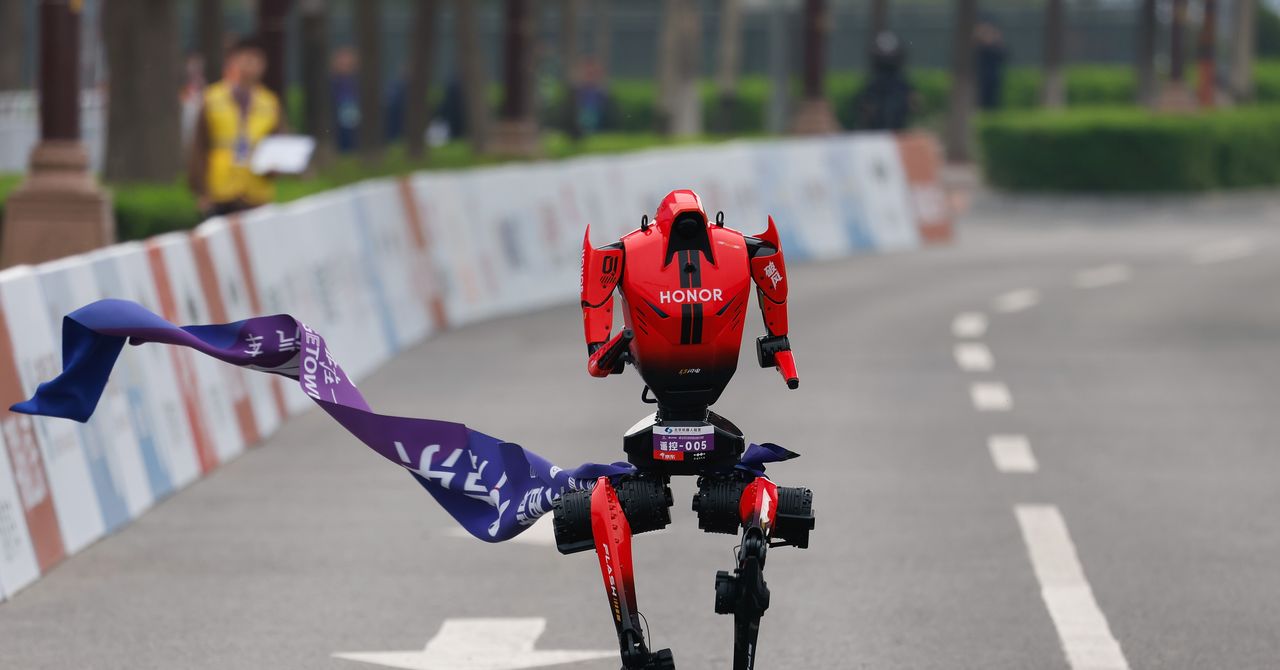
Over the weekend in China, a humanoid robot shattered world half-marathon record—the human record—by seven minutes.
The star performer was a robot developed by the Chinese company Honor (the smartphone maker), which finished the 13.1-mile race in 50 minutes, 26 seconds. The human record, set by Ugandan Olympic medalist Jacob Kiplimo, is 57 minutes, 20 seconds. The result marks an impressive milestone especially considering that, just a year earlier, the fastest robot at this half-marathon event took two and a half hours to complete the same distance.
But Honor’s robot was not the only participant. The event consisted of more than 100 humanoid robots from 76 institutions across China. The robots lined up alongside 12,000 human runners in Beijing’s E-Town, albeit on separate courses to avoid accidents. The contrast in performance between humans and robots was more than evident.
Run, Robot, Run
A humanoid robot is designed to mimic the structure and movement of the human body, with legs, arms, and sensors that allow it to interact with its environment. In this case, the winning robot incorporated features inspired by elite runners: long legs (almost a meter), advanced balance systems, and a liquid cooling mechanism, similar to that of smartphones, to prevent overheating during the race.
In addition, many of the participating robots operated autonomously, meaning without direct human control. Thanks to artificial intelligence algorithms, they could adjust their pace, maintain balance, and adapt to the terrain in real time. Notably, the Honor robot that achieved the 50-minute mark operated autonomously. The Chinese manufacturer presented another robot, operated by remote control, that ran the same stretch in even less time: 48 minutes, 19 seconds.
As expected, there were some accidents in the race. Some robots fell down, others veered off the path, and several needed technical assistance along the way. While the physical performance of humanoid robots has advanced rapidly, their reliability is still developing. Of course, the laughter and jeers are no longer as frequent as they used to be, replaced by applause and exclamations of surprise.
Robot Superiority
Just like the robots that went viral for their impressive martial arts display a few weeks ago, this long-distance race is part of a broader strategy by China to show off its leadership in the development of advanced robots.
You don’t need to be a robotics expert to see that this achievement demonstrates that machines can outperform humans at specific physical tasks under controlled conditions. (It’s hard to imagine that the winning robot could achieve the same result, for example, if it started to rain during the race.) But humans still have a few tricks up their sleeve: Running in a straight line is very different from performing complex real-world activities, such as manipulating delicate objects or interacting socially.
However, it’s understandable that the image of a robot crossing the finish line in record time, ahead of human athletes, raises several questions. Is this the beginning of a new era in which machines redefine physical limits?
One could argue that a car is a machine, and those have always been faster than humans. But a humanoid robot is designed to mimic humans. It’s more alarming to see one beat humanity at its own game—even if so many of them are still tripping over themselves.
This story originally appeared in WIRED en Español and has been translated from Spanish.

As ceasefire announcements between the US and Iran—and separately between Israel and Lebanon—dominated headlines over the past two weeks, they also prompted a look back at how war spread online: through memes.
There were jokes about conscription. Captions about getting drafted, but at least with a Bluetooth device. The song “Bazooka” went viral, with users lip-syncing to: “Rest in peace my granny, she got hit by a bazooka.” Military filters followed. So did posts about Americans wanting to be sent to Dubai “to save all the IG models.”
Across the Gulf, the tone was different but the instinct was the same. Memes joked that Iran was replying to Israel faster than the person you’re thinking about. Delivery drivers were shown “dodging missiles.” “Eid fits” became hazmat suits and tactical vests.
Dark humor is one of the oldest responses to fear, a way of reclaiming control, however briefly, over events that offer none. Variations of that idea appear across psychology and philosophy, including Freud’s relief theory, which frames humor as a release of tension.
But social media changes the scale and speed of that instinct.
A joke once shared within a small community can become a global template in minutes. Algorithms do not reward depth or accuracy; they reward engagement. The memes that travel fastest are usually stripped of context, easy to recognize and simple to remix.
Middle East scholar and media analyst Adel Iskandar traces political satire back centuries, from banned satirical papyri in ancient Egypt to cartoons during revolutions and gallows humor in modern wars. “Where there is hardship, there is satire,” he says. “Where there is loss of hope, there is hope in comedy.”
That tradition still exists online. But today it is fused with recommendation systems designed to keep attention moving.
Memes Spread Faster Than Facts
The word “meme” was coined by Richard Dawkins in his 1976 book The Selfish Gene, where he described how ideas replicate like genes. On today’s internet, replication follows platform logic.
Fitness means generality. A meme does not need to be accurate. It needs to feel familiar. It needs the right format, paired with trending audio and the right emotional shorthand.
“A meme is like a virus,” Iskandar says. “If it doesn’t travel, it’ll die.”
The most visible response online is not always the truest one. It is often just the easiest to spread. And once context disappears, one crisis can start to resemble any other.
Geography shapes humor too, and adds another level of tension. “If you live far away from the threat, you’re capable of producing content that ridicules it with an element of safety,” says Iskandar. “Whereas if you happen to be within close proximity, it is more of a fatalism.”
That divide matters. For some users, war exists mainly as mediated spectacle: clips, edits, graphics, headlines, and reaction posts. For others, it is sirens, uncertainty, disrupted flights, rising prices, and messages checking who is safe.
The same meme can function as entertainment in one country and emotional survival in another. Take the American experience of violence, which Sut Jhally, professor of communication at the University of Massachusetts Amherst, says “is very mediated.”
What much of the Western world has consumed instead is what cultural critic George Gerbner called “happy violence”: spectacular, consequence-free, and detached from the aftermath.
Jhally argues that the September 11 attacks remain the defining modern American experience of war-adjacent political violence. Much else has been cinematic: distant invasions, blockbuster destruction, video-game logic, apocalypse franchises.
The teenager from the Midwest joking about being drafted is drawing from zombie films and superhero apocalypses. “There is almost no discussion about what an actual Third World War would look like,” he says. “People do not have a perception of what that really looks like.”
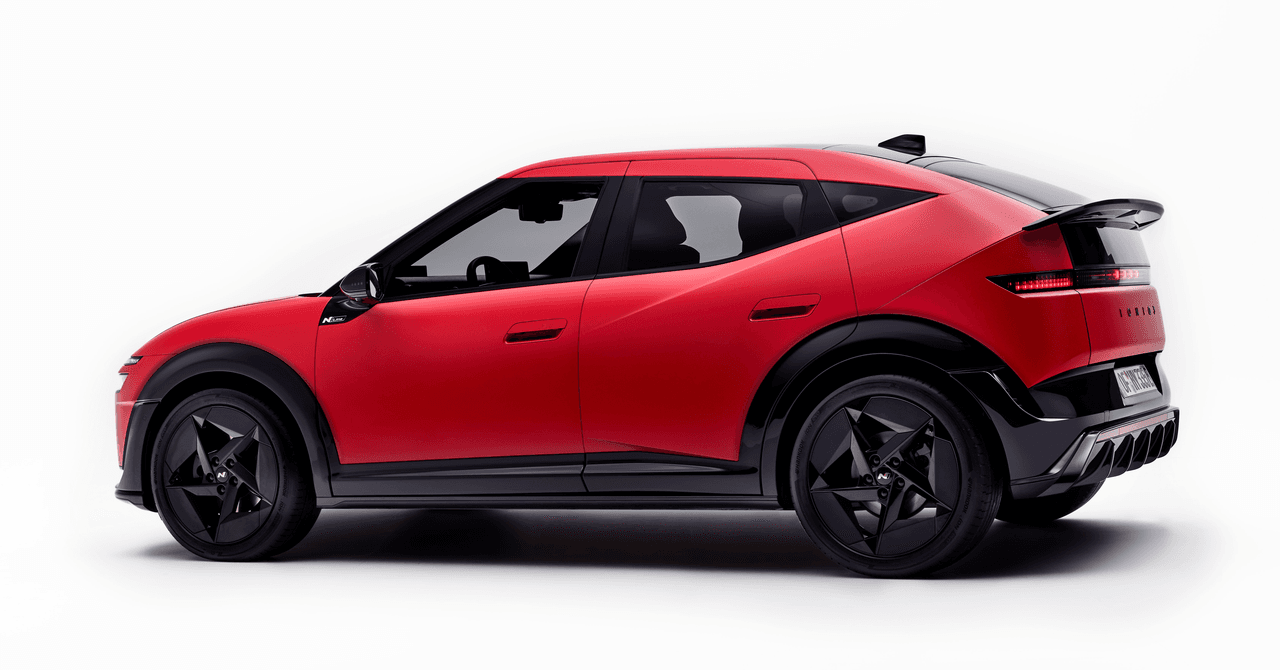
Hyundai has unveiled its Ioniq 3, a fully electric compact hatchback for urban driving designed to be as aerodynamically efficient as possible yet still offer up a surprisingly spacious interior—a trick the carmaker is loftily calling Aero Hatch. The 3 is intended to fill the gap between Hyundai’s Inster supermini and Ioniq 5 crossover.
In profile, the Ioniq 3 has a sleek front end that transitions into a roofline that stays straight over both front and rear occupants before dropping to merge with the rear spoiler. It’s this roofline that maximizes interior headroom for the rear passengers, but it also offers a supposed class-leading drag coefficient of 0.263.
The car has the same underpinnings as its sibling brand, Kia’s EV2. Two battery options will deliver a projected WLTP distance of 344 km (around 214 miles) for the Standard Range Ioniq 3; the Long Range version is supposedly good for a competitive 308-mile range. Built on the group’s Electric-Global Modular Platform (E-GMP), the car has a 400-volt architecture to lower costs rather than the 800-volt system of the Ioniq 5 N, 6, or 9 SUV. Still, this means that if you can find sufficiently fast DC charging, you can, in theory, top up from 10 to 80 percent in approximately 29 minutes (AC charging capability is up to 22 kW).
This is fine, but it is not a match for BYD’s new Blade 2.0 battery tech that WIRED tried, astonishingly allowing the Denza Z9 GT to charge its battery in just over nine minutes from 10 percent. True, that battery tech was in a $100,000 “premium” EV, but it’s coming to BYD’s wider models. And if BYD makes good on its plans to deliver a charging network to rival Tesla’s Supercharger, then very soon buyers will be expecting comparable charge times, and 30 minutes will quickly feel awfully long.
I asked José Muñoz, Hyundai Motor Company president and CEO, whether this new battery technology from BYD concerns him, whether Hyundai—leading the EV pack with 800-volt architectures for so long—needs to match the Blade 2.0’s performance. “We welcome the challenge,” Muñoz tells me. “Every challenge is an opportunity to do better. And I can tell you that, lately, we have a lot of opportunities to do better.”
“We are also working on fast charging,” Muñoz says, adding that Hyundai’s success will be built on not merely one leading technology but many. “There are not more elements that may be offered by the Chinese that we can offer. It’s only a matter of how you mix them. A lot of times, you get stuck into one indicator. I’m an engineer. And we always have the example of the airplanes: What is more important in an airplane, altitude or speed? There is only one answer. You need to achieve both.”


War-linked energy shock pushing inflation higher in Europe: IMF expert

Scam messages offering ships safe transit through Hormuz, warns security firm

Billions to be paid! US starts refund process for Trump tariffs: Can Indian exporters claim? – The Times of India

-

 Fashion5 days ago
France’s LVMH Q1 revenue falls 6%, shows resilience amid Iran war
-

 Sports1 week ago
The case for Man United’s Fernandes as Premier League’s best
-

 Entertainment1 week ago
Palace left in shock as Prince William cancels grand ceremony
-
 Business1 week ago
UK could adopt EU single market rules under new legislation
-

 Entertainment6 days ago
Is Claude down? Here’s why users are seeing errors
-

 Fashion1 week ago
Energy emerges as biggest cost driver in textile margins
-
 Business1 week ago
Delta Air Lines unveils first new Delta One suite in premium cabin arms race
-

 Tech1 week ago
A Lot of Shops Won’t Fix Electric Bikes. Here’s Why