

Business
More Indians travel solo this festive season, Atlys data shows – The Times of India


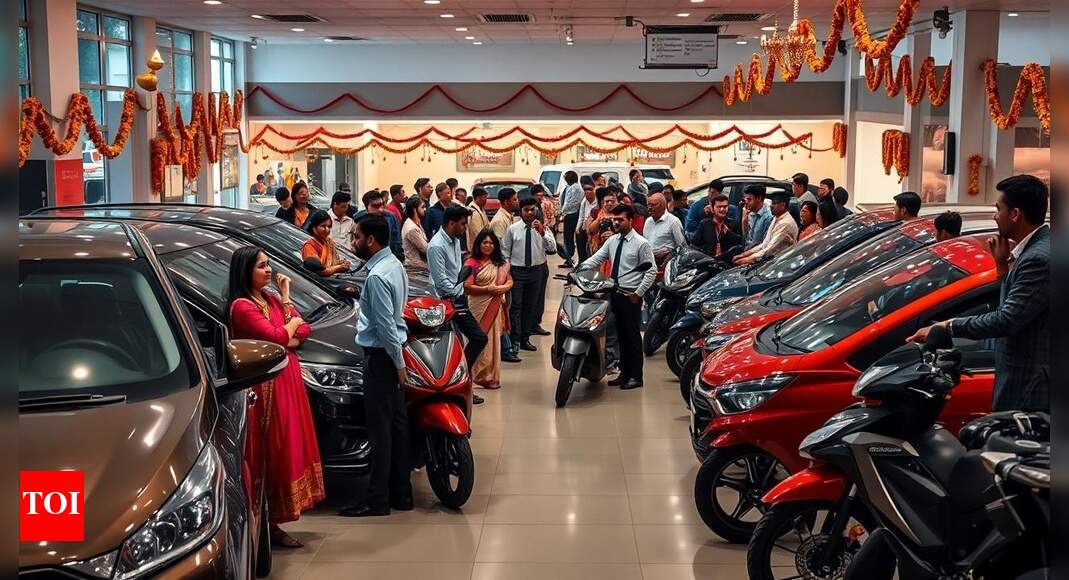
BENGALURU: Indian travellers are redefining the festive season, with solo trips and millennials leading the way. Visa platform Atlys said it processed around 15,000 visa applications for the travels in the month of October 2025, with 71.5% meant for solo travellers, signalling a shift from India’s family-centric holiday traditions. Millennials made up 53.5% of applicants, followed by Gen Z at 29.7% and Gen X at 14.6%, while men comprised 75.9% of total applications.Short-haul, affordable destinations dominated as the UAE, Thailand, Vietnam, Indonesia, Malaysia and Sri Lanka accounted for most outbound travel. Beyond Asia, Germany emerged as the top Schengen choice, with nearly two-thirds of visas issued for the country tied to Oktoberfest-related travel, largely from male solo travellers in their 20s and 30s.“Festive travel in India has always revolved around family reunions, but this year we’re witnessing something different,” said Mohak Nahta, founder and CEO of Atlys. “Travellers are using long weekends to explore new destinations and experiences abroad, turning traditional holidays into opportunities for cultural discovery.”Nahta added that consecutive long weekends and higher disposable incomes are prompting Indians to “plan smarter and explore more confidently.” Atlys said outbound visa demand has been steadily rising this year, with festivals increasingly becoming occasions for global exploration rather than just homecoming.




Last Updated:
HDFC Bank now offers airport lounge access via digital vouchers for debit cards, with a doubled Rs 10,000 quarterly spend. Physical card swipes are discontinued.



HDFC Bank Doubles Spend Requirement for Complimentary Lounge Access
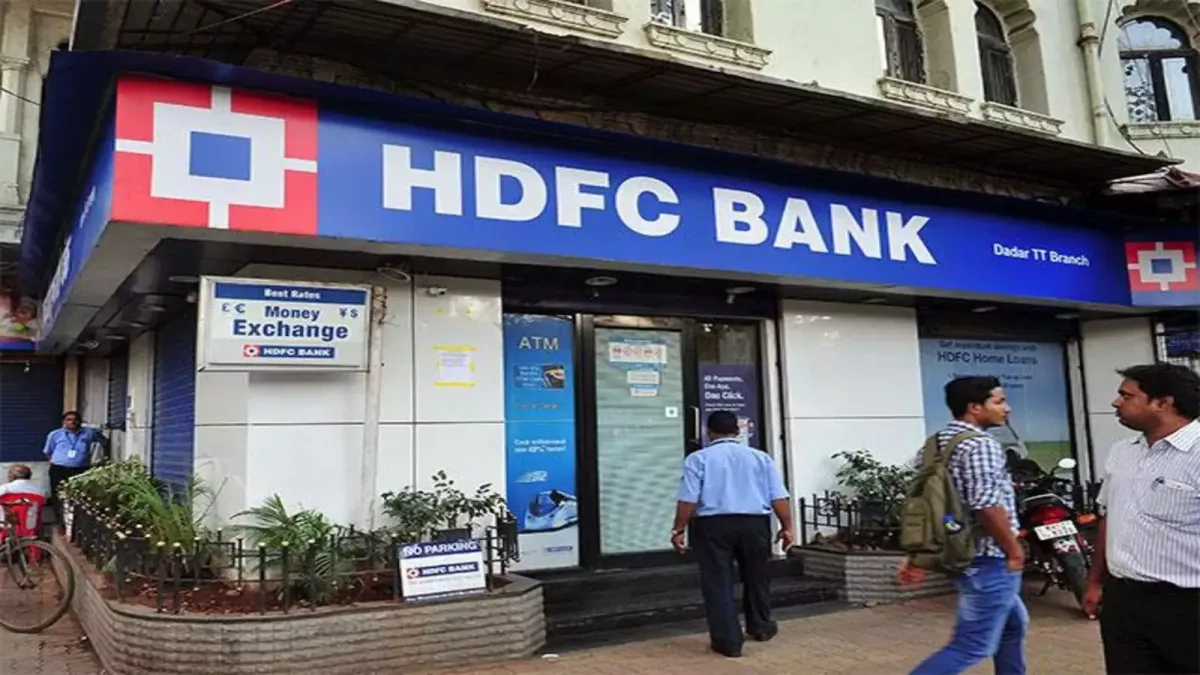
HDFC Bank Airport Lounge Access Rules 2026: HDFC Bank has revised the rules for complimentary airport lounge access on its debit cards, shifting to a voucher-based access system and increasing the minimum spending requirement. The changes have come into effect from today, January 10.
Until now, eligible debit cardholders could enter airport lounges by swiping their physical card. Under the new system, lounge access will be granted only through digital vouchers, issued to customers who meet the spending criteria.
Once eligibility is confirmed, the bank will send an SMS or email with a link to claim the voucher. Customers will need to complete OTP verification using their registered mobile number. After successful verification, a voucher code or QR code will be issued, which must be shown at the lounge for entry.
Minimum Spend Doubled For Most Cards
HDFC Bank has doubled the quarterly spend requirement for complimentary lounge access on most debit cards.
Customers must now spend Rs 10,000 or more per calendar quarter from Rs 5,000 earlier. The spend can be through single or multiple transactions, online or offline. The revised spending condition does not apply to the Infiniti Debit Card, which continues to offer lounge access without any minimum spend.
Complimentary Lounge Visits Remain Unchanged
The number of free lounge visits will continue to depend on the debit card variant:
Millennia Debit Card: 1 visit per quarter
Platinum Debit Card: 2 visits per quarter
Times Points Debit Card: 1 visit per quarter
Business Debit Card: 2 visits per quarter
GIGA Debit Card: 1 visit per quarter
Infiniti Debit Card: 4 visits per quarter
Only purchase transactions made using the debit card will count toward the quarterly spend. The following are excluded, Moneycontrol noted:
ATM Cash Withdrawals
- UPI or wallet payments (GPay, PhonePe, Paytm, etc.)
- Credit card bill payments via debit card
- Debit card EMI transactions
- New debit cardholders will also need to meet the Rs 10,000 spend threshold to become eligible.
Voucher Validity And Lounge Rules
Once issued, lounge vouchers will remain valid until the end of the next calendar quarter.
For instance:
Voucher generated on November 15, 2025 → valid till March 31, 2026
Voucher generated on January 10, 2026 → valid till June 30, 2026
Lounge access will continue on a first-come, first-served basis, with lounges retaining the right to impose stay limits—typically two to three hours—or deny entry due to operational, safety or regulatory reasons.
What this means For Customers
HDFC Bank’s updated lounge access programme places greater emphasis on higher card usage and digital verification. Customers who rely on complimentary lounge benefits will need to closely track their quarterly spending and note that physical debit card swipes will no longer work from January 10.
 Click here to add News18 as your preferred news source on Google.
January 10, 2026, 14:26 IST
Read More
Business
What Is Core-and-Satellite Strategy And How Can It Help Investors Navigate Market Volatility?

Last Updated:
The ‘core’ typically makes up around 60–70% of a portfolio and is meant to deliver stable returns while serving as its foundation.
Small and mid-cap stocks produced 14-17% returns in the last 20 years. (representative image)
Navigating financial markets often seems like an uphill task as investors need to balance the desire for growth with the fear of sudden downtrends. When markets fall, people struggle to find the right direction while chasing high returns and protecting their wealth from volatility. Too much risk can lead to panic mode, while excessive caution could leave your portfolio lagging behind inflation and long-term goals.
A practical solution here is the core-and-satellite strategy emerges as a practical solution. Under this, investors get to combine a stable “core” of diversified, low-cost investments with the dynamic “satellite” portion to target higher-growth opportunities. Not only does it allow them to achieve resilience and flexibility, but the strategy also ensures steady progress even during turbulent times. By following this dual approach, people can cushion portfolios against market downfalls.
How Does It Work?
According to Moneycontrol, the “core” usually accounts for nearly 60-70 per cent of the portfolio. It is specifically designed to provide steady returns and act as the anchor of your portfolio.
It comprises stable, low-cost funds:
1. Large-cap equity funds: Your hard-earned money gets invested in established companies having proven business models. Often, it is seen that they appear to fall less compared to mid and small-cap funds.
2. Flexi-cap funds: The fund managers keep shuffling the investment between large, mid and small caps, depending on the ongoing condition of the market. In simple terms, these add flexibility and diversification to the portfolio.
3. Hybrid funds: A combination of equity and debt, these are meant for growth and stability.
However, investors must note that even the “core” is not free from risk. Moneycontrol report highlights how markets fell nearly 14 per cent between October 2024 and February 2025.
The Role of Satellite Investments
Keeping core aside, the remaining 30-40 per cent is what makes up satellite investments.
“The satellite portfolio allows tactical exposure to high-growth sectors, themes, or strategies,” the report quoted Kirang Gandhi, a Pune-based financial mentor, as saying.
This includes mid-cap and small-cap funds that hold higher growth potential. Also, it features international equity funds.
This highlights that it is the growth engine of the portfolio, but also carries substantial risk.
A key part of the core-and-satellite approach is “balance,” where the core allows the money to grow steadily and the satellite portion adds more potential without putting the portfolio at risk.
In the last 20 years, the small and mid-cap indices have generated nearly 14-17 per cent returns on an annual basis, leaving behind large-cap indices. Investors must note that falls are more frequent in mid and small-cap stocks.
Using the core-and-satellite strategy, investors get to diversify their portfolio without making it too complicated.
Kirang Gandhi said this strategy combines safety with smart opportunity for Indian investors and avoids overexposure.
“It brings structure, discipline, and clarity to long-term wealth building without chasing trends,” Gandhi concluded.
Click here to add News18 as your preferred news source on Google.
January 10, 2026, 13:40 IST
Read More

BENGALURU: Masayoshi Son-led SoftBank Group pared its holding in Ola Electric Mobility to 13.5% from 15.6%, in what appears like a staggered exit from the electric 2-wheeler maker that was once among its marquee India bets. SVF II Ostrich (DE), a SoftBank affiliate and Ola Electric’s second-largest shareholder after founder Bhavish Aggarwal, sold 9.4 crore shares through open market transactions between Sept 3, 2025, and Jan 5, 2026, according to a regulatory filing.


‘West Wing’ actor Timothy Busfield faces heinous crime charges
HDFC Bank Changes Debit Card Lounge Access Rules From Today: What Cardholders Must Know

Our guide to the six NFL wild-card games: Matchup previews, bold predictions and X factors

-

 Entertainment3 days ago
Does new US food pyramid put too much steak on your plate?
-

 Sports5 days ago
VAR review: Why was Wirtz onside in Premier League, offside in Europe?
-

 Politics3 days ago
UK says provided assistance in US-led tanker seizure
-

 Politics5 days ago
China’s birth-rate push sputters as couples stay child-free
-

 Sports5 days ago
FACI invites applications for 2026 chess development project | The Express Tribune
-

 Sports5 days ago
Steelers escape Ravens’ late push, win AFC North title
-
 Business5 days ago
Aldi’s Christmas sales rise to £1.65bn
-

 Entertainment3 days ago
Why did Nick Reiner’s lawyer Alan Jackson withdraw from case?