Connect with us

Politics

Couple who transformed an abandoned Japanese home into a guesthouse

Published

on

Couple who transformed an abandoned Japanese home into a guesthouse


Editor’s Note: Sign up for Unlocking the World, CNN Travel’s weekly newsletter. Get the latest news in aviation, food and drink, where to stay and other travel developments.


CNN
 — 

He’d spent years backpacking around the world, and Japanese traveler Daisuke Kajiyama was finally ready to return home to pursue his long-held dream of opening up a guesthouse.

In 2011, Kajiyama arrived back in Japan with his Israeli partner Hila, who he met in Nepal, and the pair set about finding the perfect location for their future venture.

However, there were a couple of major stumbling blocks in their way. To start with, Kajiyama had very little money to speak of after years of globetrotting around destinations like Korea, Taiwan, India, Nepal, Guatemala, Cuba and Canada.

He also happened to have his heart set on a traditional Japanese house, typically known as kominka, which are usually passed down over generations.

“I wanted to have a traditional house in the countryside,” Kajiyama tells CNN Travel, explaining that he was determined to find two houses located next to each other, so that he and Hila could live in one, while the other would be a guesthouse that they’d run together. “I had a vision.”
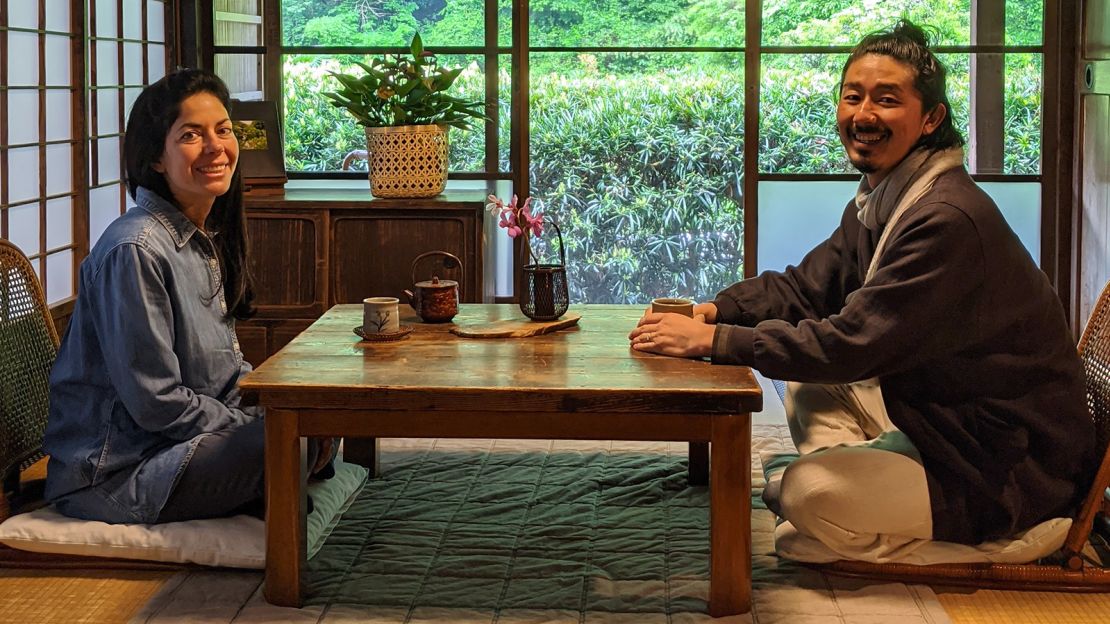
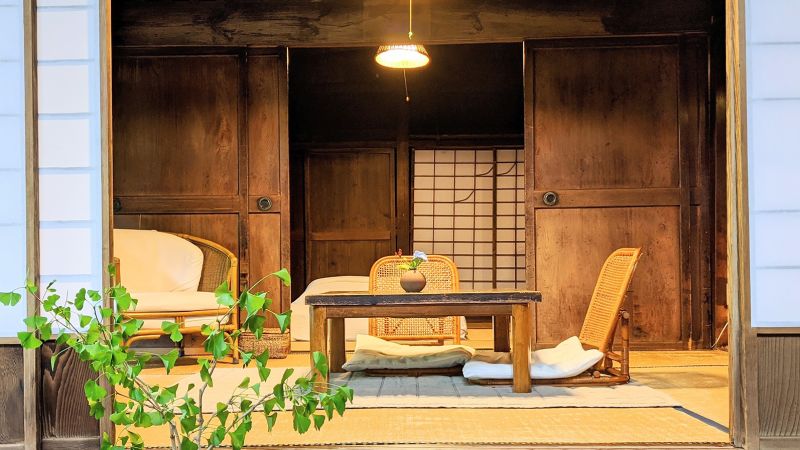
Daisuke and Hila Kajiyama transformed an abandoned farming residence in Japan into a guesthouse.

When he was unable to find anything that met his requirements, Kajiyama decided to shift his search to include the growing number of abandoned homes in the country.

As younger people ditch rural areas in pursuit of jobs in the city, Japan’s countryside is becoming filled with “ghost” houses, or “akiya.”

According to the Japan Policy Forum, there were 61 million houses and 52 million households in Japan in 2013, and with the country’s population expected to decline from 127 million to about 88 million by 2065, this number is likely to increase.

Kajiyama was driving around Tamatori, a small village located in the Shizuoka prefecture, between Kyoto and Tokyo, surrounded by green tea plantations and rice fields, when he came across an elderly woman farming, and decided to approach her.

“I said ‘Do you know if there are any empty houses around here?’ And she just pointed,” he recalls.

He looked over at the area that she was signaling to and spotted two neglected houses side by side – a former green tea factory and an old farmer’s home – located close to a river.

Both properties had been uninhabited for at least seven years and needed a huge amount of work. Kajiyama asked the woman to contact the owner to find out if they’d be interested in selling.

“The owner said that no one could live there, as it was abandoned,” he says. “But he didn’t say ‘no.’ Everybody was always saying ‘no.’ But he didn’t. So I felt there was a small chance.”
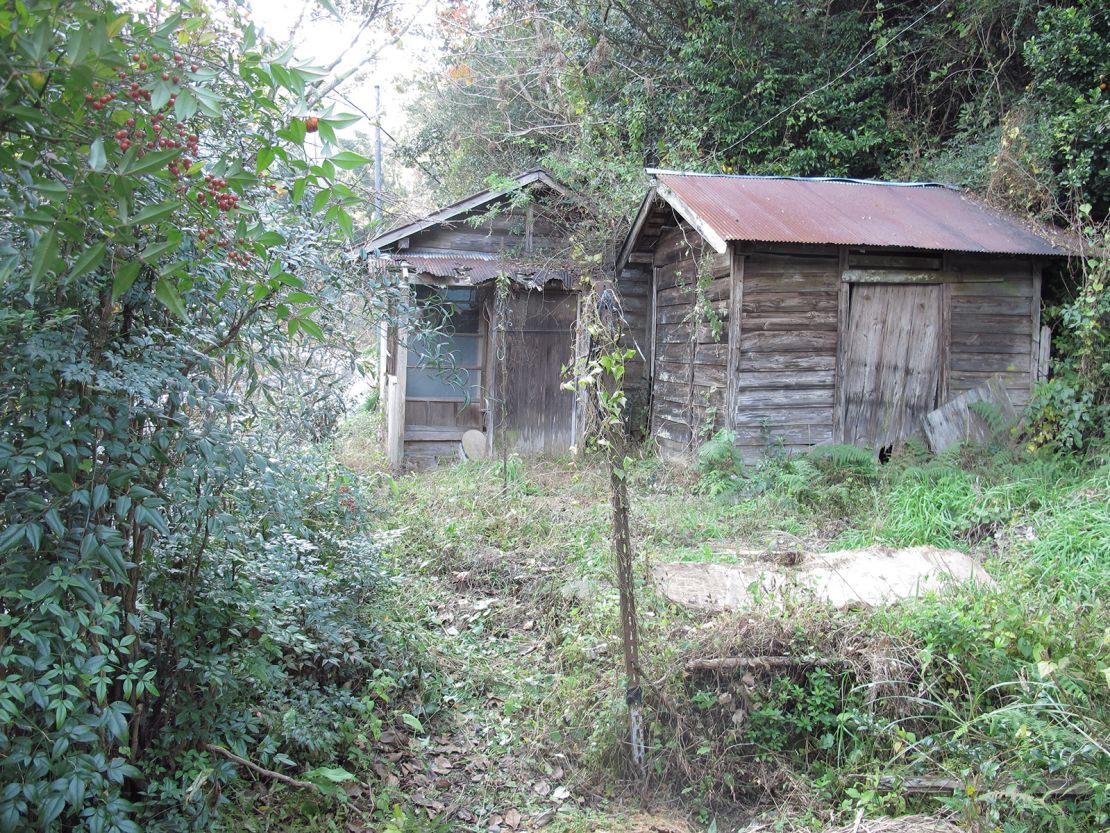
Japan's countryside is littered with ghost houses, known as

Kajiyama returned to visit the houses around five times, before going to visit the owner himself to negotiate an agreement that would see him use the old green tree factory as a home, and convert the farmer’s house into the guesthouse he’d always envisioned.

While he was keen to purchase both of the homes, he explains that the traditions around home ownership in Japan mean that he is unable to do so until it’s passed down to the son of the current owner.

“They said ‘if you take all the responsibility yourself, you can take it.’ So we made an agreement on paper,” he says.

Both he and Hila were aware that they had a lot of work ahead of them, but the couple, who married in 2013, were thrilled to be one step closer to having their own guesthouse in an ideal spot.

“It’s a very nice location,” says Kajiyama. “It’s close to the city, but it’s really countryside. Also people still live here and go to work [in the city].

“The house is also in front of the river, so when you go to sleep you can hear the sound of the water.”

According to Kajiyama, the process of clearing the house, which is around 90 years old, before beginning the renovation works was one of the hardest parts of the process, simply because there was so much stuff to sort through. However, he was able to repurpose some of the items.

During the first year, he spent a lot of time connecting with locals, gaining knowledge about the home, and helping the local farmers with farming for the first year or so.
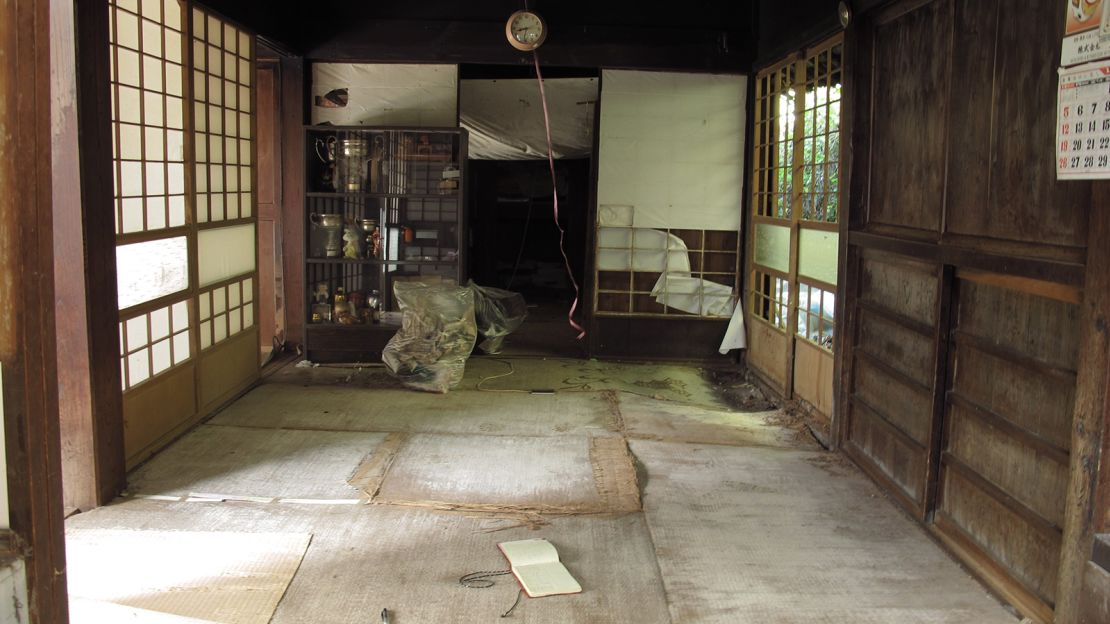
He spent around $40,000 renovating the house, completing much of the work himself.

Although he wasn’t hugely experienced with renovation work, he had spent some time farming and completing building while he was backpacking, and had also taken odd jobs fixing peoples homes.

He completed much of the work on the guesthouse himself, replacing the floors and adding in a toilet, which he says was a wedding present from his parents, at a cost of around $10,000.

“I’m not really a professional,” he says.” I like to do carpentry and I enjoy creating things, but I have no experience in my background.

“From my several years of backpacking, I saw so many interesting buildings, so many houses of interesting shapes and I’ve been collecting those in my brain.”

Kajiyama was determined to keep the house as authentic as possible by using traditional materials.

He saved money by collecting traditional wood from building companies who were in the process of breaking down traditional houses.

“They need to spend the money to throw it away,” he explains. “But for me, some of the stuff is like treasure. So I would go and take the material that I wanted.

“The house is a very, very old style,” he says. “So it wouldn’t look nice if I brought in more modern materials. It’s totally authentic.”

He explains that very little work had previously been done to the house, which is quite unusual for a home built so many years ago.

“It’s totally authentic,” he says. “Usually, with traditional houses, some renovations are made to the walls, because the insulation is not so strong. So you lose the style.”
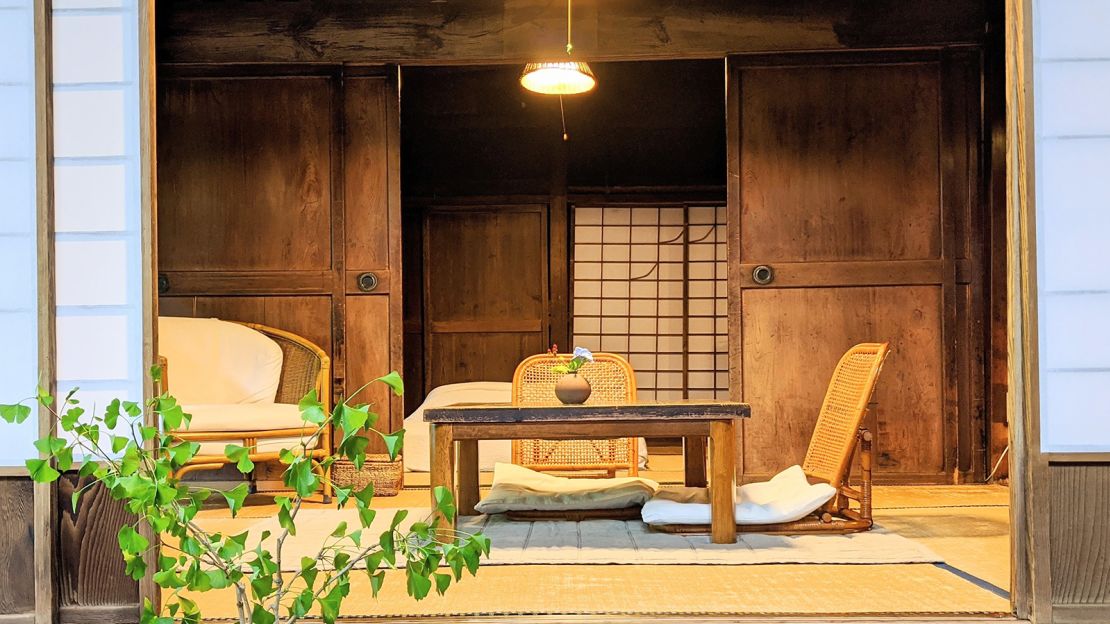
Yui Valley welcomed its first guests in 2014.

He says he received some financial support from the government, which meant he was able to bring in a carpenter and also benefited from Japan’s working holiday program, which allows travelers to work in exchange for food and board, when he needed extra help.

After doing some research into Japanese guesthouse permits, he discovered that one of the simplest ways to acquire one would be to register the property as an agriculture guesthouse.

As the area is filled with bamboo forests, this seemed like a no-brainer, and Kajiyama decided to learn everything he could about bamboo farming so that he could combine the two businesses.

“This is how I started farming,” he says.

In 2014, two years after they began working on the house, the couple were finally able to welcome their first guests.

“It was a beautiful feeling,” says Kajiyama. “Of course, this was my dream. But people really appreciate that it was abandoned and I brought it back to life.”

He says that hosting guests from all over the world has helped him to stay connected to his former life as a backpacker.

“I stay in one place, but people come to me and I feel like I’m traveling,” he says. “Today, it’s Australia, tomorrow it’s the UK and next week South Africa and India.

“People come from different places and they invite me to join them for dinner, so sometimes I join someone’s family life.”

Sadly, Hila passed away from cancer in 2022. Kajiyama stresses that his beloved wife played a huge part in helping him achieve his dream of having a guesthouse and says he couldn’t have done it without her.

“We were really together,” he adds. “She created this place with me. Without her it would not have been like this.”

While the three-bedroom guesthouse, which measures around 80 square meters, has been open for around eight years, Kajiyama is still working on it, and says he has no idea when he’ll be finished.

“It’s never ending,” he admits. “I’m halfway, I feel. It is beautiful already. But it started off abandoned, so it needs more details. And I’m getting better at creating, so I need time to do it.”
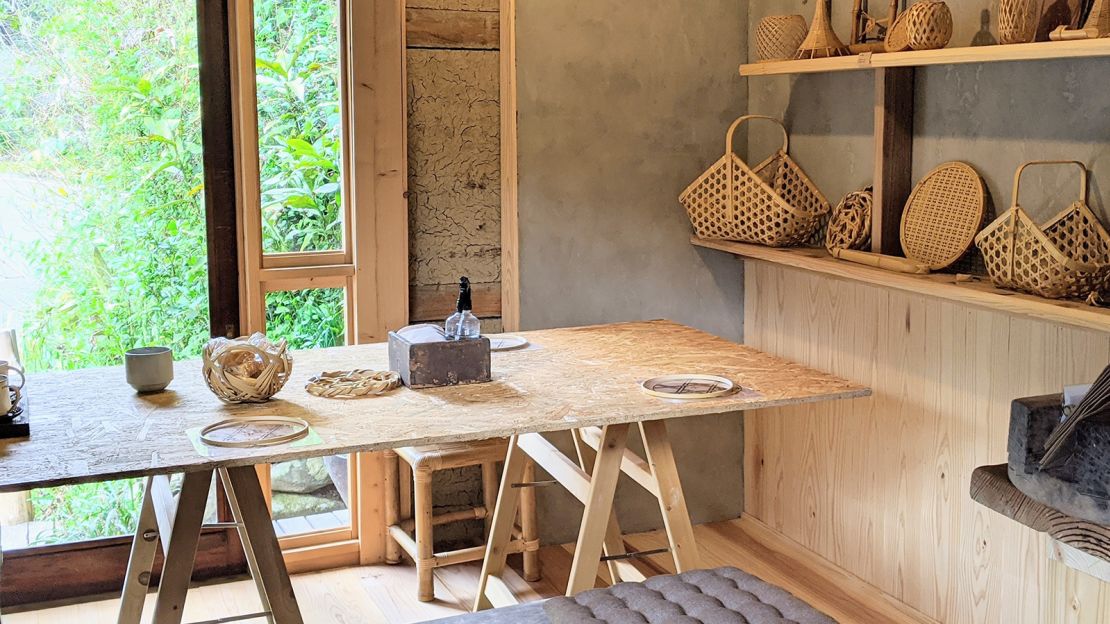
The guesthouse has three bedrooms, which are available to rent for around $120 a night.

He explains that he’s unable to complete work on the home while guests are there. And while the property is closed during the winter, he spends two months as a bamboo farmer and usually spends a month traveling, which doesn’t leave him much time for renovations.

“Sometimes I don’t do anything,” he admits.

Yui Valley, which offers activities such as bamboo weaving workshops, has helped to bring many travelers to the village of Tamatori over the years.

“Most of the guests come after Tokyo, and it’s such a contrast,” he says. “They are really happy to share the nature and the tradition in our house.

“Most people have dreamed of coming to Japan for a long time and they have a very short time here.

“So they have such a beautiful energy. I’m happy to host in this way and join their holiday time. It’s very special [for me].”

Kajiyama estimates that he’s spent around $40,000 on the renovation work so far, and if the feedback from guests, and locals, is anything to go by, it seems to have been money well spent.

“People appreciate what I’ve done,” he adds. “So that makes me feel special.”

As for Hiroko, the woman who pointed out the house to him over a decade ago, Kajiyama says she’s stunned at the transformation, and is amazed at how many international travelers are coming to Tamatori to stay at Yui Valley.

“She cannot believe how much more beautiful it is 1755387117,” he says. “She didn’t think it was going to be like this. So she really appreciates it. She says ‘thank you’ a lot.”

Yui Valley, 1170 Okabecho Tamatori, Fujieda, Shizuoka 421-1101, Japan


Source link

Continue Reading
Click to comment

Leave a Reply

Your email address will not be published. Required fields are marked *

Politics

Trump says killings in Iran subsiding as experts warn on military intervention

Published

on

Trump says killings in Iran subsiding as experts warn on military intervention


US President Donald Trump looks on as he signs executive orders and proclamations in the Oval Office at the White House, in Washington, DC on May 5, 2025. — Reuters
  • Trump says “we are going to watch” process in Iran.
  • Gulf Arab countries concerned about US strikes.
  • Trump aides reviewing a range of options, says source.

US President Donald Trump said on Wednesday that killings in Iran’s crackdown on nationwide protests were subsiding and he believed there was no plan for large-scale executions of protesters, as analysts and diplomats warned of possible risks from a US military intervention.

Trump’s comments during an Oval Office event come as fears have escalated in the Middle East that the United States could launch strikes on Iran, following the US president’s repeated threats to intervene on behalf of protesters. He did not rule out possible US military intervention, however.

Some experts and regional diplomats warn that military intervention could backfire by smothering protests, fueling an intensified crackdown on those who participated and triggering retaliatory Iranian missile attacks on US bases in the Middle East.

In a more extreme scenario, several said, US strikes might hasten the government’s collapse, possibly unleashing chaos across the nation of 90 million, encouraging insurgencies by minority Kurdish and Baluch separatists and leaving Iran’s nuclear and missile programs unsecured.

Still, several US intelligence assessments earlier this week concluded that while the protests posed a serious challenge, the government did not appear close to collapsing, according to four knowledgeable sources.

“We have restive ethnic minorities. We have loose undeclared fissile materials. We have dispersed missile stocks with no command and control, and we have had for over a decade refugee flows … and significant atrocities are happening,” said Behnam Ben Taleblu, an analyst with the Foundation for the Defense of Democracies. “All the fears that would come with regime change would be expedited.”

Meanwhile, Iranian Foreign Minister Abbas Araqchi said “there is no plan” by Iran to hang people, when asked about the anti-government protests in the Middle Eastern nation.

“There is no plan for hanging at all,” the foreign minister told Fox News in an interview on the “Special Report with Bret Baier” show. “Hanging is out of the question,” he said.

The protests appear to be the biggest domestic challenge Iran’s clerical establishment has faced since it took power in the 1979 Islamic Revolution, with massive crowds demanding the government’s ouster and clashing with security forces.

An Iranian official has said more than 2,000 people have died since the protests erupted on December 28. A rights group put the number of deaths at more than 2,600. Many experts believe the toll is much higher.

The White House and the Iranian delegation to the United Nations did not immediately respond to a request for comment.

Trump on Wednesday said “very important sources on the other side” had reported that killings in Iran’s crackdown were subsiding, and that he believed there was currently no plan for large-scale executions.

He did not rule out potential US military action, saying “we are going to watch what the process is” before noting the US administration received a “very good statement” from Iran.

Concern in the Middle East

Gulf Arab governments “are freaking out” over possible US strikes, said a regional diplomat, speaking on condition of anonymity. “In every conversation they are having with the Americans and Iranians, (the Gulf governments) have been asking them to calm down.”

Trump’s earlier warnings of intervention assumed fresh weight on Wednesday as the US began withdrawing some personnel in the region after a senior Iranian official said neighboring countries had been told that American bases would be struck in retaliation.

Not everyone expressed concern over possible US strikes.

Abdullah Mohtadi, the leader of the Komala Party of Iranian Kurdistan, a leading Kurdish party that advocates a secular democracy, dismissed the threat of separatism and said only significant US strikes can halt widespread killings of protesters by the security forces.

“The chaos is already there. The most important thing is to stop the massacre of people,” said Mohtadi, who lives in exile in London, adding that he believes opposition groups could work together to replace the theocratic government with democratic rule.

Trump, who ordered strikes on three Iranian nuclear sites in June during a 12-day war between Israel and Iran, has declined to reveal what action he would take.

One source said that Trump aides have been reviewing a range of options, including limited strikes on symbolic military targets.

Some experts said that with his repeated vows to act, Trump may have left himself little choice but to intervene should the security forces pursue their harsh crackdown.

Otherwise, they said, he risks losing credibility.

The key question, said Taleblu, is what targets would be hit.

“The nature of the target can impact the next round of protests or dampen them altogether if the population senses that Washington’s strikes are merely symbolic … and will have no meaningful impact on the security forces,” he said.

Trump could have a greater impact by interrupting Iran’s cash flows and waging cyber-attacks, giving the protests more time to play out, said Jon Alterman of the Center for Strategic and International Studies think tank.

“A military action would make everyone expect an instant result or complain it wasn’t working,” he said.

Trump has been intent on keeping up pressure on Iran after strikes on its nuclear sites in June, a White House official said. His campaign against Tehran, including both actions and the latest rhetoric, is also intended to show US adversaries that he is not shy about using US military might, the official said, citing the attack on Venezuela that toppled the country’s authoritarian leader Nicolas Maduro in early January.


Source link

Continue Reading

Politics

Iran rejects reports of protesters’ executions

Published

on

Iran rejects reports of protesters’ executions


Iranian Foreign Minister Abbas Araqchi adjusts glasses during a press conference following talks with Russian Foreign Minister Sergei Lavrov in Moscow, Russia, December 17, 2025. — Reuters

WASHINGTON: Iranian Foreign Minister Abbas Araqchi said on Wednesday that “there is no plan” by Iran to hang people, when asked about the anti-government protests in the Middle Eastern nation.

“There is no plan for hanging at all,” the foreign minister told Fox News in an interview on the Special Report with Bret Baier show. “Hanging is out of the question,” he said.

According to the Norway-based Iran Human Rights Society, hangings are common in Iranian prisons.

In an interview with CBS News on Tuesday, US President Donald Trump said he would take “very strong action” if Iran started hanging protesters, but did not elaborate on his comments. “If they hang them, you’re going to see some things,” Trump said.

Trump said on Wednesday that he was told that killings in the Iranian government’s crackdown on the protests were subsiding and that he believed there was currently no plan for large-scale executions.

Trump has been weighing a response to the situation in Iran, which is seeing its biggest anti-government protests in years.

Iran had a 12-day war with US ally Israel last year and its nuclear facilities were bombed by the US military in June. Trump has been piling pressure on Iran’s leaders, including threatening military action.

The protests posed one of the gravest tests of clerical rule in the country since the Islamic Revolution in 1979, as they evolved from complaints about dire economic hardships to defiant calls for the fall of the deeply entrenched clerical establishment.

The US-based HRANA rights group said it had so far verified the deaths of 2,403 protesters and 147 government-affiliated individuals. HRANA reported 18,137 arrests so far.

Iran’s government blames foreign sanctions for economic difficulties and alleges that its foreign enemies are interfering in domestic affairs.


Source link

Continue Reading

Politics

Denmark says White House talks failed to alter US designs on Greenland

Published

on

Denmark says White House talks failed to alter US designs on Greenland


Danish Foreign Minister Lars Lokke Rasmussen (left) and Greenlandic Foreign Minister Vivian Motzfeldt speak to the media at the Danish Embassy on January 14, 2026 in Washington, DC. — AFP
  • Danish, Greenland ministers meet Vance and Rubio at White House.
  • Trump insists Nato to back United States’s bid to control Greenland.
  • Copenhagen boosts military presence, launches Arctic exercises.

Denmark’s top diplomat said on Wednesday he failed to change the mind of US President Donald Trump’s administration on his threats to seize Greenland after flying to the White House for talks.

The foreign ministers of Denmark and Greenland, an autonomous territory of Copenhagen, met with Vice President JD Vance and Secretary of State Marco Rubio in what they hoped would clear up “misunderstandings” after Trump’s bellicose language toward the Nato ally.

“We didn’t manage to change the American position. It’s clear that the president has this wish of conquering over Greenland,” Danish Foreign Minister Lars Lokke Rasmussen told reporters after the meeting.

“And we made it very, very clear that this is not in the interest of the kingdom.”

The minister said a US takeover of Greenland, where Washington has long had a military base, was “absolutely not necessary.”

He said the issue was “very emotional” for the people of Greenland and Denmark, a steadfast US ally whose troops died alongside Americans in Afghanistan and, controversially, Iraq.

“Ideas that would not respect territorial integrity of the Kingdom of Denmark and the right of self-determination of the Greenlandic people are, of course, totally unacceptable,” Lokke said.

“We therefore still have a fundamental disagreement, but we also agree to disagree.”

He said the two sides would form a committee that would meet within weeks to see if there was possible headway.

Trump insisted hours before the talks that Nato should support the US effort to take control of Greenland, even though major European allies have all lined up to back Denmark.

Trump said Greenland was “vital” for his planned Golden Dome air and missile defense system.

“Anything less than that is unacceptable,” he wrote on his Truth Social network. “IF WE DON’T, RUSSIA OR CHINA WILL, AND THAT IS NOT GOING TO HAPPEN!”

Mocking tone

While the talks were underway, the White House posted on X: “Which way, Greenland man?”

The post included a drawing of two dogsleds — one heading towards the White House and a huge US flag, and the other towards Chinese and Russian flags over a lightning-bathed Kremlin and Great Wall of China.

Neither country has claimed Greenland, and Lokke said no Chinese ship had been spotted there in a decade.

Denmark promised ahead of the meeting to ramp up military presence further in the vast, sparsely populated and strategically located island.

Trump has derided recent Danish efforts to increase security for Greenland as amounting to “two dogsleds.” Denmark says it has invested almost $14 billion in Arctic security.

The row over Greenland has deeply shaken transatlantic relations. Both Denmark and Greenland insist only Greenlanders should decide the autonomous island’s fate.

In the quiet streets of the capital Nuuk, red and white Greenlandic flags were flying in shop windows, on apartment balconies, and on cars and buses, in a show of national unity as the talks got underway.

“We are standing together in these times when we might feel vulnerable,” the Nuuk municipality wrote on Facebook.

Greenland’s leader said on Tuesday that the island prefers to remain part of Denmark, prompting Trump to say “that’s going to be a big problem for him.”

Vance, who slammed Denmark as a “bad ally” during a visit to Greenland last year, is known for a hard edge, which was on display when he publicly berated Ukrainian President Volodymyr Zelensky in the Oval Office last February.

The meeting, however, was closed to the press, meaning there was no on-camera confrontation.

Emboldened by Venezuela

Danish Defence Minister Troels Lund Poulsen told AFP earlier Wednesday his country was boosting its military presence in Greenland and was in talks with NATO allies.

The Danish defence ministry then announced that it would do so “from today,” hosting a military exercise and sending in “aircraft, vessels and soldiers.”

Swedish officers were joining the exercise at Denmark’s request, Stockholm said.

Trump has appeared emboldened on Greenland — and on what he views as the US backyard as a whole — since ordering a deadly January 3 attack in Venezuela that removed president Nicolas Maduro.

The White House has repeatedly said military action against Greenland remains on the table.


Source link

Continue Reading

Trending