Connect with us

Politics

Couple who transformed an abandoned Japanese home into a guesthouse

Published

on

Couple who transformed an abandoned Japanese home into a guesthouse


Editor’s Note: Sign up for Unlocking the World, CNN Travel’s weekly newsletter. Get the latest news in aviation, food and drink, where to stay and other travel developments.


CNN
 — 

He’d spent years backpacking around the world, and Japanese traveler Daisuke Kajiyama was finally ready to return home to pursue his long-held dream of opening up a guesthouse.

In 2011, Kajiyama arrived back in Japan with his Israeli partner Hila, who he met in Nepal, and the pair set about finding the perfect location for their future venture.

However, there were a couple of major stumbling blocks in their way. To start with, Kajiyama had very little money to speak of after years of globetrotting around destinations like Korea, Taiwan, India, Nepal, Guatemala, Cuba and Canada.

He also happened to have his heart set on a traditional Japanese house, typically known as kominka, which are usually passed down over generations.

“I wanted to have a traditional house in the countryside,” Kajiyama tells CNN Travel, explaining that he was determined to find two houses located next to each other, so that he and Hila could live in one, while the other would be a guesthouse that they’d run together. “I had a vision.”
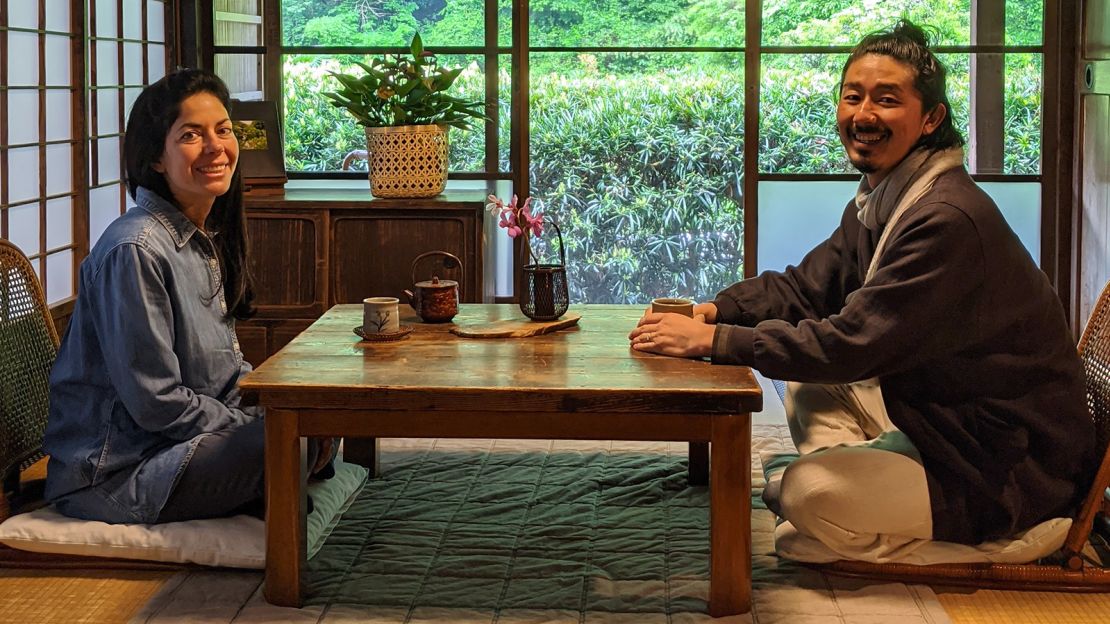
Daisuke and Hila Kajiyama transformed an abandoned farming residence in Japan into a guesthouse.

When he was unable to find anything that met his requirements, Kajiyama decided to shift his search to include the growing number of abandoned homes in the country.

As younger people ditch rural areas in pursuit of jobs in the city, Japan’s countryside is becoming filled with “ghost” houses, or “akiya.”

According to the Japan Policy Forum, there were 61 million houses and 52 million households in Japan in 2013, and with the country’s population expected to decline from 127 million to about 88 million by 2065, this number is likely to increase.

Kajiyama was driving around Tamatori, a small village located in the Shizuoka prefecture, between Kyoto and Tokyo, surrounded by green tea plantations and rice fields, when he came across an elderly woman farming, and decided to approach her.

“I said ‘Do you know if there are any empty houses around here?’ And she just pointed,” he recalls.

He looked over at the area that she was signaling to and spotted two neglected houses side by side – a former green tea factory and an old farmer’s home – located close to a river.

Both properties had been uninhabited for at least seven years and needed a huge amount of work. Kajiyama asked the woman to contact the owner to find out if they’d be interested in selling.

“The owner said that no one could live there, as it was abandoned,” he says. “But he didn’t say ‘no.’ Everybody was always saying ‘no.’ But he didn’t. So I felt there was a small chance.”
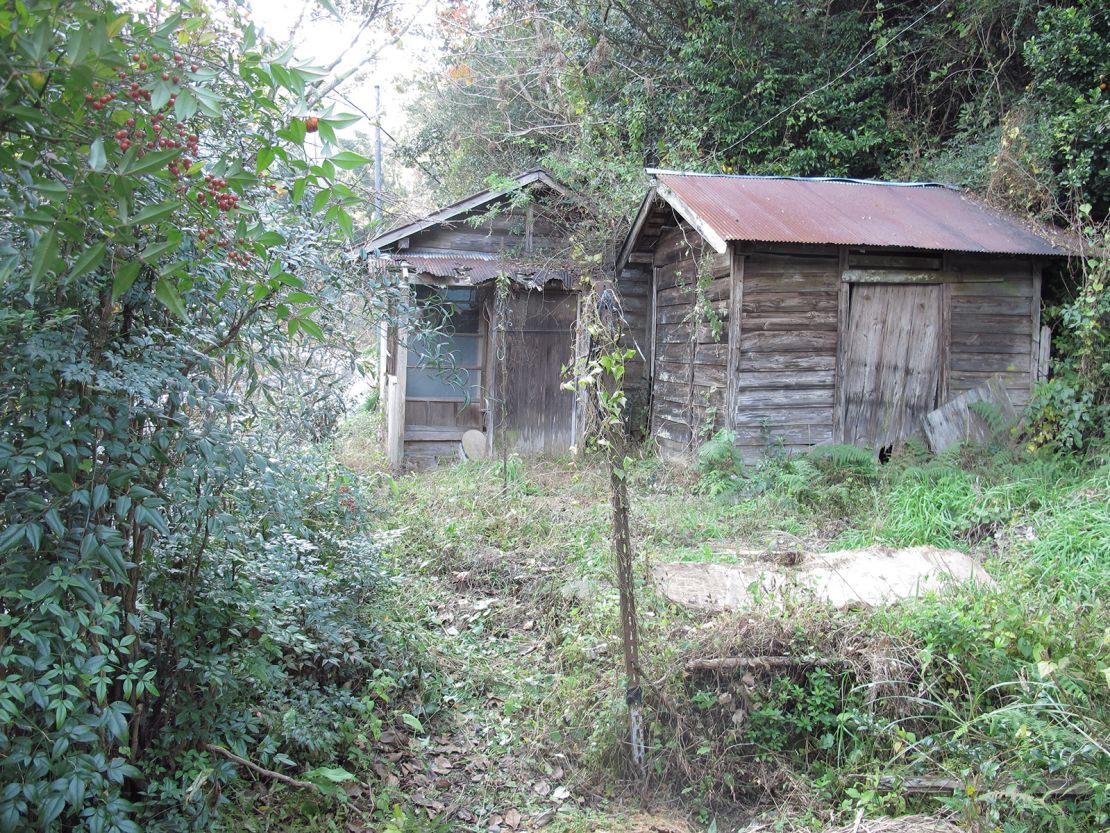
Japan's countryside is littered with ghost houses, known as

Kajiyama returned to visit the houses around five times, before going to visit the owner himself to negotiate an agreement that would see him use the old green tree factory as a home, and convert the farmer’s house into the guesthouse he’d always envisioned.

While he was keen to purchase both of the homes, he explains that the traditions around home ownership in Japan mean that he is unable to do so until it’s passed down to the son of the current owner.

“They said ‘if you take all the responsibility yourself, you can take it.’ So we made an agreement on paper,” he says.

Both he and Hila were aware that they had a lot of work ahead of them, but the couple, who married in 2013, were thrilled to be one step closer to having their own guesthouse in an ideal spot.

“It’s a very nice location,” says Kajiyama. “It’s close to the city, but it’s really countryside. Also people still live here and go to work [in the city].

“The house is also in front of the river, so when you go to sleep you can hear the sound of the water.”

According to Kajiyama, the process of clearing the house, which is around 90 years old, before beginning the renovation works was one of the hardest parts of the process, simply because there was so much stuff to sort through. However, he was able to repurpose some of the items.

During the first year, he spent a lot of time connecting with locals, gaining knowledge about the home, and helping the local farmers with farming for the first year or so.
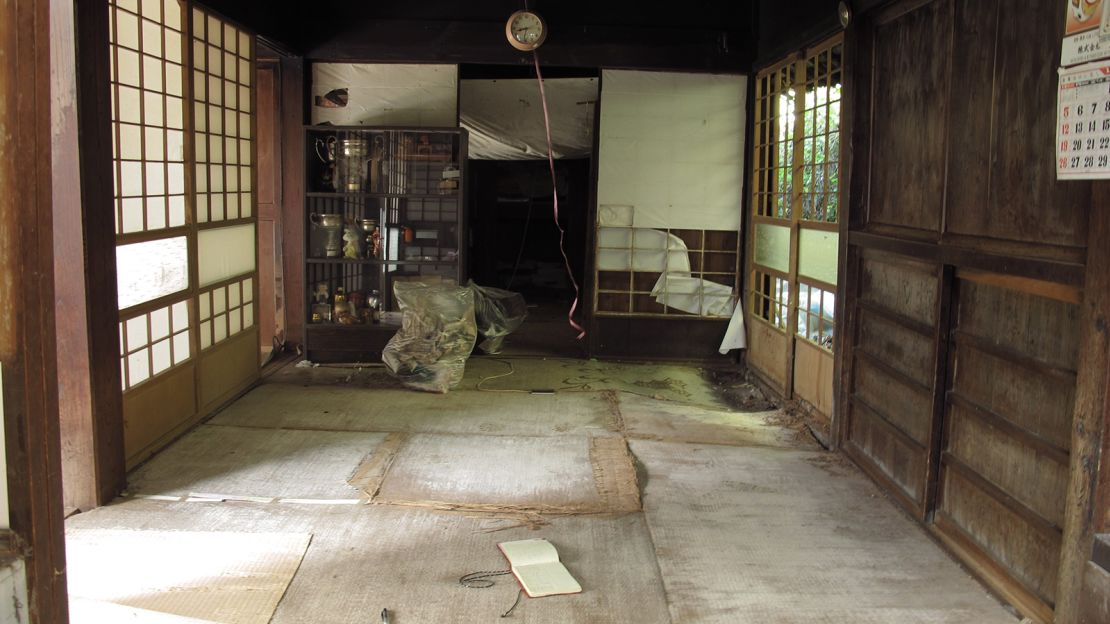
He spent around $40,000 renovating the house, completing much of the work himself.

Although he wasn’t hugely experienced with renovation work, he had spent some time farming and completing building while he was backpacking, and had also taken odd jobs fixing peoples homes.

He completed much of the work on the guesthouse himself, replacing the floors and adding in a toilet, which he says was a wedding present from his parents, at a cost of around $10,000.

“I’m not really a professional,” he says.” I like to do carpentry and I enjoy creating things, but I have no experience in my background.

“From my several years of backpacking, I saw so many interesting buildings, so many houses of interesting shapes and I’ve been collecting those in my brain.”

Kajiyama was determined to keep the house as authentic as possible by using traditional materials.

He saved money by collecting traditional wood from building companies who were in the process of breaking down traditional houses.

“They need to spend the money to throw it away,” he explains. “But for me, some of the stuff is like treasure. So I would go and take the material that I wanted.

“The house is a very, very old style,” he says. “So it wouldn’t look nice if I brought in more modern materials. It’s totally authentic.”

He explains that very little work had previously been done to the house, which is quite unusual for a home built so many years ago.

“It’s totally authentic,” he says. “Usually, with traditional houses, some renovations are made to the walls, because the insulation is not so strong. So you lose the style.”
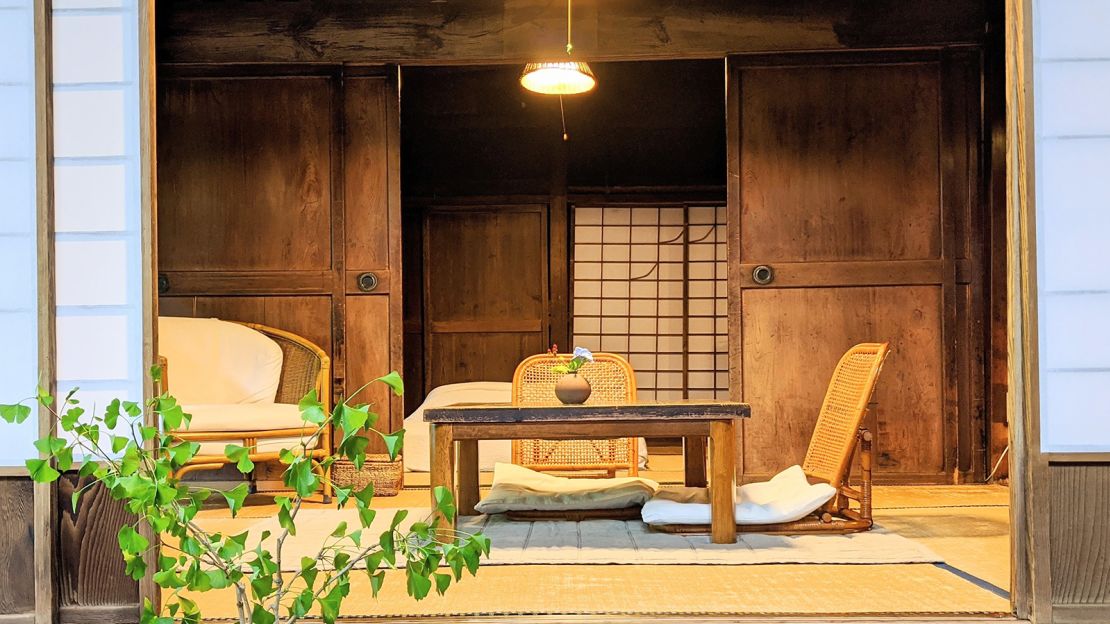
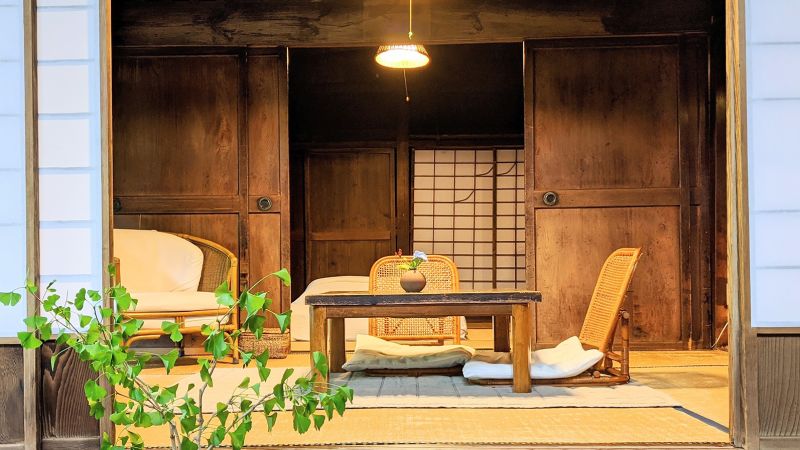
Yui Valley welcomed its first guests in 2014.

He says he received some financial support from the government, which meant he was able to bring in a carpenter and also benefited from Japan’s working holiday program, which allows travelers to work in exchange for food and board, when he needed extra help.

After doing some research into Japanese guesthouse permits, he discovered that one of the simplest ways to acquire one would be to register the property as an agriculture guesthouse.

As the area is filled with bamboo forests, this seemed like a no-brainer, and Kajiyama decided to learn everything he could about bamboo farming so that he could combine the two businesses.

“This is how I started farming,” he says.

In 2014, two years after they began working on the house, the couple were finally able to welcome their first guests.

“It was a beautiful feeling,” says Kajiyama. “Of course, this was my dream. But people really appreciate that it was abandoned and I brought it back to life.”

He says that hosting guests from all over the world has helped him to stay connected to his former life as a backpacker.

“I stay in one place, but people come to me and I feel like I’m traveling,” he says. “Today, it’s Australia, tomorrow it’s the UK and next week South Africa and India.

“People come from different places and they invite me to join them for dinner, so sometimes I join someone’s family life.”

Sadly, Hila passed away from cancer in 2022. Kajiyama stresses that his beloved wife played a huge part in helping him achieve his dream of having a guesthouse and says he couldn’t have done it without her.

“We were really together,” he adds. “She created this place with me. Without her it would not have been like this.”

While the three-bedroom guesthouse, which measures around 80 square meters, has been open for around eight years, Kajiyama is still working on it, and says he has no idea when he’ll be finished.

“It’s never ending,” he admits. “I’m halfway, I feel. It is beautiful already. But it started off abandoned, so it needs more details. And I’m getting better at creating, so I need time to do it.”
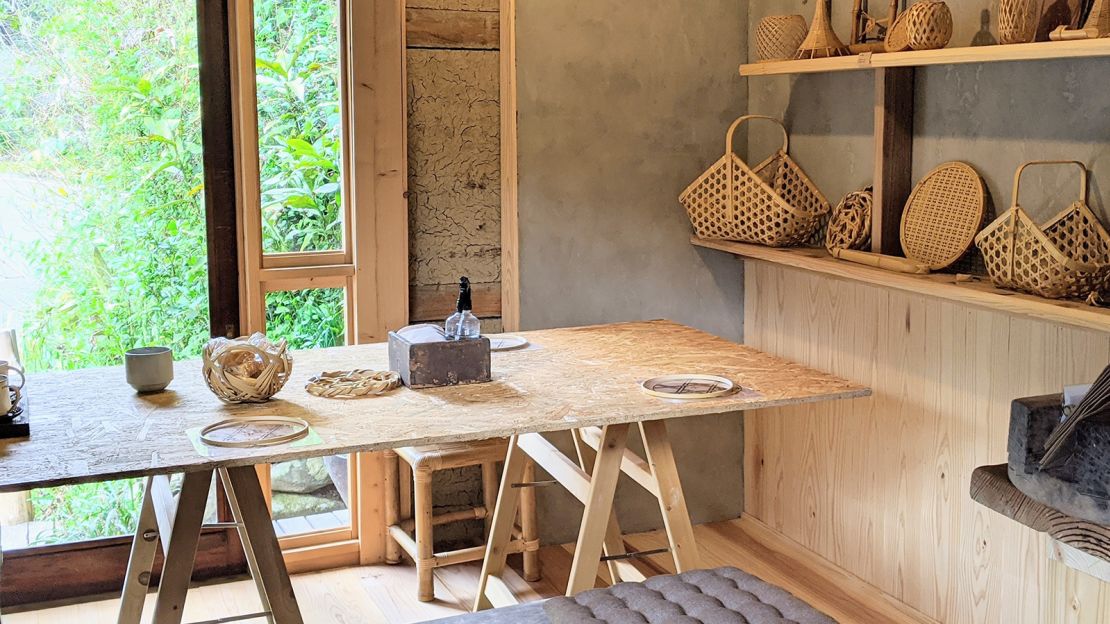
The guesthouse has three bedrooms, which are available to rent for around $120 a night.

He explains that he’s unable to complete work on the home while guests are there. And while the property is closed during the winter, he spends two months as a bamboo farmer and usually spends a month traveling, which doesn’t leave him much time for renovations.

“Sometimes I don’t do anything,” he admits.

Yui Valley, which offers activities such as bamboo weaving workshops, has helped to bring many travelers to the village of Tamatori over the years.

“Most of the guests come after Tokyo, and it’s such a contrast,” he says. “They are really happy to share the nature and the tradition in our house.

“Most people have dreamed of coming to Japan for a long time and they have a very short time here.

“So they have such a beautiful energy. I’m happy to host in this way and join their holiday time. It’s very special [for me].”

Kajiyama estimates that he’s spent around $40,000 on the renovation work so far, and if the feedback from guests, and locals, is anything to go by, it seems to have been money well spent.

“People appreciate what I’ve done,” he adds. “So that makes me feel special.”

As for Hiroko, the woman who pointed out the house to him over a decade ago, Kajiyama says she’s stunned at the transformation, and is amazed at how many international travelers are coming to Tamatori to stay at Yui Valley.

“She cannot believe how much more beautiful it is 1755387117,” he says. “She didn’t think it was going to be like this. So she really appreciates it. She says ‘thank you’ a lot.”

Yui Valley, 1170 Okabecho Tamatori, Fujieda, Shizuoka 421-1101, Japan



Source link

Continue Reading
Click to comment

Leave a Reply

Your email address will not be published. Required fields are marked *

Politics

Law firms helping migrants pose as gay to get asylum in UK: report

Published

on

Law firms helping migrants pose as gay to get asylum in UK: report


This representational image shows commuters cross London Bridge, in London, Britain, January 13, 2025. — Reuters
This representational image shows commuters cross London Bridge, in London, Britain, January 13, 2025. — Reuters 

LONDON: A BBC undercover investigation has alleged that a network of immigration advisers, paralegals and associated intermediaries has been helping migrants fabricate asylum claims in the UK by falsely presenting themselves as gay, charging thousands of pounds for false narratives, staged evidence and interview coaching.

At least three law firms – one of these owned by Pakistanis – have been accused by the BBC of fabricating the asylum claims through illegal means.

The law firms include Law and Justice Solicitors and Connaught Law. Law and Justice is owned by Michael Oluyemi Makinde and Connaught Law is owned by Nauman Javid, Sheryar Khan, Zehra Tamkan and Awais Javed.

According to the BBC investigation, the abuse centres on migrants, particularly from Pakistan and Bangladesh, whose student, work or tourist visas are close to expiring and who are then allegedly advised to seek asylum on the basis of sexual orientation, as being gay or lesbian.

Using undercover reporters posing as international students from Pakistan and Bangladesh, the BBC said it tested whether immigration advisers would encourage false sexuality-based asylum claims.

It reported finding multiple individuals willing to discuss fake claims, suggest supporting evidence and quote fees for handling such cases. Among the findings were allegations that Connaught Law firm quoted up to £7,000 for a fabricated claim and described the chances of refusal as “very low”, while another adviser allegedly offered to arrange fake supporting letters, photographs and even a supposed sexual partner to back up an asylum application.

The BBC undercover reporter made an appointment with Aqeel Abbasi, a senior legal adviser at Connaught Law, which has its offices in Central London on Gray’s Inn Road.

Abbasi told the BBC reporter that he could help him stay in the country and appeared to be willing to direct him on how to fabricate evidence for a fake claim. He promised that the chance of refusal by the Home Office was “very low”.

He said his fee would be £7,000 and, once that had been paid, his office would contact the undercover reporter to guide them through the process and the kind of evidence required.

This would include advising him on “where to go or what specific actions to take”.

The legal adviser also suggested the undercover reporter would need to find someone willing to pretend to be his male/gay partner. When the reporter said he had a wife in Pakistan, Abbasi was quick to suggest a cover story to explain this, by saying that things were “more open” in the UK than in Pakistan and that he now had a male partner.

“We will prepare a statement for you, and once you read it, you will understand exactly how it is,” said Abbasi.

A significant part of the investigation focused on Worcester LGBT, a support organisation for gay and lesbian asylum seekers, which holds monthly meetings attended by large numbers of migrants from across the country.

The BBC traced the undercover reporter’s route to the group through Mazedul Hasan Shakil, a paralegal at Law and Justice Solicitors, an immigration firm based in Birmingham and London, who is also described as founder and chairman of Worcester LGBT.

The reporter received a call from a woman identified as Tanisa (Shakil’s associate), who, in Urdu, allegedly became much more direct about using a “gay case” as the only realistic route to stay in Britain.

When told the reporter was not gay, Tanisa replied: “There is nobody who is real. There is only one way out in order to live here now and that is the very method everyone is adopting.” The BBC identified her as Tanisa Khan, an adviser linked to Worcester LGBT.

The broadcaster then described an initial meeting in Forest Gate, east London, which took place in Tanisa’s home.

According to the report, she laid out a plan to fabricate an asylum claim on the grounds of same-sex orientation, warning that the applicant would have to memorise a false story convincingly for Home Office interviews. The report said she offered to obtain a letter from someone claiming to have had sexual relations with the applicant and said she would fully prepare him for the Home Office process.

She charged £2,500, with additional costs if the claim failed and went to appeal. The BBC also said she suggested that if the reporter later brought his wife from Pakistan to Britain, she too could make a false asylum claim by pretending to be lesbian.

The BBC showed its footage to immigration lawyer Ana Gonzalez, who has 30 years of experience. She said Tanisa appeared to be “committing fraud by manufacturing a claim” and warned that such conduct makes life harder for genuine asylum seekers, especially LGBT claimants whose cases are often difficult to prove objectively.

The report said precise figures for fabricated claims are impossible to establish, but Home Office data suggests a disproportionate number of sexuality-based asylum claims come from Pakistani nationals.

In 2023, there were 3,430 initial decisions on LGBT asylum claims and nearly 1,400 new claims based on sexual orientation. Of these, 42% were lodged by Pakistani nationals, who also accounted for the highest number in each of the previous five years. The article noted that Pakistanis were only the fourth most common nationality across all asylum applications and made up just 6% of total claims overall.

Nearly two-thirds of asylum seekers claiming persecution on grounds of sexual orientation had their claims granted at initial decision stage in 2023.

The Home Office told the BBC that making an asylum claim through deception is a criminal offence and that anyone convicted can face prison and deportation.

It said misuse of protections designed for people fleeing genuine persecution because of their sexuality was deplorable, but insisted that the asylum system includes safeguards and that claims are rigorously assessed.

The department added that abuse is actively investigated and procedures are continually reviewed.


Source link

Continue Reading

Politics

Iran says to host Pakistani delegation as exchanges continue with US

Published

on

Iran says to host Pakistani delegation as exchanges continue with US


Iran will be hosting a high-ranking political and security delegation from Pakistan on Wednesday, as indirect exchanges of messages between Tehran and Washington continue, the Iranian Foreign Ministry spokesman announced.

Esmail Baghaei, speaking in response to a question from IRNA, confirmed that Tehran is expected to receive the Pakistani delegation today.

“Today, we are most likely hosting a delegation from Pakistan,” Baghaei said.

“Following the talks that took place in Islamabad, and also the discussions that the Pakistani side has had with the United States, our views have been conveyed and heard,” he said.

He added, “Naturally, during this visit, the two sides are expected to discuss their viewpoints in detail.”

Meanwhile, informed sources in Pakistan confirmed that a high-level security-political delegation, comprising prominent Pakistani figures, left Islamabad for Tehran a short while ago, IRIB news reported.

According to the sources, the delegation is carrying a new message from Washington for Tehran.

The delegation is scheduled to meet with Iranian officials to discuss future negotiations, the sources said.

The development comes as a two-week ceasefire between Iran and the United States will expire on April 22.

The United States and Israel launched their unprovoked war of aggression against Iran on February 28, assassinating the Leader of the Islamic Revolution and striking nuclear facilities, schools, hospitals and civilian infrastructure.


Source link

Continue Reading

Politics

Israel must not be allowed to sabotage US-Iran ceasefire: Turkey’s Erdogan

Published

on

Israel must not be allowed to sabotage US-Iran ceasefire: Turkey’s Erdogan


Turkish President Recep Tayyip Erdogan has warned against the Israeli regime’s attempts to sabotage a fragile ceasefire between the US and Iran, saying that Ankara will push for an extension of the truce and ensure peace talks continue in Pakistan.

Addressing a parliament session on Wednesday, Erdogan said that the Israeli prime minister’s cabinet, “which is known to be unhappy with the ceasefire process, must not be allowed to sabotage it.”

The Turkish leader said that his government is making the “necessary appeals and initiatives” to ease tensions and extend the ceasefire, which is set to expire on April 20.

The two-week ceasefire, announced last week, 40 days after the US and the Israeli regime launched their war of aggression against Iran, provided a fragile window for diplomacy. It will expire on April 22.

Over the weekend, high-level peace talks between US and Iranian officials took place in Pakistan’s capital, Islamabad. While the talks ended without an agreement, regional governments are urging both sides to return to the negotiating table.

Erdogan also urged the two sides to utilize “the window of opportunity opened by the ceasefire” before its expiration.

“If there is to be peace in our region, it will be despite the Zionist regime,” Erdogan said. “If stability is achieved, it will again be despite the Israeli government.”

The Turkish president also condemned the aggression against Lebanon, warning that continued airstrikes are harming hopes for peace.

He said that Turkey will continue “to be the follower of the cause of children killed in their sleep in Lebanon,” referring to Israel’s airstrikes that have killed more than 2,000 people—including many women and children—since early March, according to the Lebanese health ministry.

Despite the fact that the ceasefire between the US and Iran explicitly covered Lebanon, the Israeli regime continues its military aggression against the country, blatantly ignoring the terms of the truce.

This ongoing aggression is seen by regional observers as a deliberate attempt by Tel Aviv to sabotage the peace talks.


Source link

Continue Reading

Trending