

Sports
The race to the 2026 World Cup: 25 teams have qualified, 20 to go

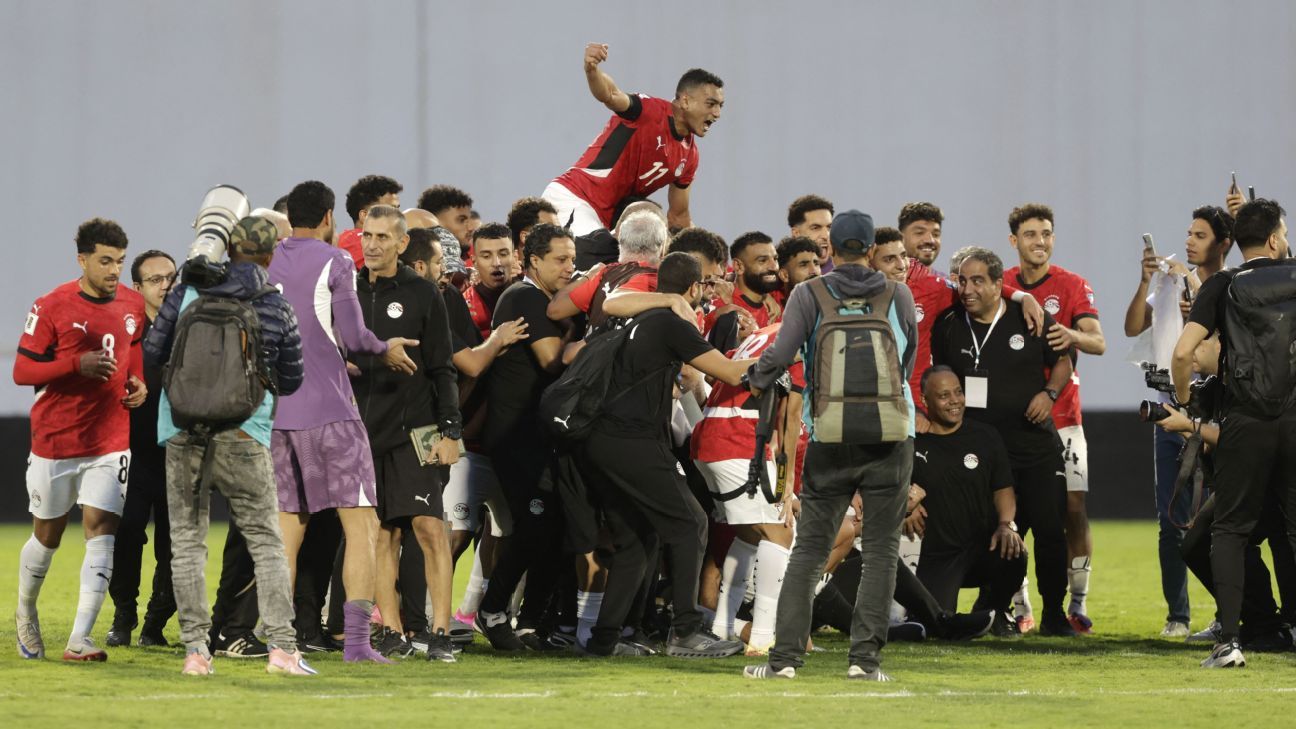
Qualifying for the 2026 FIFA World Cup began on Oct. 12, 2023, when countries from the Asian confederation played their first round of matches. Myanmar’s Lwin Moe Aung scored the very first goal in a 5-1 win over Macau.
All confederations are drawing to a close, but we’re still a long way from discovering the full list of 45 nations that will join hosts United States, Mexico and Canada to make up the field of 48.
Japan were the very first country to qualify on March 20.
QUALIFIED (25/45): Japan, New Zealand, Iran, Argentina, Uzbekistan, South Korea, Jordan, Australia, Brazil, Ecuador, Uruguay, Colombia, Paraguay, Morocco, Tunisia, Egypt, Algeria, Ghana, Cape Verde, South Africa, Qatar, England, Saudi Arabia, Ivory Coast, Senegal
What was decided in October?
Europe and Concacaf: Qualifying doesn’t end until November, but we did see England become the first European country to book their place.
Africa: The final two rounds of the group stage were played, when we discovered the seven nations that joined Morocco and Tunisia, plus the interconfederation playoff contenders.
Asia: The fourth round was played, when we will found out the final two automatic qualifiers, along with the two interconfederation playoff contenders.
South America and Oceania: Qualification complete.
There were 54 FIFA-affiliated nations in the draw. However, Eritrea subsequently withdrew.
Round 1: The teams were in eight groups of six nations, and one group of five (with Eritrea removed).
The nine group winners qualified for the World Cup.
This stage began in November 2023 and was completed in October 2025.
QUALIFIED (9/9): Morocco, Tunisia, Egypt, Algeria, Ghana, Cape Verde, South Africa, Ivory Coast, Senegal
How teams qualified as the group stage ended
Group A: EGYPT (23) qualified with a 3-0 win over rock-bottom Djibouti (1), on the back of two goals from Mohamed Salah. Burkina Faso (21) put themselves in with a strong chance of one of the playoff spots with a 3-1 win over Ethiopia but were edged out on goal difference.
Group B: SENEGAL (24) beat Mauritania (7) 4-0 to qualify. Second-placed DR Congo (22) beat Sudan (13) 1-0 and take a playoff place.
Group C: Benin (17, +1) had qualification in their own hands, but lost 4-0 in Nigeria (17, +7). That enabled SOUTH AFRICA (18) to qualify for the World Cup with a 3-0 win at home to Rwanda (11). Nigeria finished second and scored their fourth in the final minute, a goal which guaranteed a place in the playoffs.
Group D: CAPE VERDE (23) eased to a debut World Cup appearance by winning 3-0 at home to Eswatini (3) on Monday. Cameroon could only draw 0-0 at home to Angola, but they are through to round two in November.
Group E: MOROCCO (21) qualified. Niger (15) confirmed second place by winning in Zambia on Sunday, but missed out on a playoff on goal difference.
Group F: IVORY COAST (26) beat Kenya (12) 3-0 to confirm their place at the World Cup. Gabon (25) have to settle for a playoff route.
Group G: ALGERIA (25) qualified with a 3-0 win over Somalia (1). Uganda (18) took second place despite a late 2-1 defeat in Algeria on Tuesday, but it’s not good enough for a playoff.
Group H: TUNISIA (28) have qualified. Namibia (15) took second place but they have the worst record of all the runners-up and will not be in the playoffs.
Group I: GHANA (25) won 1-0 at home to Comoros (15) to become the 18th team to qualify. Madagascar (19) suffered a damaging 4-1 defeat to Mali (15), and that cost them a best runners-up spot.
Final ranking of second-placed teams:
NB: To determine the best second-place teams, the results of the team to finish sixth in the six-team groups were removed.
1 Gabon — Played 8, Points 19 (GD +6)
2 DR Congo — 8, 16 (+5)
3 Cameroon — 8, 15 (+9)
4 Nigeria — 8, 15 (+7)
———-
5 Burkina Faso — 8, 15 (+6)
7 Niger — 8, 15 (+1)
7 Madagascar — 8, 13 (0)
8 Uganda — 8, 12 (+2)
9 Namibia — 8, 9 (-2)
– Check out the latest fixtures and results here | Latest tables
Round 2: The four best runners-up will enter CAF playoffs (two semifinals and a final) to decide which one country will go to the interconfederation playoffs. This stage will be played on neutral ground in Morocco in November 2025.
The fixtures will be created using the FIFA World Ranking, and we know them now. The highest rank will play the lowest rank, and second faces third. The winners of those two ties will then meet to move on to the March playoffs.
Nigeria (current World Ranking 41) vs. Gabon (77)
Cameroon (54) vs. DR Congo (60)
There are 55 European nations, although 54 will compete as Russia remain suspended due to the invasion of Ukraine.
There are 12 groups of four or five teams, playing home and away matches. The group stage qualifying process ends with a double-header in November.
The 12 group winners will qualify directly for the World Cup, with the 12 runners-up entering the playoff system.
Qualifying began in March 2025 when most of the European teams who were not in UEFA Nations League (UNL) action played their first matches.
QUALIFIED (1/12): England
What happened in October?
The teams that were in the UNL finals only played their first games in September so we’re still a way off from discovering all the qualifiers.
Group A: Germany (9, +5) and Slovakia (9, +3) are in the box seat, and Northern Ireland (6, +1) will surely have to win in Slovakia on Nov. 14 to stay in contention. The final group game between Germany and Slovakia in Leipzig on Nov. 17 looks like being the decider, though. If Northern Ireland miss out on the top two, they are almost certain to get a playoff through the Nations League route. Luxembourg (0) are out.
Group B: Switzerland (10, +9) hold a lead over Kosovo (7, -1) and their goal difference is worth an extra point. In effect, it means the Swiss will have qualified in all but name if they win at home to Sweden (1) on Nov. 15. If they don’t, it could open the door to Kosovo, who are away to Slovenia (3) before hosting Switzerland in what could be a decider on Nov. 18. Slovenia must beat Kosovo to keep alive their hopes of a playoff. Sweden are all but out of it but are set to get a playoff route through the Nations League.
Group C: Denmark (10, +11) and Scotland (10, +5) are the only two teams left in contention. On Nov. 15, it’s Denmark vs. Belarus while Scotland go to Greece. As long as Scotland avoid defeat, the group is set up for a decider between the top two in Glasgow on Nov. 18; that looks like being must-win for Scotland as their goal difference is not as good. Greece and Belarus are eliminated.
Group D: France (10, +6) still have work to do to hold off Ukraine (7, +1) in second. On Nov. 13, it’s France vs. Ukraine and Les Bleus will qualify with a victory. Even if France lose, goal difference means they are in strong position with a home game against Azerbaijan (1, -9) to finish up on Nov. 16. Iceland (4, +2) will hope that France get the win, as if Iceland beat Azerbaijan they will move into the playoff place on goal difference. And that sets up a huge final day-game between Ukraine and Iceland in Warsaw. Azerbaijan have only a mathematical chance of a playoff.
Group E: Spain (12) are top with a 100% record with Turkey (9) the nearest challengers. Spain have a goal difference advantage of 12 over Turkey, so they will qualify in all but name with a victory in Georgia (3) on Nov. 15 (and it will be certain if Turkey do not win at home to Bulgaria). Turkey look set for the playoffs, while Bulgaria (0) are out.
Group F: Portugal (10) are close to qualification but a late Hungary (5) equaliser in Lisbon meant they must wait until November to seal it. A win in Republic of Ireland (4) on Nov. 13 seals it for Portugal, but the Irish need results in the race for second place. On the same day it’s Armenia (3) vs. Hungary, with the away team able to seal second place with a win if Ireland lose to Portugal. On the final day on Nov. 16, it’s Hungary vs. Ireland and Portugal vs. Armenia.
Group G: Netherlands (16, +19) sit top ahead of Poland (13, +4), who do still have to host Netherlands on Nov. 14 but their goal difference is 13 worse right now — so the Dutch know they can afford to lose that and as long as they win at home to Lithuania (3) on Nov. 17 they’ll still top the group. With a game in hand on Finland (10, -5) and far superior goal difference, it looks like Poland will be in the playoffs. Lithuania and Malta are out.
Group H: A surprise win for Romania (10) at home to Austria (15) has reignited the group, but Austria remain favourites to top it.
Nov. 15: Austria will qualify with a win in Cyprus (8) if Bosnia and Herzegovina (13) draw or lose at home to Romania, who must at least avoid defeat to stay in contention for a playoff spot (though they will get a route as a UEFA Nations League group winner regardless). Romania finish up at home to San Marino, so if they can beat Bosnia they will be odds-on to finish at least second, and that would benefit another country through the Nations League route.
Nov. 18: If Bosnia and Austria both win (or results to keep the two teams in touch), then they meet each other in Vienna to decide who qualifies automatically.
Cyprus are out and San Marino have only slim hope of a playoff through the Nations League route.
Group I: Norway (18, +26) are in control ahead of Italy (15, +10) and it’s Norway’s vastly superior goal difference which means a win at home to Estonia (4) on Nov. 13 should effectively do the job, even if Italy win away to Moldova (1) that day. On the final day, it’s Italy vs. Norway; if Norway go into it three points ahead then Italy would need a huge win to avoid the playoffs.
Group J: Belgium (14, +15), who moved back to the top of the table with a 4-2 win in Wales, finish up against two eliminated teams — away to Kazakhstan (7) on Nov. 15 and at home to Liechtenstein (0). As North Macedonia have only one fixture to play, Belgium need three points to qualify, so they will do it by beating Kazakhstan — though the second game against Liechtenstein means it’s effectively a formality. North Macedonia (13, +9) will look to hold off Wales (10, +3) for second. Wales go to Liechtenstein first up, before a huge game against North Macedonia in Cardiff. Wales need to win by six goals in the first game to go into the match in second on goal difference, which would mean a draw would be enough in the last game. While both North Macedonia and Wales are guaranteed a playoff route through the Nations League, finishing in second gives a better seeding — and for Wales a home semifinal.
Group K: ENGLAND (18) have dominated the group, qualifying with a 100% record without conceding a goal. It was sealed with a 5-0 win in Latvia. Albania (11) hold the playoff place over Serbia (10), and both play England in November. As Albania’s other game is vs. Andorra (1) they are favourites to finish second.
Group L: Croatia (16, +19) now look locked for the World Cup and need just one point from games in November at home to Faroe Islands (12) and away to Montenegro (6). Even if they lost both matches, their goal difference is far better than that of Czechia (13, +4), who have one game left. A shock win for the Faroes at home to Czechia is unlikely to mean they can gatecrash the playoff place, because Czechia’s last remaining game is at home to Gibraltar on Nov. 17. Faroe Islands are away to Croatia on Nov. 14, and Czechia will be assured of second if the Faroes lose. Montenegro and Gibraltar are eliminated.
– Check out the latest fixtures and results here | Tables
PLAYOFFS
The final four places at the World Cup will be determined via the UEFA playoffs, to be played in March 2026. There is no path to the World Cup through FIFA’s interconfederation playoffs.
The UEFA playoffs involve 16 teams: the 12 group stage runners-up plus the four best-ranked group winners from the UNL, who did not finish in the top two in World Cup qualifying. This creates four routes, each with four teams featuring a one-legged semifinal and a final for a place at the World Cup.
The priority order for the four World Cup playoff places through the UNL is: Spain, Germany, Portugal, France, England, Norway, Wales, Czechia, Romania, Sweden, North Macedonia, Northern Ireland, Moldova, San Marino.
Of the 14 teams to win their UNL groups, 10 of those were in Pot 1 or 2 for the World Cup qualifying draw — so on ranking would finish in the top two of their group. If that comes to pass, North Macedonia, Northern Ireland, Moldova and San Marino would get a playoff place. However, that now appears unlikely with Romania and Sweden struggling to finish in the top two.
Seeding:
Pot 1: Four World Cup qualifying group runners-up with the best FIFA World Ranking
Pot 2: As above, teams fifth to eighth in the FIFA World Ranking list order
Pot 3: As above, teams ninth to 12th in the FIFA World Ranking list order
Pot 4: UEFA Nations League teams
Semifinals:
Pot 1 vs. Pot 4
Pot 2 vs. Pot 3
This is by some distance the most complicated route to the World Cup, with a layered qualifying process featuring a dual group stage to find the eight automatic qualifiers. But the main part is now done and dusted.
Round 1: The 20 lowest-ranked nations played two-legged ties in October 2023. Afghanistan, Bangladesh, Chinese Taipei, Hong Kong, Indonesia, Myanmar, Nepal, Pakistan, Singapore and Yemen advanced.
Round 2: Those 10 winners joined the 26 best-ranked nations. The 36 teams were drawn into nine groups of four teams, with the top two nations going through to Round 3. This stage began in November 2023 and was completed in June 2024.
Advanced: Australia, Bahrain, China, Indonesia, Iran, Iraq, Japan, Jordan, Kuwait, Kyrgyz Republic, North Korea, Oman, Palestine, Qatar, Saudi Arabia, South Korea, United Arab Emirates, Uzbekistan
Round 3: We were left with 18 nations, drawn into three groups of six teams. Matches began in September 2024 and the round is completed on Tuesday.
The group winners and runners-up took the first six places at the 2026 World Cup and their campaign is complete.
Japan became the first team to qualify for the World Cup on March 20, followed by Iran, Jordan, South Korea, Uzbekistan and Australia.
– Check out the results | Final tables
Round 4: The six teams in this stage were drawn into two groups of three. They played each other once, so two matches in total per team, in one host country in October.
QUALIFIED (8/8): Japan, Iran, Uzbekistan, South Korea, Jordan, Australia, Qatar, Saudi Arabia
What was decided in October?
We found out the final two automatic qualifiers, plus the teams that will battle it out for a playoff in round five.
Group A: Qatar (hosts), United Arab Emirates, Oman
Wednesday: Oman 0-0 Qatar
Saturday: United Arab Emirates 2-1 Oman
Tuesday: Qatar 2-1 United Arab Emirates
Qatar won the final group game 2-1 and qualified for the World Cup, while UAE are in the playoff.
Group B: Saudi Arabia (hosts), Iraq, Indonesia
Wednesday: Indonesia 2-3 Saudi Arabia
Saturday: Iraq 1-0 Indonesia
Tuesday: Saudi Arabia 0-0 Iraq
A goalless draw meant the two hosts of the playoffs both qualified, Iraq move into the playoffs.
Round 5: A two-legged tie in November 2025 to earn the place in the interconfederation playoffs.
UAE will play Iraq.
Usually, Concacaf would have six automatic places in qualifying — but for the 2026 finals three of the six are taken up by the hosts. That leaves three places to be won, plus two spots in the interconfederation playoff path.
Concacaf saw 32 nations enter the race to make the finals.
Round 1: The four lowest-ranked Concacaf nations battled it out in two-legged ties. Anguilla and British Virgin Islands eliminated Turks and Caicos Islands and U.S. Virgin Islands respectively, both on penalties.
Round 2: The top 28-ranked nations, plus the two winners from Round 1, were drawn into six groups of five teams. Teams played each other only once, rather than home and away. This stage was played in two blocks, in June 2024 and June 2025.
The six group winners and six group runners-up moved on to Round 3.
Advanced: Bermuda, Costa Rica, Curaçao, El Salvador, Guatemala, Haiti, Honduras, Jamaica, Nicaragua, Panama, Suriname, Trinidad and Tobago
Round 3: The 12 remaining teams were drawn into three groups of four teams.
This phase started in September and will be completed in October and November.
The group winners will qualify for the World Cup, with the two runners-up with the best record going on to take part in the interconfederation playoffs.
– Check out the fixtures and results | Latest tables
QUALIFIED (0/3):
What was decided in October?
Group A: Panama (6) and Suriname (6) drew 1-1, with a 1-0 win for Guatemala (5) in El Salvador (3) leaving the group wide open — and it’s guaranteed to go to the last day. On November, 13 it’s Suriname vs. El Salvador and Guatemala vs. Panama. The group finishes up on Nov. 18 with Guatemala vs. Suriname and Panama vs. El Salvador.
Group B: Jamaica (9) moved top of the group with a 4-0 thrashing of Bermuda (0), who are now eliminated. Closest challengers Curaçao (8) drew at home to Trinidad and Tobago (5). Jamaica can qualify on Nov. 13 with a victory in Trinidad & Tobago if Curaçao fail to win in Bermuda. The last-day showdown between Jamaica and Curaçao in Kingston looks decisive, however.
Group C: Honduras (8) are in a good position after they beat Haiti (5) on Monday. The nearest challengers are Costa Rica (6), who thrashed Nicaragua (1). Nov. 13 sees Honduras go to Nicaragua, and a win will send them to the World Cup if Haiti vs. Costa Rica is a draw. On the final day on Nov. 18 it’s Costa Rica vs. Honduras, which could yet be a decider for the automatic qualification place.
As in recent qualifying competitions, all 10 nations played each other home and away. The top six nations qualified directly to the finals. The seventh-placed team goes into the interconfederation playoffs in March.
The first qualifiers took place in September 2023, with the league phase completed in September 2025.
QUALIFIED (6/6): Argentina, Brazil, Ecuador, Uruguay, Colombia, Paraguay
Bolivia are in the interconfederation playoffs.
– Check out the results | Final table
All 11 members of the OFC region took part. Round 1: The four lowest-ranked nations played a knockout format (two semis and a final) in Samoa in September 2024. American Samoa, Cook Islands, Samoa and Tonga were in this round. Samoa beat Tonga 2-1 in the final to advance. Round 2: Samoa and the seven top-ranked nations were drawn into two groups of four nations, with matches played in October and November 2024. Games were held in Fiji, New Zealand, Papua New Guinea and Vanuatu. The top two countries in each group — New Caledonia, Tahiti, New Zealand and Fiji — went on to Round 3. – Check out the results here | Final tables Round 3: The four remaining countries then played a one-legged knockout format (two semis and a final) in New Zealand in March 2025. Semifinals, March 21 Final, March 24 QUALIFIED (1/1): New Zealand As winners of the final, New Zealand qualified for the World Cup, with losers New Caledonia moving onto the interconfederation playoffs. The playoffs, to be held in March 2026, will determine the final two qualifiers. Six countries will take part. Each of the five confederations (apart from UEFA) will provide one country. The host confederation (so for this edition Concacaf) receives a second slot. 1 Africa (Cameroon, DR Congo, Gabon or Nigeria) The two nations with the best FIFA World Ranking will be seeded and go straight into one of the two finals. The four other countries will be drawn to play a semifinal, feeding through to play a seed for one of the two places at the World Cup. The playoffs are due to be held in one of the World Cup host nations as a test event.
New Caledonia 3-0 Tahiti
New Zealand 7-0 Fiji
New Caledonia 0-3 New Zealand
Interconfederation playoffs (2 places)
1 Asia (Iraq or UAE)
2 Concacaf
1 Oceania (New Caledonia)
1 South America (Bolivia)

Making bold sporting statements without real repercussions can be fun, and fantasy baseball certainly is fun, so it is time again for us to combine these fun things into one column. Well, really it is two columns, as we get bold separately with the American League and the National League, making myriad predictions and hoping some (or several) may hit. Perhaps not, but at least they should make one think.
For example, a year ago we predicted that Athletics DH Brent Rooker would hit 50 home runs. He did not, but he did not struggle. We predicted Houston Astros RHP Hunter Brown would whiff 200 hitters and make the All-Star team. That did occur. Tampa Bay Rays OF Chandler Simpson very nearly stole 45 bases, but three Chicago White Sox did not hit 25 home runs. Byron Buxton and Mike Trout did play a lot! Grayson Rodriguez and Liam Hendriks did not.
Some (most) of these predictions will look a bit silly in six months, if not sooner. Still, there is a basis for making each of these bold statements, and perhaps it makes you think. Perhaps the player in question has a particular skill — or opportunity — that defies groupthink. Perhaps the statement is not a positive one. Fantasy baseball managers tend to follow rankings and projections but trusting your gut is important, too. Trust yourself. Take a few chances. Perhaps some of these bold picks will look wise in a few months.
With that in mind, let us get bold yet again for the pending season, starting with the American League.
 Athletics: Could an Athletic hit 50 home runs this season? With reigning AL Rookie of the Year Nick Kurtz, anything seems possible. Let’s give Rooker 40 blasts. … SS Jacob Wilson trades some contact for pop, hitting .280 with 18 home runs. … RHP Luis Severino can’t be that bad again in home games (6.01 ERA): Overall, he wins 13 games with a 3.80 ERA. … RHP Justin Sterner saves 18 games.
 Baltimore Orioles: 2B Jackson Holliday (hand) makes his season debut in mid-April and still reaches 20 home runs and 20 stolen bases. … Two Orioles hit 40 home runs (SS Gunnar Henderson, 1B Pete Alonso). … OF prospect Enrique Bradfield Jr. debuts in July. He steals 26 bases. … LHP Trevor Rogers surprisingly is for real: 15 wins, 2.80 ERA, All-Star appearance. … RHP Andrew Kittredge saves more games than Ryan Helsley.
 Boston Red Sox: OF star Roman Anthony hits 40 home runs and he is not the primary leadoff hitter for long. … Seven Red Sox hit 20 home runs, including 1B Triston Casas. … LHP Garrett Crochet whiffs 275 hitters and earns the AL Cy Young Award. … RHP Sonny Gray fans 180 hitters for his fifth team, and he wins a career-high 15 games.
 Chicago White Sox: New 1B Munetaka Murakami and SS Colson Montgomery each hit 31 home runs, although neither infielder hits above .220. … New 2B Luisangel Acuna steals 28 bases. … Staff ace RHP Shane Smith makes the AL All-Star team again! … RHP prospect David Sandlin debuts in July, and he posts a 3.40 ERA in 12 starts.
 Cleveland Guardians: Three Guardians hit 30 home runs, with newcomer 1B Rhys Hoskins joining 3B Jose Ramirez and 1B Kyle Manzardo. … Brittle OF Chase DeLauter, new No. 2 hitter, bats 510 times. … DH David Fry earns his catcher eligibility in June, and he finishes as a top 15 fantasy catcher. … RHP Tanner Bibee makes his first All-Star game. He wins 15 games and strikes out 200.
 Detroit Tigers: OF Kerry Carpenter hits 32 home runs, knocks in 99 runs. … Prospect Max Anderson takes the 3B job in late-May, hits .290 over 420 PA. … RHP Justin Verlander wins 13 games with a 3.40 ERA. He starts Game 2 of the playoffs. … RHP Kenley Jansen saves 36 wins, sailing past 500 saves for his career and he retires.
 Houston Astros: 1B Christian Walker leads the team with 30 home runs, with OF Yordan Alvarez and 3B Isaac Paredes adding 28. … Year 2 goes better for OF Cam Smith. He hits .270 with 22 home runs. … New RHP Mike Burrows wins 12 games with 160 strikeouts. … RHP Bryan Abreu saves 25 games and makes the All-Star team. Be very careful about LHP Josh Hader.
 Kansas City Royals: Four Royals hit 30 home runs, led by slugging OF Jac Caglianone and solid 1B Vinnie Pasquantino with 34. … OF Starling Marte, active leader in stolen bases (and caught stealing), adds 22 steals. … OF Isaac Collins becomes the every-day 2B and posts a .375 OBP with 22 steals. … RHP Stephen Kolek (oblique), not in the Opening Day rotation, still wins 12 games with a 3.40 ERA.
 Los Angeles Angels: SS Zach Neto delivers the third 30/30 season in franchise history (Bobby Bonds, Mike Trout). … Healthy OF Josh Lowe rediscovers his 2023 numbers, hitting 22 home runs and stealing 28 bases. … Speaking of health, RHP Grayson Rodriguez posts a 3.50 ERA over 26 starts, with myriad strikeouts. … LHP Drew Pomeranz saves 20 games.
 Minnesota Twins: 2B Luke Keaschall scores 90 runs as leadoff hitter, batting .285 with 32 stolen bases. … OF Byron Buxton and 3B Royce Lewis each bat more than 500 times, and each reaches 30 home runs. … RHP Zebby Matthews breaks out with a 3.50 ERA and 170 strikeouts.
 New York Yankees: OF Trent Grisham nearly does it again, hitting 30 home runs with 90 walks. … Grisham and C Ben Rice are among six Yankees who reach 30 home runs. … RHP Gerrit Cole (elbow) returns in May, and he wins 14 of his 22 starts with a 3.20 ERA. … LHP Ryan Weathers surprises with a 3.50 ERA in 24 starts.
 Seattle Mariners: 2B Brendan Donovan scores 90 runs as leadoff hitter, while adding a .295 batting average. … SS prospect Colt Emerson debuts in May and he hits 15 home runs. … Five Mariners starting pitchers (Bryan Woo, Logan Gilbert, Luis Castillo, George Kirby, Bryce Miller) make at least 28 starts with an ERA better than 3.50.
 Tampa Bay Rays: An improved 3B Junior Caminero hits .280 with 50 home runs, and he ends up second in MVP voting. … OF Jonny DeLuca stays healthy enough to steal 30 bases, while OF Chandler Simpson steals 62 bases. … RHP Brody Hopkins debuts in July and dominates with a 2.80 ERA in 14 starts. … RHP Griffin Jax saves 28 wins.
 Texas Rangers: OF Wyatt Langford stays healthy enough to appear in 152 games, reaching 30 home runs and 30 stolen bases. Ian Kinsler was the last Ranger to reach 30/30 (2011). … 1B Jake Burger and DH Joc Pederson bounce back and each delivers 28 home runs. … RHP Nathan Eovaldi leads the staff with a 2.80 ERA in 26 starts and makes his third All-Star team.
 Toronto Blue Jays: OF George Springer nearly does it again, hitting .280 with 28 home runs and 96 runs scored. … New 3B Kazuma Okamoto hits cleanup, protecting 1B Vladimir Guerrero Jr., and he hits 28 home runs. … RHP Dylan Cease makes his first All-Star team, posts a 3.36 ERA. … RHP Louis Varland leads the team with 22 saves.
Sports
Pakistan qualify for Hockey World Cup 2026 after edging Japan in qualifiers | The Express Tribune

Pakistan hockey team’s sudden omission from prestigious Azlan Shah Cup has dismayed fans and critics. PHOTO: AFP
Pakistan qualified for the Hockey World Cup 2026 after defeating Japan in the semi-final of the World Cup qualifying tournament on Friday.
The Men in Green continued their unbeaten run in the tournament, securing a 4-3 victory over Japan in Egypt to confirm their place in the global event and end an eight-year wait for World Cup qualification.
Pakistan scored one goal in the first quarter and added three more in the fourth quarter to seal the win.
For Pakistan, Imad Muhammad, Abubakar Mahmood, Sufyan Khan and Afraz each scored a goal.
Goalkeeper Ali Raza played a decisive role in the victory by stopping a penalty stroke late in the match. Japan were awarded the penalty stroke four minutes before the end of the game, but Raza blocked it to help Pakistan secure the win and advance to the final while also confirming their place in the World Cup.
The leadership of the Pakistan Hockey Federation congratulated the team on the achievement with President Mohiuddin Wani saying the athletes played “excellently in nervous competition”.
Pakistan Cricket Board Chairman Mohsin Naqvi also congratulated the team.
“The players performed brilliantly in the tournament and qualified for the world cup after eight years. This success is the result of teamwork and hard work of the players. This win proves that Pakistan has hockey talent.
“The excellent performance of all the players, including captain Imad Shakeel Butt, is commendable. Hopefully the national team will return by winning the final,” he said in a statement.
The tournament is scheduled to begin on August 14 this year in Belgium and the Netherlands.
Pakistan had failed to qualify for the previous edition of the World Cup and had last secured a spot in the tournament in 2018.

Lionel Messi drew high praise from President Donald Trump as the Argentine superstar and his Inter Miami team were honoured at the White House on Thursday for winning the MLS Cup last year.
The president said: “It’s my distinct privilege to say what no American president has ever had the chance to say before: ‘Welcome to the White House, Lionel Messi.'”
Trump went on to reveal the affection his 19-year-old son Barron has for Messi.
“My son said, ‘Dad, you know who’s going to be there today?’ I said, ‘No, I got a lot of things going on today,'” Trump said. “He said ‘Messi!’ He’s a big fan of yours. He thinks you’re just a great person. And I think you got to meet a little while ago. So he’s a big soccer fan, but he’s a tremendous fan of yours. And a gentleman named Ronaldo. Cristiano is great. You’re great.”

Cristiano Ronaldo, Messi’s longtime rival in European soccer, attended a White House event with Trump last year.
Regarding Messi’s impact on Inter Miami, Trump said: “This guy won. There was tremendous fanfare, and he won. Leo, you came in and won. It’s hard to do. … You came in and won with all that pressure.”
Wading into the area of soccer history, Trump said to Messi, “You may be better than Pele,” and he asked those in attendance, “Who’s better?”
Trump said of the Inter Miami squad: “What a group of people. We could have a lot of fun with these guys. You can imagine how they celebrate.”
The president singled out Rodrigo De Paul, an Argentine midfielder who scored the go-ahead goal in the Herons’ 3-1 win over the Vancouver Whitecaps in the MLS Cup final.
“Where the hell is Rodrigo?” Trump asked, causing De Paul to blush.
The president added: “Do you have any bad-looking players? I like the bad-looking players much better.”
Messi gave Trump a pink signed Inter Miami soccer ball, and club co-owner Jorge Mas and coach Javier Mascherano presented the president with a team jersey and a watch.
Mas said: “It’s our aspiration to continue breaking barriers and putting no limits, to making sure Major League Soccer and Inter Miami are considered among the elite in global football.”


Pastors pray for Trump in Oval Office amid US-Israel war with Iran

Book excerpt: “Judge Stone” by Viola Davis & James Patterson

Princess Kate’s brother celebrates National Golden Retriever day at Crufts

Attock Cement’s acquisition approved | The Express Tribune

Policy easing drives Argentina’s garment import surge in 2025

India Us Trade Deal: Fresh look at India-US trade deal? May be ‘rebalanced’ if circumstances change, says Piyush Goyal – The Times of India

-
Business1 week ago
Attock Cement’s acquisition approved | The Express Tribune
-
 Fashion1 week ago
Policy easing drives Argentina’s garment import surge in 2025
-
Business1 week ago
India Us Trade Deal: Fresh look at India-US trade deal? May be ‘rebalanced’ if circumstances change, says Piyush Goyal – The Times of India
-

 Politics1 week ago
What are Iran’s ballistic missile capabilities?
-

 Politics1 week ago
US arrests ex-Air Force pilot for ‘training’ Chinese military
-

 Sports1 week ago
LPGA legend shares her feelings about US women’s Olympic wins: ‘Gets me really emotional’
-
 Business1 week ago
Greggs to reveal trading amid pressure from cost of living and weight loss drugs
-

 Sports1 week ago
Sri Lanka’s Shanaka says constant criticism has affected players’ mental health