

Fashion
VDMA members showcase energy-saving advances in finishing & dyeing

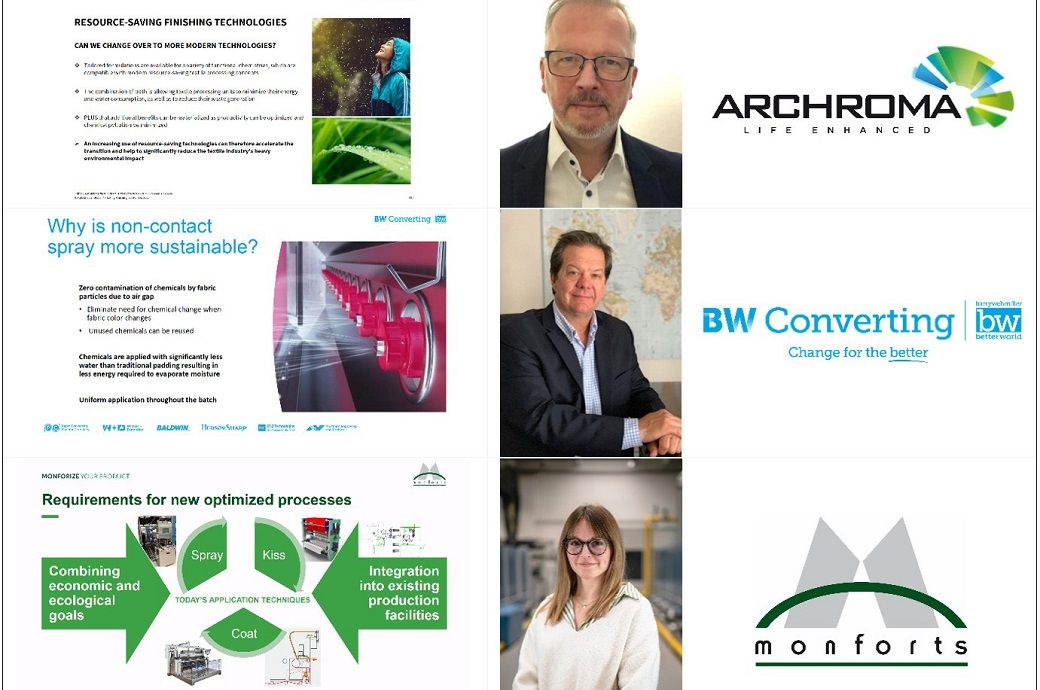
During a recent webinar organised by Germany’s VDMA textile machinery association, specialists from the three companies provided details of the range of new energy-saving options that is now available to mills.
VDMA’s recent webinar highlighted new resource-efficient finishing and dyeing technologies from Monforts, Archroma, and BW Converting.
The Baldwin TexCoat G4 system with Archroma formulations and Monforts MONTEX stenters has achieved major water and energy savings, notably in Pakistan.
The partners now extend innovation to dyeing with the new TexChroma system, debuting at ITMA Asia + CITME 2025.
In particular, BW Converting’s Baldwin TexCoat G4 precision spray technology – in combination with advanced Archroma finishing formulations and Monforts MONTEX stenters and MONFORTEX shrinking ranges and related technologies – is pushing the envelope in new standards for sustainable and long-lasting clean productivity.
Functionality
Michael Schuhmann, Global Marketing Finishing at Archroma Textile Effects, explained that typical key functions provided in textile finishing include sweat and odor control, water repellence and UV resistance. Softeners are primarily applied to make fabrics more comfortable while other finishes provide reduced crease formation for easy-care properties. The traditional padding or exhaust techniques for applying these finishes require huge volumes of water and energy intensive drying.
Spray application, by contrast, requires much less water due to drastically reduced ‘pick up’ – the amount of liquid that a fabric absorbs and retains, determining how much finishing agent remains in the fabric. This also enables significantly faster drying, making process speeds of up to 100 metres per minute possible, depending on the fabric.
“As the global fashion brands commit to reducing their emissions, the textile processing industry must respond by adopting safer chemistries with resource-saving processes such as spray application,” Schuhmann said.
Precision
Rick Stanford, Vice President Global Business Development for Textiles at BW Converting, explained that at the core of the Baldwin TexCoat G4 technology are precision valves that were originally developed for the offset printing industry and have been refined over the past 40 years through more than 40,000 installations globally.
“These enable extremely precise spray flows which are controlled by proprietary software algorithms,” he said.
Over 100 TexCoat G4 units have been installed worldwide and all three companies are enjoying notable success with bed sheeting manufacturers in Pakistan.
“Our first TexCoat G4 in Pakistan was installed in Spring of 2024 for a manufacturer using Archroma chemistry and a ten-chamber Monforts MONTEX stenter,” Stanford explained. “When using the padder at this mill, the pickup rate was 65% and with TexCoat G4 we were able to reduce that to 27%. As a result, the customer was able to increase the MONTEX speed from 60 metres a minute to 100 metres a minute, while also reducing the operating temperature in the stenter. We have subsequently sold 30 TexCoat G4 units in Pakistan, driven primarily by the system’s proven productivity and efficiency gains.”
Energy savings
“A BW Converting Baldwin TexCoat G4 unit is now installed at the Monforts Advanced Technology Center (ATC) for trials and fully complementing spray finishing operations are our multiple energy saving innovations,” added Saskia Kuhlen, Monforts Engineer for Textile Technologies. “MONTEX stenters are equipped with the TwinAir air volume regulation system as well as the TwinTherm system for temperature control and feature CADstreamE variable nozzles. These features enable full adjustment to a specific fabric width for either higher operational speeds or lower electrical energy. A further benefit is the150-mm wide advanced insulation system inside the stenter frame”.
Further Monforts modules for optimizing processes include the coaTTex unit for the knife coating of paste and foam application and the EcoApplicator, a kiss-coating technology for the indirect application of finishes on one or both sides of a fabric, with a stenter production speed up to 100m/min. Both can be integrated into existing lines.
The Monforts Energy Tower and EcoBooster are meanwhile modules for air/air heat exchanging, for heat recovery from the exhaust flow of thermal systems. They can also be retrofitted to existing stenter frames, relaxation dryers, infrared pre-dryers and hotflues.
“We continue to explore the best heating options for every customer, with optimised combinations in order to make our lines as energy efficient as possible,” Kuhlen said. “We have also been deeply investigating the potential of green hydrogen as a further option for the future.”
BW Converting’s Baldwin TexChroma
In response to a big market demand, the three technology partners are now turning their attention to the dyeing process.
At ITMA Asia + CITME in Singapore, from October 28-31, they will introduce the resource-saving combination of THERMEX continuous dyeing ranges with the new BW Converting Baldwin TexChroma spray dyeing system.
“We are excited to introduce the Baldwin TexChroma because spray dyeing is the future,” said Stanford. “We’ve been cautious about providing details on TexChroma too early, but now we’re ready and look forward to outlining its benefits in Singapore with interested customers. We will also be installing a TexChroma unit on a THERMEX line at the Monforts ATC in 2026.”
Monforts is at stand A301 in Hall 3 at ITMA Asia + CITME and BW Converting at stand B201 in Hall 8.
Note: The headline, insights, and image of this press release may have been refined by the Fibre2Fashion staff; the rest of the content remains unchanged.
Fibre2Fashion News Desk (KD)










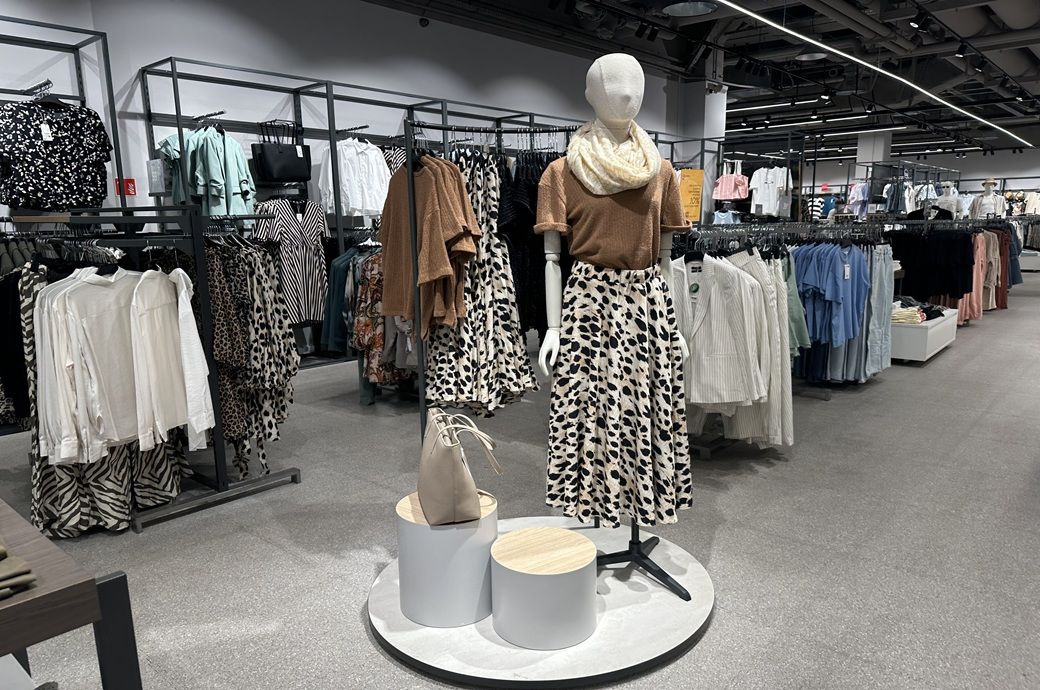
The company posted a revenue of £42.3 million (~$57.53 million) in FY26 ended March 31, 2026, up 14 per cent YoY from the previous year, supported by a 24 per cent surge in own-site sales. The growth was fuelled by higher website traffic, improved conversion rates and increased order volumes from both new and returning customers.
Sosandar reported FY26 revenue of £42.3 million (~$57.53 million), up 14 per cent, driven by strong online growth, with own-site sales rising 24 per cent.
The company returned to profitability with PBT of £0.4 million (~$0.54 million) and improved margins.
Despite slightly missing revenue expectations, performance remained solid.
Strong third-party sales supported confidence in profitable growth.
Sosandar noted strong performance across all categories, from occasion wear to casual collections, reflecting its ability to translate trends into its distinctive design aesthetic.
Profitability improved significantly during the year, with profit before tax expected to reach £0.4 million (~$0.54 million), compared to a loss of £0.1 million in FY25. Gross margin also strengthened to 63.9 per cent from 62.1 per cent, highlighting the company’s focus on margin enhancement and operational efficiency. Sosandar ended the year with net cash of £8.4 million, even after £1.8 million in share buybacks, up from £7.3 million a year earlier, Sosandar said in a press release.
The company noted that market expectations ahead of the announcement had been set at revenue of £43.1 million and profit before tax of £0.4 million for FY26, indicating that profitability is in line with forecasts, while revenue came in slightly below expectations.
The brand continued to perform strongly across third-party platforms, particularly with NEXT, reinforcing its position as a leading womenswear label in the UK market. Trading with Marks & Spencer also began to normalise following earlier disruptions, with stock intake returning to expected levels.
Sosandar’s physical retail presence delivered a positive uplift, with stores entering their second year of trading and locations in market towns performing particularly well. However, the company noted that stores are still weighing on overall profitability as they mature, especially those located in shopping centres. As a result, no new store openings are planned in the near term, with a focus instead on improving profitability at existing locations.
Looking ahead, the board expressed confidence in the company’s strategy, emphasising that strong foundations are in place to deliver sustainable, profitable and cash-generative growth.
Fibre2Fashion News Desk (SG)
Firms also increased stock purchases to support rising output, with some resorting to precautionary inventory building amid concerns over disruptions linked to the ongoing Middle East conflict, the Central Bank of Sri Lanka said in a press release.
Sri Lanka’s manufacturing PMI surged to 66.7 in March from 56.8 in February, driven by strong gains in new orders and production, particularly in apparel.
Firms raised inventories amid Middle East-related risks.
However, supply constraints, rising costs, and logistics issues persisted, with delivery times worsening.
Employment growth slowed.
Outlook remains positive.
Despite robust demand, manufacturers reported a constrained operating environment due to raw material and fuel shortages, rising input costs, and logistical challenges. Supplier delivery times lengthened significantly to 75.5, reflecting shipping disruptions and demand pressures. Employment rose at a slower pace, indicating cautious hiring despite increased workloads.
Looking ahead, business expectations for the next quarter remain positive across sectors, supported by seasonal trends and emerging opportunities. However, concerns persist over the impact of the Middle East conflict, supply disruptions, and broader global economic uncertainty, which may weigh on future momentum.
Fibre2Fashion News Desk (SG)

The agreement covers the construction and operation of a 360-kilometre railway linking the main mining areas of Al-Shidiya and Ghor Al-Safi to the Port of Aqaba.
The United Aran Emirates and Jordan recently an agreement to develop a railway network in Jordan and establish the UAE-Jordan Railway Company.
The agreement covers the construction and operation of a 360-kilometre railway linking the main mining areas of Al-Shidiya and Ghor Al-Safi to the Port of Aqaba.
The project aims at transporting 16 million tonnes of phosphate and potash annually.
The project aims at transporting 16 million tonnes of phosphate and potash annually, with a total investment value of $2.3 billion. Both phosphate and potash are chemicals used in the textile industry.
The agreement was signed by UAE Minister of Energy and Infrastructure Suhail bin Mohamed Al Mazrouei and Jordan’s Minister of Transport Nidal Al-Qatamin.
The UAE-Jordan Railway Company was formally established as a joint venture between Abu Dhabi’s L’IMAD Holding Company (L’IMAD) and several Jordanian stakeholders, according to an official release in the UAE.
The joint venture will be responsible for the implementation, operation and maintenance of Jordan’s railway network through its executing arm, Etihad Rail, the developer and operator of the UAE’s national railway network.
The project will enhance Jordan’s export capabilities and logistics efficiency by directly linking phosphate and potash production sites to the Port of Aqaba, significantly reducing transport time and costs.
It will also support comprehensive economic development and open wide prospects for job creation across multiple sectors, leveraging the extensive expertise of Etihad Rail.
Fibre2Fashion News Desk (DS)


2026 NBA playoffs: Western Conference first-round takeaways

Sarah Ferguson speaks out over Beatrice, Eugenie troubles: ‘Difficult’

Stocks to buy: What’s the outlook for Nifty for April 20-April 24 week? Check list of top stock recommendations – The Times of India

-

 Fashion4 days ago
France’s LVMH Q1 revenue falls 6%, shows resilience amid Iran war
-

 Entertainment1 week ago
Palace left in shock as Prince William cancels grand ceremony
-

 Sports7 days ago
The case for Man United’s Fernandes as Premier League’s best
-
 Business7 days ago
UK could adopt EU single market rules under new legislation
-

 Sports1 week ago
Lamar Jackson hits back at critics with faithful message on social media
-

 Entertainment5 days ago
Is Claude down? Here’s why users are seeing errors
-

 Fashion7 days ago
Energy emerges as biggest cost driver in textile margins
-
 Business1 week ago
Road accidents: a massive economic challenge | The Express Tribune