

Business
United Airlines’ summer earnings and profit outlook top estimates, but revenue falls short


A United Airlines Boeing 737-MAX 8 aircraft departs at San Diego International Airport en route to New York on Aug. 24, 2024.
Kevin Carter | Getty Images
United Airlines on Wednesday forecast higher-than-expected earnings for the fourth quarter after a rocky start to 2025.
The carrier expects to earn between $3 and $3.50 a share for the last three months of the year, compared with analysts’ estimate of $2.86 a share.
United has been expanding its flying capacity, while its rivals have scaled back some of their growth plans after a glut of flights weighed on fares this year. The airline increased capacity 7% in the third quarter over last year. Unit passenger revenue for the three months ended Sept. 30 fell 3.3% for domestic travel and 7.1% for international. Sales from its lucrative loyalty program rose 9%.
CEO Scott Kirby on an earnings call on Thursday that the carrier expects earnings before interest, taxes, depreciation, and amortization from the loyalty program to double by the end of the decade.
“We’re just beginning to realize the full potential of the loyalty program,” he said.
In an interview last month, Kirby defended the airline’s growth plan and said the carrier was winning loyal customers through its network, new technology like complimentary inflight Wi-Fi, refreshed cabins and new lounges.
“Those investments over almost a decade, combined with great service from our people, have allowed United to win and retain brand-loyal customers, leading to economic resilience even with macro economic volatility through the first three quarters of the year and significant upside as the economy and demand are improving in the fourth quarter,” Kirby said in a release Wednesday.
Still, for the third quarter, United beat earnings expectations, although its revenue fell short of estimates.
Here is what United Airlines reported for the quarter that ended Sept. 30 compared with what Wall Street was expecting, based on estimates compiled by LSEG:
- Earnings per share: $2.78 adjusted vs. $2.62 expected
- Revenue: $15.23 billion vs. $15.33 billion expected
United’s third-quarter revenue was $15.23 billion, up 2.6% from $14.84 billion last year. Net income fell 1.7% to $949 million or $2.90 a share. Adjusting for one-time items including debt, among other things, United posted income of $909 million or $2.78 a share.
The carrier is vying with Delta Air Lines to win over more affluent travelers who splurge on seats, and it has expanded its global network with far-flung destinations like Greenland and Mongolia. United said in the third quarter, its premium-cabin revenue, which includes first class and other, roomier seats, rose 6%. United’s sales from no-frills basic economy 4% year over year.
In the spring and early summer, United and other carriers trimmed their earnings forecasts they made at the start of the year, after passenger demand dipped amid on-again, off-again tariffs, and an oversupply of flights weighed on airfare.





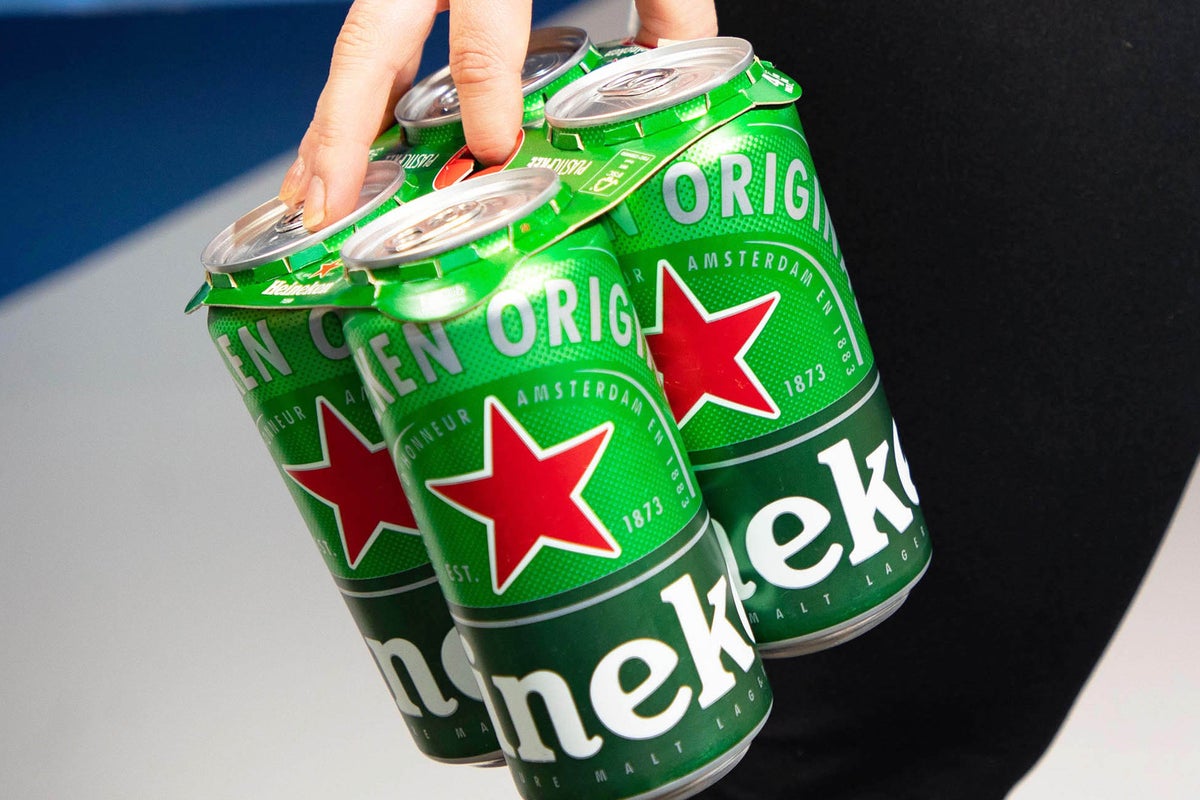
Heineken has revealed plans to invest more than £44 million into improvements for hundreds of its UK pubs.
The Dutch brewing giant said the cash injection into its Star Pubs operation, which runs 2,350 sites across the UK, will create around 850 jobs.
The major investment plan comes despite a challenging backdrop for the pub sector.
Pubs have come under pressure from rising labour costs and increases to national insurance contributions over the past year, while consumer spending has also come under pressure with concerns over inflation and rising unemployment.
However, pubs received additional business rates support from the Government from last month to help ease their cost pressures.
Lawson Mountstevens, Star Pubs’ managing director, said the company’s investment plan is partly aimed at boosting revenues to help the group cope with the recent “sustained increases in running costs”.
The plans will see the business invest £44.5 million this year into upgrades for 647 of its pubs.
It said 108 of its venues will see particularly significant cash injections, with these all set for transformations costing at least £145,000.
Heineken said the majority of pubs are owned by the group but independently operated by locals, with sports-focused venues an emphasis for investment in the run-up to the 2026 football World Cup.
The pub firm and brewer said it has pumped £328 million into British pubs since 2018.
It has already started work in 52 locations, including eight projects where it is reopening boarded-up pubs which have suffered from lengthy closures.
Mr Mountstevens urged the Government to reduce the tax burden on pubs to help ease the cost burden and support more job creation in the industry.
He said: “We can only do so much; the root-and-branch reform of business rates that the industry has been calling for over many years is urgently required, as well as a lowering of the burden of taxation on pubs, including VAT and beer duty.
“We are calling on the Government to support us in bringing out the best in the Great British pub.”

A company law appeals court on Monday rejected a challenge by mining billionaire Anil Agarwal’s Vedanta Ltd to the winning bid by Gautam Adani’s group for bankrupt real estate firm Jaiprakash Associates Ltd (JAL), whose assets include India’s only Formula One circuit. The National Company Law Appellate Tribunal (NCLAT) did not find merit in the issues raised by Vedanta and dismissed its two petitions. A Bench comprising Chairperson Justice (retired) Ashok Bhushan and Technical Member Barun Mitra held that the Committee of Creditors (CoC) were right in preferring Adani Group’s Rs 14,535 crore bid over Vedanta’s resolution plan for JAL. That decision was approved by the National Company Law Tribunal (NCLT), against which Vedanta went into an appeal in NCLAT. “No grounds have been made out by the appellant (Vedanta) to interfere with the decision of the adjudicating Authority (NCLT),” NCLAT order said. “There is no merit in the appeal. Both appeals are dismissed. There shall be no orders to pass.” NCLAT said the decision of the Committee of Creditors was based on “overall consideration of the respective resolution plan and was taken in its commercial wisdom,” said the appellate tribunal. JAL was admitted for insolvency proceedings in June 2024 after it failed to pay bank dues exceeding Rs 57,000 crore. The resolution process drew 28 expressions of interest, with six final bidders including Vedanta, Adani Enterprises and others. Adani and Vedanta emerged as frontrunners, with Adani’s proposal scoring higher on upfront recovery and overall value. The CoC approved Adani’s plan in November 2025 with a 93.81 per cent vote. Vedanta later submitted a revised offer, valued at Rs 16,070 crore, but creditors declined to consider it, citing rules barring post-deadline changes. Vedanta argued the process lacked transparency and that its revised bid offered superior value. Creditors countered that the revised proposal was submitted only after Vedanta became aware it was trailing the winning bid. The appellate tribunal had earlier declined to stay implementation of Adani’s plan, a decision subsequently upheld by the Supreme Court, which directed an expedited hearing while requiring key implementation decisions to receive tribunal approval. Monday’s ruling clears the way for Adani’s takeover of JAL unless Vedanta challenges it in the Supreme Court. In its order, NCLAT also said there has been “no material irregularity committed by Resolution Professional while conducting the plan resolution process.” NCLAT also dismissed Vedanta’s plea, where it had questioned the evaluation metrics adopted and had said its bid was Rs 3,400 crore higher in gross value terms and roughly Rs 500 crore more in net present value compared to the Adani Group’s bid. Rejecting this, NCLAT said “decision of CoC not approving the resolution plan of the appellant with a higher plan value of Rs 3,400 crores and NPV of Rs 500 crore as compared to plan of respondent No 3 (Adani) cannot be said to be arbitrary or perverse.” On March 17, the NCLT, Allahabad bench, approved Adani Enterprises Ltd’s Rs 14,535-crore bid to acquire JAL through the insolvency process. This was challenged by Vedanta before the appellate tribunal NCLAT. On April 23, the insolvency appellate tribunal had concluded its hearing after hearing the petitioner Vedanta and respondents, including the Resolution Professional, Committee of Creditors (CoC) and Adani Enterprises. Vedanta has questioned the evaluation metrics adopted by lenders of JAL, which had selected the lower bid of Rs 3,400 crore from Adani Enterprises for the debt-ridden company and questioned the commercial wisdom of CoC. Earlier, on March 24, NCLAT declined any interim stay over the Vedanta Group’s plea against the order passed by the NCLT approving Rs 14,535-crore bid by the Adani Group for acquiring JAL. However, it had also said the plan would be subject to the outcome of the appeals filed by the Anil Agarwal-led Vedanta Group. This interim order by NCLAT was challenged before the Supreme Court, which also declined to grant a stay. However, the apex court had directed that if the monitoring committee planned to take any major policy decision, it should first obtain the Tribunal’s sanction. Adani Enterprises had outbid Vedanta and Dalmia Bharat to win the bid for JAL. Adani got the maximum 89 per cent votes from creditors, followed by Dalmia Cement (Bharat), and Vedanta Group. The CoC defended its decision, saying the process complied with all Insolvency and Bankruptcy Code (IBC) rules. They maintained that no bidder has a guaranteed right to win, even if it offers the highest value. They said plans were evaluated on multiple factors, including upfront cash, feasibility, and execution, not just headline value. JAL, which has high-quality assets and business interests spanning real estate, cement manufacturing, hospitality, power and engineering & construction, was admitted to the CIRP in June 2024 after it defaulted on payments of loans aggregating Rs 57,185 crore. JAL has major real estate projects like Jaypee Greens in Greater Noida, a part of Jaypee Greens Wishtown in Noida (both on the outskirts of the national capital), and the Jaypee International Sports City, located near the upcoming Jewar International Airport. It also has three commercial/industrial office spaces in Delhi-NCR, while its hotel division has five properties in Delhi-NCR, Mussoorie, and Agra. JAL has four cement plants in Madhya Pradesh and Uttar Pradesh, and a few leased limestone mines in Madhya Pradesh. It also has investments in subsidiaries, including Jaiprakash Power Ventures Ltd, Yamuna Expressway Tolling Ltd, Jaypee Infrastructure Development Ltd, and several other companies.
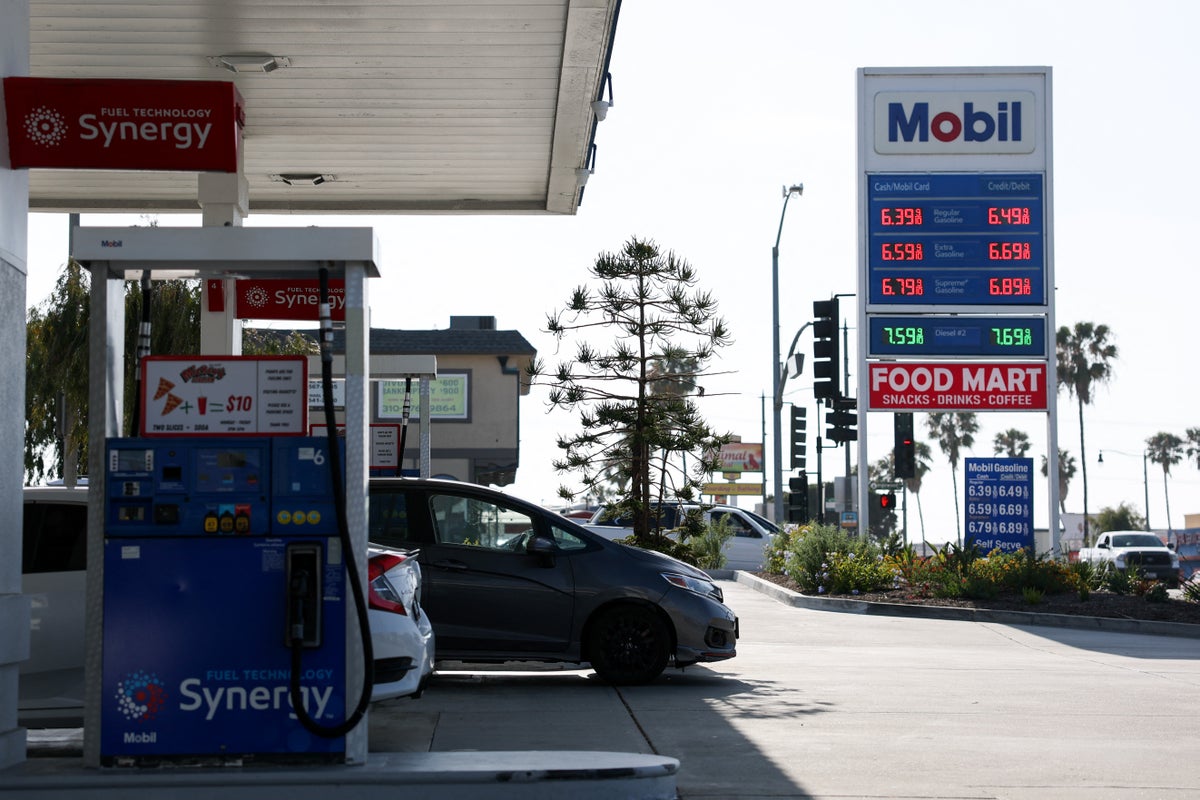
Oil prices held steady after US president Donald Trump said the US would help ships leave the Strait of Hormuz, starting on Monday.
Iran has rejected the plan, but Mr Trump also said talks with Iran could lead to positive outcomes.
A statement from the US Central Command said support would include guided-missile destroyers, over 100 land- and sea-based aircraft and 15,000 service members. A report from Axios later claimed the Navy would not necessarily escort ships through the strait.
Iran earlier said the US had responded to its 14-point proposal via Pakistan and it was reviewing the response, though Trump said it was unlikely to be acceptable.
Investors decided to reserve judgement and left Brent crude futures little changed at $108.35 per barrel, having recovered from an initial drop of more than two per cent, while US crude eased 0.1 per cent to $101.85.
Dealers noted a bulk carrier had reported being attacked by multiple small craft while transiting past Sirik in Iran on Sunday, though it was not clear how many ships would try to run through the Strait of Hormuz even with Navy protection.
A holiday in Japan made for thin trading conditions, leaving Nikkei futures up only modestly at 59,880 versus a cash close of 59,513.
MSCI’s broadest index of Asia-Pacific shares outside Japan gained 2.8 per cent, led by tech-heavy South Korean stocks which returned from holiday with a jump of 4.05 per cent. Chinese blue chips were off 0.06 per cent.
Eurotoxx 50 futures and Dax futures each added 0.3 per cent. S&P 500 futures gained 0.1 per cent and Nasdaq futures rose 0.3 per cent, as markets braced for more than 100 earnings reports this week.
Companies reporting include Advanced Micro Devices, Super Micro Computer, Palantir, Walt Disney and McDonald’s.
The S&P 500 EPS growth rate was running at 25 per cent and accounting for one-off gains at a still brisk 16 per cent, said analysts at Goldman Sachs in a note.
“Despite elevated energy prices and geopolitical uncertainty, corporate guidance and analyst estimate revisions have remained strong so far this quarter,” they said. “However, the reward for EPS beats has been unusually small.”
Concerns remained about the scale of artificial intelligence capex investment which was now at $751bn for 2026, $80bn above estimates at the start of the earnings season and 83 per cent above 2025 spending.

The threat of oil-driven inflation had also lifted bond yields in a challenge to equity valuations, while several major central banks had turned hawkish on policy.
Markets implied just 2 basis points of easing from the Federal Reserve by the end of the year compared with 11 basis points a week ago. Expectations for the European Central Bank had climbed to 76 basis points of hikes, with the Bank of England at 63 basis points.
Australia’s central bank meets on Tuesday and is considered likely to hike its cash rate for a third time running as it battles stubborn inflationary pressures.
The outlook for Fed policy could be budged by a raft of data this week which includes the payrolls report for April on Friday. Median forecasts are for a rise of 60,000 in jobs following March’s outsized 178,000 gain, though problems with seasonal adjustment make for much uncertainty.
Analysts at Citi, for instance, are predicting a 15,000 drop in payrolls and a rise in unemployment to 4.3 per cent.
In currency markets, the dollar was a shade softer as investors waited for more developments in the Middle East and, crucially, whether the Strait of Hormuz could be opened.
The dollar was steady at 157.21 yen, still smarting from last week’s Japanese intervention which analysts thought could have amounted to around $35bn.
The euro was flat at $1.1726, while the pound held at $1.3584 ahead of local elections in Britain which could see heavy losses for the ruling Labour Party.
In commodity markets, gold was 0.2 per cent lower at $4,603 an ounce, and well within recent trading ranges.


Yankees radio icon John Sterling dead at 87

Princess Charlotte shows off ‘sporty' Princess Kate trait in latest video

Canada’s Gildan’s Q1 strong on HanesBrands integration, outlook steady

-

 Tech7 days ago
A Brain Implant for Depression Is About to Be Tested in Humans
-

 Tech1 week ago
Almost 90% of women leave tech industry within 10 years | Computer Weekly
-
 Business7 days ago
‘I had £20,000 stolen and had to fight a 13-month fraud reporting rule to get it back’
-
 Business1 week ago
Pakistan’s oil market is fuelling the crisis | The Express Tribune
-

 Sports6 days ago
Pro wrestling star Steph De Lander reveals how colleague’s advice helped lead her to title triumph at ACW
-

 Entertainment7 days ago
Melania Trump says ABC should ‘take a stand’ on late-night host Kimmel
-
 Tech6 days ago
This Ambitious Laptop Doesn’t Leave Much Room for Your Hands
-

 Entertainment7 days ago
Norway joins Type 26 Frigate Programme to boost NATO naval power