

Business
United Airlines’ summer earnings and profit outlook top estimates, but revenue falls short


A United Airlines Boeing 737-MAX 8 aircraft departs at San Diego International Airport en route to New York on Aug. 24, 2024.
Kevin Carter | Getty Images
United Airlines on Wednesday forecast higher-than-expected earnings for the fourth quarter after a rocky start to 2025.
The carrier expects to earn between $3 and $3.50 a share for the last three months of the year, compared with analysts’ estimate of $2.86 a share.
United has been expanding its flying capacity, while its rivals have scaled back some of their growth plans after a glut of flights weighed on fares this year. The airline increased capacity 7% in the third quarter over last year. Unit passenger revenue for the three months ended Sept. 30 fell 3.3% for domestic travel and 7.1% for international. Sales from its lucrative loyalty program rose 9%.
CEO Scott Kirby on an earnings call on Thursday that the carrier expects earnings before interest, taxes, depreciation, and amortization from the loyalty program to double by the end of the decade.
“We’re just beginning to realize the full potential of the loyalty program,” he said.
In an interview last month, Kirby defended the airline’s growth plan and said the carrier was winning loyal customers through its network, new technology like complimentary inflight Wi-Fi, refreshed cabins and new lounges.
“Those investments over almost a decade, combined with great service from our people, have allowed United to win and retain brand-loyal customers, leading to economic resilience even with macro economic volatility through the first three quarters of the year and significant upside as the economy and demand are improving in the fourth quarter,” Kirby said in a release Wednesday.
Still, for the third quarter, United beat earnings expectations, although its revenue fell short of estimates.
Here is what United Airlines reported for the quarter that ended Sept. 30 compared with what Wall Street was expecting, based on estimates compiled by LSEG:
- Earnings per share: $2.78 adjusted vs. $2.62 expected
- Revenue: $15.23 billion vs. $15.33 billion expected
United’s third-quarter revenue was $15.23 billion, up 2.6% from $14.84 billion last year. Net income fell 1.7% to $949 million or $2.90 a share. Adjusting for one-time items including debt, among other things, United posted income of $909 million or $2.78 a share.
The carrier is vying with Delta Air Lines to win over more affluent travelers who splurge on seats, and it has expanded its global network with far-flung destinations like Greenland and Mongolia. United said in the third quarter, its premium-cabin revenue, which includes first class and other, roomier seats, rose 6%. United’s sales from no-frills basic economy 4% year over year.
In the spring and early summer, United and other carriers trimmed their earnings forecasts they made at the start of the year, after passenger demand dipped amid on-again, off-again tariffs, and an oversupply of flights weighed on airfare.





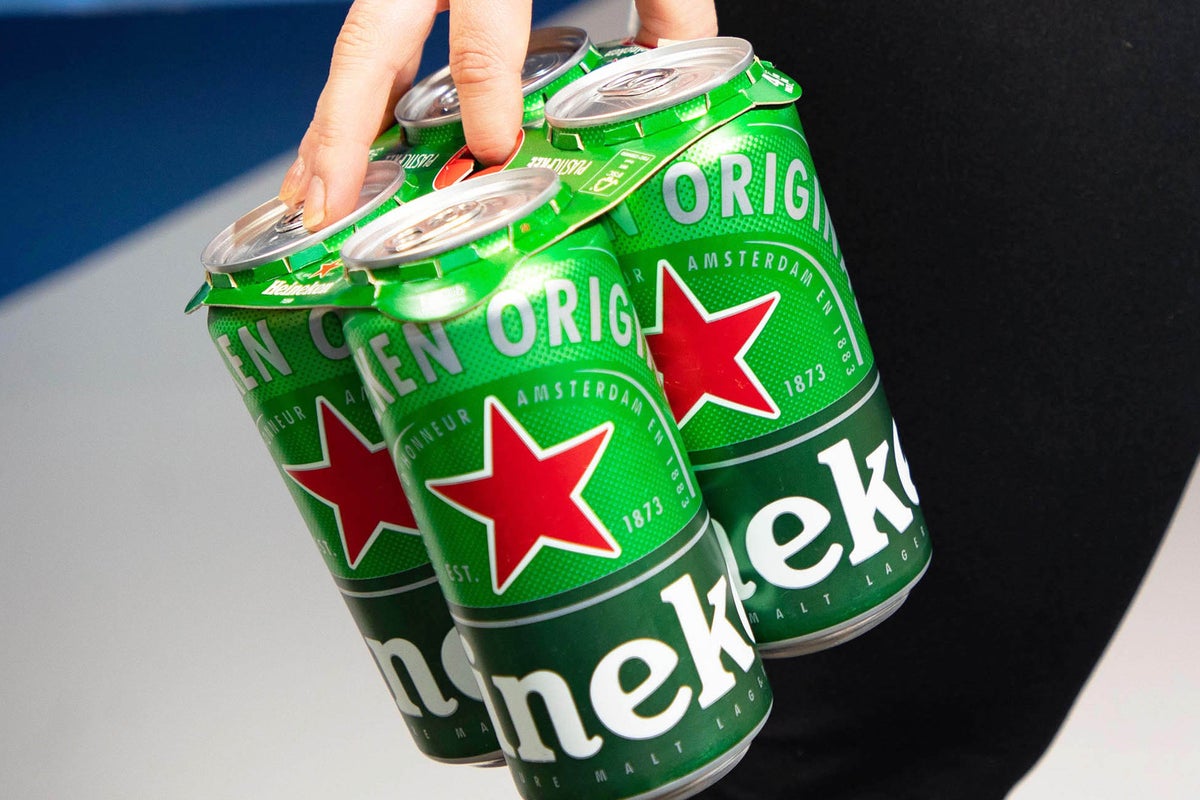
Heineken has revealed plans to invest more than £44 million into improvements for hundreds of its UK pubs.
The Dutch brewing giant said the cash injection into its Star Pubs operation, which runs 2,350 sites across the UK, will create around 850 jobs.
The major investment plan comes despite a challenging backdrop for the pub sector.
Pubs have come under pressure from rising labour costs and increases to national insurance contributions over the past year, while consumer spending has also come under pressure with concerns over inflation and rising unemployment.
However, pubs received additional business rates support from the Government from last month to help ease their cost pressures.
Lawson Mountstevens, Star Pubs’ managing director, said the company’s investment plan is partly aimed at boosting revenues to help the group cope with the recent “sustained increases in running costs”.
The plans will see the business invest £44.5 million this year into upgrades for 647 of its pubs.
It said 108 of its venues will see particularly significant cash injections, with these all set for transformations costing at least £145,000.
Heineken said the majority of pubs are owned by the group but independently operated by locals, with sports-focused venues an emphasis for investment in the run-up to the 2026 football World Cup.
The pub firm and brewer said it has pumped £328 million into British pubs since 2018.
It has already started work in 52 locations, including eight projects where it is reopening boarded-up pubs which have suffered from lengthy closures.
Mr Mountstevens urged the Government to reduce the tax burden on pubs to help ease the cost burden and support more job creation in the industry.
He said: “We can only do so much; the root-and-branch reform of business rates that the industry has been calling for over many years is urgently required, as well as a lowering of the burden of taxation on pubs, including VAT and beer duty.
“We are calling on the Government to support us in bringing out the best in the Great British pub.”

A company law appeals court on Monday rejected a challenge by mining billionaire Anil Agarwal’s Vedanta Ltd to the winning bid by Gautam Adani’s group for bankrupt real estate firm Jaiprakash Associates Ltd (JAL), whose assets include India’s only Formula One circuit. The National Company Law Appellate Tribunal (NCLAT) did not find merit in the issues raised by Vedanta and dismissed its two petitions. A Bench comprising Chairperson Justice (retired) Ashok Bhushan and Technical Member Barun Mitra held that the Committee of Creditors (CoC) were right in preferring Adani Group’s Rs 14,535 crore bid over Vedanta’s resolution plan for JAL. That decision was approved by the National Company Law Tribunal (NCLT), against which Vedanta went into an appeal in NCLAT. “No grounds have been made out by the appellant (Vedanta) to interfere with the decision of the adjudicating Authority (NCLT),” NCLAT order said. “There is no merit in the appeal. Both appeals are dismissed. There shall be no orders to pass.” NCLAT said the decision of the Committee of Creditors was based on “overall consideration of the respective resolution plan and was taken in its commercial wisdom,” said the appellate tribunal. JAL was admitted for insolvency proceedings in June 2024 after it failed to pay bank dues exceeding Rs 57,000 crore. The resolution process drew 28 expressions of interest, with six final bidders including Vedanta, Adani Enterprises and others. Adani and Vedanta emerged as frontrunners, with Adani’s proposal scoring higher on upfront recovery and overall value. The CoC approved Adani’s plan in November 2025 with a 93.81 per cent vote. Vedanta later submitted a revised offer, valued at Rs 16,070 crore, but creditors declined to consider it, citing rules barring post-deadline changes. Vedanta argued the process lacked transparency and that its revised bid offered superior value. Creditors countered that the revised proposal was submitted only after Vedanta became aware it was trailing the winning bid. The appellate tribunal had earlier declined to stay implementation of Adani’s plan, a decision subsequently upheld by the Supreme Court, which directed an expedited hearing while requiring key implementation decisions to receive tribunal approval. Monday’s ruling clears the way for Adani’s takeover of JAL unless Vedanta challenges it in the Supreme Court. In its order, NCLAT also said there has been “no material irregularity committed by Resolution Professional while conducting the plan resolution process.” NCLAT also dismissed Vedanta’s plea, where it had questioned the evaluation metrics adopted and had said its bid was Rs 3,400 crore higher in gross value terms and roughly Rs 500 crore more in net present value compared to the Adani Group’s bid. Rejecting this, NCLAT said “decision of CoC not approving the resolution plan of the appellant with a higher plan value of Rs 3,400 crores and NPV of Rs 500 crore as compared to plan of respondent No 3 (Adani) cannot be said to be arbitrary or perverse.” On March 17, the NCLT, Allahabad bench, approved Adani Enterprises Ltd’s Rs 14,535-crore bid to acquire JAL through the insolvency process. This was challenged by Vedanta before the appellate tribunal NCLAT. On April 23, the insolvency appellate tribunal had concluded its hearing after hearing the petitioner Vedanta and respondents, including the Resolution Professional, Committee of Creditors (CoC) and Adani Enterprises. Vedanta has questioned the evaluation metrics adopted by lenders of JAL, which had selected the lower bid of Rs 3,400 crore from Adani Enterprises for the debt-ridden company and questioned the commercial wisdom of CoC. Earlier, on March 24, NCLAT declined any interim stay over the Vedanta Group’s plea against the order passed by the NCLT approving Rs 14,535-crore bid by the Adani Group for acquiring JAL. However, it had also said the plan would be subject to the outcome of the appeals filed by the Anil Agarwal-led Vedanta Group. This interim order by NCLAT was challenged before the Supreme Court, which also declined to grant a stay. However, the apex court had directed that if the monitoring committee planned to take any major policy decision, it should first obtain the Tribunal’s sanction. Adani Enterprises had outbid Vedanta and Dalmia Bharat to win the bid for JAL. Adani got the maximum 89 per cent votes from creditors, followed by Dalmia Cement (Bharat), and Vedanta Group. The CoC defended its decision, saying the process complied with all Insolvency and Bankruptcy Code (IBC) rules. They maintained that no bidder has a guaranteed right to win, even if it offers the highest value. They said plans were evaluated on multiple factors, including upfront cash, feasibility, and execution, not just headline value. JAL, which has high-quality assets and business interests spanning real estate, cement manufacturing, hospitality, power and engineering & construction, was admitted to the CIRP in June 2024 after it defaulted on payments of loans aggregating Rs 57,185 crore. JAL has major real estate projects like Jaypee Greens in Greater Noida, a part of Jaypee Greens Wishtown in Noida (both on the outskirts of the national capital), and the Jaypee International Sports City, located near the upcoming Jewar International Airport. It also has three commercial/industrial office spaces in Delhi-NCR, while its hotel division has five properties in Delhi-NCR, Mussoorie, and Agra. JAL has four cement plants in Madhya Pradesh and Uttar Pradesh, and a few leased limestone mines in Madhya Pradesh. It also has investments in subsidiaries, including Jaiprakash Power Ventures Ltd, Yamuna Expressway Tolling Ltd, Jaypee Infrastructure Development Ltd, and several other companies.
Business
Manufacturing PMI rises up to 54.7 in April, Iran war pushes input costs higher – The Times of India
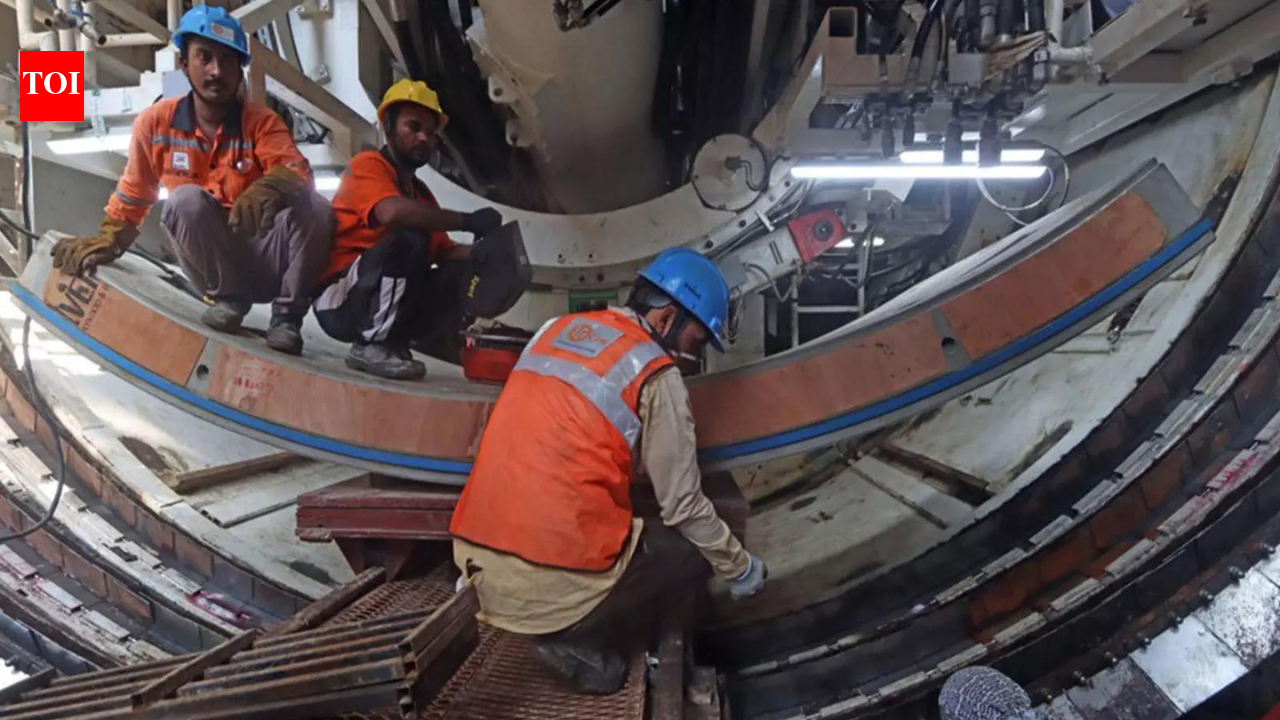
India’s manufacturing activity showed a mild recovery in April, with growth in new orders and output improving sequentially, though the pace remained among the slowest in nearly four years, PTI reported.The seasonally adjusted HSBC India Manufacturing Purchasing Managers’ Index (PMI) rose to 54.7 in April from 53.9 in March, signalling continued expansion but marking the second-slowest improvement in overall operating conditions in close to four years.In PMI terms, a reading above 50 indicates expansion, while below 50 denotes contraction.“India’s manufacturing PMI rose to 54.7 in April, up from 53.9 in March, but still marking the second-slowest improvement in operating conditions in nearly four years,” said Pranjul Bhandari, Chief India Economist at HSBC.The survey showed that growth in new orders and output strengthened compared with March, though both indicators remained weaker than levels seen over the past three-and-a-half years.Participants cited advertising efforts and resilient demand as factors supporting sales and production, but noted that competitive pressures, the Middle East conflict and delays in client approvals constrained growth.“Spillovers from the Middle East conflict are becoming more evident, particularly through inflation: input costs increased at the fastest pace since August 2022, and output prices rose at the quickest rate in six months,” Bhandari said, adding that “output, new orders (including exports) and employment all grew moderately, pointing to continued resilience in India’s manufacturing sector.”New export orders rose sharply at the start of the fiscal year, recording a seven-month high, with firms reporting stronger demand from markets including Australia, France, Japan, Kenya, mainland China, Saudi Arabia, the UAE and the UK.On the cost front, companies reported rising prices for aluminium, chemicals, electrical components, fuel, leather, petroleum products and rubber, with many attributing the increases to the Middle East war.Input costs rose at the fastest pace in 44 months, while output prices increased at the quickest rate in six months.The survey noted that overall inflation reached its highest level since August 2022, prompting manufacturers to raise selling prices accordingly.Despite only a marginal rise in outstanding business volumes, firms increased hiring, with job creation marking its strongest pace in ten months.While manufacturers remained optimistic about future growth, overall confidence softened from March levels, with expectations hinging on stronger marketing outcomes and approvals for pending projects.The HSBC India Manufacturing PMI is compiled by S&P Global based on responses from around 400 manufacturing firms.


Yankees radio icon John Sterling dead at 87

Princess Charlotte shows off ‘sporty' Princess Kate trait in latest video

Canada’s Gildan’s Q1 strong on HanesBrands integration, outlook steady

-

 Tech7 days ago
A Brain Implant for Depression Is About to Be Tested in Humans
-

 Tech1 week ago
Almost 90% of women leave tech industry within 10 years | Computer Weekly
-
 Business7 days ago
‘I had £20,000 stolen and had to fight a 13-month fraud reporting rule to get it back’
-
 Business1 week ago
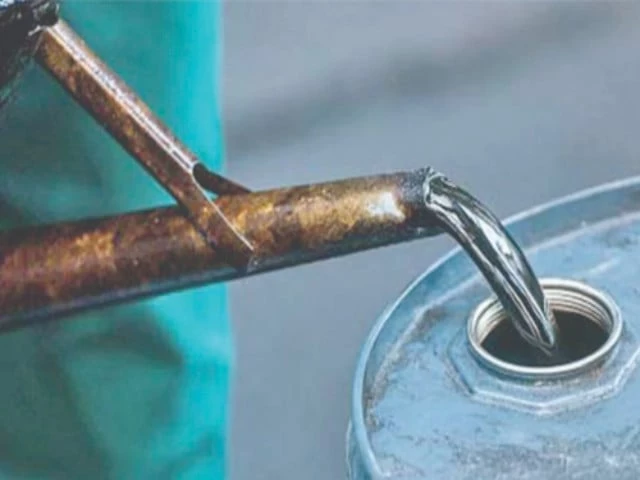
Pakistan’s oil market is fuelling the crisis | The Express Tribune
-

 Sports6 days ago
Pro wrestling star Steph De Lander reveals how colleague’s advice helped lead her to title triumph at ACW
-

 Entertainment7 days ago
Norway joins Type 26 Frigate Programme to boost NATO naval power
-

 Entertainment7 days ago
Melania Trump says ABC should ‘take a stand’ on late-night host Kimmel
-

 Tech6 days ago
This Ambitious Laptop Doesn’t Leave Much Room for Your Hands