

Business
SIP, TIP, HIP: How Starting These By 30 Helps Build A Stress-Free Financial Future


Last Updated:
SIP (Systematic Investment Plan), TIP (Term Insurance Plan), and HIP (Health Insurance Plan) together create a balanced mix of growth, protection, and security.
Experts suggest maintaining an emergency fund covering 3-6 months of expenses.
In today’s fast-paced and stressful world, achieving financial stability early in life is crucial. Experts say that by the age of 30, everyone should aim to have a strong foundation in three key areas – SIP (Systematic Investment Plan), TIP (Term Insurance Plan), and HIP (Health Insurance Plan). Together, these create a balanced mix of growth, protection, and security.
Rakesh Bhandari, director at Nirmal Bang, said, “This should be done carefully and very smartly so that your retirement life is spent in the right way.”
In Your 30s? Build Your ‘SIP-TIP-HIP’ Foundation
Your 30s are the decade when most major financial goals, such as buying a home, planning for children’s education, and preparing for retirement, begin to take shape. Setting up this three-pillar framework early helps you grow wealth, safeguard income, and protect against rising health costs without unnecessary complexity.
1. SIP: Systematic Investment Plan for Long-Term Growth
A SIP helps you invest regularly in equity mutual funds, enabling rupee-cost averaging and the power of compounding over time.
Why it matters: Long-term investments in Indian large-cap equities (like the Nifty 50 TRI) have historically delivered double-digit annualised returns. Multiple rolling-return studies (1992-2024) show that the longer you stay invested, the lower your chances of negative returns. While past performance is not a guarantee, time in the market, not timing the market, has consistently worked in investors’ favour.
Smart move: “Start small but stay consistent. Increase your SIP amount by 5-10% every year in line with salary hikes. This ‘step-up SIP’ strategy can significantly boost your corpus compared to a flat SIP,” said Bhandari.
Action cue: Pick an amount you can sustain even during market downturns and automate the investment for discipline.
2. TIP: Term Insurance Plan for Income Protection
A Term Insurance Plan (TIP) ensures your family’s financial stability if something unexpected happens to you.
Why start in your 30s: Premiums are lowest when you’re young and healthy. You can also lock in a long coverage period that spans your peak earning years.
How much cover: A general rule is to have coverage worth 10-15 times your annual income, adjusted for loans and future goals. Online insurance calculators can help fine-tune the number.
What it does: Provides a safety net so your family’s lifestyle, education, and long-term financial goals stay intact even in your absence.
Action cue: “Opt for a pure term plan, avoid investment-linked policies. Choose adequate coverage and a tenure that extends beyond your working life and your children’s education years,” Bhandari added.
3. HIP: Health Insurance Plan for Rising Medical Costs
Health insurance is your shield against medical inflation, which continues to rise sharply in India.
The reality: Government data shows health inflation averaging around 4-5% annually, while industry studies suggest actual medical cost inflation is often in the low to mid-teens. With nearly 46-47% of health expenses still paid out-of-pocket, a single hospitalisation can derail your savings.
What to buy: A family floater plan with adequate sum insured, restoration benefits, day-care coverage, and a no-claim bonus. As your income grows, enhance protection with a super top-up plan.
Action cue: “Buy early. You’ll pay lower premiums, complete waiting periods sooner, and stay protected as lifestyle-related health risks rise,” Bhandari said.
How the Trio Works Together
- SIP builds wealth for long-term goals.
- TIP safeguards those goals if your income stops unexpectedly.
- HIP prevents medical emergencies from eating into your investments.
Together, they create a balanced and resilient personal finance system.
Simple Hygiene Rules
Maintain an emergency fund covering 3-6 months of expenses.
Review your cover amounts annually, especially after salary hikes, new loans, or life changes.
Automate SIPs and insurance premiums so your protection never lapses.
Disclaimer:Disclaimer: The views and investment tips shared in this article are for general information purposes only. Readers are advised to consult a certified financial advisor before making any investment decisions.

Haris is Deputy News Editor (Business) at news18.com. He writes on various issues related to personal finance, markets, economy and companies. Having over a decade of experience in financial journalism, Haris h…Read More
Haris is Deputy News Editor (Business) at news18.com. He writes on various issues related to personal finance, markets, economy and companies. Having over a decade of experience in financial journalism, Haris h… Read More
October 18, 2025, 16:14 IST
Read More





Business
Top stocks to buy today: Stock recommendations for April 24, 2026 – check list – The Times of India

Stock market recommendations: Bharat Electronics, and Colgate-Palmolive (India) have been recommended as the top stocks to buy today (April 24, 2026) by Bajaj Broking Research. Take a look at the target prices and expected returns:Bharat ElectronicsBuy in the range of ₹ 440.00-450.00
The stock is in structural up trend forming higher high and higher low in all time frame signaling strength and continuation of the uptrend. The entire up move of the last 8 months is in a rising channel as can be seen in the chart highlighting sustained demand at an elevated level.On the smaller time frame, the stock is at the cusp of generating a breakout above the bullish Flag like formation as post a sharp up move in the first 3 weeks of April the stock went into a consolidation phase in the last four sessions. It is seen resuming up move and is at the cusp of generating a breakout above the bullish Flag formation highlighting continuation of the up move and offers fresh entry opportunity.We expect the stock to extend the up move and head towards 495 levels in the coming months being the confluence of the 123.6% external retracement of the previous decline 473 – 400 and the upper band of the rising channel of the last 8 months.Colgate-Palmolive (India)Buy in the range of 2120-2160
The share price of Colgate-Palmolive has generated a breakout above bullish Flag pattern signaling continuation of the up move and offers fresh entry opportunity.We expect the stock to head higher towards 2330 levels in the coming months being the measuring implication of the bullish flag breakout.The daily 14 periods RSI is in buy mode thus supports the positive bias in the stock.(Disclaimer: Recommendations and views on the stock market, other asset classes or personal finance management tips given by experts are their own. These opinions do not represent the views of The Times of India)
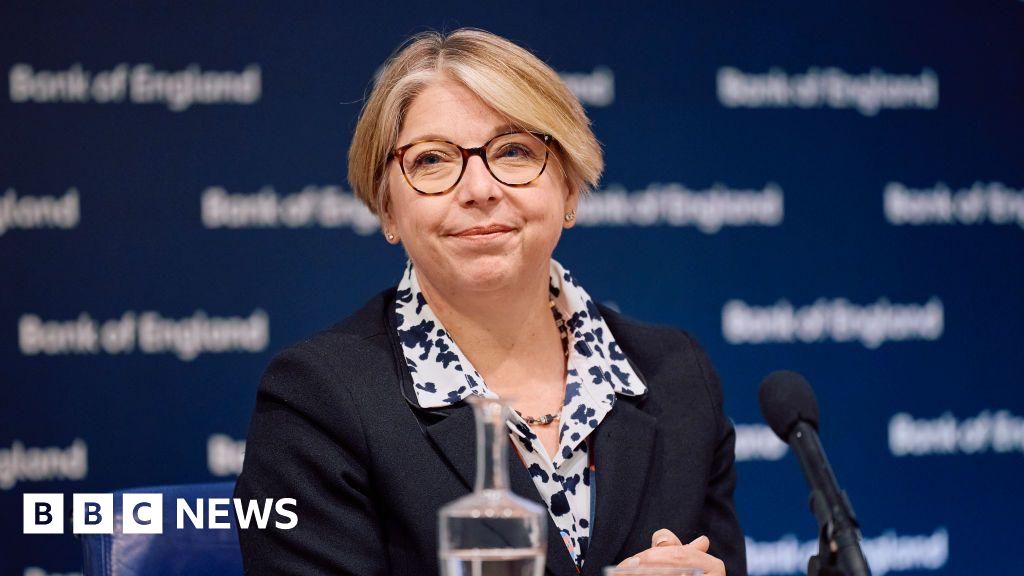
It is unusual for a senior figure at the Bank to be so forthright on market movements.
Source link

Consumer confidence has fallen for the third consecutive month amid household “jitters” over rapid price rises, figures show.
GfK’s long-running consumer confidence index fell four points to minus 25 in April, following falls of two points and three points in March and February respectively.
The deepening concern was driven by perceptions of the UK economy, with a six-point slide in confidence for the next 12 months to minus 43, its lowest level since February 2023.
Confidence in personal finances over the coming year fell five points to minus four – one point lower than this time last year.
The major purchase index – an indicator of confidence in buying big ticket items – held steady, albeit at minus 18 but one point better than last April.
The only measure to improve was the savings index – often an indication that households are concerned about their finances and looking to build contingency funds – which is up five points to 32.
Neil Bellamy, consumer insights director at GfK, said: “Consumers really do have the jitters now.
“It is a year since we last saw a monthly drop of this size, and we have to go back to October 2023 to find the last time consumer confidence was lower.
“Everyone is grappling with rapid price rises, especially at the fuel pumps, which are taking a dent out of household budgets, and people know further price hikes are coming.
“Consumer confidence is deteriorating sharply, with fuel prices and threats of more energy price increases acting as constant reminders of inflation.
“While the Gulf crisis is intensifying pressures, much of the current strain reflects earlier domestic cost increases.
“How long can all this disruption and pain continue?”


Former Giants co-owner Steve Tisch seen in team’s draft room

UK’s clothing exports down 7.6% to $293 mn in Jan-Feb
Top stocks to buy today: Stock recommendations for April 24, 2026 – check list – The Times of India

-

 Fashion1 week ago
France’s LVMH Q1 revenue falls 6%, shows resilience amid Iran war
-

 Entertainment1 week ago
Is Claude down? Here’s why users are seeing errors
-

 Sports1 week ago
PSL 11: Peshawar Zalmi win toss, opt to field first against Quetta Gladiators
-

 Tech1 week ago
The Deepfake Nudes Crisis in Schools Is Much Worse Than You Thought
-
 Business1 week ago
Standard Life buys rival in £2b deal to create savings giant
-

 Tech1 week ago
CYBERUK ’26: UK lagging on legal protections for cyber pros | Computer Weekly
-

 Fashion1 week ago
Raymond unveils luxury Chairman’s Collection Store in Mumbai
-
 Business1 week ago
PepsiCo earnings beat estimates as North American food business improves