

Business
Starting With Just Rs 10,000, Here’s How This Investor Built A Rs 60 Crore Portfolio


Last Updated:
His portfolio was built from scratch over 15 years, with 90% in mid- and small-cap funds averaging 17–18% returns

Calling himself a “sleepy investor,” he says he prefers steady, disciplined investing over high-risk ventures. (News18 Hindi)
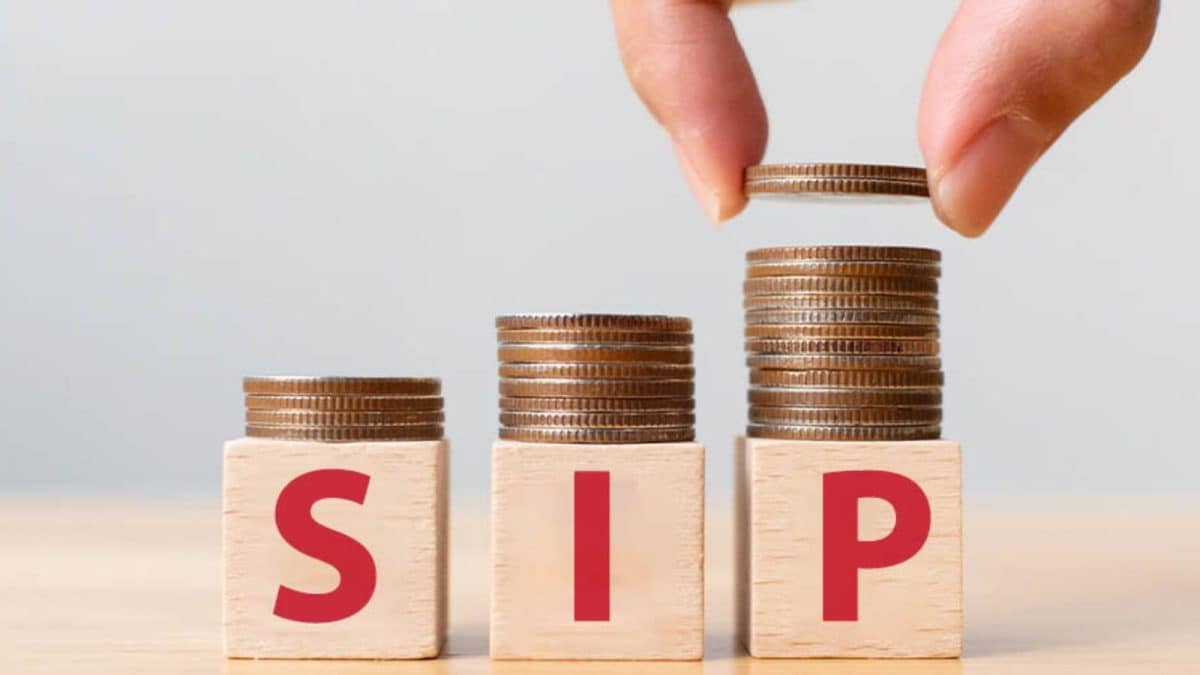
The world of mutual funds has witnessed remarkable success through disciplined investing, and Gajendra Kothari’s journey exemplifies how Systematic Investment Plans (SIPs) can build substantial wealth over time.
Initially, Kothari squandered Rs 50 lakh in Futures and Options (F&O) trading, but once he understood the importance of SIPs, he began investing Rs 10,000 monthly. Astonishingly, his monthly SIP now surpasses Rs 40 lakh, making his story a beacon for mutual fund investors.
Kothari, who aims to have a Rs 3,000 crore portfolio by age 65, is the founder of Etica Wealth Capital.
His entry into mutual funds began in 2004 at age 24, when he joined UTI Mutual Fund after reaching Mumbai through campus placement. At that time, the mutual fund industry was valued at Rs 2-3 lakh crore, far smaller than today’s Rs 75 lakh crore.
Kothari initially had little knowledge of mutual funds, and the industry itself offered minimal awareness. Those around him doubted the potential of wealth creation through mutual funds. In his early years, he made several mistakes—investing in ELSS funds solely for tax savings without understanding the power of compounding. With a salary of just Rs 30,000, saving in Mumbai’s costly lifestyle was challenging, and even more so after marriage.
Lost Rs 50 Lakh In F&O Trading
He later got an opportunity to work in London, where his income grew significantly. However, he soon made the biggest mistake of his life, investing two years’ savings in F&O (Futures and Options) trading. When global markets crashed in 2008, he got caught in day-trading and leveraged positions, losing Rs 50 lakh, a huge sum at the time. The loss left him shocked and wary of the markets, but it taught him a vital lesson: disciplined investing, not speculation, is key.
Gajendra Kothari said in an interview, “This was the most valuable lesson of my life, though it cost me Rs 50 lakh.” This experience inspired him to start his own firm. While at UTI, he advised high-net-worth individuals (HNIs) and realized he could simplify investing for everyday investors. In 2009, despite the industry facing challenges after SEBI’s entry load ban, Gajendra launched Etica Wealth.
Small Investment, Big Dreams
His first SIP, started in August 2010, was Rs 10,000 monthly split between small cap funds and ELSS funds. His simple philosophy was, “If I’m advising clients to invest through SIPs, I should start with one myself.” When his daughter was born in December, he continued the SIP without interruption. He neither added nor withdrew funds and never missed an installment. Over 15 years, his total investment of Rs 18 lakh grew to Rs 86 lakh, with the small-cap fund delivering a CAGR of 21% and the ELSS fund a CAGR of 18%.
Kothari said, “This is the first SIP of my life, and I will never touch it. It will be my longest-term investment and teach me the most.” This SIP showcases the power of compounding: his first installment of Rs 5,000 has grown to Rs 55,000–60,000, nearly 11–12 times. He adds, “Imagine, in 30 years, each installment could reach Rs 7 lakh, over 140 times the original amount!”
During COVID-19 in 2020, his SIP returns were just 7% after 10 years, but he remained patient. Compared to a PPF yielding 7.1% guaranteed, his investment was delivering 18%, all tax-free, as he never sold any units.
SIP Growth: From Rs 10,000 To Rs 41 Lakh
Kothari gradually increased his SIP contributions, starting with Rs 10,000, then Rs 50,000, Rs 1 lakh, and by 2020, he was investing Rs 6–7 lakh per month. Today, his monthly SIP stands at Rs 41.2 lakh, amounting to nearly Rs 5 crore annually. Gajendra earned all this money through his job and business, what is known as active income, and consistently invested it into SIPs.
Kothari advises, “Focus on active income during the first 15 years, as that forms the foundation for investments. As you grow older, passive income from SIPs will surpass it.”
About 90% of his wealth came from SIPs, achieved automatically. Whether the market was at 85,000 or 80,000, his SIPs continued uninterrupted. “If it had been done manually, you might have missed payments or stopped investing,” he adds.
Current Size Of Gajendra Kothari’s Portfolio
Kothari’s portfolio today is valued at Rs 60 crore, built from scratch over 15 years. He reveals that 90% of his investments are in mid- and small-cap funds, yielding average returns of 17–18%. He avoids FDs, PPF, crypto, and direct stocks, despite holding a CFA and an MBA in Finance. Calling himself a “sleepy investor,” he says he prefers steady, disciplined investing over high-risk ventures.
Gajendra Kothari’s Investment Strategy
Kothari’s investment strategy takes a contrarian approach. He invests in underperforming sectors—for instance, putting Rs 20 lakh into China Tech when it dropped 50%, and another Rs 40 lakh when it fell 45%. Today, his portfolio enjoys a CAGR of around 23%.
His journey wasn’t easy. The 2008 crash wiped out much of his wealth, but he learned that markets are cyclical, and volatility creates opportunities. Even during COVID, when returns fell to 7%, he remained patient.
Kothari says, “The market gives you the returns you deserve. Staying disciplined is crucial. Investing is a mathematical game. The process must never be interrupted.”
Investment Tips For Everyday Investors
- Start Small: Begin with an initial investment of Rs 10,000, gradually increasing over time.
- Automation: SIPs work best when automated, reducing the need for constant decision-making.
- Patience: Investments should continue even during market downturns, with additional funds allocated when markets show recovery.
- Active Income: Growth in income provides the source for further investments.
- Tax Efficiency: Holding investments long-term helps save on taxes.
- Portfolio Management: Maintaining a portfolio of 5–6 well-chosen funds ensures better control and diversification.
Disclaimer:Disclaimer: The views and investment tips by experts in this News18.com report are their own and not those of the website or its management. Users are advised to check with certified experts before taking any investment decisions.
September 11, 2025, 17:58 IST
Read More





Heineken has announced a substantial investment exceeding £44 million into hundreds of its pubs across the UK, a move expected to create approximately 850 jobs.
The Dutch brewing giant’s Star Pubs operation, which manages 2,350 sites nationwide, is undertaking this significant financial commitment despite a challenging period for the pub sector.
The industry has faced considerable pressure over the past year, grappling with escalating labour costs and increases in national insurance contributions.
Concurrently, consumer spending has been constrained by concerns over inflation and rising unemployment, further impacting pub revenues. However, pubs did receive additional business rates support from the government last month, aimed at alleviating some of these financial burdens.
Lawson Mountstevens, managing director of Star Pubs, indicated that the investment strategy is partly designed to bolster revenues and help the group navigate the recent “sustained increases in running costs”.
This year, £44.5 million will be allocated to upgrades for 647 pubs. A notable 108 of these venues are earmarked for particularly significant cash injections, with each transformation costing at least £145,000.
Heineken clarified that while the majority of its pubs are group-owned, they are independently operated by local licensees. A key focus for this investment, particularly in the lead-up to the 2026 football World Cup, will be on sports-focused venues.
The pub firm and brewer has a history of significant investment in British pubs, having pumped £328 million into the sector since 2018. Work has already commenced at 52 locations, including eight projects dedicated to reopening boarded-up pubs that have endured lengthy closures.
Mr Mountstevens also urged the government to reduce the tax burden on pubs, arguing it would ease cost pressures and foster further job creation within the industry.
He stated: “We can only do so much; the root-and-branch reform of business rates that the industry has been calling for over many years is urgently required, as well as a lowering of the burden of taxation on pubs, including VAT and beer duty.”
He concluded with a direct appeal: “We are calling on the Government to support us in bringing out the best in the Great British pub.”

GameStop’s boss Ryan Cohen says he sees potential to make eBay a much bigger rival to Amazon.
Source link

It comes as the US said on Monday it will begin to help “guide” vessels out of the Strait of Hormuz.
Source link


It took 40 years for technology to catch up to this zipper design

Britney Spears case ends with guilty plea in reckless driving matter

India’s Modi celebrates ‘record’ win in opposition-held West Bengal

-

 Tech1 week ago
A Brain Implant for Depression Is About to Be Tested in Humans
-

 Tech1 week ago
Almost 90% of women leave tech industry within 10 years | Computer Weekly
-
 Business7 days ago
‘I had £20,000 stolen and had to fight a 13-month fraud reporting rule to get it back’
-
 Business1 week ago
Pakistan’s oil market is fuelling the crisis | The Express Tribune
-

 Sports6 days ago
Pro wrestling star Steph De Lander reveals how colleague’s advice helped lead her to title triumph at ACW
-

 Entertainment1 week ago
Melania Trump says ABC should ‘take a stand’ on late-night host Kimmel
-

 Tech6 days ago
This Ambitious Laptop Doesn’t Leave Much Room for Your Hands
-

 Entertainment7 days ago
Norway joins Type 26 Frigate Programme to boost NATO naval power