

Politics
Austria deports first Afghan since Taliban seized power, says more to come

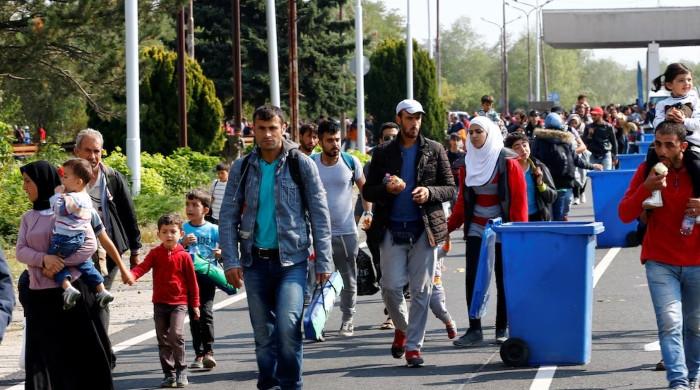
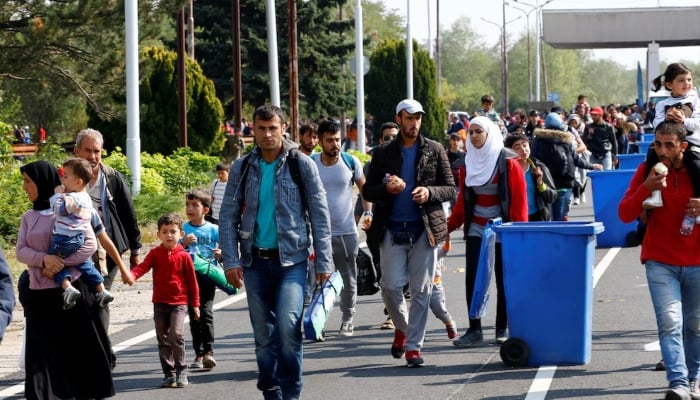
VIENNA: Austria deported an Afghan national back to his home country on Tuesday for the first time since the Taliban seized power there four years ago, and the conservative-led coalition government in Vienna said that more would follow soon.
The government has made fighting illegal immigration a top priority, apparently seeking to erode support for the far-right Freedom Party, or FPO, by focusing on one of its core issues.
The three-party ruling coalition of centrist parties took office in March after the FPO won a parliamentary election but failed to form a governing alliance. The FPO has maintained its lead in opinion polls.
“This morning, a man convicted of serious crimes was deported to Kabul — the first deportation to Afghanistan since 2021,” Chancellor Christian Stocker of the conservative Austrian People’s Party wrote on X.
“Austria is thus sending a clear message: zero tolerance for anyone who has forfeited their right to remain by committing criminal offences,” he added.
In July, Austria became the first European Union country to deport a Syrian back to their home country since the civil war there broke out, despite objections by human rights groups that it was too soon to know if it was safe to do so.
Austria has been saying for months that it hopes to resume deportations to Afghanistan despite similar objections.
Amnesty International said in a statement that Afghanistan remains one of the most dangerous countries in the world.
“Anyone who deports people to a state that commits crimes against its own people is deliberately denying protection and breaking the law,” it said, adding: “This betrayal of human rights must be stopped immediately!”
Syria and Afghanistan are the top countries of origin of asylum-seekers in Austria. The government has said that initially those deported will primarily be criminal offenders.
“The Interior Ministry under Gerhard Karner is preparing further deportations,” Stocker said.
The deportation comes just a day after the European Union said that it has “initiated exploratory contacts” with the Taliban regime to boost deportations of failed asylum seekers.
A majority of EU nations had urged Brussels to reach out to Kabul to boost expulsions.
In a letter initiated by Belgium, 20 EU member states urged the European Commission to take action to enable both voluntary and forced returns of Afghans with no right to stay.
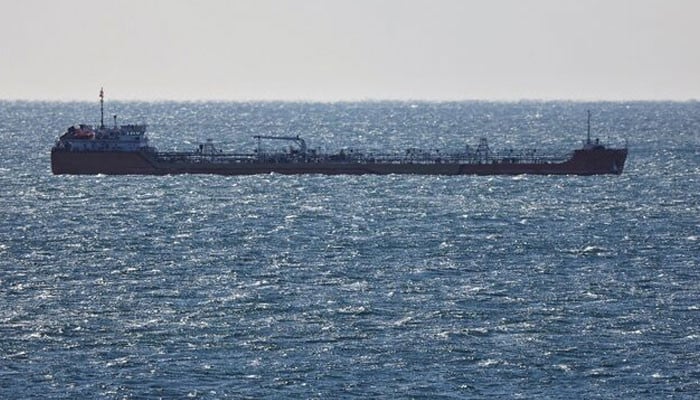
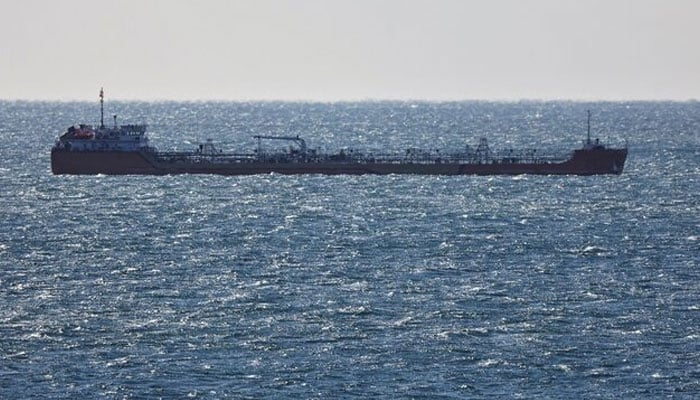
DUBAI: Unidentified attackers hijacked an oil tanker on Saturday off the coast of Yemen in the Gulf of Aden and directed it towards Somalia, the Yemeni coast guard said.
According to the agency, the tanker EUREKA was seized off Yemen’s Shabwa province by a group who “boarded, took control of it, then steered it… in the direction of the Somali coast”.
The coast guard, which is affiliated with Yemen’s internationally recognised government, vowed to investigate the attack.
“The location of the tanker has been determined, and work is under way to monitor it and take the necessary measures in an attempt to recover it and ensure the safety of its crew,” it said, without identifying the crew’s numbers or nationality.
According to the website Marine Traffic, the EUREKA is a Togolese-flagged oil products tanker that was reported to have been in the UAE port of Fujairah in late March.
Piracy was rampant off the coast of Somalia in the 2000s, peaking in 2011 with hundreds of attacks, but was significantly reduced by international naval deployments and new tactics by commercial shipping.
But in recent weeks attacks have increased again, according to a report by the European Union naval mission deployed off the shores of the troubled east African country.
Operation Atalanta, the EU’s naval force for Somalia, monitored three attacks in late April, according to its information service, the Maritime Security Centre Indian Ocean (MSCIO).
Since February 28, shipping in the region has also been disrupted by the US-Israeli war against Iran, but there was no immediate indication that Saturday’s hijacking was linked to the conflict.
Last month, a tanker was captured in the Gulf of Aden by a new group of pirates operating from the port town of Garacad in the Puntland state of northeastern Somalia, a local security official told AFP.
- Contract supports APG-66 and APG-68 radar systems.
- Work to be completed by March 2036.
- Includes multiple allies under foreign military sales plan.
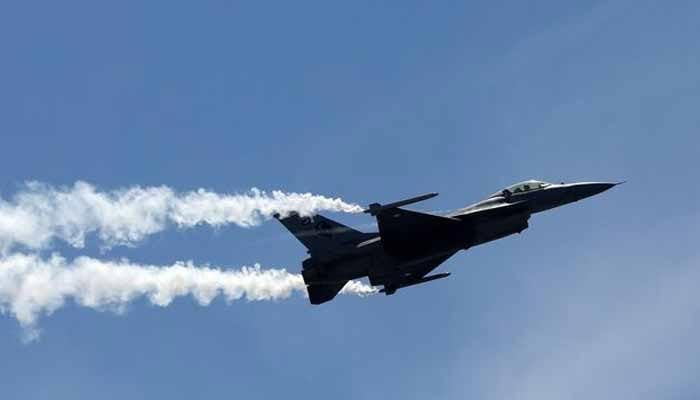
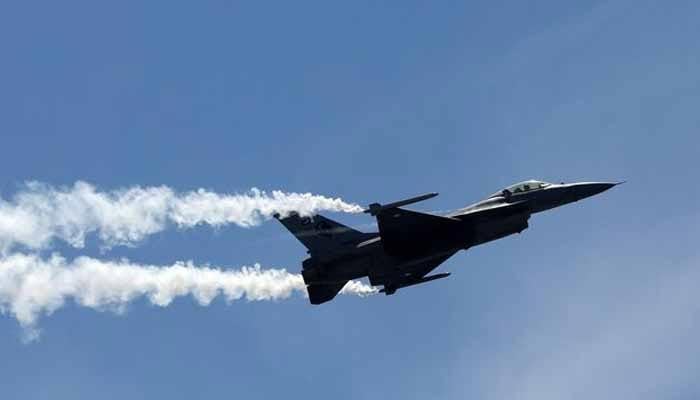
The United States Air Force has contracted Northrop Grumman Systems Corp. in a $488 million deal to provide engineering and technical support for F-16 radar systems under its Foreign Military Sales programme, with Pakistan among the beneficiary countries.
According to an official award notice issued by the US Department of War, the firm-fixed-price, indefinite-delivery/indefinite-quantity contract covers support for F-16 System Programme Office Foreign Military Sales (FMS) as well as Air Force and Navy requirements.
The contract includes engineering and technical support for APG-66 and APG-68 radar systems. The work will be carried out at Linthicum Heights, Maryland, and is expected to be completed by March 31, 2036.
The contract involves foreign military sales to multiple countries, including Bahrain, Belgium, Chile, Denmark, Egypt, Greece, Indonesia, Iraq, Israel, Jordan, Korea, Morocco, the Netherlands, Norway, Oman, Pakistan, Poland, Portugal, Romania, Thailand and Türkiye.
The US Air Force said the contract was awarded on a sole-source basis. Fiscal 2026 non-appropriated, Air Force and Navy funds amounting to $2,644,922 have been obligated at the time of the award.
The Air Force Lifecycle Management Centre at Hill Air Force Base, Utah, is the contracting authority for the agreement, which was awarded on April 27, 2026.
The development comes months after the United States, in December 2025, approved the sale of advanced technology and support services worth $686 million for Pakistan’s F-16 fighter aircraft fleet.
According to a letter from the US Defence Security Cooperation Agency (DSCA) to Congress dated December 8, the package covers Link-16 data link systems, cryptographic gear, avionics upgrades, training, and wide-ranging logistical support.
The DSCA says the decision aligns with Washington’s broader strategic aims, stating the sale “will support the foreign policy and national security objectives of the United States by allowing Pakistan to retain interoperability with US and partner forces in ongoing counterterrorism efforts and in preparation for future contingency operations.”
The letter notes that the upgrades are intended to modernise Pakistan’s Block-52 and Mid-Life Upgrade F-16s and address operational safety requirements. According to the letter, the sale will “maintain Pakistan’s capability to meet current and future threats by updating and refurbishing its Block-52 and Mid Life Upgrade F-16 fleet.”
- US approves of sales to Qatar, UAE, Kuwait and Israel.
- US govt says emergency exists to waive congressional review.
- Washington faces scrutiny for military ties with Kuwait, UAE, Qatar.
US President Donald Trump’s administration has bypassed congressional review to approve military sales totaling over $8.6 billion to Middle Eastern allies Israel, Qatar, Kuwait and the United Arab Emirates.
The State Department announcements on Friday came as the US and Israel’s war against Iran marked nine weeks since its start and more than three weeks since a fragile ceasefire came into effect.
The State Department said US Secretary of State Marco Rubio determined that an emergency existed that required immediate sales to those countries and waived the congressional review requirements for the sales.
The announcements included approving military sales to Qatar of Patriot air and missile defence replenishment services costing $4.01 billion and of Advanced Precision Kill Weapon Systems (APKWS) costing $992.4 million.
The principal contractor in the APKWS sales to Qatar, Israel and the UAE was BAE Systems, the State Department said.
RTX and Lockheed Martin were the principal contractors in the integrated battle command system sale to Kuwait and in the Patriot air and missile defense replenishment sale to Qatar, the State Department added.
Northrop Grumman was also a principal contractor in the Kuwaiti sale.
Over the years, Washington has faced scrutiny for military ties with Kuwait, the UAE and Qatar over those countries’ human rights track records that rights advocates say involve restrictions on and reported abuses of minorities, journalists, voices of dissent, the LGBT community and labourers.
Those nations have denied supporting or engaging in domestic rights abuses.
US support for Israel has also come under scrutiny from rights experts, particularly over Israel’s assault on Gaza that has killed tens of thousands, caused a hunger crisis and led to assessments of genocide from scholars and a UN inquiry.
Israel calls its actions self-defence after Hamas-led fighters killed 1,200 people in an October 2023 attack.
Washington has maintained support for its allies.


5/2: Saturday Morning – CBS News

Raptors star RJ Barrett nails season-saving 3-pointer to force Game 7 against Cavaliers

Oil tanker hijacked off Yemen, diverted towards Somalia: Yemen coast guard

-

 Tech5 days ago
A Brain Implant for Depression Is About to Be Tested in Humans
-

 Tech1 week ago
They Wanted to Join Raya. They’ve Been on the Waiting List for Years
-

 Tech6 days ago
Almost 90% of women leave tech industry within 10 years | Computer Weekly
-

 Tech1 week ago
Why Do I Like Dyson’s PencilVac So Much?
-

 Fashion1 week ago
North India cotton yarn steady despite continued push by spinners
-

 Sports5 days ago
Toulouse fall to first home defeat for a year | The Express Tribune
-

 Entertainment1 week ago
Anne Hathaway makes shocking confession about Taylor Swift’s music
-

 Sports1 week ago
US says Iran can play in Fifa World Cup but IRGC-linked individuals won’t be allowed