

Business
GM plans to launch eyes-off driving, Google AI and other new in-vehicle tech by 2028


Mary Barra speaks onstage during WSJ’s Future of Everything 2025 at The Glasshouse on May 28, 2025 in New York City.
Dia Dipasupil | Getty Images
NEW YORK — General Motors is targeting a suite of new software initiatives for its vehicles over the next three years, including an in-vehicle artificial intelligence assistant from Google and a driver-assistance system that can largely control the vehicle without human interaction or monitoring.
GM said the conversational Google Gemini AI will begin launching in its vehicles next year, followed by the new driver-assistance system, which will allow drivers to be hands-free and take their eyes off the road under certain circumstances, in 2028.
GM CEO Mary Barra and other executives made the announcements Wednesday as part of a “GM Forward” software event that also showcased other initiatives designed to “transform the car from a mode of transportation into an intelligent assistant,” the automaker said.
The company also announced that it is working on a new centralized computing platform, which is planned to roll out starting with the Escalade IQ in 2028; increased use of collaborative robots, also known as cobots, that can work alongside humans; and expanding availability of products from its GM Energy business.
GM displays its plans for a new centralized computing platform during the automaker’s “GM Forward” event on Oct. 22, 2025, in New York City.
Michael Wayland | CNBC
“Today we’ll share our vision for our vehicles, our industry and how we’re driving the future of transportation forward,” Barra said to kick off the event in lower Manhattan.
‘New era of mobility’
GM said the announcements are meant to usher in a “new era of mobility” for the company, which has struggled to achieve such initiatives in the past. Its previous efforts at moving forward include announcing plans in 2021 to double revenue by 2030, led by many now-defunct growth businesses, as well as growing annual software and services revenue to between $20 billion and $25 billion.
In recent years, it also killed an “Ultra Cruise” system meant to be able to drive in 95% of circumstances that was initially due to come out in 2023 and folded its Cruise robotaxi business.
GM executives on Wednesday declined to discuss revenue potential of the new announcements. CFO Paul Jacobson has previously walked back the doubling revenue goal, but has noted the company’s growing revenue, up 9.1% last year to $187.44 billion.
GM graphic of the automaker’s upcoming centralized computing design that’s set to debut in the Cadillac Escalade IQ in 2028.
GM
GM President Mark Reuss on Wednesday said the company’s revenue plans are “pretty much on track … maybe a year or two different” as it plans to continue to grow revenue, especially with the technologies announced Wednesday. He also said these initiatives are “very different” than prior announcements, as they’re tangible products that are entering the market shortly.
As of the third quarter of this year, GM recognized $2 billion from software services. That’s up from 2021, when the plans were announced and it took the full year to hit that mark. It also cited $5 billion in deferred revenue, up 90% from a year earlier, to end the third quarter.
The event comes a day after GM reported standout third-quarter earnings and upped its guidance, pushing the stock to have its second-best day on record since the automaker’s 2009 emergence from bankruptcy.
GM stock on Wednesday was trading relatively flat.
AI
GM said the artificial intelligence system from Google, which its infotainment system is developed on, will make “it possible to talk to your car as naturally as you would to a fellow passenger.”
“Our vision is to create a car that knows you, that looks out for you, and just meets your needs, even before you say,” Sterling Anderson, GM chief product officer, said during the event.
Anderson called the centralized computing a “foundational piece” of the company’s plans in increasing the capabilities of its vehicles.
GM Chief Product Officer Sterling Anderson during the automaker’s “GM Forward” event on Oct. 22, 2025 in New York City.
Michael Wayland / CNBC
The Detroit automaker said it expects to update select vehicles from the 2016 model year to all new models in the U.S. beginning next year with the AI tech.
GM also said it plans to develop its own “AI, custom-built” technology in the years to come but did not provide an exact time frame.
“In the future, we will introduce our own AI fine-tuned to your vehicle,” said David Richardson, a former Apple executive who is now GM vice president of software and services engineering. “Think of this as an assistant. It’s going to anticipate your needs, offer timely help and make every journey more personable and more enjoyable.”
Hands-free, ‘eyes-off’
GM said it plans for its upgraded advanced driver-assistance system, also known as ADAS, to feature hands-free, “eyes-off” driving technology, beginning on the Cadillac Escalade IQ EV, which currently starts around $127,500, in 2028.
The automaker then expects to expand the availability of the tech to other models, company executives said.
“Autonomy will make our roads safer. They’ll give customers back their most valuable asset: time. It’ll be a cornerstone of GM product portfolio going forward,” Anderson said.
Cadillac Escalade IQ with lidar
GM
The vehicle will use lidar, or light detection and ranging, systems that allow it to better detect or “see” its surroundings. Tesla CEO Elon Musk has notably been a critic of the technology, and his company’s vehicles rely on camera-based systems and computer vision.
“Just be clear, we’re developing a self driving product,” Anderson, a former Tesla executive, told CNBC. “It’s an eyes-off, self-driving system. As it relates to use of lidar in it, your product will be better with multiple modes of sensing, period. Full stop.”
Anderson, calling it an “ocean that’s too big to boil,” said the system is expected to evolve incrementally to its full potential.
GM declined to say whether the new technology will be called “Super Cruise,” which is its current system that allows drivers to be hands-free on 600,000 miles of pre-mapped roads in North America.
The current Super Cruise system monitors a driver’s attentiveness through the use of sensors and eye-detection cameras.
GM was the first automaker to offer such a hands-free system in 2016, but it was slow to roll out the technology until recent years.
Barra said the rollout of the new system will be significantly faster than the company’s initial expansion of Super Cruise.
GM Energy
Starting in 2026, GM said it will make its “Energy Home System” — which includes bidirectional electric vehicle charging and a stationary home battery — available via leasing, compared with outright purchasing the equipment.
The leasing will begin with GM all-electric vehicles owners and later roll out to other homeowners interested in backup power and solar integration, the company said.
GM Energy launched in 2022 as one of the automaker’s growth initiatives involving EVs. It was started to rival Tesla‘s home energy systems and provide battery packs, EV chargers and software to help customers optimize charging and ride out electric grid disruptions.
GM has not disclosed the size or revenue of its GM Energy business other than a blog by Wade Sheffer, vice president of GM Energy, that said momentum for its services are growing.
“It’s really incredible to see all the great things that are right on the horizon, and I know we will deliver for our customers, and that’s what matters most,” Barra said. “This moment builds on our history and sets the course.”






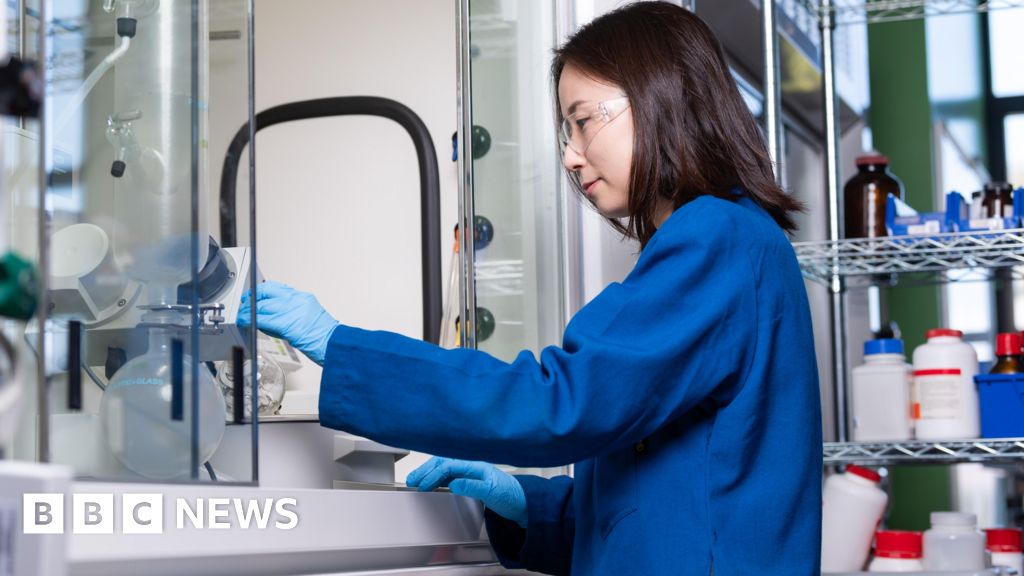
Molecules that can capture heat could be a useful technology to decarbonise heating.
Source link

The city is responsible for 80% of the world’s natural history TV shows.
Source link

NEW DELHI: The West Asia conflict is pushing govt to look at a faster transition towards renewable energy, including the possibility of increasing ethanol blending in petrol from 20-25%, although in a calibrated manner. This will come along with increased refining capacity within the country, so that there is a buffer in the system and greater domestic resilience, those familiar with the discussions said, pointing out that sustaining refineries at 100% capacity is not sustainable.While Barmer refinery has begun operations, expansion at Numaligarh is underway and work on integrated refineries on the west coast is also under focus. Apart from a mega refinery in Maharashtra, a new facility in Gujarat is also planned.Officials said rising use of renewables, biofuels and hydrogen in the energy mix was no longer just an environmental issue, but a strategic necessity in a situation like the present one, where the military conflict in West Asia has disrupted global energy supplies, triggering a supply crisis and a surge in oil and gas prices.According to officials, 20% ethanol blending has helped India save 4.5 crore barrels of crude annually and reduce foreign exchange outflow by around ₹1.5 lakh crore so far. Given the concerns over fuel efficiency and impact on vehicles, govt is expected to take a gradual approach that addresses the anxiety on ethanol blending. The third pillar on energy is expanding the strategic petroleum reserves.


CDF Munir to address Marka-e-Haq victory ceremony at GHQ tomorrow

I Tried the Best Captioning Smart Glasses, and Only One Leads the Pack

Rory McIlroy slams LIV golfers who don’t want to come back to PGA Tour—but why now?

-

 Politics6 days ago
Iran weighs US reply delivered via Pakistan as Trump signals opposition to deal terms
-

 Tech1 week ago
This Indigenous Language Survived Russian Occupation. Can It Survive YouTube?
-

 Fashion1 week ago
Canada’s Lululemon appoints Esi Eggleston Bracey to board of directors
-

 Fashion1 week ago
US’ J.Jill, Inc. appoints Kimberly Wallengren as CMO
-
 Business1 week ago
Government hikes jet fuel prices by 5% for international airlines – The Times of India
-

 Fashion1 week ago
US’ Gap partners with Victoria Beckham on timeless wardrobe essentials
-
 Business1 week ago
Apollo Sports Capital and Tom Dundon make landmark $225 million investment in pickleball
-

 Sports1 week ago
Drake Maye voices support for Patriots coach Mike Vrabel as off-field controversy continues to swirl