

Business
Cadillac unveils ‘Elevated Velocity’ electric crossover concept car


The Cadillac Elevated Velocity concept car.
Courtesy: Cadillac
General Motors on Thursday unveiled the Cadillac Elevated Velocity, a new concept car aimed at building up the brand’s all-electric luxury crossover segment.
The electric concept car has a “lifted yet elegant design,” according to Cadillac, riding on 24-inch wheels. It includes multiple driving modes to enhance the electric vehicle’s performance, the company said.
“The word ‘elevate’ serves a dual meaning – it is a reference to the lifted chassis that enables high-speed off-road capabilities, but it also refers to an elevated luxury experience,” said Alexandra Dymowska, Cadillac senior brand designer, in a media release.
The vehicle, which is a running showcar but does not have full performance capabilities, builds on Cadillac’s luxury EV portfolio, which already includes the Lyriq and the Optiq.
Automakers regularly use concept vehicles to gauge customer interest or show the future direction of a vehicle or brand, but they’re not meant to be sold to consumers.
The car continues the design principles of Cadillac’s “Opulent Velocity” concept car, which the company revealed in 2024, said Bryan Nesbitt, vice president of GM global design, in a media statement.
The Cadillac Elevated Velocity concept car.
Courtesy: Cadillac
GM initially set a goal to exclusively offer EVs by 2035, but has since said that consumer demand, which has been slower than expected, will dictate its EV plans. Its luxury Cadillac brand set a separate goal to be all-electric by 2030, but more recently said it will offer a full lineup of EVs as well as gas-powered cars.
Cadillac has been going through a revival effort in recent years, considering that luxury cars offer higher profit margins and attract a more affluent consumer than traditional vehicles.
During a call with reporters last month, Cadillac Vice President John Roth said the brand saw its best first half in nearly 20 years. He touted that Cadillac was the bestselling luxury EV brand in the second quarter of 2025, No. 2 in calendar year-to-date terms and fifth for overall EV sales.
‘Lifted yet elegant design’
The concept car offers multiple user experience modes. When entering the car, “welcome mode” involves the gull-wing doors lifting skyward and parts of the interior lighting up.
The Cadillac Elevated Velocity concept car.
Courtesy: Cadillac
When the driver engages “elevate mode,” the car becomes autonomous and the interior transforms into a “recovery space,” where the pedals and steering wheel retract, ambient lighting changes and a light above the steering column aids the driver in breathwork to help occupants get in the “headspace for performance,” according to Cadillac.
The elevate mode also triggers interior cabin filtration, fragrance, red light therapy and climatization to account for changes in air temperature and quality.
“Velocity mode,” meanwhile, features cool white lighting to “evoke a sense of exhilaration” and floor lighting dims to help the driver focus on the road.
The concept car also includes different drive modes for on-road and off-road performance and improved visibility when driving in dusty or sandy conditions.
The Cadillac Elevated Velocity concept car.
Courtesy: Cadillac
Cadillac said its exterior color is inspired by glacier ice, contrasted against the car’s red interior.
The cabin includes red leather on the seat cushions and the cabin and cargo floor, while a red fabric covers the seat uppers, armrests and instrument panel.






Rachel Reeves has expanded plans to cut electricity bills for thousands of UK manufacturing firms as she continues talks in Washington focused on the economic fallout from the Iran conflict.
The Chancellor, who is in Washington for the International Monetary Fund (IMF) spring meetings, said the plan will help UK businesses compete and create jobs despite the uncertain economic backdrop.
During her trip, she has stepped up criticism of US-Israeli military action in Iran, saying war was a “mistake” and has not made the world a safer place.
Her comments came as she was due to meet US treasury secretary Scott Bessent, who has referred to the impact of the war as “short-term volatility for long-term gain” which he said would prevent Tehran developing a nuclear weapon.
Ms Reeves also cautioned against knee-jerk responses to the cost-of-living crisis triggered by the war in a joint statement with international counterparts at the IMF.
In a bid to help businesses hit by rising costs, a plan announced last summer to cut electricity bills by up to 25% for more than 7,000 UK businesses will be expanded to cover 10,000 firms.
The British Industrial Competitiveness Scheme (BICS) will cut costs by up to £40 per megawatt-hour from 2027 by exempting businesses from certain extra charges that currently support green energy and back-up power supply systems.
An additional one-off payment in 2027 will be given to an extra 3,000 businesses, including companies in the automotive, aerospace, steel and pharmaceuticals sectors.
The Government said it will also cover the support firms would have received if the BICS had been in place from this month.
The scheme is expected to be worth up to £600 million per year from next April.
Ms Reeves said: “This Government has the right plan for the economy: backing British industry, cutting electricity costs and building a stronger, more resilient future.
“Today’s announcement will cut energy bills for over 10,000 manufacturers, helping businesses to compete, win and create good jobs across the country, and to deliver our modern industrial strategy.”
Business Secretary Peter Kyle said: “We are a Government of action, and when global instability puts businesses under pressure we’ll always do what’s needed to support them and ensure Britain’s resilience.
“By extending the reach of BICS by 40%, we’re acting decisively to tackle the number one issue that businesses face head-on.”
Household energy bills are forecast to increase this year because of the conflict pushing up global oil and gas prices, while motorists are already feeling the impact of higher costs at the pump.
Ms Reeves has signalled that any energy bill help this year will be targeted at the poorest households, rather than a universal bailout of the type offered by Liz Truss when she was prime minister after the Russian invasion of Ukraine.
The White House has said talks are ongoing about holding fresh face-to-face negotiations between the US and Iran and that Washington had not yet formally requested an extension of the ceasefire due to expire next Tuesday.
Business
Goldman Sachs bond traders stumbled as Wall Street rivals thrived: ‘A fire is being lit under’ them

David Solomon, CEO Goldman Sachs, speaking on CNBC’s Squawk Box at the World Economic Forum in Davos, Switzerland on Jan. 22nd, 2026.
Oscar Molina | CNBC
When Goldman Sachs executives were asked about disappointing results in the firm’s fixed income division this week, they made it sound as though the trading environment was simply not in their favor.
Fixed income revenue fell 10% in the first quarter, coming in $910 million below analysts’ expectations, according to StreetAccount data. It was an unusually large miss for one of Goldman’s flagship Wall Street businesses.
“It was basically just a function of the overall environment making markets,” CFO Denis Coleman told an analyst on Monday after the bank’s earning report. “We remain actively engaged with clients, but our performance in rates and mortgages was relatively lower.”
But as nearly all of Goldman’s rivals, including JPMorgan Chase, Morgan Stanley and Citigroup, posted blockbuster results for first-quarter fixed income in the days that followed, one thing became clear to Wall Street: Goldman Sachs’ vaunted fixed income traders had underperformed.
JPMorgan saw fixed income trading revenue jump 21% to $7.1 billion, the bank’s second-biggest haul ever. Morgan Stanley, where fixed income is less a priority than equities, posted a 29% jump in the bond business. Citigroup saw bond trading revenue jump 13% to $5.2 billion.
Since before the 2008 financial crisis, when Lloyd Blankfein led Goldman Sachs, the firm’s fixed income division had been the envy of Wall Street. Goldman was known for its trading prowess, a reputation forged in periods of dislocation when its desks generated outsized gains. The bank’s identity as a trader’s firm — one expected to outperform in turbulent times — has endured in the decade-plus since.
That makes the first-quarter stumble particularly notable.
“It seems that something went wrong at Goldman in fixed income,” said veteran Wells Fargo analyst Mike Mayo, who called the bank’s results “worst-in-class.”
“I’d imagine that at Goldman, a fire is being lit under the traders, managers and risk overseers in FICC after such an underperformance,” Mayo said in an interview with CNBC, using an acronym standing for fixed income, currencies and commodities, the formal name for that business.
The prevailing theory is that Goldman was caught offsides on trades tied to interest rates in the first quarter, according to several market participants who asked for anonymity to speak candidly.
That’s because of the positioning that many Wall Street firms had at the start of this year, when markets were expecting the Federal Reserve to cut interest rates at least twice in 2026, these people said.
But after the price of oil surged with the advent of the Iran war, roiling expectations for inflation, the markets began pricing those cuts out, with some investors even bracing for the possibility of rate hikes this year.
Fixed income was the sole blemish on a quarter in which Goldman Sachs exceeded expectations handily, thanks to the firm’s equities traders and investment bankers. Despite the earnings beat, the firm’s shares dropped as much as about 4% on Monday following the report.
Goldman Sachs declined to comment. But on Monday, CEO David Solomon sought to put the quarter’s performance into context:
“When I look at the scale and the diversity of the business, it’s performing very, very well,” Solomon said during the company’s conference call. “Some quarters, it’s going to be stronger here, stronger there.”
Business
Pakistan considering buying LNG on spot market to offset supply disruptions caused by Iran war: petroleum minister – SUCH TV
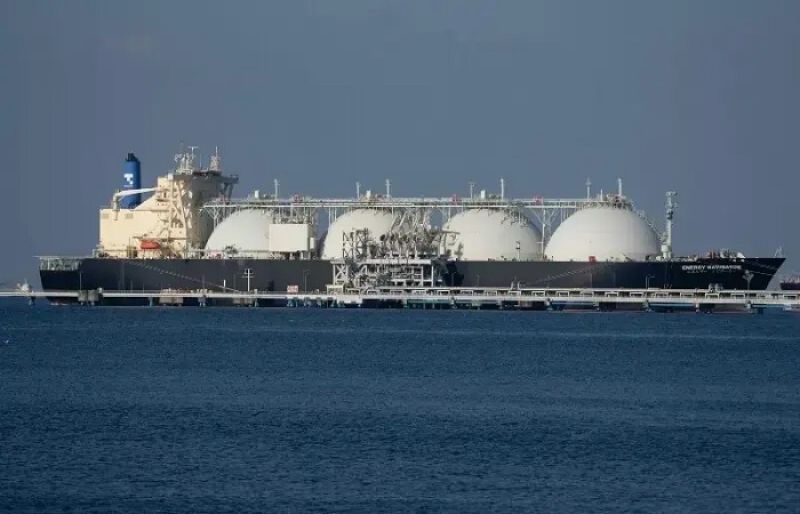
Pakistan is considering buying liquefied natural gas (LNG) on the spot market to offset supply disruptions caused by the Iran war, but would favour government-to-government deals to avoid having to pay steep premiums, Petroleum Minister Ali Pervaiz Malik has told Reuters.
Qatar’s force majeure forced Pakistan to make costly spot purchases or find alternative fuels ahead of summer demand.
Spot LNG cargoes have surged to $20 to $30 per mmBtu amid the Middle East conflict, Malik says, adding that purchases would depend on whether prices are acceptable to the power sector, including under existing government-to-government arrangements with Azerbaijan’s Socar.
Pakistan has also been routing some crude supplies via Saudi Arabia’s Red Sea port of Yanbu to bypass the Strait of Hormuz, with Malik saying insurance costs on that route were lower than routes crossing or near Hormuz.
Pakistan imports nearly all of its oil, much of it via the Strait of Hormuz, and remains exposed to supply shocks despite cutting its LNG reliance in recent years, as gas is still needed to meet the country’s peak summer power demand.
It has begun commercial output from its highest-ever producing oil and gas well, as it shores up domestic supply.
“We have arrangements in place to meet domestic and industrial requirements,” Malik said, adding that gas disruptions have not led to major curbs, with eight of 10 fertiliser plants operating.
Officials are also considering the use of costlier fuels such as furnace oil to limit load shedding, although at the expense of higher tariffs. Malik warned that prolonged shortages could threaten food security.
The Baragzai X-01 well in Khyber Pakhtunkhwa is producing about 15,000 barrels of oil per day and 45 million cubic feet of gas, with output expected to rise further, the state-run operator Oil and Gas Development Company Ltd (OGDC) said.
The well could reach up to 25,000 barrels per day and 60 million cubic feet per day of gas, making it Pakistan’s highest-producing well, and may contribute around 10 per cent of crude output while cutting the country’s import bill by about $329 million annually, OGDC said.


2026 NFL mock draft: Kiper’s pick predictions for Rounds 1-2
Chancellor cuts bills for thousands more firms as she continues Washington talks

‘The Last Airbender’ Leaked Online. Some Fans Say Paramount Deserves the Fallout

-

 Fashion1 week ago
India’s exports face reset as EU links trade to carbon metrics: EY
-

 Entertainment1 week ago
Queen Elizabeth II emotional message for Archie, Lilibet sparks speculation
-

 Entertainment1 week ago
Lamar Odom shocking response to Khloé Kardashian account of his overdose
-

 Tech1 week ago
Azure customers up in arms over ‘full’ UK South region | Computer Weekly
-

 Tech1 week ago
As the Strait of Hormuz Reopens, Global Shipping Will Take Months to Recover
-

 Fashion1 week ago
CII submits 20-pt agenda to Indian govt to back firms hit by Iran war
-

 Tech7 days ago
This AI Button Wearable From Ex-Apple Engineers Looks Like an iPod Shuffle
-

 Politics6 days ago
Indian airlines hit hardest after Dubai limits foreign flights until May 31