

Fashion
Puma to cut 900 jobs as part of restructuring under new CEO Arthur Hoeld

By
DPA
Translated by
Nazia BIBI KEENOO
Published
October 30, 2025
The world’s third-largest sportswear company, Puma, is facing losses but plans a major turnaround. The Germany-based brand, trailing Nike and Adidas, will cut about 900 administrative roles and streamline its product portfolio by the end of 2026 under its new CEO, Arthur Hoeld.
Puma, headquartered in Herzogenaurach, reported losses in the first nine months of the year. Sales fell 8.5% to €5.97 billion compared with the same period last year, while consolidated earnings dropped by about half a billion euros. After nine months, the company posted a net loss of €257 million.
Moving forward, Puma intends to focus on its core categories of football, training, running and sports fashion. Its direct-to-consumer business—through its own retail stores and e-commerce—is expected to grow faster, as Puma has so far been heavily dependent on wholesale distribution. The new CEO described 2026 as a transition year, to return to growth from 2027 onward.
To achieve this, Hoeld plans to strengthen the brand and its signature leaping cat logo. “I firmly believe that the Puma brand is intact and has incredible potential,” he said. The company intends to reduce wholesale’s share of revenue, as discounted sales through big-box retailers have hurt brand desirability. Puma also plans to lower its inventory levels.
This article is an automatic translation.
Click here to read the original article.













The company expects FY26 net sales of $3.43-3.5 billion, representing growth of 1 to 3 per cent. Gross margin guidance has been improved to 50.3-50.5 per cent, while operating income is projected at $230-262 million, with operating margin of 6.7 to 7.5 per cent. Diluted earnings per share (EPS) are forecast at $3.55-4, supported in part by temporary tariff relief.
Columbia Sportswear Company has raised its FY26 outlook, projecting $3.43-3.5 billion in sales and EPS of $3.55-4, aided by tariff relief.
Q1 sales were flat at $779 million, with profit declining due to US weakness and tariffs.
International growth remained strong.
The company expects wholesale recovery in H2.
Q2 sales are seen at $600-610 million, with a wider operating loss anticipated.
“We are updating our earnings guidance for 2026, based in part on a temporary improvement in US tariff rates,” said Tim Boyle, chairman and CEO.
He added that the company expects an inflection back to wholesale growth in the second half, supported by its Fall 2026 order book, noting that the ‘Engineered for Whatever’ campaign and product innovation are driving traction for its ACCELERATE Growth Strategy.
Q1 performance hit by US weakness, tariff pressures
Meanwhile, in the first quarter (Q1) ended March 31, 2026, net sales were largely flat at $779 million, down 3 per cent. International growth was offset by a US decline due to a weaker Spring 2026 wholesale order book and reduced inventory.
Operating income fell 10 per cent year-on-year (YoY) to $42 million, while operating margin declined to 5.4 per cent from 6 per cent. Net income dropped to $34.3 million, with EPS at $0.65 versus $0.75 last year. Gross margin contracted 20 basis points to 50.7 per cent due to tariff impact, the company said in a press release.
Boyle said the company still exceeded internal expectations, driven by early spring shipments and stronger demand in Europe and the US, with international markets leading growth. He added that the US slowdown was anticipated due to prior inventory and tariff-related decisions.
Columbia Sportswear ended Q1 with $535.4 million in cash and no debt.
Q2 outlook signals near-term pressure
For the second quarter (Q2), net sales are expected at $600-610 million, broadly flat YoY. The company anticipates an operating loss of 4.5 to 5.5 per cent of net sales, compared to 3.9 per cent last year, while diluted loss per share is projected at $0.37-0.46, based on an effective tax rate of around 20 per cent.
Fibre2Fashion News Desk (SG)
The Department of Commerce has notified the revisions through a Notification dated April 30, 2026.
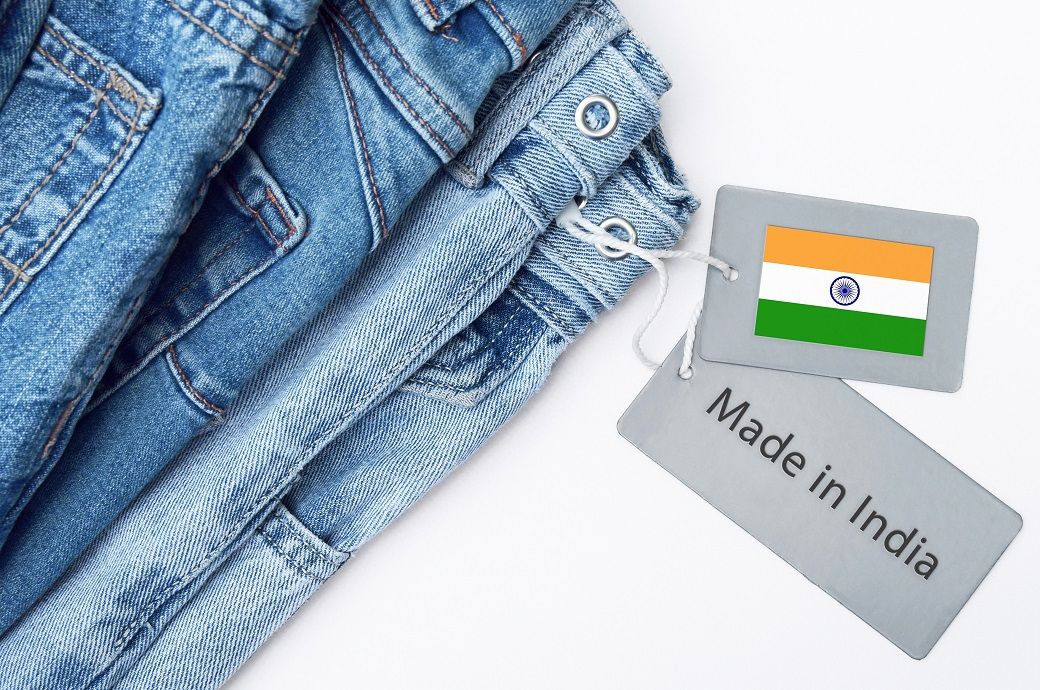
India has aligned RoDTEP schedules with the amended customs tariff structure, effective May 1, 2026.
The revision updates Appendix 4R and 4RE, impacting 194 tariff lines with additions, deletions and modifications.
It aims to ensure seamless system integration, reduce classification ambiguity and improve export processing.
The move ensures continuity in duty remission benefits.
The update revises Appendix 4R, which applies to Domestic Tariff Area (DTA) exports, and Appendix 4RE, which covers exports under Advance Authorisation (AA), Export Oriented Units (EOU), and Special Economic Zone (SEZ) units. These changes align with amendments introduced in the First Schedule to the Customs Tariff Act, 1975, through the Finance Act, 2026.
The notification primarily focuses on technical alignment between RoDTEP tariff lines and the revised customs tariff structure. A total of 194 tariff lines has been impacted, including the addition of 142 new 8-digit tariff lines, deletion of 50 lines, and modification of descriptions for two tariff lines.
Officials stated that the revised schedules will enable seamless implementation of RoDTEP benefits within the Customs Automated System starting May 1. The alignment is expected to reduce ambiguity in classification, ensure consistency across tariff frameworks, and facilitate smoother processing of export claims.
The government emphasised that the measure is RoDTEP-specific and aimed at enhancing ease of doing business. By minimising system-level discrepancies and ensuring continuity in duty remission, the initiative is expected to support exporters and maintain efficiency in trade operations.
Fibre2Fashion News Desk (KUL)
April data indicated mild recoveries in growth of new business intakes and production among Indian manufacturers, though rates of increase remained the second weakest since 2022. The two largest components of the PMI, new orders and output, both rose compared to March but continued to trail levels seen over the past three-and-a-half years.
India’s manufacturing purchasing managers’ index (PMI) rose to 54.7 in April from 53.9, signalling modest growth but the second-slowest improvement in nearly four years.
Exports remained strong, while rising input costs, linked to the Middle East conflict pushed inflation higher.
Despite pressures, output, orders and employment grew moderately, reflecting sector resilience.
Exports emerged as a bright spot, with new export orders expanding sharply and registering the fastest growth since last September. Firms reported improved demand from markets including Australia, France, Japan, Kenya, China, Saudi Arabia, the UAE and the UK.
Despite this, rising cost pressures weighed on overall sentiment. Companies noted that the ongoing Middle East conflict exerted upward pressure on inflation. Input costs rose at the fastest pace since August 2022, driven by higher prices for aluminium, chemicals, electrical components, fuel, leather, petroleum products and rubber. Consequently, output charges increased at the quickest rate in six months.
Survey participants said advertising and demand resilience supported sales and production, but growth was constrained by competitive pressures, geopolitical uncertainties and client hesitancy in approving pending orders.
Manufacturers continued to purchase additional raw materials and semi-finished goods, though the pace of expansion slowed to the joint-weakest in nearly two-and-a-half years. Input inventories rose at the slowest rate in close to five years, as firms attempted to maintain lean stock levels amid subdued sales. Finished goods inventories increased slightly for the first time in six months.
Employment trends remained positive, with firms adding workers at the strongest pace in ten months, supported by expansion plans. Meanwhile, supplier performance improved significantly, with shorter input lead times reflecting better coordination with suppliers.
Although overall business optimism eased slightly from March, it remained near its highest level since November 2024. Confidence was supported by expectations of improved marketing outcomes and approvals of pending projects.
Pranjul Bhandari, chief India economist at HSBC, said the rise in PMI reflects continued resilience in the manufacturing sector despite inflationary pressures stemming from geopolitical tensions.
Fibre2Fashion News Desk (CG)

[CinePlex360] Please moderate: “Landmark legal

US’ Columbia ups FY26 outlook on tariff relief; Q1 profit dips

Anna Wintour feathers up for 2026 Met Gala look

-

 Tech1 week ago
A Brain Implant for Depression Is About to Be Tested in Humans
-

 Tech1 week ago
Almost 90% of women leave tech industry within 10 years | Computer Weekly
-
 Business1 week ago
Pakistan’s oil market is fuelling the crisis | The Express Tribune
-
 Business1 week ago
‘I had £20,000 stolen and had to fight a 13-month fraud reporting rule to get it back’
-

 Sports7 days ago
Pro wrestling star Steph De Lander reveals how colleague’s advice helped lead her to title triumph at ACW
-

 Entertainment1 week ago
Melania Trump says ABC should ‘take a stand’ on late-night host Kimmel
-

 Tech7 days ago
This Ambitious Laptop Doesn’t Leave Much Room for Your Hands
-

 Entertainment1 week ago
Norway joins Type 26 Frigate Programme to boost NATO naval power