

Politics
Pakistan, Muslim countries slam Israeli violations, demand immediate withdrawal of Israeli forces at Gaza ceasefire meeting: FO

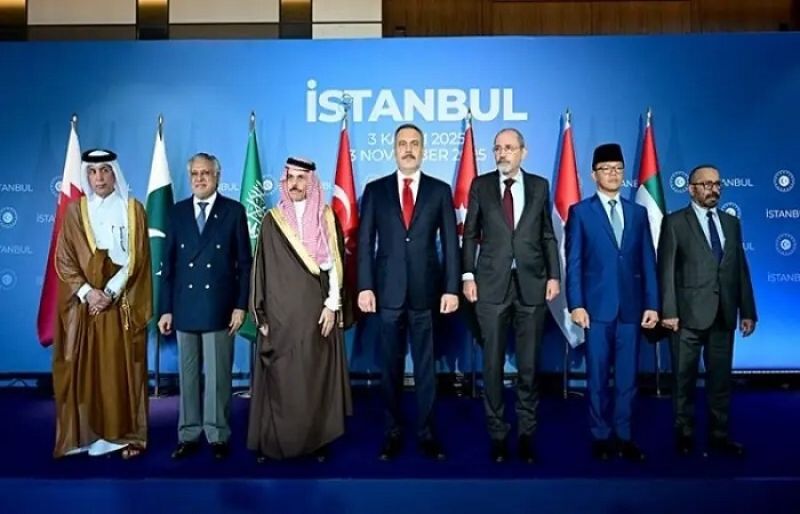
Pakistan and other Muslim countries on Monday slammed Israeli violations of the fragile Gaza ceasefire and demanded the immediate withdrawal of Israeli forces from the occupied territory, according to the Foreign Office (FO).
Hamas and Israel signed a ceasefire agreement on October 9, agreeing to free the Israeli captives in exchange for Palestinian prisoners, in the first phase of United States President Donald Trump’s initiative to end the Israeli onslaught in Gaza. Pakistan was one of the eight Arab and Muslim countries to work with Trump on the plan.
Despite occasional flare-ups, the fragile truce has been holding in Gaza. The truce, which left thorny issues like the disarmament of Hamas and a timeline for Israeli withdrawal from Gaza unresolved, has been tested by unilateral Israeli bombardment since coming into force.
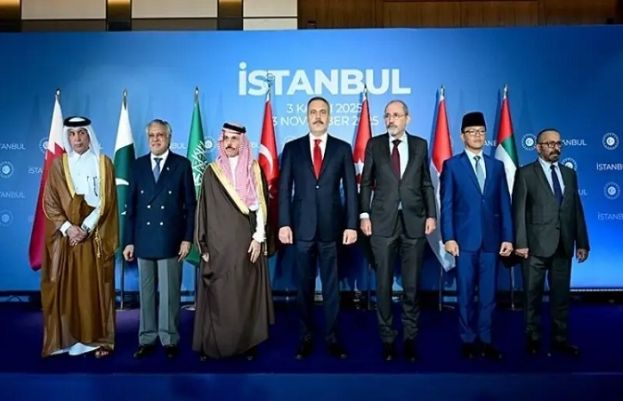
The foreign ministers of Turkiye, the United Arab Emirates, Indonesia, Qatar, Pakistan, Saudi Arabia, and Jordan — the same countries that met with Trump on Sept 23 on the sidelines of the UN General Assembly — met at the Coordination Meeting of Arab-Islamic Foreign Ministers in Istanbul today to discuss the ceasefire.
A statement from the FO said Deputy Prime Minister and Foreign Minister Ishaq Dar and other Arab-Islamic diplomats deliberated on the way forward for a lasting ceasefire and sustainable peace in Gaza.
“The leaders jointly called for urgent humanitarian aid for the Palestinians, condemned Israeli ceasefire violations, demanded Israel’s withdrawal from the Occupied Palestinian Territory and emphasised the rebuilding of Gaza.
“Pakistan reaffirmed its principled stance for the establishment of an independent, viable and contiguous State of Palestine based on pre-1967 borders, with Al-Quds Al-Sharif as its capital, in line with the UN and OIC resolutions.”
The countries said that Gaza’s future must be Palestinian-led and avoid any new system of tutelage.
Turkiye, which played a central role in forging the now shaky three-week-old ceasefire, is pushing for Muslim nations to bring their influence to bear on the reconstruction of the embattled territory.
“Our principle is that Palestinians should govern the Palestinians and ensure their own security, the international community should support this in the best possible way — diplomatically, institutionally and economically,” Turkish Foreign Minister Hakan Fidan said after the talks.
“Nobody wants to see a new system of tutelage emerge,” he told a news conference.
“We’ve now reached an extremely critical stage: we do not want the genocide in Gaza to resume,” Fidan added, saying all seven nations supported plans for the Palestinians to take control of Gaza’s security and governance.
Fidan, who held talks at the weekend with a Hamas delegation led by its chief negotiator Khalil al-Hayya, said the movement was “ready to hand Gaza to a committee of Palestinians”.
He also expressed hope that reconciliation efforts between Hamas and the rival West Bank-based Palestinian Authority, “will bear fruit as soon as possible”, saying inter-Palestinian unity would “strengthen Palestine’s representation in the international community”.
Fidan said it was crucial that the emerging International Stabilisation Force (ISF) that will monitor the Gaza ceasefire under Trump’s plan, have a “mandate defined by a UN Security Council resolution and a framework for legitimacy”.
Washington is currently working with Arab and international partners to decide on the composition of the force, with Turkiye hoping to play a role, despite fierce opposition from Israel.
“The countries we’ve spoken with say they will decide whether to send troops based on … the ISF’s mandate and authority,” Fidan said.
“First, a general consensus needs to be reached on a draft, then it needs to be approved by the members of the Security Council.
“And it needs to be free from vetoes by any of the permanent (UNSC) members,” he said of a blocking move frequently used by key Israel ally Washington.
Israel has long viewed Turkiye’s diplomatic overtures with suspicion over Ankara’s close ties with Hamas and adamantly opposes it joining the task force that is meant to take over after Israeli troops withdraw from Gaza.
A Turkish disaster relief team, sent to help efforts to recover the remains of those trapped under the rubble — including Israelis seized by Hamas — has been stuck at the border because Israel refused to let them in, according to Ankara.
Earlier, FM Dar reaffirmed Pakistan’s commitment to deepen cooperation with Türkiye across political, economic, and defence spheres in a meeting with his Turkish counterpart, while agreeing to continue working together on the issue of Palestine.
Dar held a bilateral meeting with FM Fidan on the meeting’s sidelines, the FO said.
“During the meeting, the ministers expressed satisfaction over the positive trajectory of Pakistan–Türkiye bilateral relations and reaffirmed their shared commitment to further deepening cooperation across political, economic, and defence spheres.
“Both sides agreed to continue working together on the issue of Palestine, especially establishing sustainable peace in Gaza.”
It added that both leaders reaffirmed the strong bonds of brotherhood and mutual support that continue to underpin Pakistan–Türkiye relations and agreed to maintain close coordination on regional and international issues.
Earlier in the day, the FO posted on X that upon arrival, FM Dar was received by Ambassador Ahmet Cemil Miroğlu, Director General of Protocol, as well as officials of the Pakistan Embassy.
- US concerned over Iran’s missiles, support for proxies.
- Washington has significant naval buildup in the region.
- Iran says ballistic missile programme non-negotiable.
Iran and the United States started high-stakes negotiations in Oman on Friday in efforts to overcome sharp differences over Tehran’s nuclear programme, but a dispute over widening the agenda risks derailing diplomacy and triggering another Middle East conflict.
While both sides have signalled readiness to revive diplomacy over Tehran’s long-running nuclear dispute with the West, Washington wants to expand the talks to also cover Iran’s ballistic missiles, support for armed groups around the region and “treatment of their own people”, US Secretary of State Marco Rubio said on Wednesday.
Iran has said it wants Foreign Minister Abbas Araqchi and US Middle East envoy Steve Witkoff to discuss only the nuclear issue in Muscat. US President Donald Trump’s son-in-law, Jared Kushner, who helped mediate in Gaza ceasefire talks, is also due to take part in the talks.
“Iran enters diplomacy with open eyes and a steady memory of the past year. We engage in good faith and stand firm on our rights. Commitments need to be hono[u]red,” Araqchi said on X on Friday.
Tehran’s clerical leadership remains deeply concerned that Trump may still carry out his threats to strike Iran after a military buildup by the US Navy near Iran.
In June, the US struck Iranian nuclear targets, joining in the final stages of a 12-day Israeli bombing campaign. Tehran has since said its uranium enrichment work has stopped.
The US naval buildup, which Trump has called a massive “armada”, has followed a bloody government crackdown on nationwide protests in Iran last month, heightening tensions between Washington and Tehran.
Trump has warned that “bad things” would probably happen if a deal could not be reached, ratcheting up pressure on Tehran in a standoff that has led to mutual threats of air strikes.
“While these negotiations are taking place, I would remind the Iranian regime that the president has many options at his disposal, aside from diplomacy, as the commander-in-chief of the most powerful military in the history of the world,” White House Press Secretary Karoline Leavitt on Thursday told reporters.
Iran has vowed a harsh response to any military strike and has cautioned neighbouring Gulf Arab countries hosting US bases in the oil-rich region that they could be in the firing line if they were involved in an attack. Iran has one of the Middle East’s biggest stockpiles of ballistic missiles.
Missile programme red line for Tehran
Negotiators in Oman will have to navigate Iran’s red line on discussing its missile programme to reach a deal and avert future military action. Tehran has flatly ruled out talks on its “defence capabilities, including missiles and their range.”
In a show of defiance, Iran’s state TV said hours before the talks that “one of the country’s most advanced long-range ballistic missiles, the Khorramshahr-4,” had been deployed at one of the Revolutionary Guards’ vast underground “missile cities”.
However, Tehran is willing to show “flexibility on uranium enrichment, including handing over 400 kg of highly enriched uranium (HEU) and accepting zero enrichment under a consortium arrangement as a solution,” Iranian officials told Reuters last week.
Iran also insists that its right to enrich uranium is not negotiable and demands the lifting of sanctions, reimposed since 2018 when Trump ditched Iran’s 2015 nuclear deal with six powers.
The United States, its European allies and Israel accuse Tehran of using its nuclear programme as a veil for efforts to try to develop the capability to produce weapons. Iran says its nuclear programme is for peaceful purposes only.
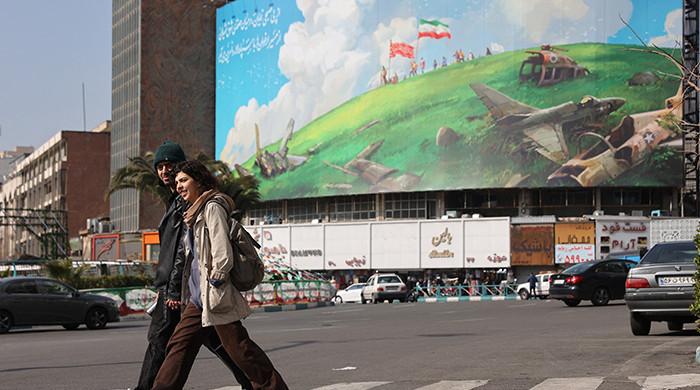
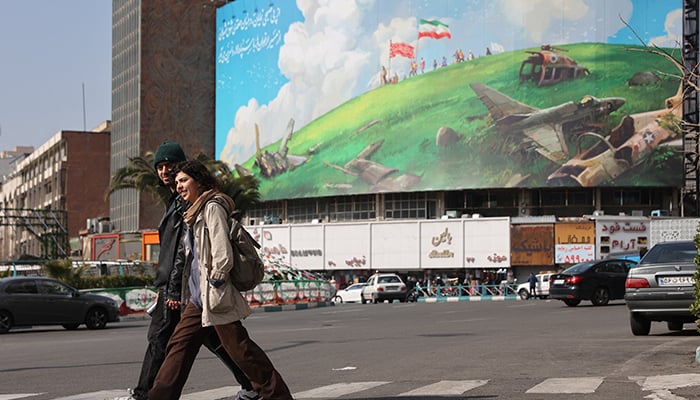
The United States government has issued an urgent travel advisory for its citizens in Iran, citing “increased security measures, road closures, disruptions to public transport, and ongoing internet blockages across the country.”
The advisory was issued by the US Virtual Embassy in Iran, urging its citizens to leave the West Asian country. In a statement on its website, the embassy urged citizens to prepare an exit plan from Iran that does not depend on US government assistance.
Those unable to leave were advised to stay in a “secure location” or other safe building. The advisory also recommended keeping a stock of food, water, and medications, and staying alert to local media for the latest updates.
The advisory came as the two countries hold talks in Oman on Friday, amid rising tensions, with the US deploying forces to the Middle East —what President Donald Trump has called a massive “armada” — while regional actors aim to prevent what many fear could escalate into a broader conflict.
The White House said that diplomacy is Trump’s first choice for dealing with Iran, and he will wait to see whether a deal can be struck at high-stakes talks, but also warned that he has military options at his disposal.
The US previously said it wanted the discussions to include Iran’s missile arsenal and other issues, while Tehran has insisted on focusing exclusively on its disputed nuclear program. It was unclear whether that disagreement had been resolved.
“The president’s diplomacy is always his first option when it comes to dealing with countries all around the world, whether it’s our allies or our adversaries,” White House press secretary Karoline Leavitt told reporters when asked about the coming talks.
‘Iran will defend itself ‘
Ahead of Omani-mediated talks, Iranian Foreign Minister Abbas Araghchi said Tehran is ready to defend itself against “excessive demands or adventurism” by the US.
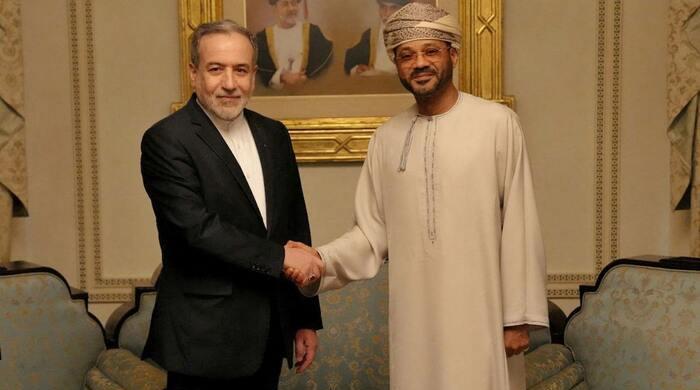
The Islamic Republic will adopt the “approach of using diplomacy to secure Iran’s national interests,” Araghchi said during a meeting in Muscat with Badr al-Busaidi, Oman’s foreign minister.
Iran maintains “full readiness to defend the country’s sovereignty and national security against any excessive demands or adventurism” by the United States, Araghchi added, as US President Donald Trump refuses to rule out military action against Tehran.
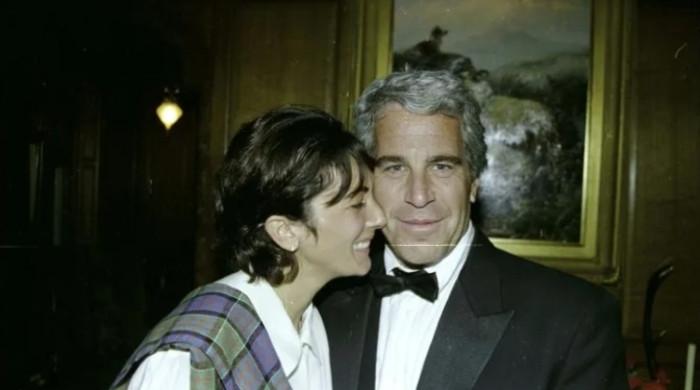
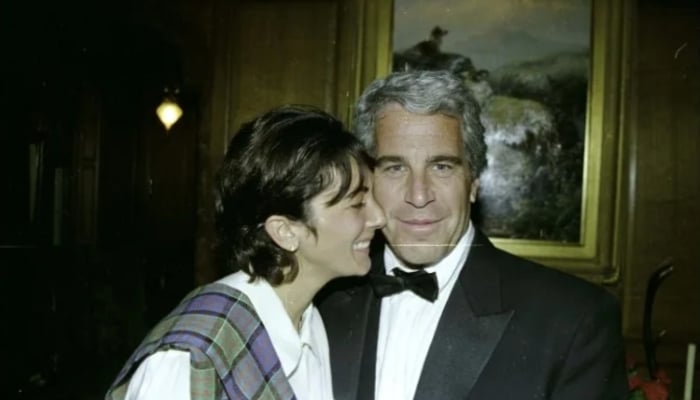
Jeffrey Epstein cultivated a global network of politicians, top business executives, academics and celebrities, many of whom have been severely tainted by association with the convicted sex offender.
While high-profile figures like Britain’s former prince Andrew have been very publicly disgraced, some powerful but lesser-known names have been sacked, forced to resign, placed under investigation or had their positions placed under review.
The mere mention of someone’s name in the Epstein files released by the US Department of Justice does not, in itself, imply any wrongdoing by that person.
Epstein was convicted in 2008 for soliciting a minor and died in 2019 while awaiting trial for sex trafficking minors.
Borge Brende
The governing board of the World Economic Forum, which organises the Davos summit, has ordered an independent review of the interactions of WEF chief Borge Brende, 60, with Epstein.
Brende, a former Norwegian foreign minister, has acknowledged attending dinners with Epstein in New York in 2018 and 2019.
He has insisted he was “completely unaware” of Epstein’s criminal activities.
Thorbjorn Jagland
Former Norwegian prime minister Thorbjorn Jagland, 75, is under police investigation on “suspicion of aggravated corruption” over his links to Epstein, which include many email exchanges unearthed from the released files.
Jagland served as prime minister from 1996 to 1997 and later as secretary general of the Council of Europe. He also chaired the committee that awards the Nobel Peace Prize.
Mona Juul
Mona Juul, 66, a Norwegian diplomat who played a key role in the secret Israeli-Palestinian negotiations which led to the Oslo Accords of the early 1990s, has been suspended pending an investigation into her alleged ties to Epstein.
Epstein left $10 million in his will to Juul’s two children with her husband, fellow diplomat and Oslo talks broker Terje Rod-Larsen.
The Norwegian Ministry of Foreign Affairs said Juul, currently the Norwegian envoy to Jordan, was being temporarily relieved while the investigation was underway.
Dean Kamen
American engineer Dean Kamen, 74, the inventor of the Segway, took a leave of absence from the board of directors of the robotics organisation he founded, FIRST.
The latest Epstein files release includes photos of Kamen with Epstein and Ghislaine Maxwell, who is serving a 20-year prison sentence for trafficking underage girls to the disgraced financier.
They also include an email in which Kamen thanks Epstein for a 2013 visit to his private Caribbean island.
Brad Karp
American attorney Brad Karp, 66, stepped down after 18 years as the chairman of Paul Weiss, one of the most powerful corporate law firms in the United States.
In emails, Karp thanked Epstein for inviting him to a 2015 dinner at his Manhattan mansion, calling it “an evening I’ll never forget.”
Karp, who has said he regrets socialising with Epstein, also asked Epstein in another email if he could help get his son a job on a Woody Allen film.
Miroslav Lajcak
Miroslav Lajcak, 62, the Slovakian government’s national security advisor, resigned after text messages included in the Epstein files showed the two men discussing women.
Lajcak was the foreign minister at the time.
Caroline Lang
French film producer and former actor Caroline Lang, the daughter of former French culture minister Jack Lang, resigned as head of a film producers’ group following revelations of the family’s Epstein ties.
Caroline Lang told French investigative website Mediapart that she and Epstein had agreed to set up a company together to buy artworks, but she did not invest any money in it.
She described herself as being “incredibly naive.”
Her father, Jack Lang, 86, said he was introduced to Epstein by Woody Allen about 15 years ago and had no knowledge of his crimes.
George Mitchell
Former US senator George Mitchell, 92, brokered the negotiations which led to the 1998 peace agreement ending three decades of conflict over British rule in Northern Ireland.
Queen’s University Belfast in Northern Ireland dropped Mitchell’s name this week from its Institute for Global Peace, Security and Justice over his links with Epstein.
Mitchell has previously said he regrets having met and known Epstein and that he had no knowledge of his illegal activities.
Steve Tisch
Steve Tisch, 76, producer of “Forrest Gump” and co-owner of the New York Giants, was connected by Epstein to multiple women, according to email exchanges between the two.
Tisch acknowledged in a statement that he and Epstein had “a brief association where we exchanged emails about adult women, and in addition, we discussed movies, philanthropy and investments.”
National Football League chief Roger Goodell said the league, which has a strict personal conduct policy, would “look at all the facts” before deciding whether to take any action against Tisch.
Casey Wasserman
Casey Wasserman, 51, has faced calls to step down as chairman of the Los Angeles Organising Committee for the 2028 Olympic Games after flirtatious email exchanges between him and Maxwell emerged.
Wasserman has said he “deeply regrets” the exchanges he had with Maxwell in 2003, well before Epstein’s and Maxwell’s crimes were public knowledge.


Ukrainian drone pilot training program turned into video game so anyone can “feel the rush” of modern warfare

More Than 800 Google Workers Urge Company to Cancel Any Contracts With ICE and CBP

US Upland cotton exports increased but Pima notably down: USDA

-
 Business1 week ago
PSX witnesses 6,000-point on Middle East tensions | The Express Tribune
-

 Tech1 week ago
The Surface Laptop Is $400 Off
-

 Tech4 days ago
How to Watch the 2026 Winter Olympics
-

 Tech1 week ago
Here’s the Company That Sold DHS ICE’s Notorious Face Recognition App
-

 Tech7 days ago
Right-Wing Gun Enthusiasts and Extremists Are Working Overtime to Justify Alex Pretti’s Killing
-

 Sports1 week ago
Darian Mensah, Duke settle; QB commits to Miami
-
 Business7 days ago
Labubu to open seven UK shops, after PM’s China visit
-

 Fashion1 week ago
Italy’s Brunello Cucinelli debuts Callimacus AI e-commerce experience