

Tech
More Than 800 Google Workers Urge Company to Cancel Any Contracts With ICE and CBP


More Than 800 employees and contractors working for Google signed a petition this week calling on the company to disclose and cancel any contracts it may have with US immigration authorities. In a statement, the workers said they are “vehemently opposed” to Google’s dealings with the Department of Homeland Security, which includes Immigration and Customs Enforcement (ICE) and Customs and Border Protection (CBP).
“We consider it our leadership’s ethical and policy-bound responsibility to disclose all contracts and collaboration with CBP and ICE, and to divest from these partnerships,” the petition published on Friday states. Google didn’t immediately respond to a request for comment.
US immigration authorities have been under intense public scrutiny this year as the Trump administration ramped up its mass deportation campaign, sparking nationwide protests. In Minneapolis, confrontations between protesters and federal agents culminated in the fatal shooting of two US citizens by immigration officers. Both incidents were captured in widely disseminated videos and became a focal point of the backlash. In the wake of the uproar, the Trump administration and Congress say they are negotiating changes to ICE’s tactics.
Some of the Department of Homeland Security’s most lucrative contracts are for software and tech gear from a variety of different vendors. A small share of workers at some of those suppliers, including Google, Amazon, and Palantir, have raised concerns for years about whether the technology they are developing is being used for surveillance or to carry out violence.
In 2019, nearly 1,500 workers at Google signed a petition demanding that the tech giant suspend its work with Customs and Border Protection until the agency stopped engaging in what they said were human rights abuses. More recently, staff at Google’s AI unit asked executives to explain how they would prevent ICE from raiding their offices. (No answers were immediately provided to the workers.)
Employees at Palantir have also recently raised questions internally about the company’s work with ICE, WIRED reported. And over 1,000 people across the tech industry signed a letter last month urging businesses to dump the agency.
The tech companies have largely either defended their work for the federal government or pushed back on the idea that they are assisting it in concerning ways. Some government contracts run through intermediaries, making it challenging for workers to identify which tools an agency is using and for what purposes.
The new petition inside Google aims to renew pressure on the company to, at the very least, acknowledge recent events and any work it may be doing with immigration authorities. It was organized by No Tech for Apartheid, a group of Google and Amazon workers who oppose what they describe as tech militarism, or the integration of corporate tech platforms, cloud services, and AI into military and surveillance systems.
The petition specifically asks Google’s leadership to publicly call for the US government to make urgent changes to its immigration enforcement tactics and to hold an internal discussion with workers about the principles they consider when deciding to sell technology to state authorities. It also demands Google take additional steps to keep its own workforce safe, noting that immigration agents recently targeted an area near a Meta data center under construction.











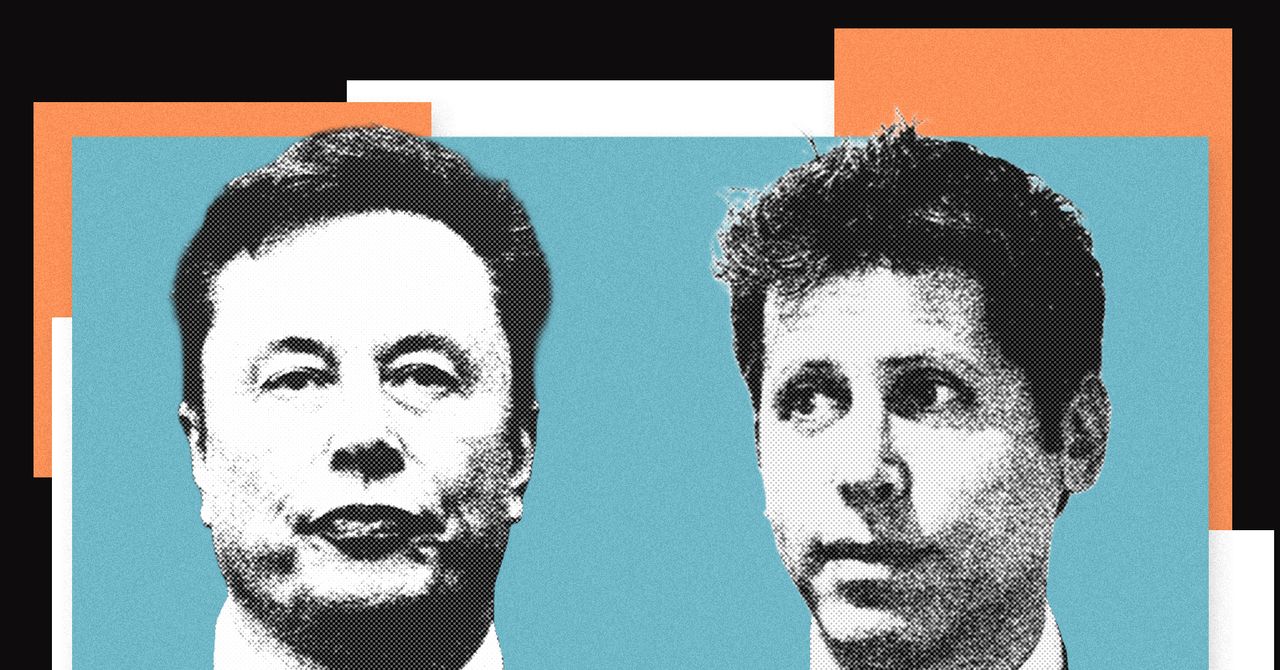
Attorneys delivered closing arguments in the Musk v. Altman trial on Thursday in a final attempt to convince a judge and jury that their respective clients, Elon Musk and Sam Altman, are the most well-intentioned, truth-telling stewards of OpenAI’s founding nonprofit mission. A judgement could be delivered as soon as next week, ending a decade-long battle between two of the technology industry’s most influential entrepreneurs.
But regardless of the outcome, there is a wide set of losers in this case. Based on ample amounts of evidence, it appears that the people worst off are the employees, policy makers, and members of the public who believed in the mission of a nonprofit research lab—and supported OpenAI because of it. What seemed to take precedent for Musk and OpenAI’s other cofounders at almost every turn was building the world’s leading AI lab—even if that meant creating a multibillion dollar for-profit company in the process.
“It’s hard to see how the public interest is being protected by either of these parties, and that is really what is ultimately at stake in a case about a nonprofit,” says Jill Horwitz, a Northwestern University law professor with expertise in nonprofits and innovation, who listened to the closing arguments. “The public interest in the nonprofit is at risk no matter who wins.”
OpenAI’s stated mission is to ensure artificial general intelligence (AGI) benefits humanity, but humanity is not a party in this case. In practice, OpenAI has spent the last decade attempting to rival multitrillion dollar companies like Google, and build AGI first. Additionally, Musk and Altman have fought tooth and nail to be the ones who control OpenAI.
“Musk and Altman are basically locked in a race to be the first to build superintelligence, and they both rightly fear what the other will do if they win. The rest of us should fear them both,” says Daniel Kokotajlo, a former OpenAI researcher who joined in 2022 and has raised concerns over the company’s safety culture. He was part of a group of former OpenAI researchers that filed an amicus brief in this case against OpenAI’s for-profit conversion, arguing that the nonprofit structure was critical in their decision to join the company.
At trial, OpenAI’s nonprofit was discussed as if it were yet another corporate investor. OpenAI’s lawyers argued that giving the nonprofit a $200 billion stake in the for-profit company is proof that OpenAI is fulfilling its mission. Public advocacy groups disagree that funding alone is sufficient.
“I am among the many people who are glad to see how many philanthropic resources the OpenAI foundation has at its disposal to do good work,” says Nathan Calvin, VP of state affairs for the AI safety nonprofit Encode, which filed an amicus brief opposing OpenAI’s restructuring earlier in this case. “But it’s worth remembering that the nonprofit also has a governance role, and that the mission of the nonprofit is not that of a typical foundation, it is specifically to ensure that AGI benefits all of humanity. Money is important for that goal and is useful all else equal, but it is not the goal in and of itself.”
Origin Story
Evidence revealed in this case suggests Altman and Musk were in agreement about OpenAI launching as a nonprofit and operating much like a typical startup. They shared the goal of beating Google DeepMind in the race to AGI. But creating OpenAI as a nonprofit turned out to be a horribly inconvenient means to winning that race.
Musk has accused Altman, OpenAI’s CEO, and Greg Brockman, its cofounder and president, of straying from the nonprofit’s founding mission. He claims the founders used his $38 million investment to turn OpenAI into an $850 billion company and make several of its cofounders billionaires.

The US Centers for Disease Control and Prevention is monitoring 41 people in the US for the Andes hantavirus after a cruise ship was hit with a rare outbreak, but the risk to the public remains low, according to health officials.
This includes a group of 18 passengers from the cruise ship who are now in quarantine facilities in Nebraska and Georgia. The agency is also monitoring passengers who returned home before the outbreak was identified and others who were exposed during travel, specifically on flights where a symptomatic case was present.
“Most people under monitoring are considered high-risk exposures, and CDC recommends that everyone under monitoring stay at home and avoid being around people during their 42-day monitoring period,” David Fitter, incident manager for the CDC’s hantavirus response, told reporters during a media briefing on Thursday. “We emphasize not to travel across all these groups.”
The Andes virus is a strain of hantavirus found in South America that can be transmitted from person to person. Typically, hantavirus is passed to humans when they come into contact with rodent droppings or urine. A respiratory virus, the disease can cause difficulty breathing and carries a fatality rate of around 35 percent. As of Thursday, the World Health Organization has confirmed 11 cases of the Andes virus among passengers of the MV Hondius cruise ship, including three deaths.
A Department of Health and Human Services official confirmed to WIRED that all Americans who were on board the Hondius at any point during its journey are now back in the US.
The CDC has legal authority to issue federal quarantine and isolation orders to prevent the spread of certain communicable diseases into or within the US. Fitter said on Thursday that the CDC is not using that authority to manage all 41 of the individuals who were potentially exposed to the hantavirus.
“Our approach is based on risk and evidence,” he said. “We are working closely with passengers and public health partners to ensure monitoring and rapid access to care if symptoms develop. Our goal is to work with them and alongside them, building plans based on their specific situations to protect the health and safety of passengers and American communities.”
Individuals will be monitored for 42 days, which is the amount of time it can take for hantavirus symptoms to appear after exposure. Symptoms begin as flu-like, with fever, muscle aches, and fatigue, then rapidly progress to severe respiratory distress.

MIT master’s student Sunshine Jiang ’25 and Rupert Li ’24 are recipients of this year’s Knight-Hennessy Scholarship. Now in its ninth year, the highly competitive scholarship provides up to three years of financial support for graduate studies at Stanford University.
Sunshine Jiang ’25
Sunshine Jiang, from Hangzhou, China, graduated from MIT in 2025 with a bachelor’s degree as a double major in physics and electrical engineering and computer science, along with minors in mathematics and economics. She will receive her master of engineering degree this month and will start her PhD in computer science at Stanford School of Engineering this fall.
Jiang researches embodied artificial intelligence and robotics, developing data-efficient, adaptive systems for general-purpose robots that broaden accessibility. She has presented her research at major conferences, including the Conference on Robot Learning, the International Conference on Robotics and Automation, and the International Conference on Learning Representations.
Jiang led the development of AI-powered systems that provide access to traditional Chinese art in rural classrooms, founded cross-country programs that expand girls’ access to STEM education, and created a Covid-19 documentary amplifying community voices, which was featured on China Daily.
Rupert Li ’24
Rupert Li, from Portland, Oregon, is currently pursuing a PhD in mathematics at Stanford School of Humanities and Sciences. He graduated from MIT in 2024 with a bachelor’s degree, double majoring in mathematics and computer science, economics, and data science. Along with his bachelor’s degree, he also received a master’s degree in data science. Li then traveled to the United Kingdom as a Marshall Scholar, where he earned a master’s degree in mathematics from the University of Cambridge.
Li’s research interests lie in probability, discrete geometry, and combinatorics. He enjoys serving as a mentor for MIT PRIMES-USA, a high school math research program, and previously served as an advisor for the Duluth REU, an undergraduate math research program. In addition to the Knight-Hennessy Scholarship and the Marshall Scholarship, he has been awarded the Hertz Fellowship, P.D. Soros Fellowship, and the Goldwater Scholarship, and he received honorable mention for the Frank and Brennie Morgan Prize.


The Real Losers of the Musk v. Altman Trial

Pete Davidson, Elsie Hewitt break up 5 months after welcoming baby girl

Sugar exports banned till Sept 30 to check prices

-

 Tech7 days ago
A new frontier: Identity stack evolves for agentic systems | Computer Weekly
-

 Tech6 days ago
‘Orbs,’ ‘Saucers,’ and ‘Flashes’ on the Moon: Pentagon Drops New UFO Files
-

 Fashion7 days ago
New orders in German manufacturing up 5% MoM in Mar 2026: Destatis
-

 Tech6 days ago
Nick Bostrom Has a Plan for Humanity’s ‘Big Retirement’
-

 Entertainment6 days ago
Rihanna embraces new tattoo given by children
-

 Sports6 days ago
Shaheen Afridi achieves landmark feat during opening Test against Bangladesh
-

 Fashion7 days ago
US’ Carter’s taps retail veteran Sharon Price John as new CEO
-

 Tech7 days ago
The Canvas Hack Is a New Kind of Ransomware Debacle