

Business
Stock market today: Nifty50 opens above 25,550; BSE Sensex up over 200 points – The Times of India


Stock market today: Nifty50 and BSE Sensex, the Indian equity benchmark indices, opened in green on Monday. While Nifty50 was above 25,550, BSE Sensex was up over 200 points. At 9:16 AM, Nifty50 was trading at 25,567.90, up 76 points or 0.30%. BSE Sensex was at 83,426.94, up 211 points or 0.25%.For the week ahead, market experts expect range-bound movement influenced by mixed global factors, while potential positive corporate earnings and developments in India-US trade discussions could provide support.Dr. VK Vijayakumar, Chief Investment Strategist, Geojit Investments Limited says, “The dominant trend in global trade this year has been the AI trade, which has pushed up AI stock valuations to elevated valuations, though not yet in bubble territory. The strong earnings growth in the US has been a fundamental support to this AI trade. Countries regarded as AI winners like China, South Korea and Taiwan also have benefited from this AI rally. Now, there are signs of this AI trade losing steam as evidenced by the 3 % decline in Nasdaq last week. This is a healthy trend. If this trend persists without high volatility, that would make the US market healthy, preempting a bubble formation and its eventual burst. Investors have to watch how this trend plays out.”“This emerging trend, it persists, would be particularly favourable for the Indian market which didn’t participate in the AI trade. FIIs, particularly the hedge funds, who have been consistently selling in India and taking money out for playing the AI trade, are now likely to pause and slowly reverse the AI trade in favour for non-AI trade in countries like India. Fortunately, the earnings growth currently happening in India and expected to gather momentum, going forward, can provide the fundamental support for a rally. Watch out for the leading names in banking and finance, telecom, capital goods, defence and automobiles.”Friday saw Nasdaq close slightly lower, marking its sharpest weekly fall since early April, as investors expressed concerns about sustainability of recent gains in artificial intelligence shares. US Treasury yields showed marginal decline.Asian trading witnessed a surge in US stock-index futures, as expectations grew for a resolution to the prolonged US government shutdown.Foreign portfolio investors conducted net sales of shares valued at Rs 4,581 crore on Thursday. In contrast, domestic institutional investors were net purchasers, investing Rs 6,675 crore.(Disclaimer: Recommendations and views on the stock market, other asset classes or personal finance management tips given by experts are their own. These opinions do not represent the views of The Times of India)





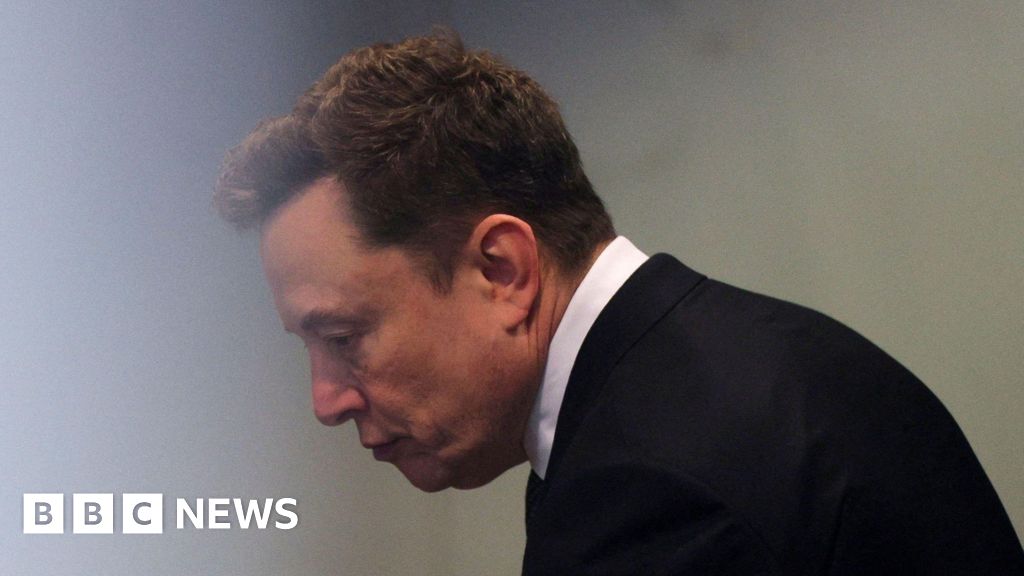
Musk’s loss against OpenAI is the latest in a string of courtroom defeats.
Source link
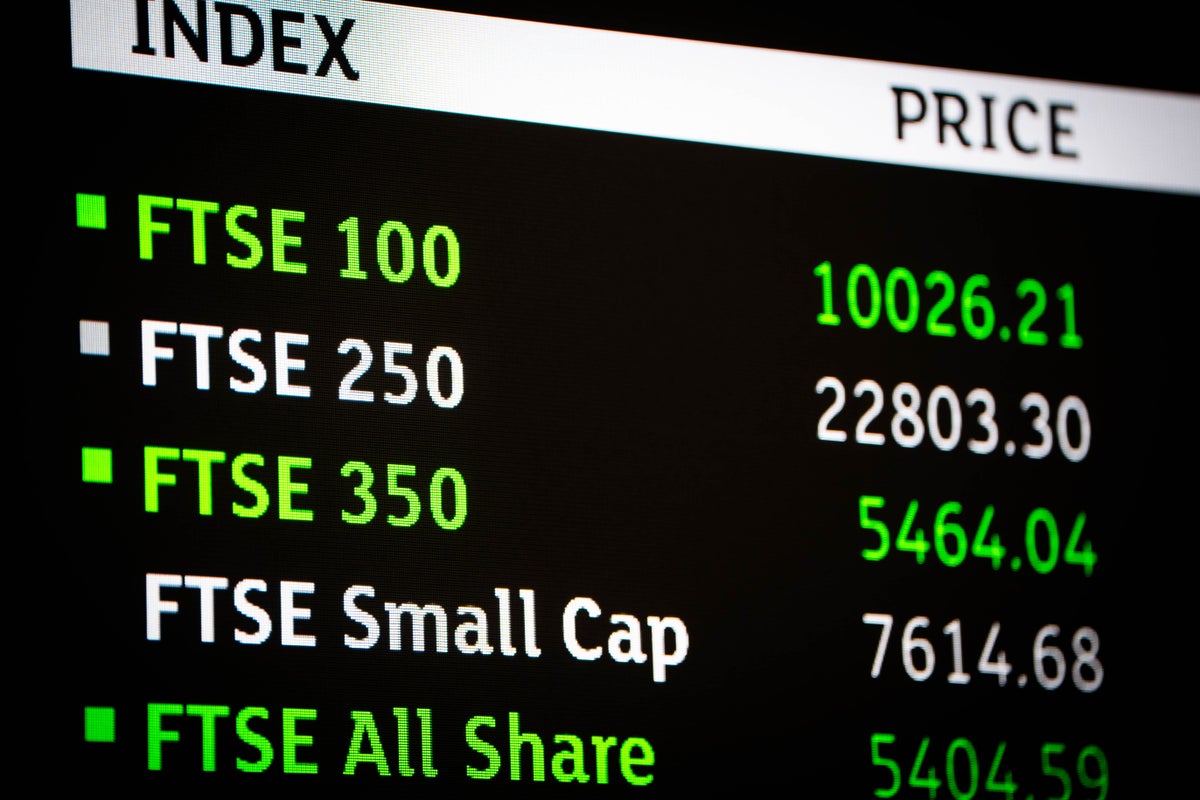
The FTSE 100 closed higher on Monday, recouping most of Friday’s hefty falls amid a calmer bond market and as Iran responded to the latest US peace proposal.
The FTSE 100 closed up 128.38 points, 1.3%, at 10,323.75. The FTSE 250 ended up 15.56 points, 0.1%, at 22,611.70, but the AIM All-Share fell 8.72 points, 1.1%, at 800.17.
Iran said it had responded to a new US proposal aimed at ending the war, adding that diplomatic exchanges continue despite Iranian media reports describing Washington’s demands as excessive, AFP reported.
Washington and Tehran have been swapping proposals in an effort to end the conflict, which the US and Israel launched on February 28, but they have held only a single round of talks despite a fragile ceasefire.
“As we announced yesterday, our concerns were conveyed to the American side,” foreign ministry spokesman Esmaeil Baqaei told a news briefing, adding that exchanges were “continuing through the Pakistani mediator”.
Mr Baqaei defended Iran’s demands, including the release of Iranian assets frozen abroad and the lifting of long-standing sanctions.
“The points raised are Iranian demands that have been firmly defended by the Iranian negotiating team in every round of negotiations,” he said.
But with no signs of clear progress, the oil price remained inflated and volatile.
Brent crude for July delivery was trading at 110.80 dollars a barrel on Monday, up compared to 108.83 at the time of the equities close in London on Friday.
After a frantic Friday, the bond markets calmed, while sterling also rebounded as investors weighed the latest political developments.
The yield on UK 10-year gilts traded at 5.14% compared to 5.17% at the same time on Friday.
The pound traded at 1.3397 dollars on Monday afternoon, up from 1.3319 on Friday. Against the euro, sterling firmed to 1.1506 euros from 1.1462 on Friday.
Prime Minister Sir Keir Starmer insisted he would not set out a timetable to leave No 10 as potential leadership challenger Andy Burnham vowed to “change Labour” if he is successful in his effort to return to Parliament.
The Prime Minister said he still wants to lead Labour into the next general election amid calls from within the party to set out a timetable for his exit.
Greater Manchester Mayor Mr Burnham hopes to be Labour’s candidate in the Makerfield by-election, which could provide him with a route back to the Commons to challenge for the party leadership and the keys to Downing Street.
Speaking to broadcasters in London, Sir Keir said he was not going to set out a timetable to stand down if Mr Burnham returns to Westminster.
He added: “I do want to fight the next election. Obviously, I recognise that after the local election results, the elections in Wales and Scotland as well, that the first task is obviously turning things around and making sure that my focus is in the right place.”
Meanwhile, the International Monetary Fund said growth in the UK economy will be stronger this year than previously thought.
The IMF updated its growth projections a month after warning of a sharp slowdown caused by the global energy shock from the US-Iran war.
The influential financial body said it was now predicting UK gross domestic product to rise by 1% in 2026, higher than the 0.8% growth it was forecasting last month.
Responding to the latest report, Chancellor Rachel Reeves said: “The IMF upgrading its growth forecasts and backing our fiscal strategy is yet more proof that this Government has the right economic plan.”
In Europe, equity markets on Monday, the Cac 40 in Paris ended up 0.4%, and the Dax 40 in Frankfurt advanced 1.5%.
In New York, the Dow Jones Industrial Average was down 0.1%, the S&P 500 fell 0.4%, and the Nasdaq Composite was 0.7% lower.
On the FTSE 100, Whitbread closed up 2.3% after Corvex Management urged the Premier Inn owner to put itself up for sale, slamming its recently announced new five-year strategic plan.
In a damning letter to Whitbread management, the New York-based activist hedge fund called the status quo “untenable” and said that the need to pursue “meaningful strategic and structural reform had become unignorable”.
As a result, Corvex, which holds a stake of around 7% in Whitbread, said the only “credible” path to unlocking value at Whitbread is a sale of the company.
Anglo America fell 1.4% as it struck a deal to sell its portfolio of steelmaking coal mines in Australia to Dhilmar for up to 3.88 billion dollars in cash.
The London-based mining house said Dhilmar will pay the FTSE 100-listing 2.3 billion dollars upfront, and the deal has a price-linked earnout of up to 1.58 billion dollars.
Anglo American chief executive officer Duncan Wanblad said: “This agreement represents another major step in the simplification of our portfolio ahead of completing our merger with Teck. Through this transaction, we will complete our exit from steelmaking coal.”
Susannah Streeter, chief investment strategist at Wealth Club, said: “This not only strengthens the balance sheet, ahead of its planned merger with Canada’s Teck Resources, but also keeps it exposed to future strength in coal prices.”
Capita shares rose 8.9% as the London-based outsourcing and business services company said adjusted revenue rose 2.9% on-year in the first four months of 2026, which it said was in line with expectations.
Looking ahead, Capita said it continues to expect a low to mid-single digit revenue climb in Capita Public Service and expects mid-teen revenue growth in its Pension Solutions business.
The biggest risers on the FTSE 100 were Centrica, up 7.70p at 196.95p, National Grid, up 43.50p at 1,231.50p, Pearson, up 37.00p at 1,136.50p, Relx, up 81.00p at 2,504.00p, and SSE, up 74.00p at 2,345.00p.
The biggest fallers on the FTSE 100 were 3i Group, down 128.00p at 2,082.00p, Airtel Africa, down 15.60p at 312.80p, Mondi, down 16.40p at 734.60p, Polar Capital Technology Trust, down 12.50p at 659.00p and Diploma, down 95.00p at 6,625.00p.
Tuesday’s global economic calendar has UK consumer and wholesale inflation figures, eurozone inflation data and the minutes of the last Federal Open Market Committee meeting.
Tuesday’s local corporate calendar has full-year results from business services group DCC, half-year numbers from supplier of specialised technical products and services, Doploma, and electricals retailer Currys.
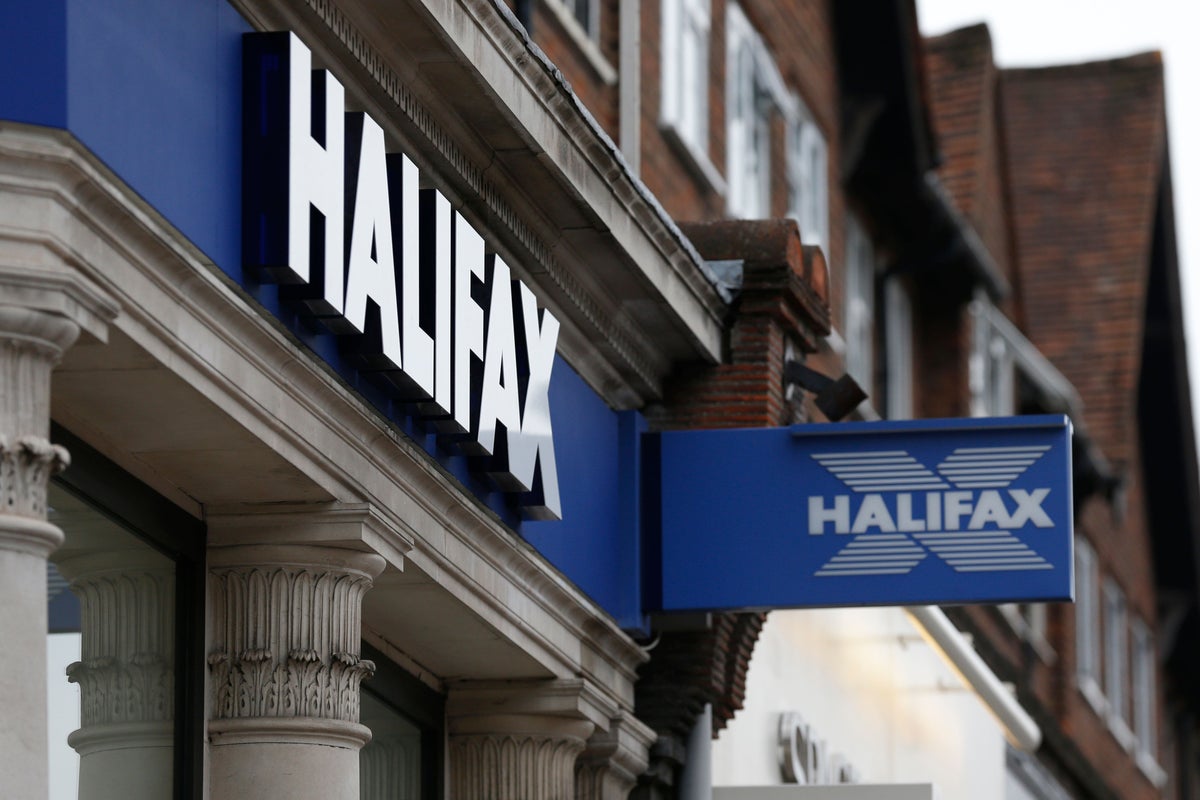
Lloyds Banking Group is considering phasing out its Halifax brand, a move that could bring an end to the 173-year-old institution.
The Sun reports that bosses are expected to announce the end of Halifax as a standalone brand this summer.
It is understood that no definitive decisions have yet been made about the brand, which granted its first mortgage in 1853.
Should Halifax be phased out, account numbers would remain unchanged, and customers’ automatic protection under the Financial Services Compensation Scheme (FSCS) would be unaffected.
“We regularly look at the role our brands play in supporting our customers,” a spokesperson for Lloyds said.
“Our banking customers can already use any Lloyds, Halifax or Bank of Scotland branch, and see any of their products and services in any of their apps – there are no changes for our customers today.”
The Sun, citing industry insiders, reported that any transition would begin on 1 July when people will no longer be able to open new Halifax accounts online or through the app.
By October, Halifax will stop taking on new customers entirely and existing account holders will be gradually migrated to Lloyds Bank, the reports say.
Lloyds declined to comment on the potential timings for any plans.
Britain’s biggest mortgage lender made changes in 2025 that meant its three brands, Lloyds, Halifax and Bank of Scotland, could share branches and mobile banking services.
The shake-up meant some customers could access a branch that is closer to their home because they will be able to access face-to-face banking regardless of the brand.
However, the banking giant has also shut hundreds of high street branches over recent years.
It started another round of closures this month, which will see 95 branches shuttered across the three brands by March 2027.
The closures will leave the group with 610 branches in total, of which 306 are Lloyds, 238 Halifax and 66 Bank of Scotland.
Lloyds has said that all employees currently working at the affected branches will be offered alternative roles within the business or at other locations.
Halifax and Lloyds operate in the same market in England and Wales, while Bank of Scotland is the group’s only brand in the country.

Elon Musk just lost another lawsuit. Will he keep fighting?

India will become history if it attempts any future misadventure, warns defence czar

Thomas Massie faces Trump-backed challenger in GOP primary: Can he win?

-

 Entertainment6 days ago
Conan O’Brien hat tricks as Oscar host
-

 Tech1 week ago
Could Contact-Tracing Apps Help With the Hantavirus? Not Really
-

 Fashion5 days ago
Italy’s Zegna Group’s Q1 growth boosted by strong organic performance
-

 Entertainment1 week ago
Martin Short: Facing tragedy with joy
-

 Entertainment1 week ago
Tom Brady gets back at Kevin Hart during Netflix roast
-

 Sports1 week ago
Jacob Fatu unleashes vicious assault on Roman Reigns after World Heavyweight Championship loss at WWE Backlash
-

 Entertainment1 week ago
Martha Stewart: How to make an omelet
-

 Tech1 week ago
Papa Johns Is Getting Into Drone Delivery—but Not for Pizza