Connect with us

Business

Six Pakistani firms to showcase at FinTech | The Express Tribune

Published

on

Six Pakistani firms to showcase at FinTech | The Express Tribune


Deputy High Commissioner commends the participation of Pakistani fintech companies


SINGAPORE:

The Pakistan Pavilion was officially inaugurated at the Singapore FinTech Festival (SFF) 2025 on Wednesday by Deputy High Commissioner and Charge d’Affaires Salman Mehmood, according to an official statement.

Speaking at the ceremony, Mehmood commended the participation of Pakistani fintech companies and encouraged them to capitalise on the global platform to form international partnerships, attract investment, and promote Pakistan’s fast-growing technological capabilities.

A delegation of six leading Pakistani fintech firms is representing the country at this year’s event, underscoring Pakistan’s rising profile as an emerging player in the global fintech arena. Their participation reflects Pakistan’s growing engagement with Singapore’s vibrant fintech ecosystem and its commitment to expanding its footprint in the digital economy.

Running from November 12 to 14, 2025, the Singapore FinTech Festival is among the world’s largest gatherings of financial technology leaders, innovators, investors, regulators, and policymakers. The 2025 edition features over 600 exhibitors and 41 international pavilions, providing a dynamic platform to explore developments in fintech, digital finance, and emerging technologies.

Source link

Continue Reading
Click to comment

Leave a Reply

Your email address will not be published. Required fields are marked *

Business

Indian Railways 2025 Milestones To Set Stage For 2026

Published

on

Indian Railways 2025 Milestones To Set Stage For 2026


New Delhi: As many as 42 projects of the Indian Railways, including innovation, indigenisation, track renewals, electrification works, and “airport-like facilities” at redeveloped stations to redefine rail travel, worth over Rs 25,000 crore, were commissioned in 2025 to make passenger and freight trains safer and faster in the country, an official statement said on Sunday.

The New Year is all set to offer comfortable sleeper journeys in long-distance travels through Vande Bharat & Amrit Bharat trains, cutting short the journey time, as well as giving travellers the branded food & beverage options at railway stations, according to a year-end review released by the Ministry of Railways.

During the calendar year 2025, Indian Railways introduced 15 Vande Bharat Express trains. As on December 26, a total of 164 Vande Bharat train services are running across the Indian Railways network. Looking ahead, the upcoming Vande Bharat Sleeper is set to transform overnight travel. It will combine speed, comfort, and modern amenities for long-distance passengers.

Add Zee News as a Preferred Source


Another 13 Amrit Bharat Express trains, which are fully non-AC trains, have also been introduced. A total of 30 Amrit Bharat train services are now running across the Indian Railways network to provide quality services to the common man.

Besides, Namo Bharat Rapid Rail Services are designed for high-frequency and regional connectivity, strengthening short and medium-distance mobility in high-demand corridors.

Landmark projects completed during the year include opening the country’s first vertical-lift rail bridge at Pamban, bolstering Kashmir connectivity with all-weather rail links (including the world’s highest Chenab bridge), and extending rail access into the Northeast with the new Bairabi–Sairang line.

Between April 1 and November 30, Indian Railways commissioned over 900 kilometres of new track lines. Besides laying the new tracks, the focus is to renew the existing rail tracks to ensure safer, faster and more comfortable travel. Track renewal works have been carried out across 6,880 track km, rails renewed with new rails, and complete track renewal for 7,051 track km has been done during the year, the statement said.

During the period 2014–25, a total of 34,428 km of new track was laid at an average of 8.57 km/day, which is more than twice the average daily commissioning (4.2 km/day) during the period 2009–14.

These modernisation efforts are complemented by the raising of sectional speeds to improve train operations and passenger convenience. Sectional speed has been increased to 130 kmph over 599 track km, covering parts of the Golden Quadrilateral, Golden Diagonal, and other B routes. Further, speeds of 110 kmph have been achieved over 4,069 track km, combining infrastructure upgrades with advanced track machinery to ensure faster, safer, and more efficient train operations.

Electrification of the railway network has been taken up in mission mode. So far, about 99.2 per cent of the Broad Gauge (BG) network has been electrified. Electrification in the remaining network has been taken up. This achievement is significantly higher than the electrification levels of the UK (39 per cent), Russia (52 per cent) and China (82 per cent). A total of 14 Railway Zones and 25 states/Union Territories have now achieved 100 per cent electrification.

In FY 2025-26 (up to November 2025), more than 4,224 hi-tech LHB coaches were also produced, 18 per cent higher than the corresponding period last year. Between 2014-25, production increased 18-fold compared to 2004-14, ensuring safer, smoother and more comfortable journeys.

Indian Railways has made a major leap in modernisation by manufacturing over 42,600 LHB coaches in the last 11 years. LHB coaches are known for higher safety standards, lower maintenance costs and superior operational efficiency.

The Railways have also achieved remarkable progress in safety performance. Consequential Train Accidents during the period 2004-14 was 1711 (average 171 per annum), which has declined to 31 in 2024-25 and further to 11 in 2025-26 (up to November 2025). The safety budget has nearly tripled, rising from Rs 39,463 crore in FY 2013-14 to Rs 1,16,470 crore in the current financial year. Fog safety devices increased from 90 in 2014 to 25,939 in 2025. In the last four months alone, Centralised Electronic Interlocking and Track Circuiting have been completed at 21 stations, the statement said.

Kavach Version 4.0, the latest indigenously developed Automatic Train Protection (ATP) system, has also been commissioned over 738 route kilometres. The safety system assists the Loco Pilot in operating trains within prescribed speed limits by automatically applying brakes in case of human failure and also enables safe train operations during adverse and inclement weather conditions.

Meanwhile, the 508 km Mumbai-Ahmedabad High Speed Rail (MAHSR) Project has achieved physical progress of 55.63 per cent as on November 30, while overall financial progress has touched 69.62 per cent with an expenditure of Rs 85,801 crore, the statement added.


Source link

Continue Reading

Business

Satcom rollout: Services to start after security clearances and spectrum pricing; telecom minister Jyotiraditya Scindia gives this update – The Times of India

Published

on

Satcom rollout: Services to start after security clearances and spectrum pricing; telecom minister Jyotiraditya Scindia gives this update – The Times of India


Satellite communication services in India will be rolled out only after operators meet security requirements and spectrum pricing is finalised, Union telecom minister Jyotiraditya Scindia said, adding that the government is also examining issues related to Vodafone Idea (Vi).In an interview to PTI, Scindia said players such as Elon Musk-owned Starlink, Eutelsat One and Jio Satellite Global Services (SGS) will get spectrum once the Department of Telecommunications (DoT) completes the pricing process and companies comply with security norms.“There are two issues that need to be addressed. One by the licence holders OneWeb, Reliance Jio, and Starlink, which is to comply with security clearances regarding international gateways, ensuring data remains in India, and so on,” Scindia said.He said the government has already allocated provisional spectrum to satcom companies to allow them to demonstrate compliance with security agencies. “They are in the process of doing that, so they need to comply,” he added.On spectrum pricing, Scindia said the matter is being handled by the DoT and the Telecom Regulatory Authority of India (Trai). “Hopefully that should be resolved soon,” he said.Trai and the DoT have differed on several aspects of spectrum allocation for satcom services. Earlier this month, Trai rejected a number of DoT proposals, including levying a 5 per cent annual spectrum fee instead of 4 per cent and removing a Rs 500 per-connection charge in urban areas. The DoT is expected to place its views before the Digital Communication Commission (DCC), the apex decision-making body in the telecom sector, which will decide the future course of action, including whether Cabinet approval is required.On Vodafone Idea, Scindia said the department is still examining the company’s request for relief. “We are today applying our minds on that. It is work in progress within the Department of Telecommunications,” he said.Vodafone Idea has told the DoT that its liabilities to the government stand at around Rs 2 lakh crore, including Rs 1.19 lakh crore in spectrum dues. The company has warned that without support, the Centre could face losses due to non-recovery of dues and erosion of equity value. The Supreme Court has allowed the government to address the matter within its policy-making powers.Asked about concerns over repeated relief to Vi, Scindia said no such relief has been extended so far. “We have not given any relief as such. We have converted our dues into equity. Therefore, we hold a 49 per cent equity stake in Vodafone against dues of close to, if I recall correctly, Rs 37,000 crore. That is now the Government of India’s equity stake in that company,” he said.In the absence of further relief, Vodafone Idea is required to pay around Rs 18,000 crore by March 2026 and a similar amount annually for the next six years. Its annual liabilities are more than double its operational cash generation, which has been about Rs 8,400–9,200 crore over the past three years.Vi has warned that any threat to its operations could push the market into a duopoly and lead to higher telecom tariffs. Scindia, however, said India’s telecom market remains competitive.“If you look at countries across the world, very few can boast of four providers of telecom services. India today has four very robust telcos,” he said, adding that Vodafone Idea and BSNL together still serve over 300 million customers. “We would like to see that continue.”


Source link

Continue Reading

Business

Brain implants, falling Tesla sales and a $1tn deal: A year in the life of Elon Musk

Published

on

Brain implants, falling Tesla sales and a tn deal: A year in the life of Elon Musk


Elon Musk is rarely out of the spotlight. But, even by his standards, 2025 has been a full-on year.

Over the past 12 months, the entrepreneur-turned-government adviser has reached massive business milestones and suffered serious setbacks. He was also knocked off the top spot as the world’s richest man – and is now further out in front than ever before.

All that amid a backdrop of an increasingly challenging economic environment, both across the US and globally – and without factoring in private life developments, which included the announcement of a reported 13th child being born months earlier.

But business wise, Musk has been all-action, all year – just not all of it as smooth as he might have wished. Here, The Independent takes a look at a year in the life of Elon Musk.

Doge – and Donald Trump

It feels a long time ago but the Department of Government Efficiency (Doge) only came into being in January 2025, with Musk appointed as a special government employee, effectively giving him a 130-day stint overseeing cuts to the US federal budget, slashing public sector jobs and planning cuts to the US foreign aid programme to the tune of almost $10bn. Naturally, plenty of this drew plenty of ire, with Bill Gates one of those to accuse “the world’s richest man [of] killing the world’s poorest children”.

While it might have been expected that he at least had the backing of the person who appointed him to the role during that spell – President Trump – the relationship proved to be fractious and volatile, descending into all-out personal attacks strewn over social media at one point.

In June, Musk called Trump’s “Big Beautiful Bill” an “abomination” and soon after suggested on X that “the really big bomb [was] Trump is in the Epstein files”. For his part, the president lambasted Musk as a disappointment. The petty squabbles continued as Trump said the administration would be looking at the subsidies paid to Musk’s companies, around potentially ending them – though noting it had “to be fair” to the nation and to the entrepreneur alike. Suggesting he’d “take a look” at deporting Musk was hardly “first buddy” material, either.

Musk officially ended his Doge tenure in May, weeks after telling Tesla shareholders that he would be spending “far more time” back to focusing on the EV firm, amid a falling share price and questions over product launches.

Business ups and downs

It would of course be remiss to not detail the successes and milestones that Musk has seen across the year around his many businesses.

(Getty Images)

Though – as is often the case in industry and especially where pushing new boundaries is concerned – many ups can be followed by a down, Musk’s companies do continue to produce.

Tesla, for example, launched their long-range Cybertruck variant partway through the year to much acclaim from fans – but a massive recall to tens of thousands of earlier models over parts concerns was a misstep.

Neuralink, Musk’s firm which is developing brain implants to be placed within human skulls to aid people with limited movement to be able control devices using their thoughts, has held multiple clinical trials. He says there’s a backlog of 10,000 people who are signed up for it, with the potential for positive reach here undeniable, yet there has also been criticism over possible animal treatment and for filing as a “small disadvantaged business” in the US despite a valuation of $9bn.

Elsewhere Grok 4 was launched in July as a new AI model, SpaceX performed a successful controlled splashdown landing with one of its Starship rockets and The Boring Company showed progress with its ZPIT (Zero People In Tunnel) approach: digging tunnels, moving earth and installing concrete wall segments with no humans inside, improving safety and efficiency along the way.

Tesla

But it’s impossible to separate Musk from one company in particular, and that one has had more downs than ups across 2025: Tesla.

The share price, as ever, tells its own story: from a high of around $480 near Trump’s vote victory last winter, it sunk to about $220 by April, decimated by public perception of its CEO, falling sales, widespread economic uncertainty over tariffs and questions over the company’s valuation.

If investing in Tesla – and investing in individual companies in general – has always been a bit of a rollercoaster, 2025 has perhaps marked the part of the ride with loops, turnbacks and rapid accelerations, heading quickly towards the highest peak as we race toward the end of the calendar year. Beyond it? As with any funfair ride, you never know until you get there – that’s the thrill and the fear of it.

Tesla showrooms faced vandalism, while Musk himself faced protests aplenty – collections of people, bus stop posters, even a car smashed to pieces.

(Getty Images)

Some came in the face of his Doge work, while others were furious at a perceived insulting salute gesture at Trump’s inauguration. Yet more came as comments emerged from the car maker’s chief executive seemingly trying to entangle himself in other nations’ politics or policies.

The upshot was simple enough: falling sales.

In Europe in particular, the drop-off has been spectacular – summer data showed Tesla sales fell by 40 per cent as competition from Chinese manufacturers, reputational damage and a lack of new models all played a part in BYD overtaking it as the dominant emerging EV brand on the continent. Tesla’s market share had fallen to below 1 per cent by that time, and sales are down year-on-year despite EV sales as a whole being up by more than a quarter.

Weak sales in India, China and the US add further worries, despite a pickup in September domestically, driven by buyers beating the expiration of tax credits.

In Norway, a similar effect gave a recent boost in Europe: Tesla broke records for sales by a single manufacturer in a month in November, but rather than this being a sustainable trend, it appears to have been spurred on by planned increases to taxes on buying EVs which come into effect next year.

But Musk has long felt that car sales are not the only, or the biggest, ace up Tesla’s long-term sleeves.

Self-driving cars, robotics, AI and data – all these factors are what many investors point to as future revenue prospects for the firm. And those inside and outside the company seem to feel the same way, given the recent events.

World’s richest person

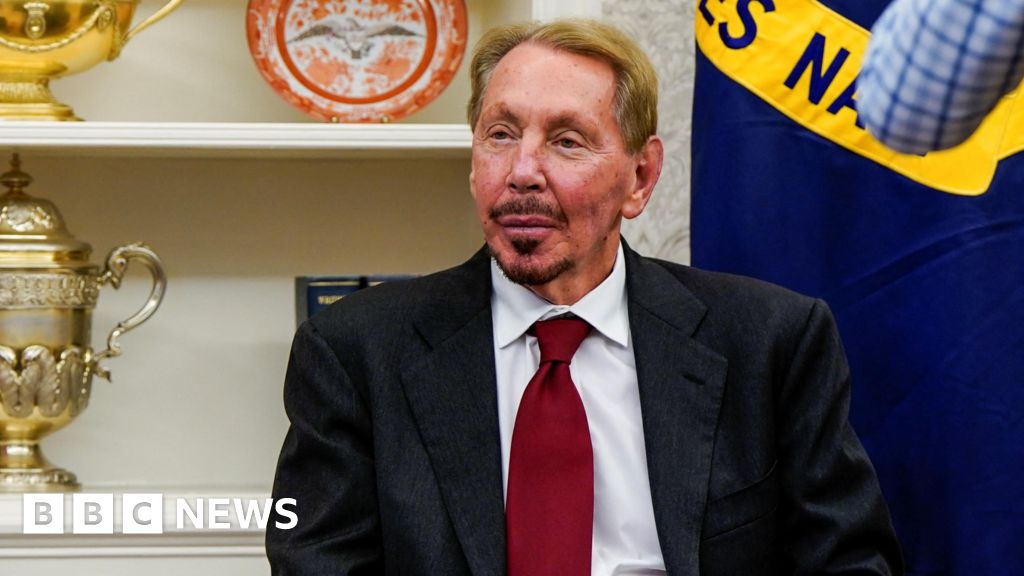
Musk is already the world’s richest person and has been for some time – aside from a few hours when he very briefly lost top spot to Oracle’s Larry Ellison.

Since then, however, Musk has opened up a huge gap again and, at the start of December, had a net worth of $450bn (£340bn) per Bloomberg’s Billionaires Index.

Elon Musk

Elon Musk (AP)

That places him a full $180bn (£136bn) ahead of now-second-placed Larry Page, of Alphabet. Musk’s net worth has grown by almost $17.5bn (£13.2bn) across the course of 2025 and he did become the first person to hit the $500bn mark for a short period. Yet it’s a figure way beyond even those riches where Musk’s year finishes in the spotlight.

Close to a full trillion dollars is at stake in his new Tesla pay package, voted for and approved by more than three-quarters of shareholders just last month. He’ll earn $878bn (£665bn) across a decade if he continues to lead the growth of the company to significant production and valuation milestones, the last of which would leave Tesla worth $8.5tn (£6.4tn) – the precise combined market capitalisation value of the world’s two biggest public companies right now as it happens, Nvidia and Apple.

The path to those riches is not just a “new chapter […] but a whole new book,” Musk declared after that pay packet was approved.

Whatever pages 2026 writes for Musk and his many projects, he’s unlikely to ever be far from dramatic progress, fervent criticism or eye-catching headlines – and the money milestones keep piling up too.


Source link

Continue Reading

Trending