

Fashion
Saint Laurent tops Lyst Index; Skims, Coach, Ralph Lauren boost reach

Saint Laurent’s Le Loafer shoe was Q3’s second hottest product.
Saint Laurent ranked top for the first time in the Lyst Index in Q3 2025, followed by Italy’s Miu Miu and London-based H&M Group brand COS.
Saint Laurent’s Le Loafer shoe was Q3’s second hottest product.
Moving up four positions, COS saw a 147-per cent increase in searches in the quarter.
Loewe moved down six spaces to eighth rank.
American brand The Row moved up two spaces into fourth position.
The latest index reflects an unusual mix of moods, uncertainty for brands mid-transition and clarity for those doubling down on what they do best, according to an official release.
All but three brands in the table moved position this quarter, with the biggest swings coming from COS’s breakthrough into the top three—moving up four places since Q2 2025, and Spanish brand Loewe moving down six spaces to eighth position.
The data shows simplicity and restraint continue to resonate with consumers seeking understated pieces across price points.
COS saw a 147-per cent increase in searches in the quarter. The COS chunky cashmere sweater, last appearing in Q4 2024, returned as one of Q3’s hottest items.
American brand The Row moved up two spaces into fourth position, with demand up by 28 per cent in the quarter. In Q2, its flip-flop defined a summer trend; this quarter, the Eel loafer dominated searches, sitting neatly in an aesthetic dialogue with Saint Laurent’s own.
Still in fifth position, demand for Coach on Lyst rose by 29 per cent in the quarter, with strong social buzz supported by high profile sports ambassadors and strategic product placements and partnerships. The Empire bag, this quarter’s tenth hottest product, helped anchor the brand’s summer success.
Another American brand seeing digital, culture-led growth is Ralph Lauren (ninth position), rising two places with a 6-per cent quarterly increase in searches.
American brands are resonating outside of the Top 20 too. Madewell saw 34-per cent growth in the quarter, riding the wave of the mall-brand renaissance bringing brands like Gap and American Eagle back into the online conversation for younger shoppers.
Brands are effectively capitalising on moments of social media virality and tapping talent more relevant to Gen Z to reach these audiences in their digitally native context.
Burberry (13th position) climbed four positions with a 14-per cent lift in demand in the quarter. Skims (15th position) continues its product-driven ascent, with demand now up by 271 per cent year on year in the quarter.
Stone Island re-entered the index after four years outside the Top 20, with a strong 115-per cent quarter-on-quarter rise in demand. A long-time pillar of casual subculture, the brand garnered mainstream attention in the quarter.
Taken together, Q3’s results reveal a fashion landscape regaining balance after several volatile seasons. New creative leads are still settling, but those with a defined direction, like Saint Laurent, The Row, and COS, are proving that conviction is the key to clarity, the release added.
Fibre2Fashion News Desk (DS)








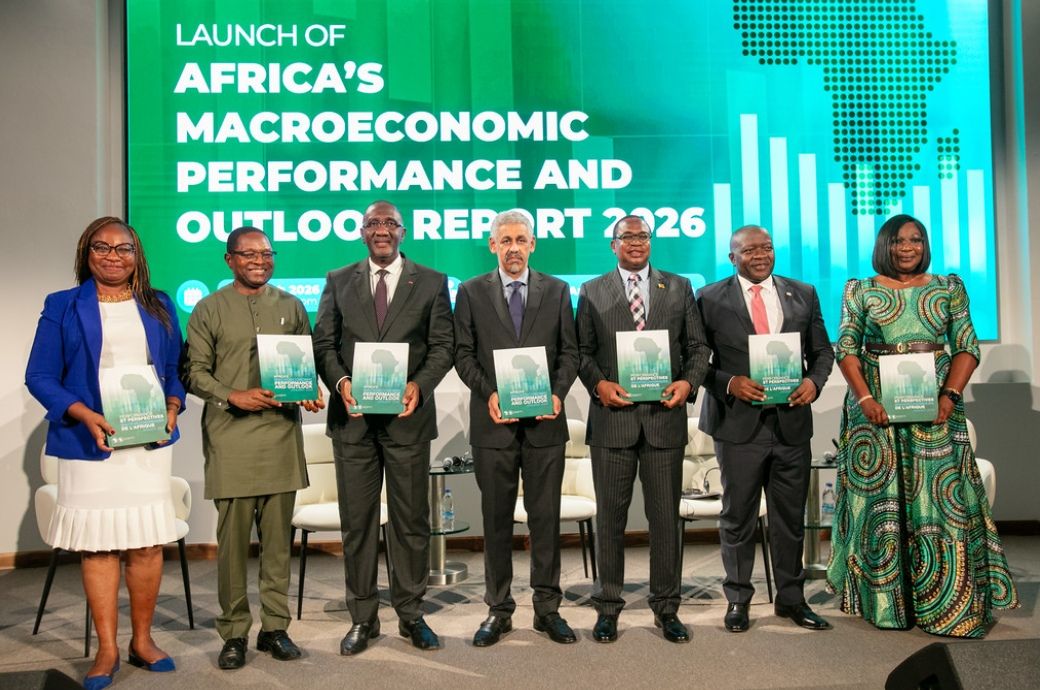
Despite ongoing regional and global headwinds, Africa continues to demonstrate impressive resilience and maintains its status as a global growth frontier, it noted.
Africa’s real GDP growth is projected to stabilise at 4.3 per cent in 2026 and grow further to 4.5 per cent in 2027, an African Development Bank report said.
Growth in 2025 exceeded 5 per cent in 22 African nations and topped 7 per cent in six.
Despite regional and global headwinds, Africa continues to demonstrate impressive resilience and maintains its status as a global growth frontier, it noted.
Africa outpaced the global average in 2025 as its real GDP surged to 4.2 per cent, up from 3.1 per cent in 2024, comfortably eclipsing the 3.1-per cent world average, the report said.
A key finding in the report is the ‘broad-based’ surge, with growth exceeding 5 per cent in 22 African countries, and topping 7 per cent in six, bolstered by easing inflationary pressures, improved macroeconomic management and favourable agricultural conditions, an AfDB release noted.
Twelve of the 20 fastest-growing economies in the world last year were African.
East Africa maintained its lead last year as the continent’s fastest-growing region, posting 6.4-per cent GDP growth, with its expansion driven by the surge in growth performances of 9.8 per cent in Ethiopia, 7.5 per cent in Rwanda and 6.4 per cent in Uganda.
Africa’s GDP per capita growth rose from 0.9 per cent in 2023 to 1.1 per cent in 2024 and 1.9 per cent in 2025, but still remains too low to propel rapid poverty reduction.
Inflation is declining, with average inflation estimated at 13.6 per cent in 2025, down from 21.8 per cent in 2024; further reductions are projected for 2026 and 2027.
Foreign direct investment rebounded sharply in 2024, rising by more than 75 per cent to reach $97 billion.
Remittance flows to the continent rebounded strongly in 2024, rising by more than 14 per cent to $104.6 billion—offsetting the 6-per cent decline recorded in 2023 and making remittances the largest single source of external non-debt financing, surpassing foreign portfolio investment.
Fibre2Fashion News Desk (DS)
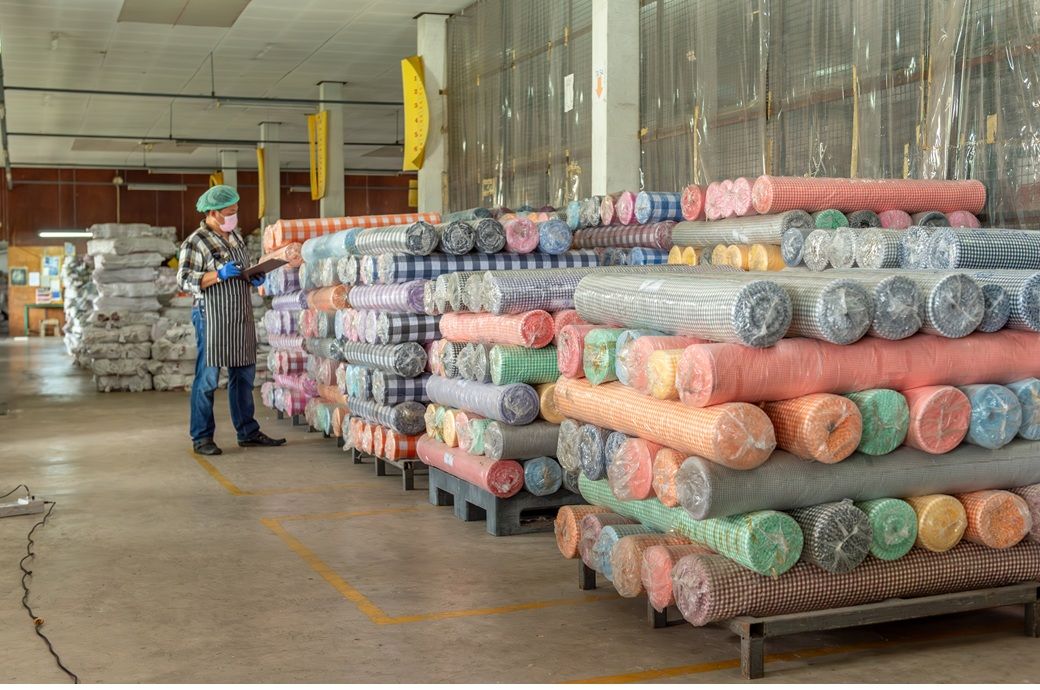
This hidden inventory is best understood through indirect but telling indicators. In Bangladesh, for instance, total textile capacity is estimated at ~*.*–*.* million tons, while actual consumption has dropped to around *.* million tons, implying utilisation levels of just ~** per cent, leaving a significant portion of capacity effectively idle. Similar patterns are visible across South Asia, where spinning and weaving units are operating well below optimal levels. In India and Pakistan, industry feedback suggests mills are running at **–** per cent capacity, with yarn inventories building up due to slower offtake from downstream buyers. Cotton dynamics are adding to the pressure, with global inventories exceeding *** million bales, keeping prices volatile and discouraging fresh procurement.
The pressure intensifies further along the value chain. Fabric manufacturers, particularly in Bangladesh, are facing delayed or reduced orders from garment exporters, leading to a build-up of greige and processed fabric stocks. At the same time, exporters themselves are holding finished goods as shipment cycles lengthen. Geopolitical disruptions around the Strait of Hormuz have increased transit times by *–** days on key routes, while freight costs have risen by **–** per cent, slowing inventory movement and delaying cash realisation.
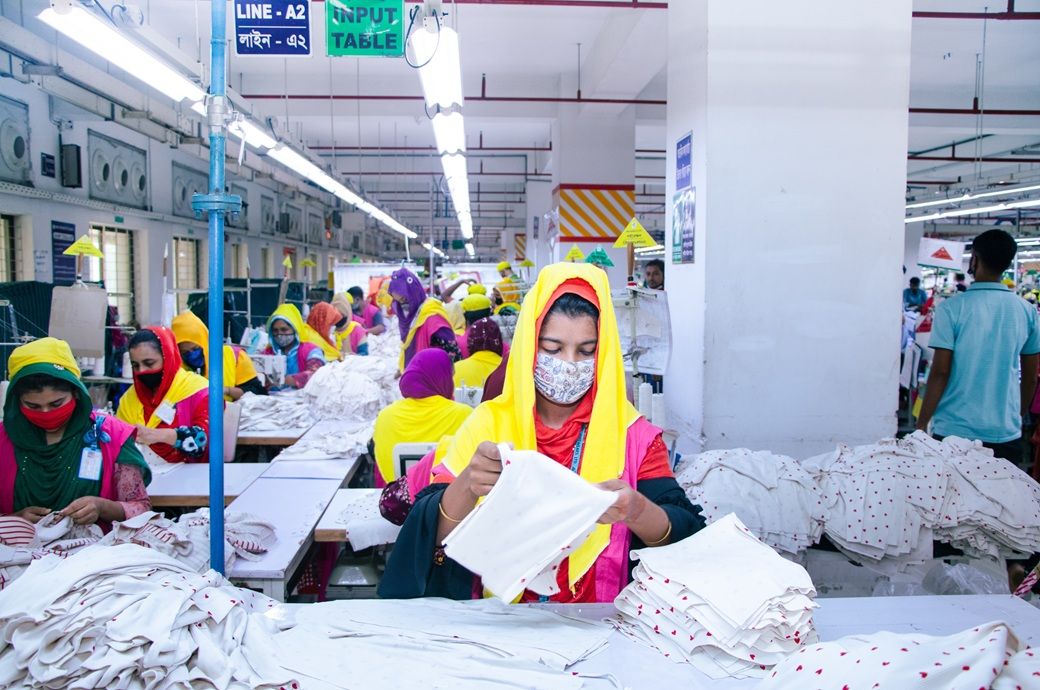
Foreseeing a ‘cautiously moderate’ near-term outlook for the RMG industry, Bangladesh Bank (BB) projected a combination of external demand uncertainty and emerging opportunities in key export markets.
Bangladesh’s RMG exports performance in the next few quarters will depend on the pace of economic recovery in major buying nations, stabilisation of global supply chains and the sector’s ability to diversify products and markets, the central bank noted.
Foreseeing a ‘cautiously moderate’ near-term outlook for the sector, it projected external demand uncertainty and emerging opportunities in key markets.
“Strengthening logistics, enhancing productivity and expanding into higher value apparel segments might be critical for maintaining the competitiveness of Bangladesh in the global garment market,” the bank’s ‘Quarterly Review of Readymade Garments (RMG): October-December of FY26’ noted.
The sector continued to occupy the dominant share in the country’s export basket, accounting for 80.36 per cent of total export earnings during the October-December period of fiscal 2025-26 (FY26).
Amid continuing demand uncertainty globally, the sector contracted during the quarter, with earnings reaching $9.74 billion, a 5.99 per cent year-on-year (YoY) decline.
Global demand conditions, inflationary pressures in importing countries, shifts in consumer spending patterns and supply chain adjustments continue to influence order volumes and export receipts, the bank observed.
In addition, production costs, exchange rate movements, and logistical conditions play a considerable role in shaping the competitiveness of Bangladesh’s garment exports.
These show a large and resilient industry providing the bulk of export earnings and employment facing growing short-term headwinds as it moves into the rest of FY26, the bank added.
Fibre2Fashion News Desk (DS)


Taylor Swift plans to reunite with Sabrina Carpenter, Sombr at Coachella

Stock markets outlook: Dalal Street braces for swings as RBI MPC decision, war risks weigh on sentiment–Check key triggers – The Times of India

US commandos probed deep into Iran to rescue downed airman: media

-

 Sports1 week ago
USMNT handed reality check by Doku, Belgium ahead of World Cup
-

 Entertainment1 week ago
Lee Sang-bo dies at 45: Funeral details revealed
-

 Sports1 week ago
2026 NCAA men’s hockey tournament: Schedule, results
-

 Fashion1 week ago
China rolls out tariff cuts on Congo imports from April 1
-

 Fashion1 week ago
EU apparel imports slump 15.48% YoY in Jan; Bangladesh hardest hit
-
Uncategorized6 days ago
[CinePlex360] Please moderate: “Further tariff
-

 Sports1 week ago
Man City show why they are worthy WSL title winners as tired United wilt
-
Uncategorized1 week ago
[CinePlex360] Please moderate: “Apple scrapping