Connect with us

Fashion

Bangladesh allows unions with min 20 workers; industry rejects move

Published

on

Bangladesh allows unions with min 20 workers; industry rejects move
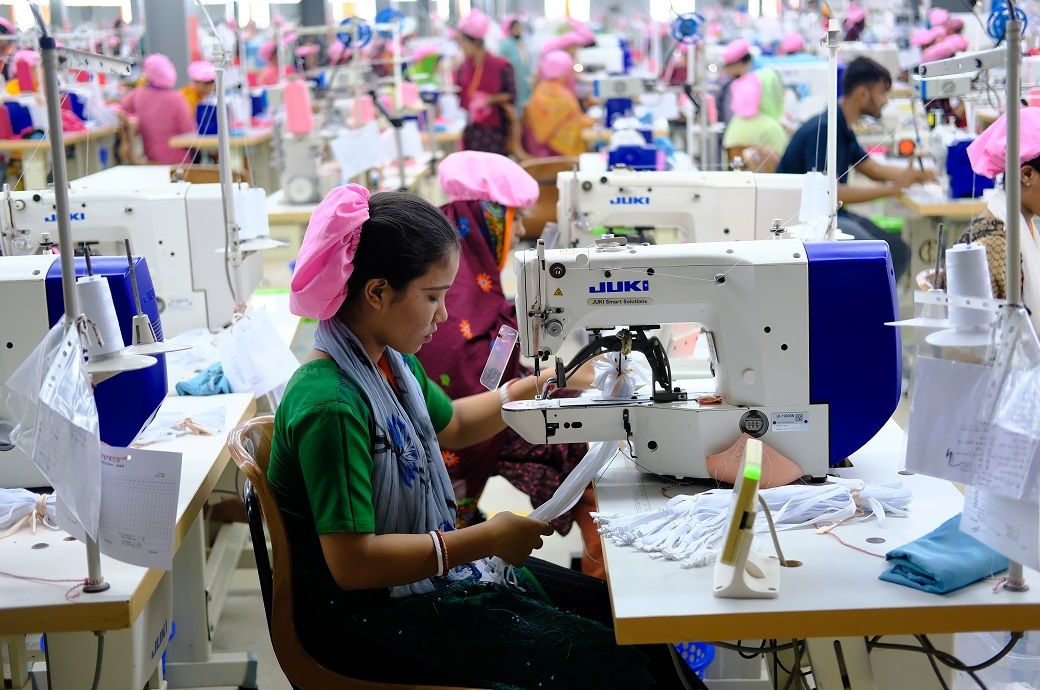


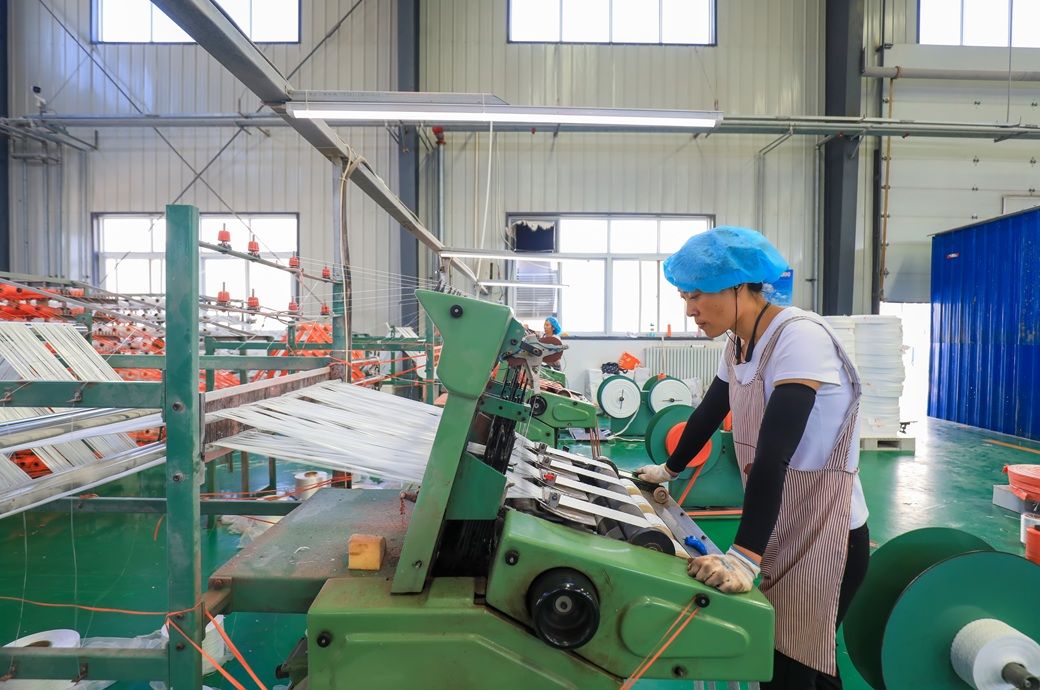
Bangladesh recently issued a gazette notification announcing a new ordinance amending the Labour Act, allowing trade unions to be formed with the consent of at least 20 workers.

The law required the consent of 20 per cent of the total workforce to form a trade union earlier.

Bangladesh recently issued a gazette notification announcing a new ordinance amending the Labour Act, allowing trade unions to be formed with the consent of at least 20 workers.
The law required the consent of 20 per cent of the total workforce to form a trade union earlier.
While the Bangladesh Labour Foundation hailed the move, apparel and textile industry leaders rejected the ordinance.

The Bangladesh Labour (Amendment) Ordinance, 2025, was issued by the legislative and parliamentary affairs department.

The number of workers in a factory who apply to form a trade union will be registered based on the total number of workers.

For establishments with 20 to 300 workers, at least 20 workers may apply; with 301 to 500 workers, 40 workers; with 501 to 1,500 workers, 100 workers; with 1,501 to 3,000 workers, 300 workers; and with more than 3,001 workers, 400 workers.

“This is more than just a legal update—it’s a major victory for our dignity and future, ensuring our labour governance is finally brought closer to international standards,” the Bangladesh Labour Foundation (BLF) said in a LinkedIn post.

The ordinance brings sweeping, essential changes that put the workers first, BLF noted.

For the first time, domestic and agricultural workers are explicitly included in key chapters concerning trade union rights, welfare and social security. Their essential work is now formally recognised and protected under the law, BLF said.

Paid maternity leave is now set at 120 days. The high-risk shipbreaking sector is now explicitly included under the definition of a regulated establishment.

“These reforms will strengthen our freedom of association and collective bargaining power, and they are vital for securing our jobs and reinforcing Bangladesh’s global trade standing,” BLF added.

Meanwhile, apparel and textile industry leaders have rejected the ordinance, saying several key provisions had been added to the law outside the consensus reached at the meeting of the Tripartite Consultative Council (TCC), according to domestic media reports.

They urged the government to immediately revise the relevant sections in line with the decisions adopted at the meeting.

Fibre2Fashion News Desk (DS)



Source link

Continue Reading
Click to comment

Leave a Reply

Your email address will not be published. Required fields are marked *

Fashion

Italy’s Moncler FY25 revenue reaches $3.69 bn with resilient margins

Published

on

Italy’s Moncler FY25 revenue reaches .69 bn with resilient margins


Italian luxury fashion group Moncler SpA has delivered resilient performance in fiscal 2025 (FY25) ended December 31, reporting consolidated revenues of €3.13 billion (~$3.69 billion), up 3 per cent at constant exchange rates and 1 per cent at current rates compared with €3.11 billion (~$3.67 billion) in 2024.

Profitability remained robust despite a more challenging trading backdrop. Group EBIT stood at €913.4 million, broadly stable year on year (YoY), translating into a 29.2 per cent margin versus 29.5 per cent in FY24. Net profit reached €626.7 million compared with €639.6 million a year earlier, reflecting higher net financial expenses, while maintaining a 20 per cent margin.

Moncler has reported revenues of €3.13 billion (~$3.69 billion) in FY25, up 3 per cent at constant exchange rates, with net profit of €626.7 million (~$739.5 million).
Asia led regional growth, while DTC channels strengthened across brands.
Q4 revenues rose 7 per cent, driven by robust Moncler and Stone Island performance, as the group prepares for continued investment and leadership transition.

Regionally, the group recorded strong momentum in Asia, where revenues rose 7 per cent at constant exchange rates to €1.42 billion, supported by demand in China and Korea and a recovery in tourist flows. The Americas increased 5 per cent to €391.1 million, whereas Europe, Middle East and Africa (EMEA) declined 3 per cent amid subdued tourism-related traffic, Moncler said in a press release.

Channel performance highlighted the continued shift towards direct engagement. Moncler’s direct-to-consumer (DTC) revenues rose 4 per cent to €2.36 billion, accounting for nearly 87 per cent of brand sales, while wholesale declined 4 per cent as the group continued to enhance distribution quality. Stone Island’s DTC channel expanded 11 per cent to €226.4 million, whereas wholesale decreased 4 per cent.

The group’s financial position strengthened further, with net cash reaching €1.46 billion at year-end after dividend payments of €353.2 million. The board proposed a dividend of €1.4 per share and approved the consolidated sustainability statement.

Remo Ruffini, chairman and CEO of Moncler, said: “Moncler and its board of directors wish to express their most sincere thanks to Gabriele Galateri di Genola for his dedication and the highly valuable contribution he has made throughout his more than ten-year term of office. His significant experience, the vision developed over many years in senior leadership positions at leading industrial and financial organisations, as well as his constant commitment to good governance, have represented a key point of reference for our work. With gratitude, we extend our best wishes to Gabriele Galateri di Genola for the future.”

In the fourth quarter (Q4), the group delivered accelerated momentum, with revenues rising 7 per cent at constant exchange rates to €1.29 billion (~$1.52 billion). Moncler brand revenues reached €1.17 billion, up 6 per cent, while Stone Island posted €123.1 million, surging 16 per cent with double-digit growth across all regions.

Moncler’s DTC channel advanced 7 per cent despite a demanding comparable base in the quarter, supported by Asia and the Americas, while wholesale returned to growth, rising 2 per cent. Stone Island recorded broad-based acceleration, with DTC revenues increasing 16 per cent and wholesale climbing 17 per cent, partly reflecting delivery timing shifts from the previous quarter.

Looking ahead, the group emphasised continued investment in brand development and organisational strengthening, including the appointment of Leo Rongone as group chief executive officer from April 2026, as it seeks to sustain long-term growth and value creation.

Fibre2Fashion News Desk (SG)


Source link

Continue Reading

Fashion

Finlands’ Amer Sports FY25 revenue jumps 27% on segment growth

Published

on

Finlands’ Amer Sports FY25 revenue jumps 27% on segment growth


Finnish sporting goods company Amer Sports has reported strong financial results for the fiscal 2025 (FY25) ended December 31, with revenue growth of 27 per cent year-over-year (YoY) to $6,566 million. Technical Apparel revenue increased 30 per cent to $2,856 million, Outdoor Performance rose 31 per cent to $2,404 million, and Ball & Racquet Sports advanced 13 per cent to $1,307 million.

The annual gross margin improved by 220 basis points to 57.6 per cent, while operating profit jumped 49 per cent to $702 million. Operating margin expanded 160 basis points to 10.7 per cent, reflecting strong profitability gains across segments. Net income attributable to equity holders increased 489 per cent to $427 million, or $0.76 per diluted share, with adjusted net income rising 131 per cent to $545 million, or $0.97 per diluted share.

Amer Sports has reported FY25 revenue growth of 27 per cent to $6,566 million with margin expansion and strong profitability across segments.
Q4 revenue rose 28 per cent to $2,101 million, driven by Technical Apparel and Outdoor Performance.
Despite higher growth investments, earnings surged and outlook remains positive, with the company projecting double-digit growth momentum into 2026.

Meanwhile, in the fourth quarter (Q4), the company recorded revenue of $2,101 million, up 28 per cent YoY, exceeding guidance and reflecting continued momentum across its portfolio. Segment-wise, Technical Apparel revenue rose 34 per cent to $1 billion, Outdoor Performance increased 29 per cent to $764 million, and Ball & Racquet Sports grew 14 per cent to $337 million, Amer Sports said in a press release.

The gross margin improved by 160 basis points to 57.7 per cent in Q4, while adjusted gross margin reached 57.8 per cent. Selling, general and administrative expenses increased 35 per cent to $988 million amid accelerated investments, particularly to support Salomon Softgoods growth initiatives. Operating profit climbed 18 per cent to $228 million, although operating margin declined around 90 basis points to 10.9 per cent due to higher growth investments.

Net income attributable to equity holders surged 752 per cent to $132 million in the quarter, translating to diluted earnings per share of $0.23, while adjusted net income rose 94 per cent to $176 million, or $0.31 per diluted share.

James Zheng, chief executive officer (CEO) of Amer Sports said, “Fourth quarter was a great finish to a breakout year for Amer Sports led by our flagship Arc’teryx brand and rising star Salomon, which surpassed the $2 billion sales mark. In 2025 we delivered 27 per cent revenue growth and more than 150 basis points of operating margin expansion, with double-digit growth across all segments, regions, and channels.”

Zheng added that he was pleased to announce Carrie Ask as the next Wilson President and CEO, describing her as a proven brand leader and C-suite executive with strong prior experience at Helly Hansen, Levi’s and Nike.

“Looking forward, we believe our unique portfolio of technical sports and outdoor brands is very well positioned for strong and profitable growth within the premium sports and outdoor market, which continues to be one of the healthiest segments across the global consumer landscape,” added Zheng.

Andrew Page, chief financial officer of the company, highlighted the group’s financial strength and investment strategy, stating: “We had another strong performance in Q4 with healthy sales growth, gross margin expansion and EPS despite our decision to accelerate investment behind Salomon. The strong sales and profitability profile of the broader Amer portfolio gives us the flexibility to accelerate resources behind the large Salomon Softgoods opportunity while still delivering great results at the Group level.”

He added, “Ending 2025 with only 0.3x net leverage and more than $700 million operating cash flow, we believe our financial foundation has never been stronger. Looking ahead, given the continued momentum from our highest-margin Arc’teryx franchise, accelerating Salomon footwear growth, plus the solid foundation of our equipment franchises, we are confident in our ability to deliver another strong financial performance in 2026.”

Looking ahead, Amer Sports expects FY26 reported revenue growth of 16-18 per cent, supported by favourable foreign exchange conditions, with gross margin projected at around 59.0 per cent and operating margin between 13.1 and 13.3 per cent. The company also anticipates continued segment growth, led by Technical Apparel and Outdoor Performance, alongside steady expansion in Ball & Racquet Sports.

For the first quarter (Q1) of 2026, Amer Sports forecasts reported revenue growth of 22-24 per cent, with operating margin expected between 14 and 14.5 per cent, underscoring sustained momentum as the company advances its growth strategy across premium sports and outdoor categories.

Fibre2Fashion News Desk (SG)


Source link

Continue Reading

Fashion

US’ Rocky Brands’ Q4 2025 sales rise 9.1% on strong retail growth

Published

on

US’ Rocky Brands’ Q4 2025 sales rise 9.1% on strong retail growth


American shoe manufacturer Rocky Brands Inc has reported net sales of $139.7 million in the fourth quarter (Q4) of 2025 ended December 31, an increase of 9.1 per cent year on year (YoY). The growth was primarily supported by strong retail channel momentum, with retail sales surging 30.8 per cent to $57.0 million, while wholesale sales declined 2.1 per cent to $79.6 million and contract manufacturing sales slipped 1.6 per cent to $3.2 million.

The gross margin for the quarter stood at 41.3 per cent of net sales, slightly below 41.5 per cent a year earlier. The marginal decline reflected tariff-driven pressure on wholesale margins, partially offset by improved retail profitability and a higher retail sales mix. Operating expenses increased to $48.1 million, or 34.5 per cent of net sales, mainly due to higher logistics costs linked to retail growth as well as increased incentive compensation and discretionary spending.

Rocky Brands has posted net sales of $139.7 million in Q4 2025, up 9.1 per cent YoY, driven by a 30.8 per cent surge in retail sales, while wholesale and contract manufacturing declined.
Net income rose 35.7 per cent to $6.5 million.
Full-year sales grew 6.2 per cent to $482 million with improved margins and profitability, supported by strong DTC demand despite tariff pressures.

Income from operations increased 12.8 per cent to $9.6 million, representing 6.9 per cent of net sales, compared with $8.5 million in the prior-year quarter. Net income rose sharply by 35.7 per cent to $6.5 million, or $0.86 per diluted share, versus $4.8 million, or $0.64 per diluted share, a year earlier, Rocky Brands said in a press release.

Adjusted net income for the quarter was $7.2 million, or $0.94 per diluted share, compared with $8.9 million, or $1.19 per diluted share in the corresponding period of 2024. Interest expense declined to $2.5 million from $3 million due to lower debt levels and easing interest rates.

For the full year 2025, Rocky Brands recorded net sales of $482 million, up 6.2 per cent from $453.8 million in 2024. Wholesale sales grew modestly by 1 per cent to $316.6 million, while retail sales climbed 20.5 per cent to $152.9 million, highlighting the continued shift towards direct-to-consumer (DTC) channels. Contract manufacturing revenue declined 7.7 per cent to $12.5 million.

Annual gross margin improved significantly by 150 basis points to 40.9 per cent, driven by stronger wholesale profitability and favourable channel mix. Operating expenses totalled $160.1 million, or 33.2 per cent of net sales, reflecting investments to support growth initiatives. Income from operations increased 19.7 per cent to $37.2 million, representing 7.7 per cent of net sales.

Net income for 2025 nearly doubled to $22.3 million, or $2.96 per diluted share, compared with $11.4 million, or $1.52 per diluted share in 2024. Adjusted net income reached $24.5 million, or $3.26 per diluted share, up from $19.0 million, or $2.54 per diluted share the previous year. Interest expense declined to $10.0 million following debt refinancing in April 2024 and continued deleveraging, with total debt falling to $122.6 million at year-end from $128.7 million in 2024.

“We concluded 2025 with our highest quarterly net sales growth rate for the year in the fourth quarter, reflecting the momentum that has been building in our business,” said Jason Brooks, chairman, president and CEO at Rocky Brands. “Our performance during the key holiday selling season was highlighted by strong demand in our direct-to-consumer channel led by XTRATUF, which delivered nearly triple digit sales growth online. These results contributed to a very good year for our Company, especially considering the industry headwinds caused by higher tariffs and deteriorating US consumer sentiment.”

Fibre2Fashion News Desk (SG)


Source link

Continue Reading

Trending