

Fashion
Billionaire family turns India’s gold obsession into a fortune


By
Bloomberg
Published
November 20, 2025
Gold is having a moment in the sun and the billionaire Muthoot clan of India is reaping the benefits.
Their family-run firm that’s doled out gold loans for almost nine decades is on a roll as consumers take advantage of surging bullion prices to swap jewellery for short-term cash. The boom has pushed the company’s stock to a record, boosting the Muthoots’ combined fortune above $13 billion, according to the Bloomberg Billionaires Index.
“The market is exploding,” said George Alexander Muthoot, 70, the managing director of his eponymous firm and third-generation executive of the business. “Even for rich people, it’s fashionable today to take gold loans.”
Muthoot Finance Ltd.’s rise speaks to the growing clout of India’s shadow banking sector, which is helping fuel the country’s economic growth. Gold lending across all firms surged 35% in the 12 months ended in June to 13.4 trillion rupees ($151 billion), by far the fastest growth among consumer loans, according to CRIF High Mark Credit Information Services Pvt.
The company’s biggest challenge now is keeping rivals at bay, with gold hovering near a record high. Competition is heating up after Bain Capital agreed to pay about $500 million for an 18% stake in gold lender Manappuram Finance Ltd. Mitsubishi UFJ Financial Group Inc. meanwhile is reportedly in talks to buy 20% of shadow bank Shriram Finance Ltd. for $2.6 billion. Muthoot Finance’s plan to expand its 7,500-plus network of branches by up to 200 a year may not be enough to maintain its dominance as India’s top gold lender.
During an earnings call last week, analysts peppered Muthoot with questions about how the firm is going to deal with foreign competitors, as well as the local banks that are aggressively expanding their gold-loan portfolios. He shrugged off the queries, saying the overall market is expanding.
“There is no need to take any hasty or knee-jerk reactions,” said Muthoot. “The challenges in the operations will catch up with them.”
No country is as obsessed with gold as India, where households own about 34,600 tons, worth about $3.8 trillion, according to Morgan Stanley estimates. That’s more than the holdings at the central banks of the US, Germany, Italy, France, Russia, and China combined. For India’s population of 1.4 billion, that works out to almost 25 grams per person, valued at more than $3,250 at current prices. (By contrast, the country’s gross domestic product per capita is just $2,820, according to the IMF.)
Gold is deeply ingrained in India’s culture, often linked to Hindu religious rites. Dhanteras, celebrated at the start of the Diwali festival of lights, is a popular day to buy gold and worship Lakshmi, the goddess of wealth. Weddings are also ripe for purchases, with brides typically lavished in gold bangles, bracelets, rings and necklaces.
The practice of using gold as collateral for loans dates back centuries. Long before the Muthoots set up shop, small jewellers would offer cash to help clients get through rough patches. The size of the loan — sometimes as little as $17 — is tied to the jewellery’s worth. Higher gold prices boost their value, which leads to bigger loans — and more interest income for lenders like Muthoot Finance.
“It’s much easier to borrow from Muthoot,” said Sandarsh, a 27-year-old driver in Bengaluru who asked to be identified only by his first name. He took out a loan of about 500,000 rupees in 2023, using half of his family’s gold stash. He was charged 1.25% a month, cheaper than the rate offered by State Bank of India, he said. He used the money to invest in a biryani business, which ultimately failed, though he repaid the loan.
The Muthoot clan are Orthodox Christians, a tiny minority in the predominantly Hindu nation. The family’s given names are usually English, and George is particularly popular. Nine of the 15 company directors are named George. Muthoot and his brothers are the 19th generation of the family line.
Their business model is surprisingly simple. Clients bring their jewellery to a branch, where staff check the gold content before making a loan of up to 75% of the value. A minimum of 18-karat gold is required. To gauge purity, staffers rub the piece against an obsidian testing stone — called a Kasauti — to create a faint streak, before adding a nitric acid solution. If the line disappears, it may signal a fake, or low-quality gold. Borrowers typically take out loans for four to 12 months, before reclaiming their heirlooms after repaying the money. Muthoot Finance charges 1% to 1.5% a month on the loans. Annualised rates can top 19%.
“We only finance used jewellery,” Muthoot said in an interview from his office in Kochi, the commercial hub of Kerala state at the southern tip of India. “Most of the gold is owned by the family. When they give it as collateral, they’d like to take it back.”
Muthoot Finance branches are hardly ornate, considering the value of the assets inside. They tend to be in low-income neighbourhoods that are often shunned by major banks.
One branch in the financial hub of Mumbai is tucked away on a quiet side street behind a busy thoroughfare. A hardware store and mom-and-pop grocery shop sits next door, where hawkers selling custard apple and papaya park their carts.
The outlet is protected by a sliding metal grille, like an old-fashioned elevator door. Its facade is adorned with the bank’s logo of two elephants facing each other, their curled trunks forming an “M” for Muthoot. Along the wall are bright red posters of actor Amitabh Bachchan, a brand ambassador and one of India’s biggest Bollywood stars, cupping his hands in a traditional namaste greeting.
A security guard, cooled from the searing heat by a fan duct-taped to a small stool, locks the door with a heavy padlock whenever a customer enters. After clients are scanned with a hand-held metal detector, they’re served by staff from behind glass partitions.
Once the jewellery is deposited, it’s stored in the branch’s vault, whose doors are controlled from the company’s head office. The entire process takes less than an hour, and no credit history is required. The tight security is essential: Muthoot Finance held 209 metric tons of gold for clients — worth almost $28 billion — slightly more than the gold held in Singapore’s official foreign reserves.
Outstanding gold loans by the Keralite firm rose to 1.25 trillion rupees at the end of September, topping the 725.5 billion rupees in similar loans made by State Bank of India, the country’s largest lender. Still, SBI’s gold loan book jumped 87% from the previous year, faster than Muthoot Finance’s 45% growth rate.
While Muthoot Finance has dominated the business of gold financing, the company could do more to sell other products to diversify its revenue, said Parijat Garg, a Mumbai-based credit consultant who has tracked the company for a decade. Gold loans account for close to 90% of the group’s business, which also includes home financing and insurance.
“If I’m a gold loan customer, I may have insurance needs, I may have remittance needs,” Garg said.
Though the firm’s customers often have low incomes, defaults are rare. Muthoot’s non-performing loan rate of 2.3% is in line with commercial banks, which are subject to stricter regulations. Jewellery seized from any default is sold at auction.
The steady growth has led to three straight years of stock gains for the company, including a 73% rally this year. As a result, four family members have more than doubled their fortunes. Three of them each hold at least 10% of the firm, which now has a market value of almost $17 billion.
The clan is already grooming the next generation, according to Muthoot. Asked whether female family members can one day run the business, he said it’s a “sensitive” matter. “They get married, they go to the husband’s family,” he said.
Among his three deputies are George Muthoot Jacob, a 42-year-old nephew who holds law and business degrees from England.
Asked why he returned home instead of staying in the UK like so many other well-heeled Indians, the younger Muthoot seemed surprised by the question. “We have a great family business here,” he said.











The agreement covers the construction and operation of a 360-kilometre railway linking the main mining areas of Al-Shidiya and Ghor Al-Safi to the Port of Aqaba.
The United Aran Emirates and Jordan recently an agreement to develop a railway network in Jordan and establish the UAE-Jordan Railway Company.
The agreement covers the construction and operation of a 360-kilometre railway linking the main mining areas of Al-Shidiya and Ghor Al-Safi to the Port of Aqaba.
The project aims at transporting 16 million tonnes of phosphate and potash annually.
The project aims at transporting 16 million tonnes of phosphate and potash annually, with a total investment value of $2.3 billion. Both phosphate and potash are chemicals used in the textile industry.
The agreement was signed by UAE Minister of Energy and Infrastructure Suhail bin Mohamed Al Mazrouei and Jordan’s Minister of Transport Nidal Al-Qatamin.
The UAE-Jordan Railway Company was formally established as a joint venture between Abu Dhabi’s L’IMAD Holding Company (L’IMAD) and several Jordanian stakeholders, according to an official release in the UAE.
The joint venture will be responsible for the implementation, operation and maintenance of Jordan’s railway network through its executing arm, Etihad Rail, the developer and operator of the UAE’s national railway network.
The project will enhance Jordan’s export capabilities and logistics efficiency by directly linking phosphate and potash production sites to the Port of Aqaba, significantly reducing transport time and costs.
It will also support comprehensive economic development and open wide prospects for job creation across multiple sectors, leveraging the extensive expertise of Etihad Rail.
Fibre2Fashion News Desk (DS)
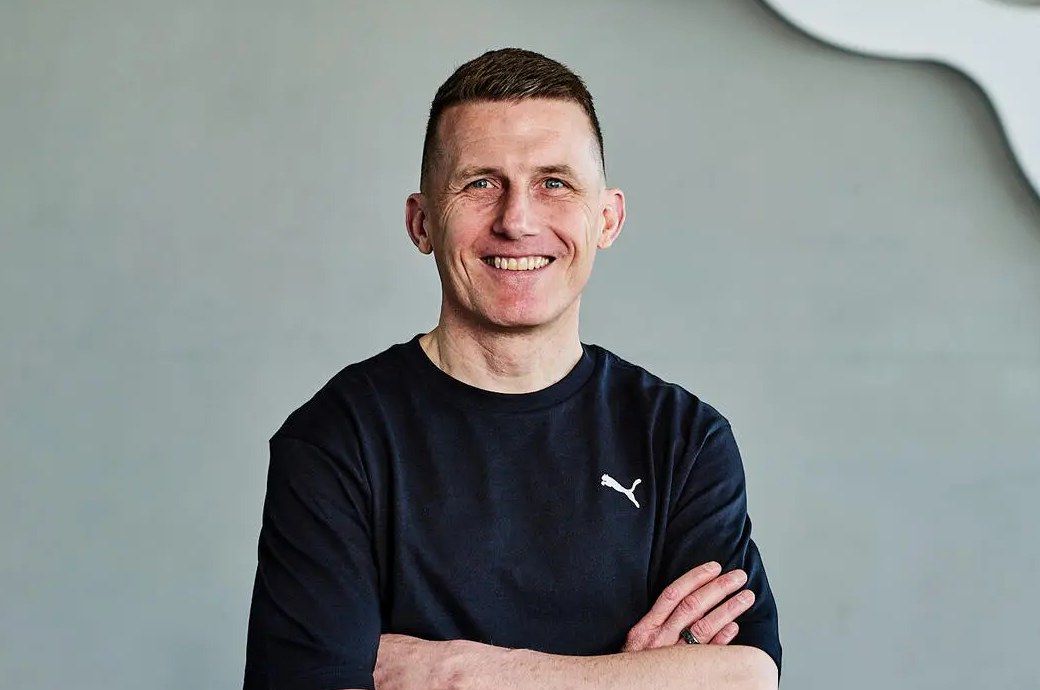
With more than two decades of experience in the sports industry, James brings a unique combination of skills, which will help PUMA use creative direction as an important strategic lever to establish itself as a top-3 global sports brand.
Puma has appointed James Carnes as senior vice president creative direction.
Reporting to Maria Valdes, he will oversee creative direction, innovation, and product excellence.
With over two decades of experience, including leadership roles at Adidas, he will align design strategy with business goals to strengthen Puma’s global brand appeal and market position.
“James is a very highly regarded leader in our industry and he has been instrumental in shaping some of the most influential performance and lifestyle products, labels, and platforms,“ said Maria Valdes. “With a strong background in industrial design and a deep understanding of both athletes and consumers, he will play an important role in getting our customers and consumers excited about PUMA once again.”
Until 2021, James held several leadership positions in design, creative direction and strategy at adidas, both in Herzogenaurach and Portland, Oregon. Most recently he worked as an independent consultant and investor in the wider industry.
At PUMA, James will align creative direction with the company’s overall strategic ambitions, set the seasonal direction for the Business Units and create a long-term look and feel for the brand across consumer touch points.
“Creative Direction is about more than seasonal trends and colours. It is about defining how PUMA holistically presents itself in the market, harnessing the company’s portfolio of world class innovation, and deeply connecting with consumers,” said James Carnes. “We have the amazing opportunity to modernize the image and style of one of the most iconic sports brands in the world and I look forward to leading our teams and collaborating with my colleagues to make this happen.”
Note: The headline, insights, and image of this press release may have been refined by the Fibre2Fashion staff; the rest of the content remains unchanged.
Fibre2Fashion News Desk (RM)

China will step up building a higher-level China-Vietnam community with a shared future that carries strategic significance, Chinese President Xi Jinping said while holding talks with visiting Vietnamese President To Lam.
China and Vietnam are accelerating efforts to navigate bilateral trade towards a more balanced and sustainable course.
President Xi Jinping recently held talks with visiting Vietnamese President To Lam.
During the visit, Vietnamese Minister of Industry and Trade Le Manh Hung called for a restructuring of production, trade and supply chains alongside stronger investment cooperation.
Xi said both countries should work together in their modernisation drive, accelerate the alignment of development strategies and prioritise infrastructure connectivity.
While meeting Chinese Minister of Commerce Wang Wentao during the state visit, Vietnamese Minister of Industry and Trade Le Manh Hung called for a restructuring of production, trade and supply chains alongside stronger investment cooperation.
Wang said both sides should focus on implementing the high-level common perceptions, including raising bilateral trade turnover to $500 billion in future.
Hung urged China to expand imports of Vietnamese goods, broaden the list of products eligible for tariff preferences and further open its market. He also called for the mutual recognition of quarantine results for agro-forestry-fishery products, facilitation of Vietnamese exports via cross-border e-commerce, and expansion of Vietnam’s trade promotion offices across Chinese localities, according to a Vietnamese news agency.
China will continue to support Vietnam in setting up additional trade promotion offices, following those already established in Chongqing, Hangzhou and Haikou, Wang responded.
China also expressed readiness to support Vietnam’s stronger exports through cross-border e-commerce, encouraging greater visibility of the Vietnam National Pavilion on Chinese e-commerce platforms beyond JD.com to better promote Vietnamese products to Chinese consumers.
China has consistently been Vietnam’s largest trading partner and second-largest export market, while Vietnam continues to be China’s biggest trading partner in the Association of Southeast Asian Nations (ASEAN).
Fibre2Fashion News Desk (DS)


NFL star George Kittle intercepts NBA player Tyrese Haliburton’s beer WrestleMania 42

Cole Sprouse reacts to brother Dylan confronting house intruder

2026 NFL draft: Louis Riddick’s favorite prospects, sleepers

Palace left in shock as Prince William cancels grand ceremony

The case for Man United’s Fernandes as Premier League’s best

100% road tax waiver for electric cars, new rules for 2, 3 and 4 wheelers – what Delhi govt’s draft EV policy says – The Times of India

-
 Sports6 days ago
The case for Man United’s Fernandes as Premier League’s best
-
 Entertainment6 days ago
Palace left in shock as Prince William cancels grand ceremony
-
Business1 week ago
100% road tax waiver for electric cars, new rules for 2, 3 and 4 wheelers – what Delhi govt’s draft EV policy says – The Times of India
-

 Entertainment1 week ago
Dua Lipa hits major career high ahead of wedding with Callum Turner
-
 Business6 days ago
UK could adopt EU single market rules under new legislation
-
 Business1 week ago
The FAA wants gamers to apply for air traffic control jobs
-

 Fashion6 days ago
Energy emerges as biggest cost driver in textile margins
-

 Sports1 week ago
Lamar Jackson hits back at critics with faithful message on social media