

Business
Kohl’s names Michael Bender as permanent CEO after a turbulent year and sales declines


Kohl’s said Monday that Michael Bender, who has served as its interim CEO, will become its permanent chief executive as the department store tries to get back to sales growth.
He becomes the third CEO for the department store in about three years. The move is effective as of Sunday.
Bender, who has been director of Kohl’s board since July 2019, became the company’s interim CEO in May. The retailer appointed Bender to the position after firing CEO Ashley Buchanan after just a few months into his tenure.
Kohl’s fired Buchanan after it said a company investigation found that he had pushed for deals with a vendor with whom he had a personal relationship. That person was Chandra Holt, a former retail executive who had a romantic relationship with Buchanan.
Kohl’s leadership announcement comes a day before the retailer reports fiscal third-quarter earnings. Along with leadership turmoil, Kohl’s has struggled with declining sales. The company said in August that it expects net sales to drop by 5% to 6% for the fiscal year.
Kohl’s has had many changes at the top since former CEO Michelle Gass left the company in 2022 to join Levi Strauss & Co., where she later succeeded then-CEO Chip Bergh. She was followed at Kohl’s by Tom Kingsbury, a then-board member of the company, who became interim and then permanent CEO.
Michael Bender named Kohl’s Interim CEO.
Courtesy: Kohl’s
Bender, 64, previously held leadership and management roles at retailers including Victoria’s Secret, Walmart and Eyemart Express. Along with his role as CEO, Bender will continue to serve on the company’s board.
In a news release, board chair John Schlifske said Kohl’s hired an external firm and “conducted a comprehensive search” for the retailer’s new leader. He said Bender is the right person for the job because of his “three decades of leadership experience across retail and consumer goods companies and a deep commitment to the Kohl’s brand.”
“Over the past several months as interim CEO, Michael has proven to be an exceptional leader for Kohl’s – progressively improving results, driving short and long-term strategy, and positively impacting cultural change,” he said.
In a CNBC interview, Bender described Kohl’s turnaround as “heading toward close to the middle innings.”
“For me, that’s a good thing, because it means there’s still good work to be done, and ideas and challenges to bring forward to solve,” he said.
At Kohl’s, he said customers have “a lot of excitement,” but also “a more discerning, choiceful attitude about the dollars they spend.”
“What they’re looking for from retailers is curating assortment for me of quality products at a value that compels me to either get off the couch, or if I want to stay on the couch, to get on my phone and and order from you because they signify value for me,” he said.
Over the past five years, Kohl’s shares have fallen by about 53%. So far this year, its stock is up nearly 12%.
— CNBC’s Courtney Reagan contributed to this report




From the UK, flights have also been cancelled for many Middle East destinations, including all flights to Israel and Bahrain, three-quarters of the day’s scheduled flights to the United Arab Emirates, and more than two-thirds (69%) of flights to Qatar.
Business
IIP sees 4.8% YoY growth in January; manufacturing & electricity support rise – The Times of India

India’s Index of Industrial Production saw a 4.8% increase year-on-year in January 2026, according to the Ministry of Statistics & Programme Implementation. The rise in industrial output was largely driven by a 4.8 per cent expansion in manufacturing and a 5.1 per cent improvement in electricity generation. Mining activity also supported overall growth, registering a 4.3 per cent uptick during the month.Estimates placed IIP at 169.4 for January 2026, compared with 161.6 in January 2025. This follows a stronger reading in December 2025, when industrial production had grown by 7.8 per cent. For January 2026, the sector-specific indices stood at 157.2 for mining, 167.2 for manufacturing and 212.1 for electricity.Within manufacturing, 14 of the 23 industry groups at the NIC two-digit level posted year-on-year gains in January. The strongest contributors were manufacture of basic metals, which rose 13.2 per cent; manufacture of motor vehicles, trailers and semi-trailers, up 10.9 per cent; and manufacture of other non-metallic mineral products, which increased 9.9 per cent. Growth in basic metals was supported by items such as flat products of alloy steel, MS slabs, and hot-rolled coils and sheets of mild steel.The automobile category advanced on the back of higher output of auto components and spare parts, commercial vehicles, and bus and minibus bodies or chassis. In the non-metallic mineral products segment, cement of all types, cement clinkers and stone chips were key contributors.According to use-based classification, output of primary goods grew 3.1 per cent, capital goods rose 4.3 per cent and intermediate goods increased 6 per cent compared with January 2025. Infrastructure and construction goods recorded the sharpest rise at 13.7 per cent, while consumer durables expanded 6.3 per cent. In contrast, consumer non-durables declined by 2.7 per cent. The ministry identified infrastructure and construction goods, intermediate goods and primary goods as the leading drivers of growth under this classification.

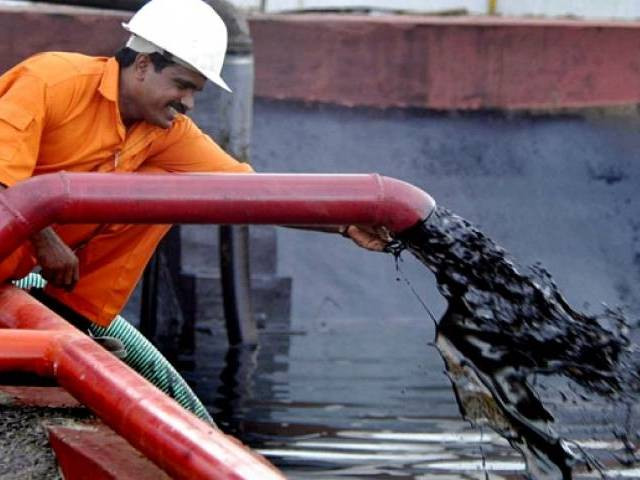
There might also be a more direct impact on food. “Some elements of crude oil are used in fertiliser, and so there could be a cost implication in terms of food prices,” Benjamin Goodwin, partner at banking advisory firm PRISM Strategic Intelligence told the BBC.


US’ Old Navy launches little navy, a new newborn essentials collection

Super-rich pay up to $350,000 for private jet evacuations as Middle East conflict escalates

5 key takeaways from Pete Hegseth’s Pentagon press conference on Iran-US war

-

 Politics1 week ago
Pakistan carries out precision strikes on seven militant hideouts in Afghanistan
-

 Tech1 week ago
These Cheap Noise-Cancelling Sony Headphones Are Even Cheaper Right Now
-

 Sports1 week ago
Kansas’ Darryn Peterson misses most of 2nd half with cramping
-

 Entertainment1 week ago
Viral monkey Punch makes IKEA toy global sensation: Here’s what it costs
-
Sports1 week ago
Mike Eruzione and the ‘Miracle on Ice’ team are looking for some company
-
 Business6 days ago
Households set for lower energy bills amid price cap shake-up
-
 Entertainment1 week ago
Talking minerals and megawatts
-

 Fashion1 week ago
India, Switzerland review TEPA implementation & boost investment ties