

Business
More North Sea exploration to be allowed in new Labour plan


Plans to relax restrictions on new oil and gas drilling in the North Sea will be unveiled on Wednesday under the government’s North Sea Strategy.
Chancellor Rachel Reeves will announce the publication of the strategy in the Budget, the BBC understands. The Department for Energy Security and Net Zero will issue a document on it shortly after.
The strategy is expected to contain a more liberal interpretation of a manifesto pledge to ban new oil and gas exploration using more generous extensions of existing fields.
This idea for allowing new drilling in a way that can be “tied back” to existing fields was first floated at the Labour conference in September.
The results of the North Sea review will not directly reference the decision being considered by ministers over whether to give the go ahead to the controversial Rosebank field, which Ed Miliband was vocally opposed to while in opposition.
That project is the subject of a separate and ongoing regulatory and judicial process. However, the wider relaxation in rules is widely thought to increase the chances Rosebank will ultimately be approved.
Tiebacks have historically been used for small remote extensions to existing oil and gas fields which geologically stray into currently unlicenced areas of seabed.
Rosebank is a much larger facility which requires its own production infrastructure.
There has also been speculation that the windfall tax of 78% – due to expire in 2030 – might be phased out earlier.
The oil and gas industry has been lobbying hard in recent months for changes to the windfall tax, or energy profits levy, which they say has been crippling the industry.
Investment is at an all-time low with operators instead looking to spend their money in parts of the world with more favourable tax rates.
Research from Robert Gordon University in Aberdeen estimates that about 1,000 jobs a month are currently being lost.
It is understood the green light for “tie backs” would be viewed as a hollow gesture without at least some concessions on taxation.
A kind of “cap and floor” mechanism would seem like the most likely move from government, which would kick in if oil prices returned to high levels like they did in the aftermath of the Russian invasion of Ukraine.
The industry argues that subsequent falls in the price of crude oil demonstrate that the “windfall” has now ended and that taxation should reflect that change.
The chief executive of Aberdeen & Grampian Chamber of Commerce, Russell Borthwick, criticised the UK government, saying it has got its North Sea policy “badly wrong”.
“This is the first step towards addressing the damage that has already been done – but while the Energy Profits Levy remains in place, this change in isolation will not stem the loss of jobs and investment in our oil and gas industry,” he said.
Mr Borthwick said maintaining the EPL would “ensure that more jobs will vanish in their thousands”.
He predicted more companies leaving the North Sea.
“The Chancellor must signal a shift away from this tax today, and that shift must come in 2026 before it is too late,” he added.
Business
Top stocks to buy today: Stock recommendations for April 24, 2026 – check list – The Times of India

Stock market recommendations: Bharat Electronics, and Colgate-Palmolive (India) have been recommended as the top stocks to buy today (April 24, 2026) by Bajaj Broking Research. Take a look at the target prices and expected returns:Bharat ElectronicsBuy in the range of ₹ 440.00-450.00
The stock is in structural up trend forming higher high and higher low in all time frame signaling strength and continuation of the uptrend. The entire up move of the last 8 months is in a rising channel as can be seen in the chart highlighting sustained demand at an elevated level.On the smaller time frame, the stock is at the cusp of generating a breakout above the bullish Flag like formation as post a sharp up move in the first 3 weeks of April the stock went into a consolidation phase in the last four sessions. It is seen resuming up move and is at the cusp of generating a breakout above the bullish Flag formation highlighting continuation of the up move and offers fresh entry opportunity.We expect the stock to extend the up move and head towards 495 levels in the coming months being the confluence of the 123.6% external retracement of the previous decline 473 – 400 and the upper band of the rising channel of the last 8 months.Colgate-Palmolive (India)Buy in the range of 2120-2160
The share price of Colgate-Palmolive has generated a breakout above bullish Flag pattern signaling continuation of the up move and offers fresh entry opportunity.We expect the stock to head higher towards 2330 levels in the coming months being the measuring implication of the bullish flag breakout.The daily 14 periods RSI is in buy mode thus supports the positive bias in the stock.(Disclaimer: Recommendations and views on the stock market, other asset classes or personal finance management tips given by experts are their own. These opinions do not represent the views of The Times of India)
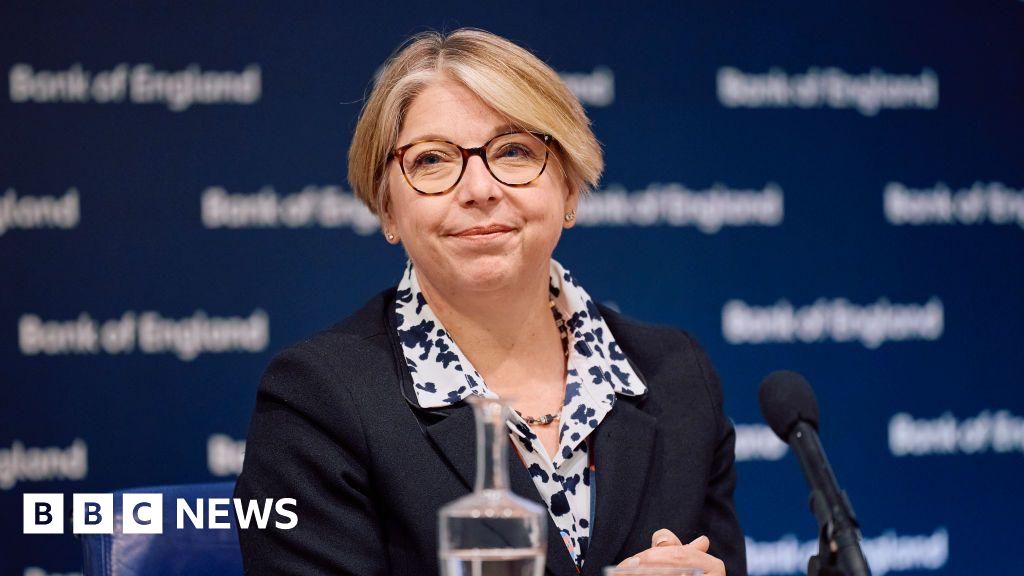
It is unusual for a senior figure at the Bank to be so forthright on market movements.
Source link

Consumer confidence has fallen for the third consecutive month amid household “jitters” over rapid price rises, figures show.
GfK’s long-running consumer confidence index fell four points to minus 25 in April, following falls of two points and three points in March and February respectively.
The deepening concern was driven by perceptions of the UK economy, with a six-point slide in confidence for the next 12 months to minus 43, its lowest level since February 2023.
Confidence in personal finances over the coming year fell five points to minus four – one point lower than this time last year.
The major purchase index – an indicator of confidence in buying big ticket items – held steady, albeit at minus 18 but one point better than last April.
The only measure to improve was the savings index – often an indication that households are concerned about their finances and looking to build contingency funds – which is up five points to 32.
Neil Bellamy, consumer insights director at GfK, said: “Consumers really do have the jitters now.
“It is a year since we last saw a monthly drop of this size, and we have to go back to October 2023 to find the last time consumer confidence was lower.
“Everyone is grappling with rapid price rises, especially at the fuel pumps, which are taking a dent out of household budgets, and people know further price hikes are coming.
“Consumer confidence is deteriorating sharply, with fuel prices and threats of more energy price increases acting as constant reminders of inflation.
“While the Gulf crisis is intensifying pressures, much of the current strain reflects earlier domestic cost increases.
“How long can all this disruption and pain continue?”


Former Giants co-owner Steve Tisch seen in team’s draft room

UK’s clothing exports down 7.6% to $293 mn in Jan-Feb
Top stocks to buy today: Stock recommendations for April 24, 2026 – check list – The Times of India

-

 Fashion1 week ago
France’s LVMH Q1 revenue falls 6%, shows resilience amid Iran war
-

 Entertainment1 week ago
Is Claude down? Here’s why users are seeing errors
-

 Sports1 week ago
PSL 11: Peshawar Zalmi win toss, opt to field first against Quetta Gladiators
-

 Tech1 week ago
The Deepfake Nudes Crisis in Schools Is Much Worse Than You Thought
-
 Business1 week ago
Standard Life buys rival in £2b deal to create savings giant
-

 Tech1 week ago
CYBERUK ’26: UK lagging on legal protections for cyber pros | Computer Weekly
-

 Fashion1 week ago
Raymond unveils luxury Chairman’s Collection Store in Mumbai
-
 Business1 week ago
PepsiCo earnings beat estimates as North American food business improves