

Business
Taxes hiked to ‘all-time high’ by Reeves as growth forecasts cut

- OBR apologises for publishing fiscal outlook early
- OBR: Tax thresholds freeze means more people will bay basic, higher and additional-rate taxes.
- New tax on £2m homes; mileage charge for electric vehicles; national insurance on salary sacrifice pension contributions above £2,000; changes to Isa rules
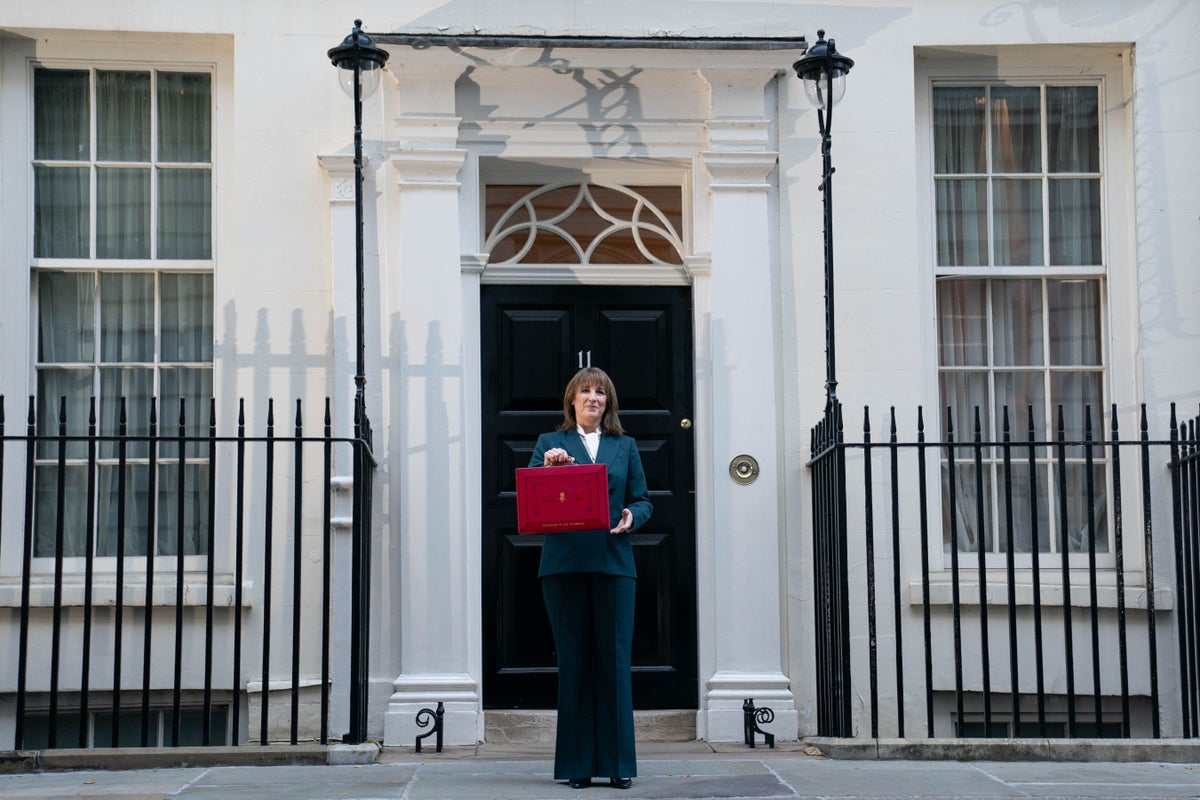
Rachel Reeves has announced tax rises amounting to £26 billion as she battles a downgrade in forecast economic growth.
More than 1.7 million people will face paying more income tax as she froze thresholds, meaning people will be dragged into paying the tax for the first time or shifted into higher bands as earnings increase.
The measures contribute to a tax burden that will rise to an “all-time high” in 2030/31.
The Office for Budget Responsibility (OBR) forecast gross domestic product would grow by 1.5% this year, an increase from its earlier 1% forecast.
But it downgraded growth in 2026 from 1.9% to 1.4%, in 2027 from 1.8% to 1.5%, in 2028 from 1.7% to 1.5% and in 2029 from 1.8% to 1.5%.
In an unprecedented blunder, full details of Ms Reeves’s plans were published by the OBR more than half an hour before she stood up in the Commons chamber.
The OBR confirmed Rachel Reeves’s Budget “raises taxes by amounts rising to £26 billion in 2029/30, through freezing personal tax thresholds and a host of smaller measures”.
The freeze in thresholds will result in 780,000 more basic-rate, 920,000 more higher-rate, and 4,000 more additional-rate income tax payers in 2029/30. Scotland has a separate income tax system.
The policy, which applies to income tax and national insurance contributions, will rake in £8.3 billion for the Exchequer in 2029/30 and the freeze will extend to 2030/31.
Other personal tax changes include £4.7 billion through charging national insurance on salary-sacrificed pension contributions, and £2.1 billion through increasing tax rates on dividends, property and savings income by two percentage points.
Ms Reeves acknowledged the freeze in tax thresholds would hit “working people” – the group Labour had promised to protect – but she was “asking everyone to make a contribution”.
“I can keep that contribution as low as possible because I will make further reforms to our tax system today to make it fairer and to ensure the wealthiest contribute the most,” she said.
The combination of measures means that tax as a share of the economy – the tax-to-GDP ratio – will “increase to an all-time high of 38.3%” in 2030/31.
The Chancellor insisted the downgraded growth forecasts were “the Tories’ legacy, not Britain’s destiny” after the OBR lowered its expectations for productivity growth by 0.3 percentage points.
Measures in the Budget include:
– Changes to green levies will save £150 on the average household energy bill from April next year.
– The amount of headroom the Government has against the Chancellor’s day-to-day spending rule will widen to £21.7 billion in 2029/30, almost £12 billion more than in March.
– The 5p cut in fuel duty will remain in place until September 2026, when it will be reversed through a staggered approach.
– Drivers of battery electric cars will be hit by a 3p per mile tax from April 2028, with the charge to rise annually with inflation.
– The two-child benefit cap is being removed at an estimated cost of £3 billion by 2029/30.
– A high-value council tax surcharge on properties worth more than £2 million will raise £0.4 billion in 2029/30.
– Debt will rise from 95% of GDP this year to 96.1% by the end of the decade.
– Consumer Prices Index inflation is forecast to be 3.5% this year, higher than the 3.2% forecast in March, and 2.5% next year, higher than the 2.1% previously forecast, before settling at 2%.
– Unemployment is also forecast to be higher than previously forecast until 2029, peaking at 1.8 million next year.
Tory leader Kemi Badenoch said the Budget was a “total humiliation” for Rachel Reeves and “if she had any decency she would resign”.
The OBR document is not meant to be released until after the Chancellor has delivered her Budget in the House of Commons.
But it was published on the Budget watchdog’s website early, the latest in a series of leaks and early disclosures in the run-up to Ms Reeves’s statement.
The OBR apologised, blaming a “technical error”.
Shadow chancellor Sir Mel Stride said it was an “utterly outrageous” leak of market-sensitive information, which could constitute a criminal act.
Ms Reeves said it was “deeply disappointing” and a “serious error on their part”.

Intellia Therapeutics, building exterior and company sign, Cambridge, Massachusetts, USA.
Spencer Grant | Universal Images Group | Getty Images
Intellia Therapeutics said its Crispr-based treatment for a rare swelling condition met its goals in a late-stage trial, marking a milestone for the field of gene editing and putting the company on track to seek approval from the U.S. Food and Drug Administration.
The company’s treatment uses Nobel Prize-winning technology Crispr to edit DNA and turn off the gene that controls production of a peptide that’s overactive in people with hereditary angioedema, causing them to experience potentially life-threatening swelling attacks. Intellia’s treatment is administered once through an hourslong infusion, making the edits directly in the liver.
Intellia said the one-time treatment reduced attacks by 87% compared with a placebo, meeting the study’s main goal. Six months after treatment, 62% of patients were free from attacks and weren’t using other therapies, Intellia said.
The company described the safety and tolerability of the treatment as “favorable,” reporting the most common side effects were infusion-related reactions, headaches and fatigue. Analysts were closely watching safety in the trial since a patient in a separate trial of a different treatment from Intellia died. That patient developed a liver injury and ultimately died from septic shock following an ulcer, according to the company.
“When you think about where we started with Crispr, just 12 years ago with some of the fundamental insights, I think there was a lot of talk about what might be possible, and we’ve had reports along the way in terms of milestones, but this is the first Phase 3 data in any indication with in vivo Crispr where you’re actually changing a gene that causes disease,” said Intellia CEO John Leonard.
The only FDA-approved Crispr-based medicine comes from Vertex Pharmaceuticals. Called Casgevy, the gene editing is done outside the body, or ex vivo. The process requires collecting a person’s blood cells, making the edits outside the body, then reinfusing them back into a patient. Intellia’s treatment, meanwhile, makes the edits inside the body, or in vivo.
Intellia said it has started a rolling application with the FDA and plans to complete the filing in the second half of this year. The company expects to launch the treatment in the U.S. in the first half of next year, if it’s approved.
If approved, Intellia’s treatment, lonvoguran ziclumeran, will compete with about a dozen other chronic drugs for HAE. Despite the allure of a one-time treatment, genetic medicines haven’t always been a commercial successes. BioMarin withdrew its gene therapy for Hemophilia A because of weak sales, for example.
Leonard said there are important differences between the two, like the fact that BioMarin’s therapy faced questions about how long the effects would last. In contrast, he said Intellia hasn’t seen a single case in almost six years where the effects diminished over time.
Despite the results, he’s reluctant to call Intellia’s treatment a functional cure.
“I think this is a tipping point for the disease and tipping point for Crispr-based in vivo therapy where you can make a change [and] it’s permanent,” Leonard said. “And, as far as we can tell, we don’t have a single patient in this program or other program where there’s been any waning of the effect of what we did to the gene or the effect of what we’ve seen with the clinical aspects of the disease itself. So it’s pretty exciting.”
Clarification: This story has been updated to clarify that a patient in a separate trial of a different treatment from Intellia developed acute liver injury and ultimately died from septic shock following an ulcer.

While many airlines say they are raising prices due to high fuel costs, József Váradi says European airlines are trying to boost demand
Source link
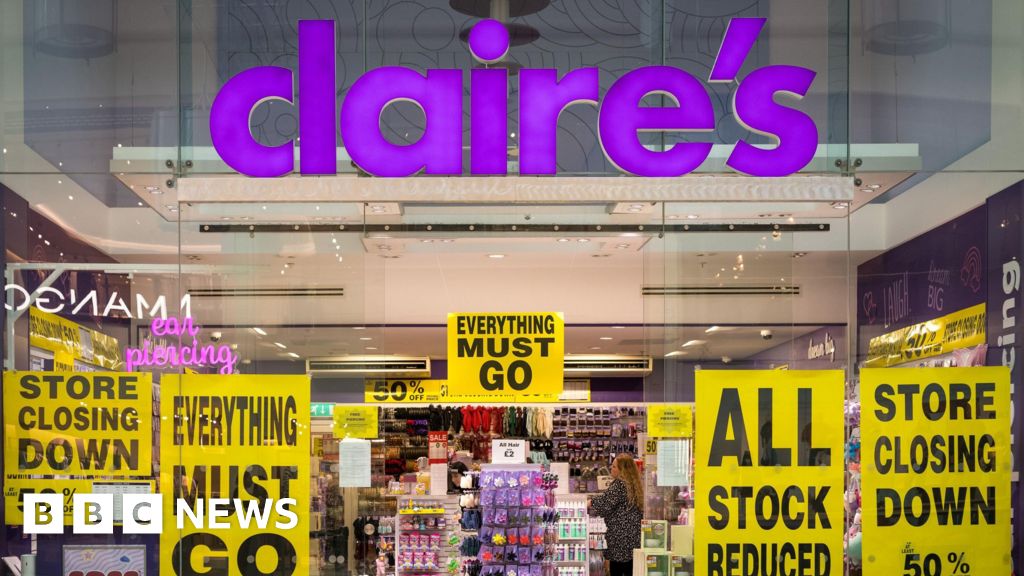
All of the chain’s standalone stores have stopped trading in the UK and Ireland.
Source link


Norway joins Type 26 Frigate Programme to boost NATO naval power

Trump calls for Jimmy Kimmel to be fired over jokes made before White House Correspondents’ Dinner shooting
Intellia Therapeutics says its Crispr-based treatment succeeds in pivotal trial

-

 Sports1 week ago
NCAA men’s gymnastics championship: All-time winners list
-

 Sports1 week ago
WWE WrestleMania 42 Night 2: Live match results and analysis
-

 Politics7 days ago
UK’s Starmer seeks to deflect blame over Mandelson appointment
-

 Fashion1 week ago
UK’s Sosandar returns to profitability amid robust FY26 performance
-

 Entertainment1 week ago
Lee Anderson, Zarah Sultana kicked out of UK Parliament for calling PM ‘liar’
-
 Business1 week ago
How Trump’s psychedelics executive order could unlock stalled cannabis reform
-
 Business1 week ago
No fuel shortage: Govt assures 100% domestic LPG, PNG, CNG supply amid Hormuz energy crunch – The Times of India
-

 Sports1 week ago
Quetta Gladiators opt to bowl after winning toss against Peshawar Zalmi in PSL 11 clash