

Business
Tax, spending and investment: Where the Budget ranks in history

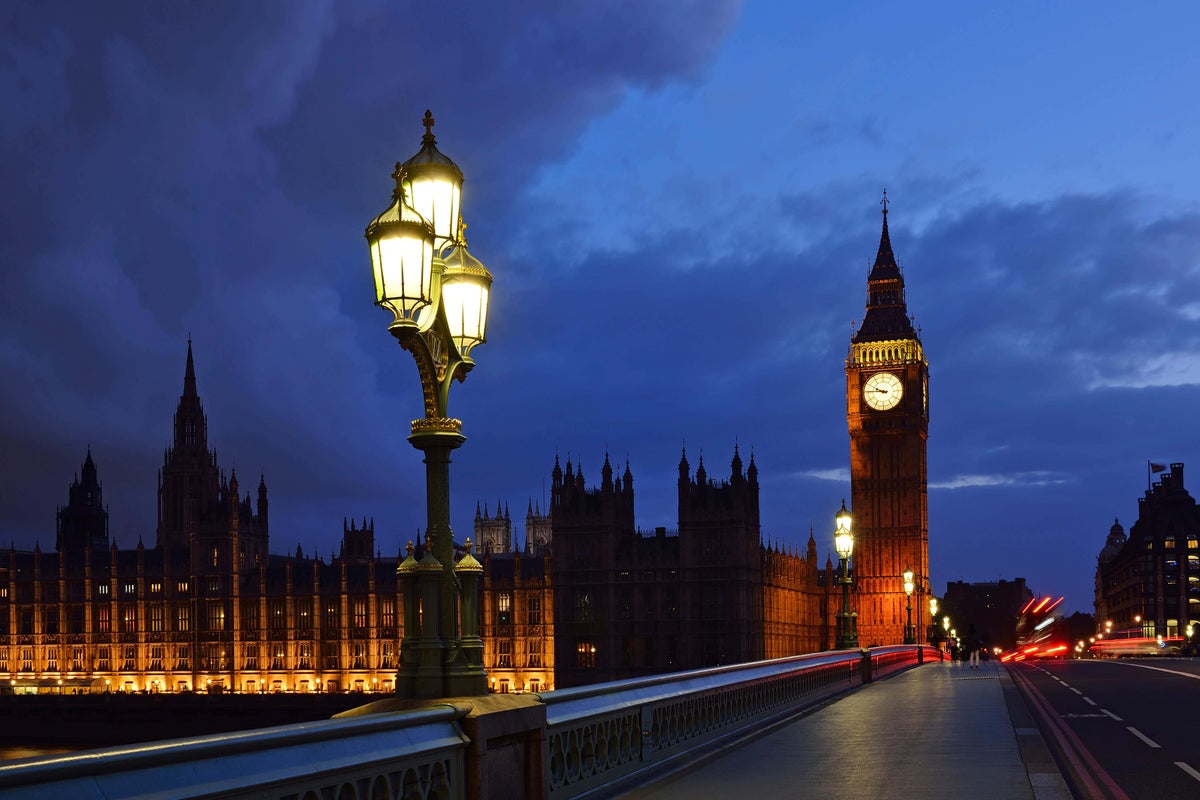
Rachel Reeves’s second Budget as Chancellor has set the UK on a path towards levels of tax, spending and investment not seen for many years, according to the latest economic forecasts.
Here the PA news agency looks at what those forecasts suggest about the likely future of the country’s finances – and how they compare with decades gone by.
– Tax burden to reach new all-time high
The UK’s tax burden was already set to hit record levels in the years ahead, but new data shows the figure peaking even higher than previously thought.
The tax burden, or tax take, is a measure of how much the Government collects in taxation, expressed as a proportion of the total value of the economy.
When Rachel Reeves delivered her spring financial statement in March 2025, the Office for Budget Responsibility forecast the tax burden to reach the equivalent of 37.7% of GDP by 2027/28: the highest level since current records began in 1948.
The OBR is now forecasting it to reach 37.6% by 2027/28 but then go on climbing to an even higher record of 38.3% in 2030/31.
This is more than five percentage points above the pre-pandemic level of 32.9% in 2019/20.
The main drivers of the increase are personal taxes, such as the extension of the threshold freeze at which people start paying higher rates of income tax, plus the increase in employer national insurance contributions, the OBR said.
– Spending on health and disability benefits passes £100 billion for first time
Government spending on welfare is also forecast to continue at record levels.
Spending on health and disability benefits per year is likely to pass £100 billion for the first time, rising from £83.1 billion in 2025/26 to £103.6 billion in 2029/30.
This is up from the previous forecasts of £81.2 billion in 2025/26 and £97.7 billion in 2029/30.
The OBR acknowledges there is “uncertainty” around the future costs of welfare spending, because of “the growth of disability and health caseloads, which have increased very sharply since the pandemic”.
The latest forecasts have been calculated on the assumption that the number of people requiring these benefits will continue to rise, but at a slower pace than recently.
However, if growth continues at rates seen since the pandemic, this could increase spending in 2029/30 by around £11 billion, the OBR added.
Total government spending on welfare per year is forecast to rise from £333.0 billion in 2025/26 to a new all-time high of £389.4 billion in 2029/30.
This is higher than the previous forecasts of £326.1 billion in 2025/26 and £373.4 billion in 2029/30.
The revised forecasts reflect the reversal of cuts to winter fuel payments and health-related benefits, along with the removal of the two-child limit within Universal Credit.
– Longest sustained period of high government spending since Second World War
Total government public spending is forecast to remain at the equivalent of between 44% and 45% of GDP for nearly the entire decade.
This is almost five percentage points higher than before the Covid-19 pandemic.
It also represents the longest sustained period of spending at this level since the Second World War.
The forecast suggests spending will not fall below the equivalent of 44% of GDP for nine financial years in a row, from 2022/23 to 2030/31.
This easily surpasses the two other post-war periods when spending was 44% of GDP or above, in the three years from 1974/75 to 1976/77 and the three years from 2009/10 to 2011/12.
Spending at the end of the last century, in the financial year 1999/2000, stood at 34.6% of GDP.
– Debt as percentage of GDP remains at levels last seen in early 1960s
The headline measure of public sector net debt in the UK, which includes the Bank of England, is forecast to remain between 95% and 97% for the rest of the decade.
This level of debt was last seen at the end of the financial year 1962/63, when debt stood at 98.2% of GDP: a time when Harold Macmillan was Conservative prime minister, there were only two television channels in the country, and The Beatles had just released their debut album Please Please Me.
Debt at the end of the last century, in 1999/2000, stood at 32.4% of GDP.
– Highest sustained level of government investment since 1970s
Government investment is forecast to remain above the equivalent of 2% of GDP in every year for the rest of the decade: the highest sustained level since the 1970s.
Public sector net investment stood at the equivalent of 2.4% of GDP in 2023/24 and is forecast to climb to 2.9% in 2027/28, before falling back to 2.5% by 2030/31.
This would represent eight consecutive years with investment above 2%: a trend not seen in the UK for more than 40 years.
Government investment as a proportion of GDP was above 2% in every year from 1948/49, when current records began, to 1980/81.
It then remained below 2% in almost every year until the late 2010s, save for 1983/84, 2004/05 and 2008/09-2010/11.
Spending rose above 2% in the two years from 2017/18 to 2018/19, then again from 2020/21 to 2021/22, but in each case it fell back below 2% the following year.
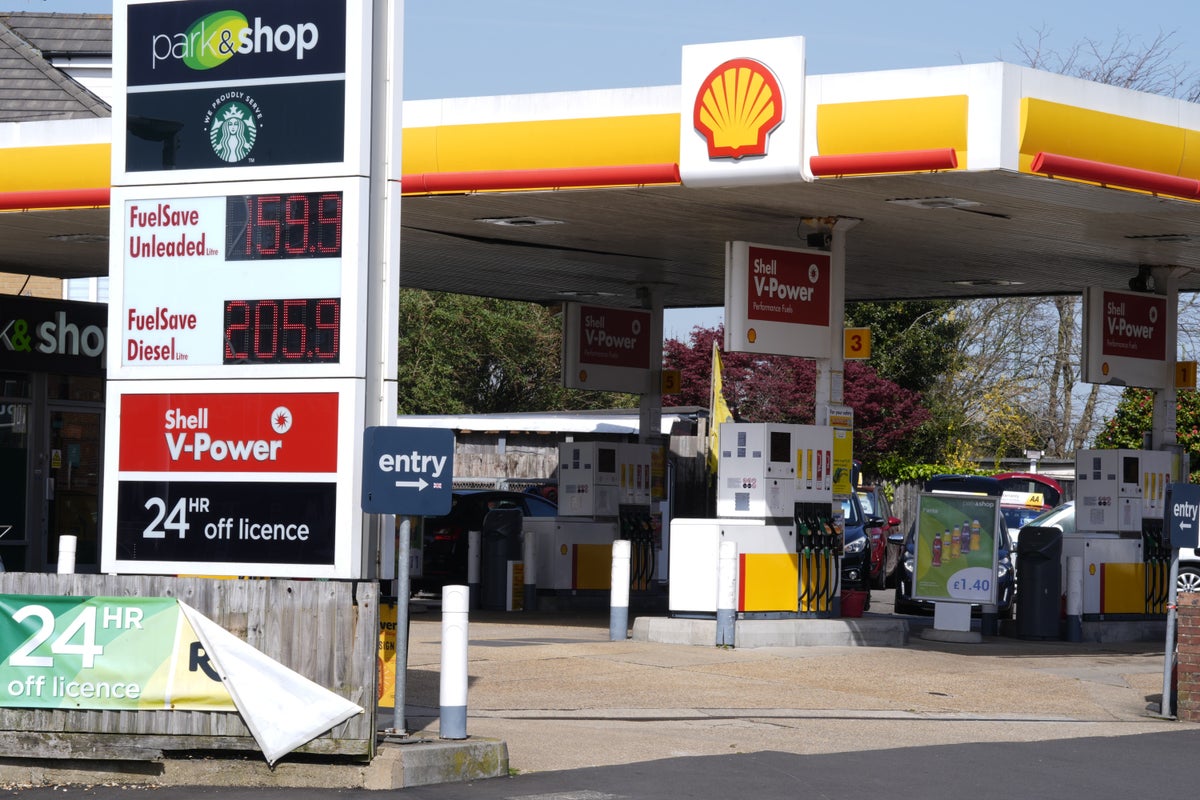
UK retail sales returned to growth last month as they were pushed higher by motorists stocking up on fuel as prices shot higher because of the Iran war, according to official figures.
The Office for National Statistics (ONS) said the total volume of retail sales, which measures the quantity bought, rose by 0.7% in March.
It compared with a 0.6% fall in February, which was revised slightly lower.
The latest reading was also stronger than expected, with economists having predicted a 0.1% dip for the month.
Statisticians said March’s increase was particularly driven by a spike in demand for fuel, which saw sales volumes jump by 6.1% for the month, the highest level since April 2021.
They indicated that this was especially linked to a short period, of less than a week, of particularly elevated sales as unfolding geopolitical events in the Middle East caused a significant rise in prices at the pump.
The value of sales, the amount of money spent, for fuel was up 11.6% amid the jump in petrol and diesel prices.
Recent data from the RAC shows that petrol prices have risen by 18.5% to 157.34 pence per litre, as recorded on Wednesday.
Meanwhile, diesel is up 33.4% to an average of 189.88 pence per litre.
Elsewhere, clothing stores also had a strong month, with sales volumes across the category rising by 1.2% in March amid a boost from better weather conditions.
Technology retailers also saw sales grow after they benefited from new products launches.
However, food sales were weaker, slipping by 0.8% for the month.
The ONS said overall retail sales volumes are up 1.6% for the first three months of 2026, as the industry was also supported by positive growth in January.
ONS senior statistician Hannah Finselbach said: “Retail sales rose in the three months to March, with commercial art galleries doing well earlier in the quarter and sales in beauty products stores rising as retailers reported launching new collections.
“Motor fuel sales were up on the quarter, with retailers commenting that many motorists had been filling up their tanks in March following the start of conflict in the Middle East.”
Elliott Jordan-Doak, senior UK economist at Pantheon Macroeconomics, said: “The first batch of hard data on consumers’ spending since the start of the Iran war was better than expected.
“Granted, stocking up on motor fuels drove headline sales higher, but even excluding petrol retail sales volumes nudged up showing that households largely brushed off the initial shock of higher energy prices.”
Business
Top stocks to buy today: Stock recommendations for April 24, 2026 – check list – The Times of India

Stock market recommendations: Bharat Electronics, and Colgate-Palmolive (India) have been recommended as the top stocks to buy today (April 24, 2026) by Bajaj Broking Research. Take a look at the target prices and expected returns:Bharat ElectronicsBuy in the range of ₹ 440.00-450.00
The stock is in structural up trend forming higher high and higher low in all time frame signaling strength and continuation of the uptrend. The entire up move of the last 8 months is in a rising channel as can be seen in the chart highlighting sustained demand at an elevated level.On the smaller time frame, the stock is at the cusp of generating a breakout above the bullish Flag like formation as post a sharp up move in the first 3 weeks of April the stock went into a consolidation phase in the last four sessions. It is seen resuming up move and is at the cusp of generating a breakout above the bullish Flag formation highlighting continuation of the up move and offers fresh entry opportunity.We expect the stock to extend the up move and head towards 495 levels in the coming months being the confluence of the 123.6% external retracement of the previous decline 473 – 400 and the upper band of the rising channel of the last 8 months.Colgate-Palmolive (India)Buy in the range of 2120-2160
The share price of Colgate-Palmolive has generated a breakout above bullish Flag pattern signaling continuation of the up move and offers fresh entry opportunity.We expect the stock to head higher towards 2330 levels in the coming months being the measuring implication of the bullish flag breakout.The daily 14 periods RSI is in buy mode thus supports the positive bias in the stock.(Disclaimer: Recommendations and views on the stock market, other asset classes or personal finance management tips given by experts are their own. These opinions do not represent the views of The Times of India)
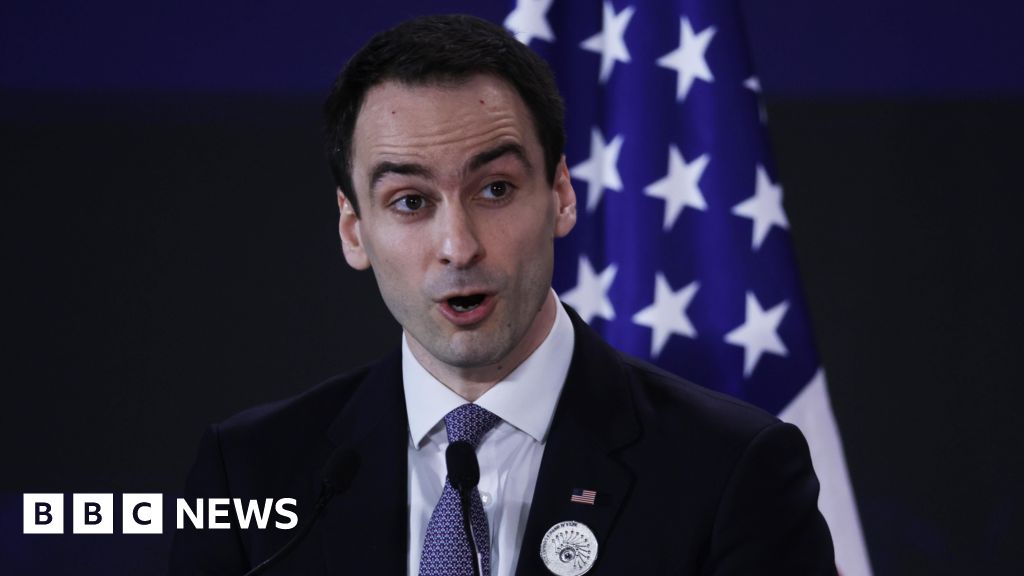
A memo from Michael Kratsios says firms, mainly in China, are wrongfully distilling US AI models.
Source link

UK retail sales rebound as motorists stock up on fuel

Pentagon email floats suspending Spain from Nato, other steps over Iran rift: source

Vietnam-India seminar boosts textile, leather ties

-

 Fashion1 week ago
France’s LVMH Q1 revenue falls 6%, shows resilience amid Iran war
-

 Entertainment1 week ago
Is Claude down? Here’s why users are seeing errors
-

 Sports1 week ago
PSL 11: Peshawar Zalmi win toss, opt to field first against Quetta Gladiators
-

 Tech1 week ago
The Deepfake Nudes Crisis in Schools Is Much Worse Than You Thought
-
 Business1 week ago
Standard Life buys rival in £2b deal to create savings giant
-

 Tech1 week ago
CYBERUK ’26: UK lagging on legal protections for cyber pros | Computer Weekly
-
 Business1 week ago
PepsiCo earnings beat estimates as North American food business improves
-

 Fashion1 week ago
Raymond unveils luxury Chairman’s Collection Store in Mumbai