

Business
$36b logistics loss sparks calls for digital overhaul | The Express Tribune

At CAREC forum, ADB announces plans to invest over $10b to support projects to build digitally connected region
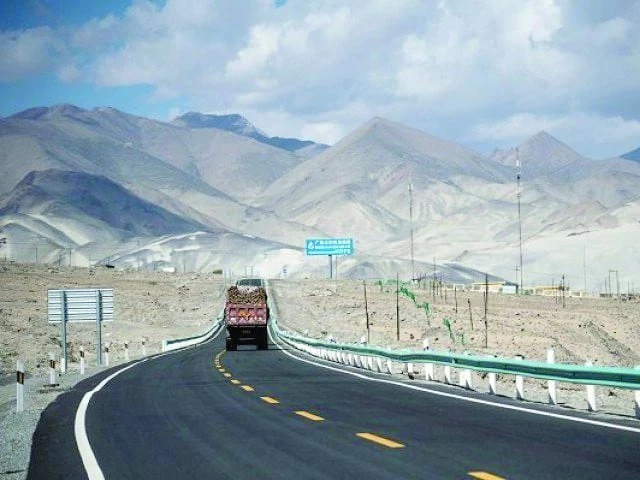
While infrastructure projects have brought critical improvements in energy generation, transport connectivity and logistics, they have also saddled Pakistan with an increasing debt burden. photo: file
LAHORE:
Pakistan is losing an estimated $36 billion annually due to outdated, largely offline logistics systems – losses that experts say can be reversed only through rapid digitalisation and stronger public-private partnerships.
It was revealed during the Carec Business Forum in Bishkek, where global development partners, including the Asian Development Bank (ADB), renewed commitments to cross-border digital connectivity.
The losses in foreign trade due to the lack of digitisation in Pakistan were discussed during the international event where the ADB announced plans to invest over $10 billion by 2030 to support projects under the Central Asia Regional Economic Cooperation (Carec) framework, aiming to build a digitally connected and resilient region.
The urgency for transparency and traceability in trade has grown following the International Monetary Fund’s (IMF) recent identification of an $11 billion discrepancy in Pakistan’s trade data, urging Islamabad to modernise reporting and restore global trust.
Addressing the Carec Business Forum, galaxefi Founder and CEO Asif Pervez said Pakistan stands at a pivotal moment where technology-driven reforms can unlock significant trade gains and position the country as a digital trade hub for the entire Carec corridor.
“Pakistan cannot afford to lose $36 billion annually when technology offers a direct solution to overcome these systemic bottlenecks,” he said. “The government must act decisively to build a trusted digital ecosystem for regional trade.”
His remarks align with findings from the Carec Institute, which has consistently warned that the region’s major trade barrier is not physical infrastructure but the absence of a unified multimodal e-logistics system. While Pakistan Single Window (PSW) has digitised government procedures, nearly 70% of private logistics operations remain manual, keeping Pakistan uncompetitive across global supply chains.
ADB President Masato Kanda told delegates that countries which “connect faster and trade smarter” will lead the next wave of economic growth.
He announced that ADB will quadruple private-sector financing to $13 billion a year by 2030, dedicating 30% of future operations to regional connectivity and digital corridors. “This connectivity is designed with purpose making commerce smoother, greener and more inclusive,” he said.
Pakistan signed two major memoranda of understanding (MoUs) at the forum – the Carec Innovation and Venture Investment Catalyst Facility and the Carec Digital Corridor Initiative – both aimed at deepening digital cooperation.
“Pakistan must seize this moment,” Pervez stressed. “The technology, infrastructure and partnerships already exist. What we now need is decisive alignment from the public sector. This is how we eliminate $36 billion in losses and transform into a competitive regional force.”




The boss of insurer Aviva has cautioned that a lengthy conflict in the Middle East could send the cost of vehicle parts and repairs surging in an echo of the aftermath seen after Russia’s invasion of Ukraine.
Chief executive Amanda Blanc said the group has seen limited claims so far relating to the US-Israel war with Iran, but flagged the potential for claims costs to jump if supply chains are badly disrupted for a long time.
She said: “We have a good case study on this in terms of the Ukraine situation back in 2022 and the impact on the supply chain, which had an inflationary impact on vehicle parts and replacement vehicles.
“Obviously, if this goes on for a prolonged period of time, we would expect that this could have some impact, but to speak about this from an Aviva perspective, we are very well placed to manage that with our supply chain and our owned garage network.”
Ms Blanc added: “We will take action as necessary to make sure we look after our customers and price accordingly for any new inflationary impact.”
She said there had been “very limited” travel claims so far.
Ms Blanc added: “We have had calls from customers asking about whether they should travel and those sorts of things, and we are pointing them to the Foreign Office guidance on that.”
Full-year results from Aviva on Thursday showed annual earnings leaped 25% higher, while the firm also announced it was resuming share buybacks as it continues to benefit from its £3.7 billion takeover of Direct Line.
The group unveiled an earnings haul of £2.2 billion for 2025, up from £1.8 billion in 2024, including a £174 million contribution from Direct Line, helping the group hit its financial targets a year early.
Aviva unveiled a £350 million share buyback after putting these on hold due to the Direct Line deal, which completed last year.
Ms Blanc cheered an “outstanding performance”.
She said: “We have transformed Aviva over the last five years and whilst we have made significant progress, there is so much more to come.”
Artificial intelligence (AI) is also a big area of focus for the firm, according to Ms Blanc.
“We have clear strengths in artificial intelligence which are creating major opportunities to transform claims, underwriting and customer experience,” she said.

The firm was unable to cope during high demand, Ofwat says, leading to “immense stress” for customers.
Source link
Business
Middle East heat may ripple across India’s energy supply chain, flags Goldman Sachs – The Times of India
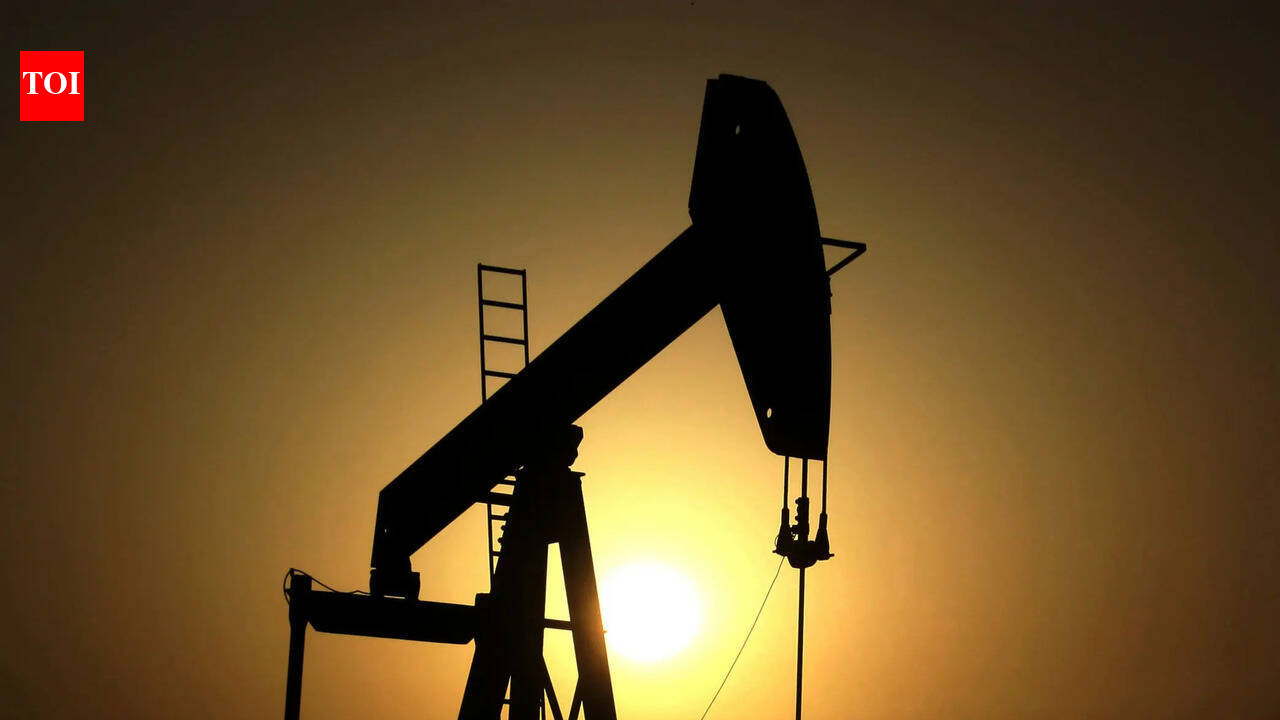
As tensions continue to heat up in the Middle East, concerns are raising about disruptions to one of the world’s most critical energy shipping routes, the Strait of Hormuz. Any disruption could significantly affect major oil-importing countries such as India, as the narrow Strait of Hormuz is central to global energy trade. The strait sees almost 20 million barrels of oil passing through each day, or about a fifth of the world’s consumption, pass through the route. The waterway also carries roughly 19% of global liquefied natural gas (LNG) shipments, making it a crucial corridor for energy-importing economies.A recent report by Goldman Sachs has flagged early signs of stress in the region. The report warned that tanker traffic through the Strait of Hormuz has already begun showing signs of disruption, with shipping firms, oil producers and insurers adopting a cautious approach following reports of damaged vessels in nearby waters.According to the firm, financial markets have already begun factoring in the geopolitical risk. Oil prices currently carry an estimated risk premium of $18-per-barrel, reflecting the potential market impact if energy flows through the Strait of Hormuz were disrupted for about a month.
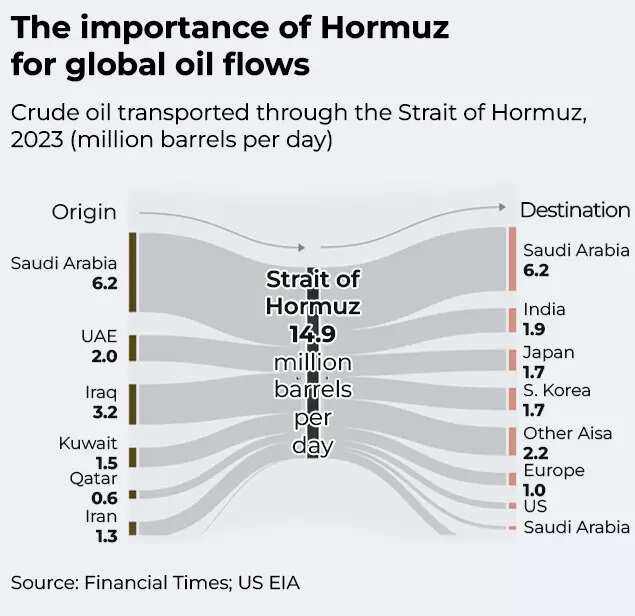
Even is the oil facilities are not directly damaged, a shutdown of the shipping route could expose a significant portion of global supply. The report estimates that in an event of full closure, about 16 million barrels per day of oil flows could be affected, despite the availability of some pipeline routes designed to bypass the strait.And the risks are not limited to crude oil shipments with almost 80 million tonnes of LNG exports annually, much of it from Qatar, moving through the passage. Any prolonged disruption could tighten gas supply globally and potentially drive European benchmark gas prices back to levels seen during the 2022 energy crisis.
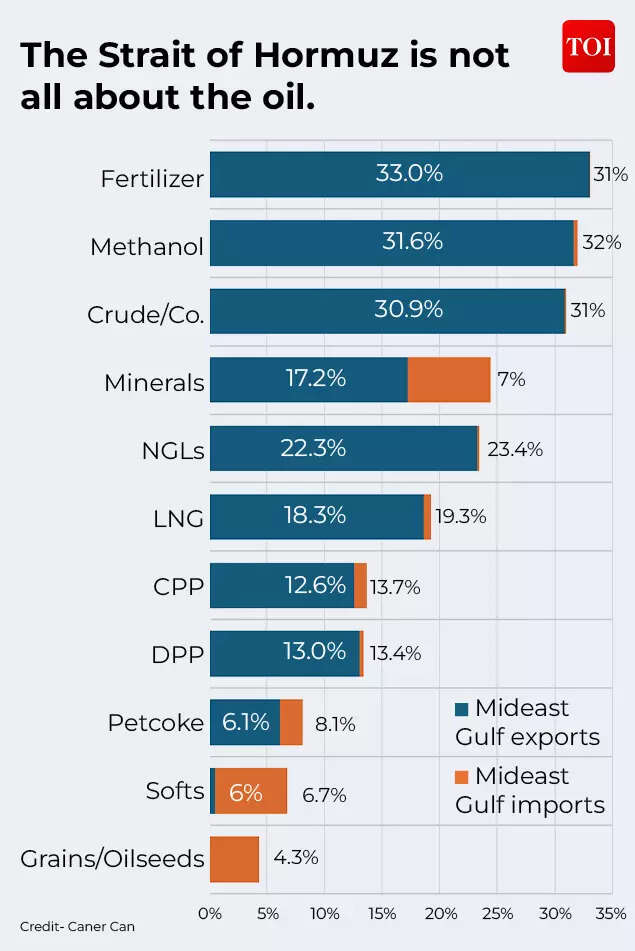
Asian economies stand among the most exposed to such disruptions. Major importers such as China, India, Japan and South Korea depend heavily on oil and LNG shipments that transit through the strategic corridor.While global oil inventories and spare production capacity could help cushion short-term shocks, the report warned that sustained disruption to Gulf shipping routes could trigger sharp volatility in global energy markets and push prices higher across oil, gas and refined fuel products.Market participants and governments are closely watching tanker traffic in the Strait of Hormuz, along with diplomatic and military developments involving the United States, Iran and Gulf nations, to assess whether the current disruptions remain temporary or escalate into a broader energy supply shock.


China targets 4.5 to 5% GDP growth for 2026

Michigan parts ways with alleged mistress of fired football coach Sherrone Moore
Aviva flags potential for Iran conflict to send claims costs rising

What are Iran’s ballistic missile capabilities?

India Us Trade Deal: Fresh look at India-US trade deal? May be ‘rebalanced’ if circumstances change, says Piyush Goyal – The Times of India

Attock Cement’s acquisition approved | The Express Tribune

-
 Politics1 week ago
What are Iran’s ballistic missile capabilities?
-
Business6 days ago
India Us Trade Deal: Fresh look at India-US trade deal? May be ‘rebalanced’ if circumstances change, says Piyush Goyal – The Times of India
-
Business7 days ago
Attock Cement’s acquisition approved | The Express Tribune
-

 Politics1 week ago
US arrests ex-Air Force pilot for ‘training’ Chinese military
-
 Business1 week ago
Households set for lower energy bills amid price cap shake-up
-

 Fashion7 days ago
Policy easing drives Argentina’s garment import surge in 2025
-

 Sports6 days ago
LPGA legend shares her feelings about US women’s Olympic wins: ‘Gets me really emotional’
-

 Fashion6 days ago
Texwin Spinning showcasing premium cotton yarn range at VIATT 2026