

Politics
India, China agree to resume direct flights, boost business links

- Troop pullback, border delimitation discussed in latest talks.
- India’s Modi says stable ties will contribute to global peace.
- China’s Wang says both countries should enhance mutual trust.
NEW DELHI: India and China agreed on Tuesday to resume direct flights and step up trade and investment flows as the neighbours rebuild ties damaged by a 2020 border clash.
The Asian giants are cautiously strengthening ties against the backdrop of US President Donald Trump’s unpredictable foreign policy, staging a series of high-level bilateral visits.
The two countries would resume direct flights and boost trade and investment, including reopening border trade at three designated points, and facilitating visas, the Indian foreign ministry said.
Direct flights have been suspended since the COVID-19 pandemic in 2020. No date was given for their resumption.
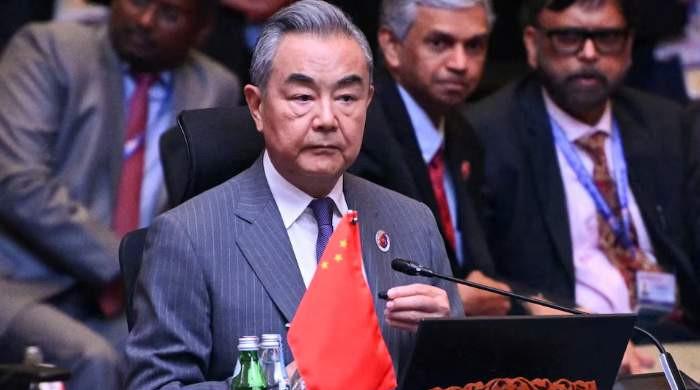
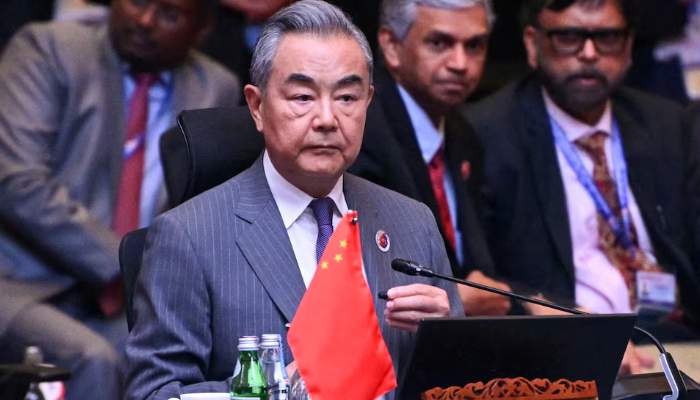
The latest statements came at the end of Chinese Foreign Minister Wang Yi’s two-day visit to New Delhi for the 24th round of talks with Indian National Security (NSA) Advisor Ajit Doval to resolve their decades-old border dispute.
The border talks covered issues related to pulling back troops both countries have amassed on their Himalayan border, delimitation of borders and boundary affairs, the Indian ministry said.
Both countries have agreed to set up a working group to consult and coordinate on border affairs to advance demarcation negotiations, a Chinese foreign ministry statement released on Wednesday showed.
It said the mechanism will extend talks to cover the eastern and middle sections of the border. Meanwhile, another round of talks on the western section will be held as soon as possible, the ministry said.
Beijing also said both countries agreed to meet again in China in 2026.
“Stable, predictable, constructive ties between India and China will contribute significantly to regional as well as global peace and prosperity,” Prime Minister Narendra Modi posted on X after meeting Wang.
Modi is scheduled to travel to China at the end of this month to take part in the summit of the Shanghai Cooperation Organisation – his first visit to the country in more than seven years.
Tibet Dam
A readout from the Chinese foreign ministry said Wang told Doval that “the stable and healthy development of China-India relations is in the fundamental interests of the two countries’ people”.
The two sides “should enhance mutual trust through dialogues and expand cooperation,” Wang said, and should aim for consensus in areas such as border control and demarcation negotiations.
India said Foreign Minister Subrahmanyam Jaishankar had underlined in his talks with Wang India’s concerns with regard to the mega dam China is building on the Yarlung Zangbo river in Tibet.
Yarlung Zangbo becomes the Brahmaputra as it flows into India and Bangladesh, a lifeline for millions.
The dam would have implications for lower riparian states and the need for “utmost transparency” was strongly underlined, New Delhi said.
To that, China agreed to share with India emergency hydrological information on relevant rivers on humanitarian principles, China’s foreign ministry said.
Both sides agreed to engage an expert-level mechanism on cross-border rivers and maintain communication to renew flood reporting arrangements, the ministry said.
Chinese officials had previously said hydropower projects in Tibet would not have a major impact on the environment or downstream water supplies, but India and Bangladesh have nevertheless raised concerns.
Earlier on Tuesday, an Indian source said Wang had assured Jaishankar that Beijing was addressing three key Indian concerns – the need for fertilisers, rare earths and tunnel boring machines.
The Indian foreign and mines ministries and China’s commerce ministry did not immediately respond to requests for comment.
Politics
Tajikistan says five Chinese nationals killed in cross-border attacks from Afghanistan in past week
- China advises companies, personnel to evacuate border area.
- Embassy says Chinese citizens targeted in armed attack on Sunday.
- Another border attack on Friday killed three citizens: embassy.
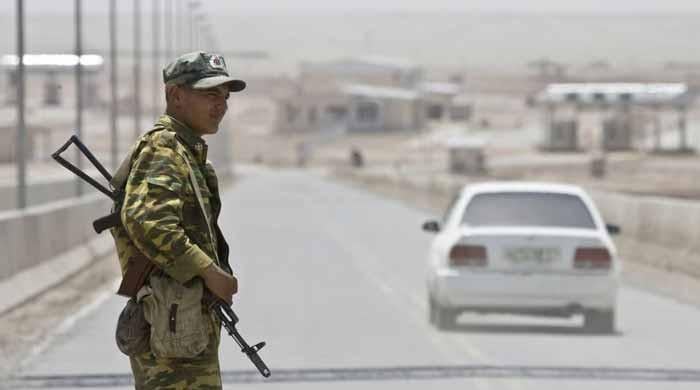
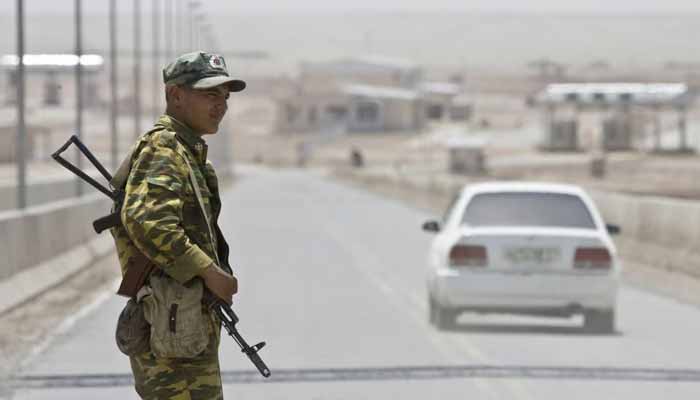
Five Chinese nationals have been killed and five more injured in Tajikistan in attacks launched from neighbouring Afghanistan over the past week, Tajik authorities and China’s embassy in the Central Asian country said on Monday.
China’s embassy in Dushanbe, the capital, advised Chinese companies and personnel to urgently evacuate the border area.
It said that Chinese citizens had been targeted in an armed attack close to the Afghan border on Sunday. On Friday, it said that another border attack — which Tajik authorities said had involved drones dropping grenades — had killed three Chinese citizens.
Tajikistan, a mountainous former Soviet republic of around 11 million people with a secular government, has tense relations with the Taliban authorities in Afghanistan. It has previously warned of drug smugglers and illicit gold miners working along the remote frontier.
China, which also has a remote, mountainous border with Tajikistan, is a major investor in the country.
There was no immediate response on Monday from the authorities in Afghanistan to the Tajik statement.
But Afghanistan’s foreign ministry last week blamed an unnamed group, which it said was out to create instability, and said it would cooperate with Tajik authorities.
Tajik President Emomali Rahmon’s press service said on Monday that Rahmon had met with the heads of his security agencies to discuss how to strengthen border security.
It said that Rahmon “strongly condemned the illegal and provocative actions of Afghan citizens and ordered that effective measures be taken to resolve the problem and prevent a recurrence of such incidents.”
Tajikistan endured a brutal civil war in the 1990s after independence from Moscow, during which Rahmon initially rose to power. The country is closely aligned with Russia, which maintains a military base there.
Millions of Tajiks, a Persian-speaking nation, live across the border in Afghanistan, with Tajikistan historically having backed Afghan Tajiks opposed to the Taliban.


A man in India’s south brutally killed his estranged wife at a women’s hostel and took a selfie with her dead body, according to NDTV.
The victim, identified as Sripriya, employed at a private firm in Coimbatore, Tamil Nadu, had separated from her husband, Balamurugam, who was from Tirunelveli.
Police said the suspect arrived at the hostel on Sunday afternoon, concealing a sickle in his clothes, and was seeking to meet her.
They had an argument soon after the couple met, and the feud turned into a violent attack by Balamurugan, who drew the sickle and hacked the woman to death.
Furthermore, the police said he then took a selfie with her body and shared it on his WhatsApp status, accusing her of “betrayal”.
The incident spread panic and chaos in the hostel.
Following the brutal murder, the suspect did not escape from the spot but waited until the police arrived, and he was arrested at the crime scene. The murder weapon was recovered.
The initial investigation suggested that he suspected his wife of being in a relationship with another man.
- Indonesia, Malaysia and Thailand witness large scale devastation.
- At least 176 people perish in Thailand and three in Malaysia.
- Indonesia’s death toll reaches 502 with 508 more still missing.
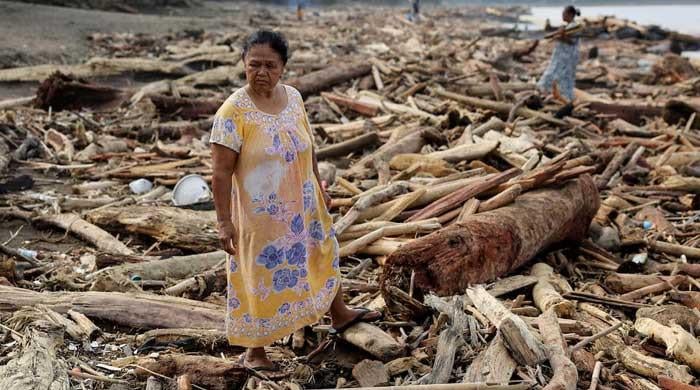
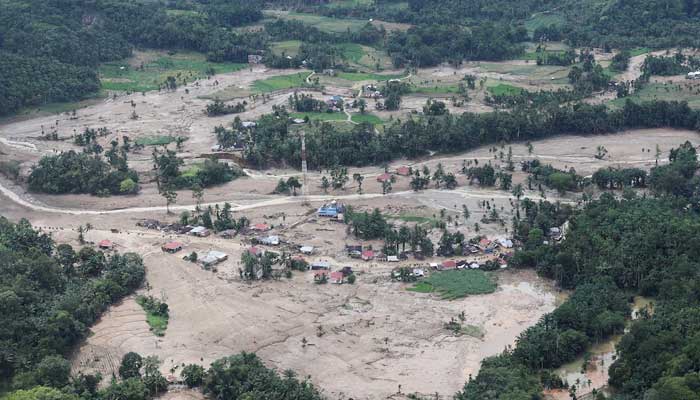
PALEMBAYAN: Rescue teams in western Indonesia were battling on Monday to clear roads cut off by cyclone-induced landslides and floods, as improved weather revealed more of the scale of a disaster that has killed close to 700 people in Southeast Asia.
Indonesia, Malaysia and Thailand have seen large scale devastation after a rare tropical storm formed in the Malacca Strait, fuelling torrential rains and wind gusts for a week that hampered efforts to reach people stranded by mudslides and high floodwaters.
At least 176 have been killed in Thailand and three in Malaysia, while the death toll climbed to 502 in Indonesia on Monday with 508 missing, according to official figures.
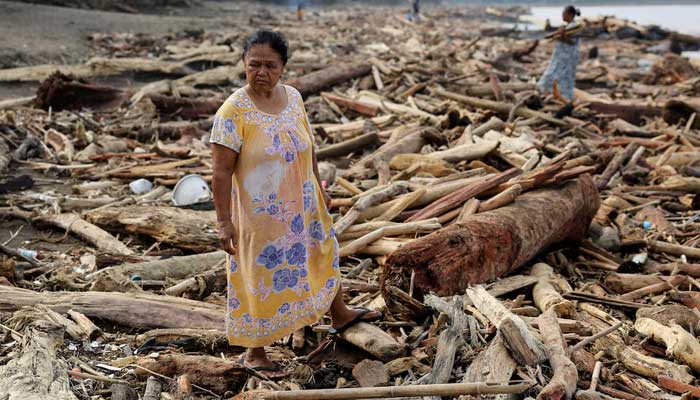
Under sunshine and clear blue skies in the town of Palembayan in Indonesia’s West Sumatra, hundreds of people were clearing mud, trees and wreckage from roads as some residents tried to salvage valuable items like documents and motorcycles from their damaged homes.
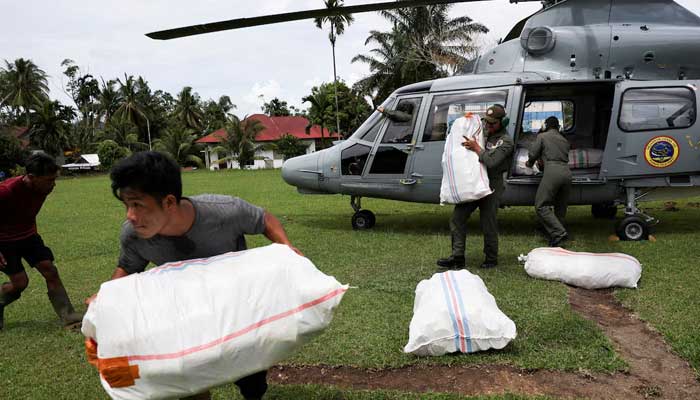
Men in camouflage outfits sifted through piles of mangled poles, concrete and sheet metal roofing as pickup trucks packed with people drove around looking for missing family members and handing out water to people, some trudging through knee-deep mud.
Months of adverse, deadly weather
The government’s recovery efforts include restoring roads, bridges and telecommunication services.
More than 28,000 homes have been damaged in Indonesia and 1.4 million people affected, according to the disaster agency.
Indonesian President Prabowo Subianto visited the three affected provinces on Monday and praised residents for their spirit in the face of what he called a catastrophe.
“There are roads that are still cut off, but we’re doing everything we can to overcome difficulties,” he said in North Sumatra.
“We face this disaster with resilience and solidarity. Our nation is strong right now, able to overcome this.”
The devastation in the three countries follows months of adverse and deadly weather in Southeast Asia, including typhoons that have lashed the Philippines and Vietnam and caused frequent and prolonged flooding elsewhere.
Scientists have warned that extreme weather events will become more frequent as a result of global warming.
Marooned for days
In Thailand, the death toll rose slightly to 176 on Monday from flooding in eight southern provinces that affected about three million people and led to a major mobilisation of its military to evacuate critical patients from hospitals and reach people marooned for days by floodwaters.
In the hardest-hit province of Songkhla, where 138 people were killed, the government said 85% of water services had been restored and would be fully operational by Wednesday.
Much of Thailand’s recovery effort is focused on the worst-affected city Hat Yai, a southern trading hub which on November 21 received 335 mm (13 inches) of rain, its highest single-day tally in 300 years, followed by days of unrelenting downpours.
Prime Minister Anutin Charnvirakul has set a timeline of seven days for residents to return to their homes, a government spokesperson said on Monday.
In neighbouring Malaysia, 11,600 people were still in evacuation centres, according to the country’s disaster agency, which said it was still on alert for a second and third wave of flooding.


I’ve Tried Every Digital Notebook. Here Are the Best Ones on Sale

Flamengo’s Copa Libertadores trophy damaged in title celebrations

Eastpak appoints Marie Gras as vice president, global brand

-

 Sports1 week ago
WATCH: Ronaldo scores spectacular bicycle kick
-

 Entertainment1 week ago
Welcome to Derry’ episode 5 delivers shocking twist
-

 Politics1 week ago
Washington and Kyiv Stress Any Peace Deal Must Fully Respect Ukraine’s Sovereignty
-
 Business1 week ago
Key economic data and trends that will shape Rachel Reeves’ Budget
-

 Politics1 week ago
53,000 Sikhs vote in Ottawa Khalistan Referendum amid Carney-Modi trade talks scrutiny
-

 Tech6 days ago
Wake Up—the Best Black Friday Mattress Sales Are Here
-

 Fashion1 week ago
Canada’s Lululemon unveils team Canada kit for Milano Cortina 2026
-

 Tech1 day ago
Get Your Steps In From Your Home Office With This Walking Pad—On Sale This Week