

Business
A border that weakens state, how Pakistan can fix it | The Express Tribune

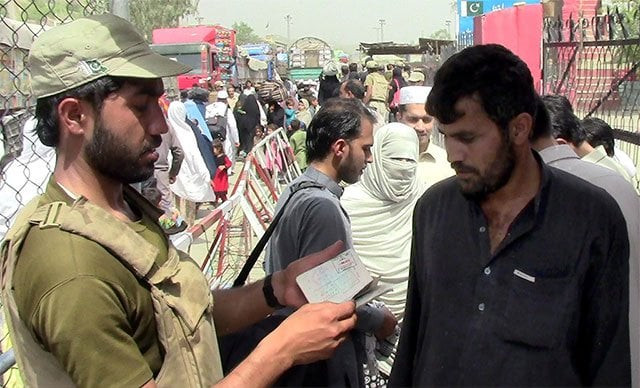
Move is part of plan to secure Durand Line which remains bone of contention. PHOTO: INP
ISLAMABAD:
In the unforgiving geography of South and Central Asia, Pakistan’s western frontier with Afghanistan has long been a paradox — a line of insecurity that could have been a corridor of opportunity.
For decades, the 2,600-kilometre Durand Line has carried the weight of unresolved politics, cross-border militancy, and economic leakage. Yet today, amid regional realignments and shifting trade routes, this fragile border demands not only fortification but transformation — from a porous passage into a gateway of sovereignty.
Pakistan’s western border has historically been more open than managed — a legacy of tribal linkages, historical mistrust, and administrative neglect. This looseness has exacted a heavy toll. The unrestricted movement of people and goods has drained Pakistan’s fiscal capacity, undermined law enforcement, and allowed illicit trade in currency, fuel, narcotics, and commodities to flourish.
Estimates suggest that informal trade across the Pakistan-Afghanistan frontier exceeds $2.5 billion annually, while formal bilateral trade has sharply declined from nearly $2.7 billion in 2012 to less than $1.2 billion today. The fall has coincided with a surge in smuggling of food commodities including staples such as wheat flour, Basmati rice, sugar, vegetables, ghee, fertiliser, and petroleum products, which not only distorts domestic prices, often leading to food inflation, but also deprives the exchequer of billions in duties, when goods are smuggled into Pakistan.
Every truckload of untaxed goods crossing the frontier is a silent strike against Pakistan’s industries and economic sovereignty. It widens the fiscal deficit, feeds inflation, and erodes confidence in the state’s ability to regulate its borders.
From buffer zone to economic corridor
The Taliban-led Afghan government’s recent statements, particularly those of Deputy Prime Minister Mullah Abdul Ghani Baradar, highlight Kabul’s willingness to expand trade ties beyond Pakistan — with China, India, Iran, and the Central Asian Republics. This shift, combined with the development of Afghanistan’s rail connectivity with China via Uzbekistan, threatens to marginalise Pakistan’s traditional role as Afghanistan’s main transit route to the sea.
In 2023-24, Afghanistan’s total trade volume through Pakistan under the Afghan Transit Trade Agreement (ATTA) fell to $1.8 billion, a steep decline from $4 billion in earlier years. Pakistan’s exports to Afghanistan — primarily pharmaceuticals, cement, food items, and textiles – have also dropped by nearly 60% in a decade. India, Iran, and Central Asian states have filled the vacuum through alternative corridors.
Yet, this loss is reversible, if Pakistan redefines its western border not as a line of division but as an axis of connectivity. With effective border management, joint economic zones, and customs integration, the Durand Line can become a regulated trade corridor that boosts formal commerce, raises revenue, and stabilises the frontier region.
Security through economy, not exclusion
Pakistan’s instinctive response to border volatility has often been enhancing security – fences, patrols, and closures. While border fencing remains essential, especially against cross-border terrorism, it must now evolve into a “smart border” model that integrates surveillance with trade facilitation.
Border regions thrive not on barbed wire alone but on balanced economic ecosystems. Chaman, Torkham, and Ghulam Khan could be developed as Special Border Economic Zones (SBEZs) under joint administration, where regulated trade replaces smuggling and legal movement replaces illegal crossings.
In such zones, both countries could benefit from shared customs terminals, bonded warehouses, and simplified transit procedures. The model already exists in other regions — from Iran’s border markets with Turkmenistan to China’s integrated economic enclaves with Asean nations.
Who suffers if trade ends?
The reality is that Pakistan and Afghanistan are economically interdependent despite political friction. Afghanistan depends on Pakistan for food security, energy supplies, and medical products. Nearly 70% of Afghanistan’s essential pharmaceuticals and over half of its processed food imports come from Pakistan.
If trade halts, Pakistan’s exporters — particularly small and medium industries in Peshawar, Faisalabad, and Karachi — would lose a natural market of nearly 40 million consumers. But Afghanistan would suffer more severely, as it lacks alternative land routes for many basic imports and continues to face chronic shortages of fuel, wheat, and medicine.
For Pakistan, cutting trade ties or imposing broad restrictions would mean losing not just a market but also influence — at a time when regional powers are vying to shape Kabul’s orientation. Economic disengagement creates a vacuum that others are ready to fill.
The fate of the Turkmenistan-Afghanistan-Pakistan-India (TAPI) gas pipeline also hinges on a stable, cooperative frontier. The 1,800- kilometre project — envisioned to bring 33 billion cubic metres of gas annually to South Asia — cannot proceed without security and mutual trust along the Pakistan-Afghanistan corridor.
Similarly, Pakistan’s dream of accessing the Central Asian Republics (CARs) via Afghanistan depends on open, predictable transit routes. If Pakistan closes its border or continues treating it solely as a security barrier, it risks being bypassed by alternative corridors under China’s Belt and Road Initiative (BRI), such as the China-Kyrgyzstan-Uzbekistan railway and the Iran-Afghanistan-China corridor.
Reclaiming sovereignty through regulation
The paradox of Pakistan’s border management is that too much informality has weakened sovereignty. True sovereignty lies not in isolation but in control — the ability to monitor, tax, and regulate what crosses one’s frontiers.
The government’s recent decision to curb smuggling through digital scanning, centralised customs monitoring, and inter-agency coordination is a step forward. However, lasting success requires a unified Border Management Authority, empowered to coordinate intelligence, trade, and law enforcement across all agencies.
Moreover, Pakistan must digitise and modernise customs infrastructure, link ports with dry ports in Quetta and Peshawar, and deploy blockchain-based systems for transit tracking. Every legitimate consignment must be traceable; every illegal one interceptable.
A gateway, not a wall
The choice before Pakistan is stark: continue letting its western border bleed through informal trade and insecurity, or turn it into a gateway of controlled prosperity. A border that once symbolised division could instead become the frontline of Pakistan’s economic revival — connecting South Asia to Central Asia, and the Arabian Sea to the steppes beyond the Amu Darya.
To draw the line, Pakistan must first redefine it — not as a barrier but as a boundary of purpose, where sovereignty, security, and commerce converge.
The writer is a former vice president of KCCI, commodities and international trade expert

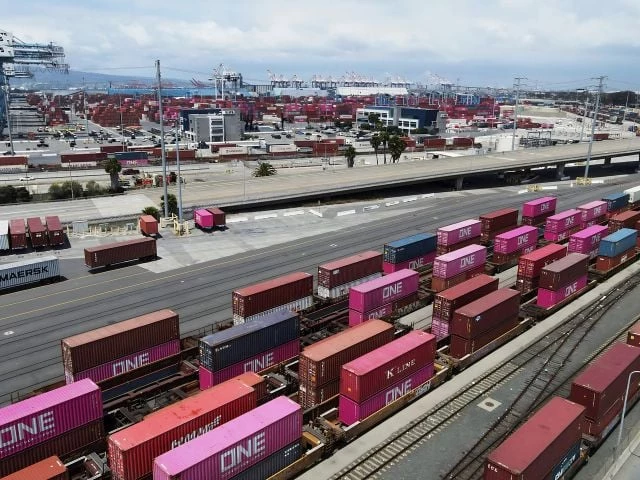





Now one of the biggest sportswear firms, Anta’s rise follows a playbook adopted by many Chinese giants.
Source link
Business
Gold price prediction today: Will gold prices continue to be volatile? Key levels to watch out for April 27, 2026 week – The Times of India

Gold price prediction today: Gold prices will closely track movements on the rate decisions by several central banks, including the US Federal Reserve, this week, says Manav Modi, Senior Analyst, Commodity Research at Motilal Oswal Financial Services Ltd.Gold is currently consolidating after sharp swings in a broad range, indicating a pause rather than a reversal. Price action shows a higher-high structure intact, but the recent sideways movement suggests indecision near the upper supply zone around 158,000–160,000. The formation resembles a short-term flag/triangle continuation pattern, where a breakout on either side will define the next directional move. Volume has tapered slightly, reinforcing the consolidation narrative.Gold prices recently moved from the upper band toward the mid-band (20 DMA), and are now attempting to stabilize. The bands have started to contract, signaling a potential volatility expansion ahead. Sustaining above the mid-band (~150,500–151,000 zone) keeps bullish bias intact, while a breakdown below this could trigger a deeper mean reversion toward the lower band.For the week, immediate support for gold prices is placed at around Rs 150,500, which is followed by stronger support near Rs 148,500. On the upside, the resistance stands at around Rs 155,500, and after that the key supply zone is at Rs 158,000. A decisive close for gold above Rs 158,000 levels can then resume the broader uptrend. However, a break in gold prices below levels of Rs 148,500 may shift the momentum to bearish in the near term.The economic docket is filled with data points and events this week as the focus will be on FED, BOJ, ECB and ECB policy meetings. US consumer confidence, GDP, inflation and durable goods orders data will also be in radar.(Disclaimer: Recommendations and views on the stock market, other asset classes or personal finance management tips given by experts are their own. These opinions do not represent the views of The Times of India)

British families tell BBC Panorama how the Iran war is affecting their monthly budgets.
Source link


UNCTAD, Maritime and Port Authority of Singapore launch partnership

Lexie Brown denies Klay Thompson cheated on Megan Thee Stallion with her

Strait of Hormuz disruption ‘systemic shock’ threatening SE Asia: ERIA

-

 Sports1 week ago
WWE WrestleMania 42 Night 2: Live match results and analysis
-

 Sports1 week ago
NCAA men’s gymnastics championship: All-time winners list
-

 Fashion1 week ago
UK’s Sosandar returns to profitability amid robust FY26 performance
-

 Politics6 days ago
UK’s Starmer seeks to deflect blame over Mandelson appointment
-

 Entertainment7 days ago
Lee Anderson, Zarah Sultana kicked out of UK Parliament for calling PM ‘liar’
-

 Entertainment1 week ago
Ruby Rose old essay resurfaces detailing night of alleged Katy Perry assault
-

 Entertainment1 week ago
Nathalie Baye, low-key legend of French cinema, dies aged 77
-
 Business7 days ago
How Trump’s psychedelics executive order could unlock stalled cannabis reform