

Business
PSX to break 200,000 barrier by December 2026 | The Express Tribune

KARACHI:
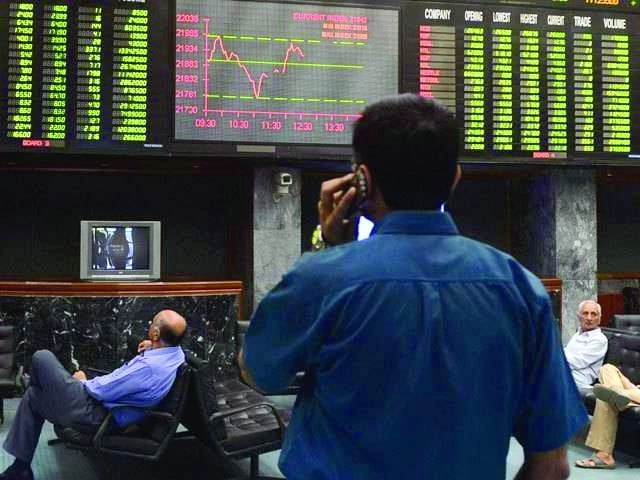
Pakistan’s stock market is expected to extend its record-breaking rally into next year, with analysts at Taurus Securities projecting that the KSE-100 index may surpass 200,000 points by December 2026, supported by strong corporate earnings, improved investor confidence, and continued policy anchoring under the IMF programme.
The bullish forecast builds on the index’s performance in 2025, as the market absorbs domestic political instability, falling global commodity prices, and active reforms in the energy and fiscal sectors. “We expect the KSE-100 index to reach 206,000 points by the end of Dec’26, translating into a 24% return from the current levels,” noted Taurus Securities in a report.
According to the brokerage house, the KSE-100’s valuation remains compelling even after a nearly 45% gain during 11MCY25, driven by robust profitability in banks, energy, cement, and technology stocks. It expects FY26 earnings growth to remain strong, with companies benefiting from improved pricing power, lower financial costs over time, and operational efficiencies induced by structural reforms. Assuming macroeconomic continuity and predictable policy momentum, the index has the capacity to rise another 20-25% over the next year, Taurus noted, adding that liquidity from local investors remains a crucial pillar of the ongoing rally.
While the broader trend remains positive, the KSE-100 has shown signs of short-term consolidation. The index hovered around the 166,000 level at the end of November as investors digested geopolitical risks and awaited clarity on upcoming monetary and fiscal decisions. Taurus attributes the slowdown largely to the uncertainty created by the Pakistan-Afghanistan border closure, which has disrupted trade flows and weakened sentiment in stocks with Afghan exposure.
Still, domestic participation remains strong. The brokerage observed that while foreign investors continued to trim positions in November, local individuals, banks, and mutual funds absorbed the selling, keeping the market stable near record highs. This trend underscores the “deepening domestic equity culture” and the market’s resilience to external shocks. The cement sector remained in the spotlight throughout November, particularly after Maple Leaf Cement (MLCF) announced its intention to acquire a 58% stake in Pioneer Cement (PIOC). The news sparked aggressive buying, pushing PIOC up 64% month-on-month, with MLCF advancing 10% MoM. Fertilisers also saw momentum, with Fauji Fertiliser Company (FFC) gaining 20% following its inclusion in the KMI-30 Index, prompting Islamic portfolio inflows.
In contrast, Pakistan Aluminium Beverage Cans (PABC) emerged as the worst-performing major stock, dropping 15% due to its heavy reliance on the Afghan market at a time when formal trade remains suspended.
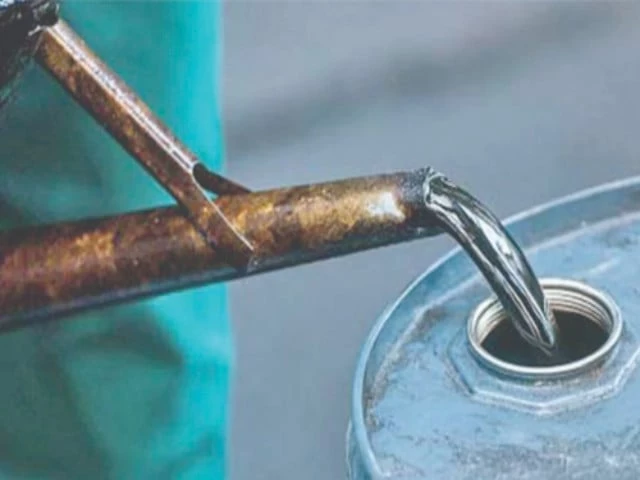
A major theme highlighted by both Taurus and JS Research is the continued weakness in oil prices. WTI crude traded below $60 per barrel in November, its lowest level in years, on account of record US inventory builds, subdued global trade, and reports that Saudi Arabia may cut Asian oil prices to five-year lows. Analysts say this provides meaningful relief for Pakistan’s import bill, stabilising the rupee and easing inflationary pressure.
The trade halt with Afghanistan, in effect since October 11, triggers growing concerns. Taurus estimates that if the border remains closed for three months, Pakistan could lose around $150 million in exports during the second quarter of FY26. Cement exporters and firms heavily dependent on the Afghan market, including PABC, remain most vulnerable. However, the shutdown has also created unexpected beneficiaries. With illicit inflows from Afghanistan sharply reduced, industries previously hurt by smuggling, including tyres, petroleum products, steel, electronics, and personal care goods, are witnessing a demand shift towards formal-sector products.
JS Research, in its market review, echoed the strong medium-term outlook but warned that the market may continue to consolidate in the near term as geopolitical and macroeconomic uncertainties persist. The brokerage noted that despite a $112 million current account deficit in October, Pakistan’s overall balance of payments remain in surplus due to steady inflows and soft import prices.
With inflation above 6% in November, JS sees no room for a policy rate cut in the upcoming meeting on December 15. Both brokerages identify the IMF Executive Board meeting on December 8, which will review Pakistan’s second EFF tranche and first RSF facility, as a near-term trigger for market direction. A successful review could unlock $1.2 billion.




BP has come under fire after revealing profits more than doubled in the first three months of the year, thanks to the soaring cost of crude caused by the Iran war.
Chief executive Meg O’Neill praised the quarter as sending the firm “in the right direction” and “strengthening the balance sheet” – but critics have labelled the energy giant’s revenues as “horrifying” as “millions suffer the fallout” from war.
The FTSE 100 firm revealed its preferred profit measure – underlying replacement cost profit – surged by over 130% to a better-than-expected $3.2bn (£2.4bn) in the first quarter, up from $1.38bn (£1.02bn) a year earlier and $1.54bn (£1.13bn) in the previous three months. Most analysts had expected first-quarter profits of $2.67bn (£1.97bn).
Campaigners accused the group of profiting at the expense of households, who have seen fuel prices rocket at the pumps and are set to see energy bills jump higher once more when the price cap is next updated on July 1.
The price of oil has risen from the mid-$60s range in February to over $100 now, spiking close to $120 several times during the course of the Iran war.
Patrick Galey, head of news investigations at campaigning organisation Global Witness, said: “It is horrifying to see BP’s profits grow as millions suffer the fallout from the US-Israel war on Iran. Unfortunately we’ve been here before – when Russia invaded Ukraine four years ago we saw big oil firms make bumper profits from spiralling fuel costs.
“As oil prices drive up bills once again, it’s clear that fossil fuel companies don’t enhance affordability or energy security, they make life worse. They destroy the climate, push up the cost of living, and rake in billions in profit while innocent civilians die.
“It’s well overdue that we make oil companies pay for the damage their doing. If they broke it, they need to fix it. It’s clear they can afford to. BP profits, we all pay.”
Mike Childs, head of science, policy and research at Friends of the Earth, added: “Just as we saw in 2022 following Russia’s invasion of Ukraine, fossil fuel giants are quids in when global instability drastically inflates fuel prices.
“But again, it’s ordinary people who pay the price when soaring energy prices threaten to plunge the UK into an even deeper cost-of-living crisis.”
The End Fuel Poverty Coalition called for a windfall tax on firms profiting from the Iran-related energy crisis.
The campaign group’s co-ordinator Simon Francis said: “These astronomical profits are a startling reminder that when conflict drives up the price of oil and gas, energy companies profit and households pay.”
BP’s new chief executive Meg O’Neill, who took over at the helm on April 1, said the group was ensuring fuel supplies are met across the UK.
She said: “The teams across BP are playing their part to keep oil, gas and refined products flowing during an incredibly challenging time – focused on maintaining safe, reliable and cost-efficient operations.”
She added: “We are working with customers and governments to get fuel where it’s needed, helping minimise disruption and the impact it can have on people’s lives.”
Ms O’Neill took over from Murray Auchincloss, who himself served only two years in the role after succeeeding Bernard Looney’s three-year tenure. Prior to the recent regular changes, Bob Dudley spent a full decade in the job up to 2020.
BP have struggled with strategy direction and the transition to clean energy, first doubling down on their green plan before an abrupt about-face turn.
In share price terms, the results saw BP rise 2.5 per cent in early trading on Tuesday, adding to a surge of more than 28 per cent in the past three months alone, as investors watched a soaring oil price and predicted the profits to come.
“In February, BP announced it was halting share buybacks as weak oil prices hurt profitability. How times change,” said Freetrade’s investment writer, Duncan Ferris.
“The firm has been among the best-performing supermajors since the escalation of conflict in Iran. Higher oil prices, and the opportunities they offer to the company’s traders, have breathed life into a stock battered by faltering low-carbon projects and investor unrest.”
Oil prices have raced higher since the US-Israel war on Iran started on February 28 and are now more than 60% up so far this year.
Brent crude reached close to 120 dollars a barrel at one stage and, despite falling back, is still above the 100 dollars level as peace talks falter and amid fears over a looming global energy supply crisis.
BP’s update showed its customers and products division – including its oil trading unit – reported profits of 2.5 billion (£1.84 billion), compared with 1.4 billion dollars (£1.03 billion) in the previous quarter and just 103 million dollars (£76.2 million) a year ago as traders were able to capitalise on highly volatile oil prices.
Additional reporting by PA
Business
Strait of Hormuz blockade persists, but India’s imports of Russian oil are down from highs seen in March – here’s why – The Times of India
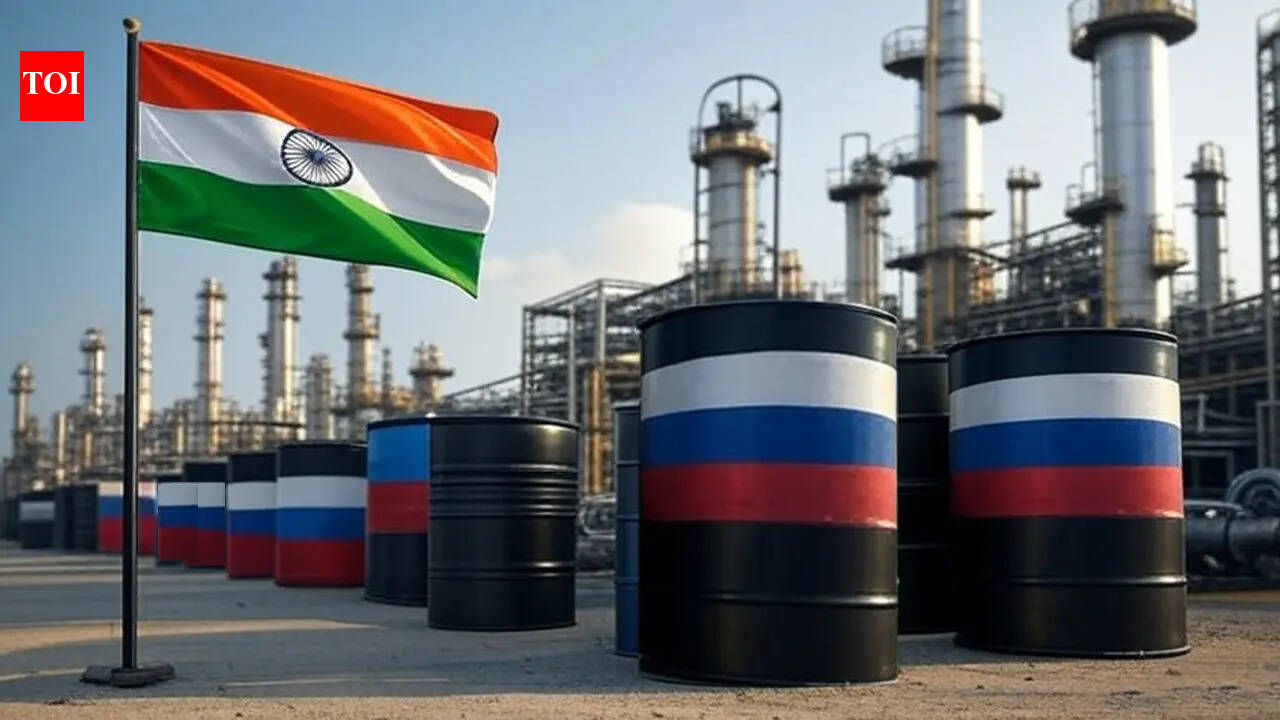
India’s imports of crude oil from Russia have dropped from the highs seen in March when the supply disruptions from the Middle East caused by the US-Iran war and the Strait of Hormuz closure prompted refiners to step up buys from Moscow.India’s imports of Russian crude oil have declined 20 per cent month-on-month in April to 1.57 million barrels per day, easing from the sharp surge recorded in March. The spike in March had been driven by the availability of floating cargoes during the Iran conflict, along with a temporary waiver on US sanctions. This waiver has been extended for now. Nearly all Indian refiners, except Numaligarh Refinery, are now importing Russian crude. This marks a significant shift from January, when only three refiners – namely Indian Oil, Nayara Energy and BPCL, were purchasing Russian oil after US sanctions on key Russian exporters had discouraged many buyers. Reliance resumed its Russian crude imports in February.Also Read | Iran war: Trump sanctions waiver or not – why India continues to buy Russian oil
Why are Russian crude oil imports down in April?
April volumes were affected by loading disruptions at a major Russian export terminal following a Ukrainian attack.Indian Oil Corporation remained the largest importer of Russian crude in both March and April. Between April 1 and April 26, the company imported an average of 670,000 barrels per day, accounting for roughly 42 per cent of India’s total Russian crude purchases. This was about two-and-a-half times the volume imported by Reliance Industries, which averaged 263,000 barrels per day, according to Kpler data quoted in an ET report. In March, Indian Oil had imported 589,000 barrels per day. Other major buyers in April included Bharat Petroleum Corporation Limited at 136,000 barrels per day, Hindustan Petroleum Corporation Limited at 83,000 barrels per day, Mangalore Refinery and Petrochemicals Limited at 68,000 barrels per day, HPCL-Mittal Energy Limited at 66,000 barrels per day, and Nayara Energy at 28,000 barrels per day. The buyers of an additional 262,000 barrels per day could not be immediately identified.Nayara Energy’s imports dropped sharply from 315,000 barrels per day in March, largely because the Rosneft-backed refiner began a 35-day maintenance shutdown on April 9.According to Nikhil Dubey, Senior Research Analyst at Kpler, the temporary closure of the Strait of Hormuz in March prompted Indian refiners to turn to readily available floating Russian cargoes in the Indian Ocean and other regions to offset supply disruptions from the Gulf. This led to a significant jump in imports during that month.India imported nearly 2 million barrels per day of Russian crude in March, substantially higher than the 1.3 million barrels per day of India-bound cargoes loaded from Russian ports in February. The higher March arrivals were supported by floating supplies. Since Russian shipments generally take around a month to reach India, lower February loadings, which were caused by US sanctions that had curtailed Indian purchases, had an impact on subsequent arrivals.Russian crude loadings in March were estimated at around 1.5 million barrels per day, which translated into similar arrival volumes at Indian ports in April, as most of the previously available floating cargoes had already been absorbed.Dubey also noted that Ukrainian attacks on a Russian Baltic Sea terminal in March disrupted loading operations.
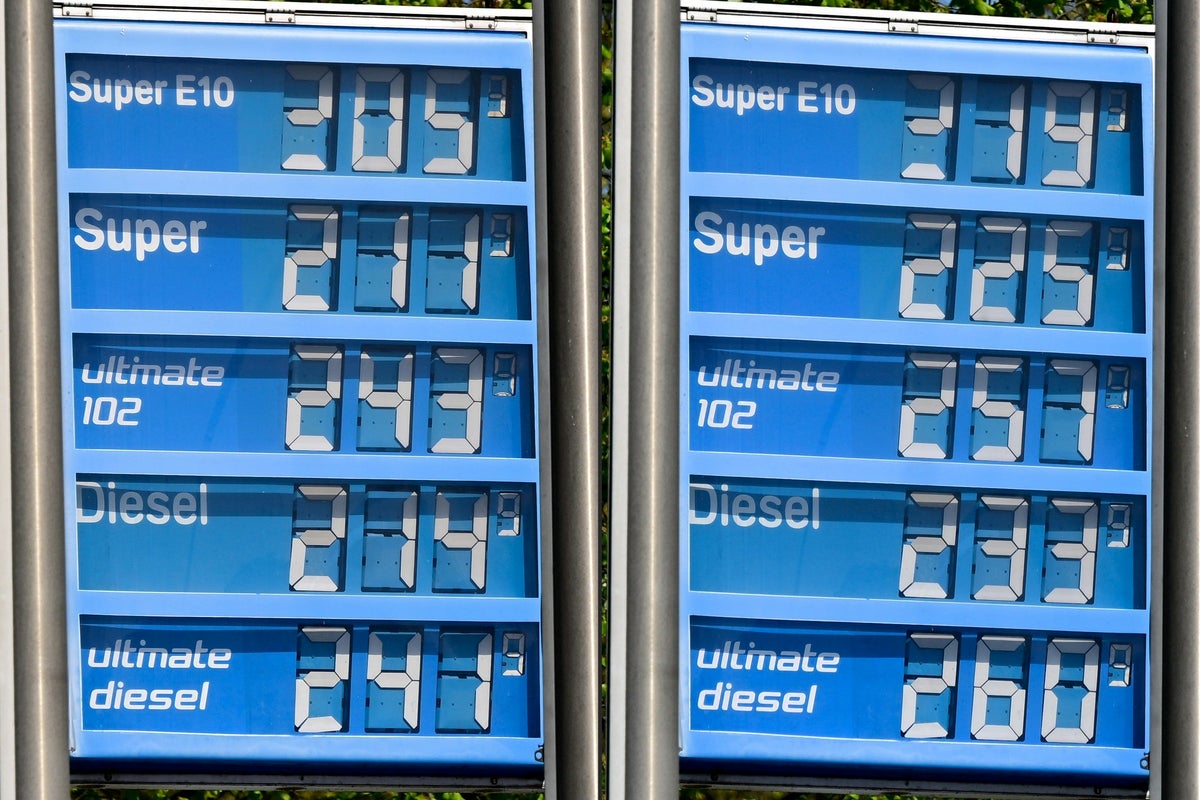
Oil prices jumped on Tuesday as Donald Trump weighed Iran’s latest proposal to end the war.
The US president is unhappy with the latest Iranian proposal, a US official said on Monday. Iranian sources disclosed that Tehran’s proposal avoided addressing its nuclear programme until hostilities cease and Gulf shipping disputes are resolved.
Trump’s displeasure with the Iranian offer leaves the conflict deadlocked, with Iran shutting shipping flows through the Strait of Hormuz, which typically carries supply equal to about 20 per cent of global oil and gas consumption, and the US keeping in place its blockade of Iranian ports.
Brent crude rose to $108.13 per barrel, hovering near a three-week high, while US West Texas Intermediate went up to $96.48.
Both benchmarks are well above pre-war levels. Brent was trading at $72 before the US-Israeli war on Iran began on 28 February.
Asian stocks were broadly subdued at the opening. While MSCI’s broadest index of Asia-Pacific shares outside Japan was down 0.12 per cent, hovering near the record high it touched on Monday, Nikkei fell 0.5 per cent.
The S&P 500 eked out modest gains on Monday and was on course for a nearly 10 per cent gain for April. US stock futures were 0.1 per cent higher in Asian hours.
Indian shares are set to open lower on Tuesday, with GIFT Nifty futures pointing to the benchmark Nifty 50 opening below Monday’s close of 24,092.70. Both Nifty and Sensex snapped a three-session losing run on Monday, led by a rebound in technology stocks, but the broader momentum remained constrained by unresolved tensions around the Strait of Hormuz.
Elevated oil prices are a particular headwind for India, the world’s third-largest crude importer, heightening inflation risks, pressuring economic growth and widening the country’s import bill.
Foreign portfolio investors offloaded domestic stocks worth Rs 11.5bn ($122m) on Monday, extending their selling streak to a sixth straight session.
Vessel crossings showed signs of recovery over the weekend, according to the maritime intelligence firm Windward, but analysts warned increased movement was yet to translate into a surge in oil and gas flows.
Iran reportedly offered to end its blockade of the waterway without addressing its nuclear programme, passing the proposal to Washington through Pakistani mediators. But Mr Trump has made ending Iran’s atomic programme a condition for any deal.
Central banks are also in focus this week, with the Bank of Japan, the US Federal Reserve, the Bank of England, and the European Central Bank all due to announce policy decisions. All are expected to hold rates steady, but markets will be watching closely for signals about how policymakers plan to respond to the inflationary pressure from the war.
“The BOJ is likely to stay highly sensitive to market volatility,” Fred Neumann, chief Asia economist at HSBC, told Reuters. “Our base case remains one single 25 basis point hike this year in July, but a June rate rise becomes more likely if the Strait of Hormuz is still effectively closed after mid-May.”


Match officials announced for HBL PSL 11 qualifier – SUCH TV
BP profits more than double as oil trading booms amid Iran war

‘Dances With Wolves’ star Nathan Chasing Horse gets life imprisonment for sexual assault verdict

-

 Sports1 week ago
NCAA men’s gymnastics championship: All-time winners list
-

 Sports1 week ago
WWE WrestleMania 42 Night 2: Live match results and analysis
-

 Fashion1 week ago
UK’s Sosandar returns to profitability amid robust FY26 performance
-

 Politics7 days ago
UK’s Starmer seeks to deflect blame over Mandelson appointment
-
 Business1 week ago
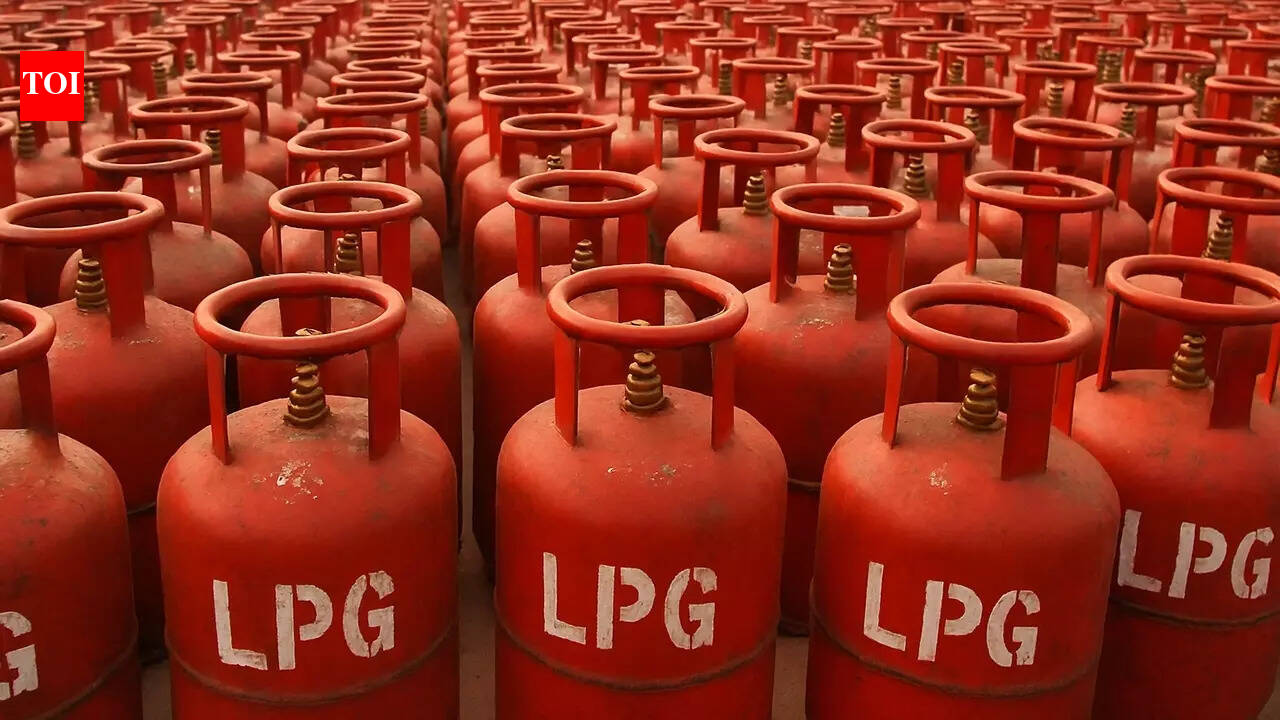
No fuel shortage: Govt assures 100% domestic LPG, PNG, CNG supply amid Hormuz energy crunch – The Times of India
-

 Entertainment1 week ago
Lee Anderson, Zarah Sultana kicked out of UK Parliament for calling PM ‘liar’
-
 Business1 week ago
How Trump’s psychedelics executive order could unlock stalled cannabis reform
-
 Business7 days ago
Us-India Trade Talks: US–India trade deal: Where do talks stand & what to expect – explained – The Times of India