

Business
India’s Investment & Wealth Management Market Set To Double By 2030: Report


Last Updated:
According to a report by Equirus Wealth, India’s wealth management market may expand to $27-31 billion by FY31, reflecting a CAGR of 15-17% over the next five years.

Over the next three years, investors are expected to increase allocations toward venture capital, private debt and long–short strategies, signaling a move towards higher-yield and flexible investment options. (AI Generated/News18 Hindi)
India’s Investment and Wealth Management industry is on track to double in size by the end of the decade, fuelled by rising investor participation, higher disposable incomes and a shift towards sophisticated advisory-driven models. According to a report by Equirus Wealth, the country’s wealth management market, currently valued at around $14 billion in FY25, is expected to expand to $27-31 billion by FY31, reflecting a compound annual growth rate of 15-17% over the next five years.
The firm noted that the past decade has seen a decisive transformation in the industry, moving away from product-led, transactional distribution to holistic, advisory-led wealth management. This shift, Equirus said, has been supported by the rise of family offices, increased access to global investment avenues, and the emergence of one-stop solutions offering estate planning, taxation, insurance, wealth management and alternate investment strategies.
Shift Toward Alternative Strategies
Investor preferences within Alternate Investment Funds (AIFs) are also shifting. Over the next three years, investors are expected to increase allocations toward venture capital, private debt and long-short strategies, signaling a move towards higher-yield and flexible investment options.
In line with this trend, India’s family offices are planning to raise their allocation to alternatives by nearly 5 percentage points from the current 10%. Private equity, venture capital and long-only funds are expected to take the lion’s share of this increase, reflecting sophisticated portfolio construction among ultra-wealthy investors.
SIF: A Potential Game Changer
A recent regulatory development, the introduction of Specialised Investment Funds (SIFs) by Sebi, could significantly reshape the domestic wealth landscape. Equirus said SIFs may become a ‘game changer” because they allow greater flexibility in investment strategies, including the ability to go long and short, enabling investors to benefit during both rising and falling markets.
Importantly, SIFs come with a lower entry barrier, with a minimum ticket size of just Rs 10 lakh, potentially democratising access to strategies previously limited to high-ticket investors.
Wealth Boom Critical to India’s 2047 Ambition
The report linked the sector’s growth to India’s broader ambition of becoming a developed nation by 2047. As the economy targets a 10-fold expansion in size, financial assets may need to grow nearly 20 times, making a resilient, well-capitalised financial sector a prerequisite for further progress.
Equirus expects wealth management, asset management, stock broking and lending to be key drivers of the financial ecosystem’s depth and innovation in the coming decades.
Ultra-Wealthy Population Expected to Surge
India’s rapidly expanding wealthy class will play a central role in this growth narrative. Citing Hurun data, the note said that the number of individuals with wealth of $12-14 million and above could double to 1.3 lakh over the next decade, bringing India closer to China’s current levels.
Affluent households with wealth of around $1 million may increase from 872,000 today to between 1.7 and 2 million, while HNI households, those with $1.2–1.4 million wealth, could rise from 5,90,000 to more than 1.2 million.
Meanwhile, the number of ultra-global wealthy Indians, those worth $24-30 million or more, is projected to cross 30,000 households, underscoring India’s expanding global wealth footprint.
While China’s wealth creation was driven by rapid industrialisation and urbanisation, India’s trajectory, Equirus said, will be powered by technology, services, entrepreneurship, manufacturing expansion and global capital flows.
(This story has not been edited by News18 staff and is published from a syndicated news agency feed – Reuters)
About the Author

Haris is Deputy News Editor (Business) at news18.com. He writes on various issues related to personal finance, markets, economy and companies. Having over a decade of experience in financial journalis…Read More
 Click here to add News18 as your preferred news source on Google.
 December 02, 2025, 17:00 IST
Read More
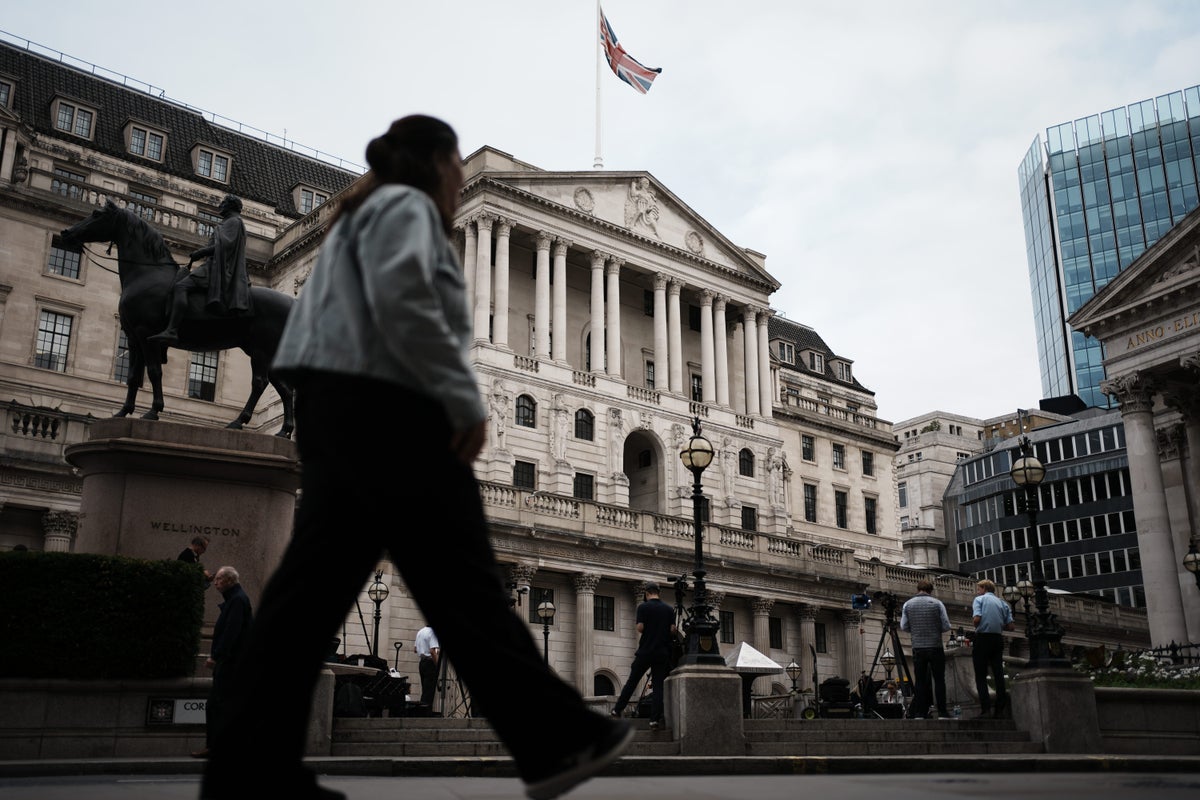
Bank of England policymakers will “almost certainly” hold interest rates at 3.75% at their meeting next week despite the Iran war pushing up the cost of living, economists have said.
However, experts have said a future interest rate increase could still be a possibility if firms and households continue to face inflationary pressure.
The Bank of England’s nine-strong Monetary Policy Committee (MPC) will vote on whether to maintain, increase or decrease its base interest rate on Thursday April 30.
The Bank will also publish its first full monetary policy report and set of economic forecasts since the conflict between US-Israeli and Iranian forces began in late February.
This week, a raft of economic data has shown that the conflict has helped to drive inflation higher.
Data published by the Office for National Statistics (ONS) on Wednesday showed that UK Consumer Prices Index (CPI) inflation lifted to 3.3% in March, a three-month-high, on the back of accelerating fuel prices.
The price of motor fuels jumped by 8.7% month-on-month – the largest increase since June 2022 – as disruption to oil production and transportation drove diesel and petrol prices higher.
Meanwhile on Friday, Bank of England research saw UK firms warn they think food inflation could jump as high as 7% as they increased their inflation outlook for next year.
Other economic data also indicated that activity in the UK economy has been stronger than expected.
The ONS reported the UK economy grew by 0.5% in February, ahead of forecasts of 0.1%, before the conflict began.
Elsewhere, UK retail sales volumes were stronger-than-expected after a boost from fuel, with motorists buying more in March in a bid to stock up amid rising prices.
Despite these figures, economists broadly expect the Bank’s rate-setters to maintain the current interest rate.
Oxford Economics chief UK economist Andrew Goodwin said: “We expect the MPC to keep bank rate unchanged at 3.75%, with most committee members seemingly keen to hold policy at its current restrictive level as they gather more information about how the energy shock is feeding through to the economy.
“Nevertheless, we suspect a minority will opt for a 25 basis point (0.25 percentage point) hike, on the basis that some pre-emptive tightening is a more robust strategy to guard against an inflation outlook where the risks are skewed to the upside.”
Thomas Pugh, chief economist at RSM UK, said the result of the meeting looks “nailed on”.
He said: “The Bank of England (BoE) will almost certainly hold interest rates at 3.75% at its meeting next week, most likely in a unanimous 9-0 vote again.
“The picture of the war in Iran is little clearer than at the last meeting and the value in waiting for more information is significant, given the uncertainty over both the future direction of energy prices and their impact on the economy.”
He indicated however that the “resilience” of some recent data “raises the risk that interest rates will rise in the summer”.
Elliott Jordan-Doak, senior UK economist at Pantheon Macroeconomics, also predicted a unanimous hold vote but also suggested that recent data could drive future concerns over elevated inflation.
He said: “If surveys for May repeat the same pattern, and crucially the ‘dirty’ Middle East ceasefire continues with oil flows disrupted, we think the MPC will be bumped into a hike in June or perhaps July.
“We expect rate setters to hike once this year, in June, before cutting twice in 2027 to leave interest rates at 3.5%.”

new video loaded: Who’s Getting a Tariff Refund?

By Tony Romm, Nour Idriss, Stephanie Swart, Whitney Shefte and Paul Abowd
April 24, 2026
Business
Hair oil, ACs, soaps become costlier: How FMCG companies are dealing with Middle East supply blow – The Times of India

Consumer goods companies in India are facing a sharp rise in input costs due to the ongoing war in the Middle East. Surging raw material prices are forcing firms to track costs on a near-daily basis, review pricing frequently, and focus on short-term decisions instead of long-term planning.As firms are struggling with volatile input costs, company executives have told ET that the sudden spike in inflation has made it harder to manage business, while also raising concerns that higher prices could hurt consumer demand. This comes at a time when consumption had started improving after the government reduced goods and services tax rates on several products last September.Havells India chief executive officer Anil Rai Gupta was cited by the financial agency as saying that the company is taking a cautious approach and reviewing the situation month by month. “I have not seen this kind of price escalation in the recent past or in recent memory. Usually, inflation happens, but it is neither so steep nor spread across all product categories… consumer offtake can get affected if the price hike is too sharp.” Bajaj Consumer Care managing director Naveen Pandey said the company is closely tracking input costs and taking decisions almost daily. Speaking during the company’s earnings call last week, he said costs across the business have gone up between 20% and 60%. He added that the war has created “extreme volatility” in the prices of light liquid paraffin and packaging materials. At the same time, prices of mustard and copra have not fallen as expected and are still at pre-war levels. The company is working on cutting costs across its operations.Industry executives said the war has pushed up commodity prices and crude-linked products, increased freight costs, and made imports more expensive due to the fall in rupee. They added that even after a ceasefire, prices have not come down, and uncertainty remains over whether the conflict could start again.In the past month, companies have already raised prices in several categories, including air-conditioners, refrigerators, soaps, detergents, hair oil, apparel, decorative paints and footwear. Some companies have also reduced pack sizes to deal with higher costs. More price hikes are expected by the end of this month.Parle Products vice president Mayank Shah said the pressure on input costs is very high and the uncertainty is “killing”.Retailers are also seeing more careful spending. Trent Ltd, which runs Westside and Zudio stores, said in an investor presentation that while demand was steady at the start of the January–March quarter, the current situation is affecting consumer behaviour.“Consumers are spending with caution, resulting in moderation of discretionary spending on the back of continuing macro uncertainties and potential increase in cost of living. Structurally the demand levels and the underlying market opportunities remain strong. However, the duration and intensity of disruptions in the Middle East along with its second order effect on supply chain, commodity prices and inflation in general has potential implications for near term demand,” the company said.AWL Agri Business executive deputy chairman Angshu Mallick said the company has already increased edible oil prices by Rs 7–10 per kg to pass on higher freight costs. “Being a staples company, we hike or reduce prices immediately. As we are in basic necessities, the volume impact is usually lower,” he said.Meanwhile, the Middle East conflict is inching closer towards the two month mark. The conflict began back on February 28, when the US and Israel launched joint strikes on Iran. In retaliation, Tehran choked the crucial Strait of Hormuz, a pipeline that carries 20% of global energy supplies, straining flow across the globe.


Jada Pinkett Smith seeks $49K legal fees from Will Smith former friend
Bank of England set to hold interest rates despite Iran war pushing up inflation

Sweden’s H&M & Stella McCartney return with nostalgic 2026 collection

-

 Fashion1 week ago
France’s LVMH Q1 revenue falls 6%, shows resilience amid Iran war
-

 Entertainment1 week ago
Is Claude down? Here’s why users are seeing errors
-

 Tech1 week ago
CYBERUK ’26: UK lagging on legal protections for cyber pros | Computer Weekly
-

 Fashion1 week ago
Raymond unveils luxury Chairman’s Collection Store in Mumbai
-

 Sports5 days ago
WWE WrestleMania 42 Night 2: Live match results and analysis
-
 Business1 week ago
PepsiCo earnings beat estimates as North American food business improves
-

 Sports5 days ago
NCAA men’s gymnastics championship: All-time winners list
-

 Tech1 week ago
Anthropic Plots Major London Expansion