

Business
Stocks To Watch: Infosys, ONGC, Pine Labs, JSW Steel, IndiGo, Tata Capital, And Others


Last Updated:
Stocks to watch: Shares of firms like Infosys, ONGC, Pine Labs, JSW Steel, IndiGo, Tata Capital, and others will be in focus on Thursday’s trade

Stocks To Watch
Stocks to Watch on December 4: Markets saw a volatile session and settled marginally lower, extending the ongoing consolidation phase. Sentiment took a hit as the rupee weakened to a record low of 90.13 against the dollar, raising concerns over higher import costs and triggering FII outflows. Caution ahead of the MPC meeting and mixed global cues further weighed on investor mood.
During the session, the Nifty slipped below the key short-term support of the 20-DEMA near the 25,950 level, but a recovery in the final hour helped it reclaim this mark. Analysts advised investors to manage position sizes carefully and stay selective—preferring IT and pharma stocks for long trades, while looking at rate-sensitive sectors on dips.
Meanwhile, here are some of the top stocks to watch today:
ONGC:
The government has approved a one-year extension for Arun Singh as chairman of ONGC. His three-year term was set to end on December 6. Singh, who retired as chairman of Bharat Petroleum Corporation in 2022, was appointed to revive ONGC at a time when the company was facing years of declining output.
Reliance Industries:
Reliance Strategic Business Ventures, a wholly owned subsidiary of Reliance Industries, along with Surrey County Cricket Club, announced a partnership in the Oval Invincibles franchise in The Hundred. This follows a deal under which the two entities will hold 49 per cent and 51 per cent stakes, respectively, with ownership transferred from the England and Wales Cricket Board.
Infosys:
The IT major is witnessing rising client interest in India-based global capability centres (GCCs). Several new engagements are now beginning with proposals to set up GCCs before expanding into wider technology partnerships, a senior executive said on Wednesday. The company is also stepping up efforts to capture a larger share of the expanding GCC market.
Pine Labs:
The fintech firm reported a consolidated net profit of ₹5.97 crore in Q2 FY26, compared with a loss of ₹32.01 crore in Q2 FY25. Revenue from operations rose 17.82 per cent year-on-year to ₹649.9 crore from ₹551.57 crore.
Cipla:
In partnership with Stempeutics Research, Cipla announced its entry into orthobiologic medicine with the launch of Ciplostem—an allogeneic mesenchymal stromal cell (MSC) therapy for knee osteoarthritis.
JSW Steel:
Sajjan Jindal-led JSW Steel and JFE Steel Corporation will jointly own and operate the steel business of Bhushan Power and Steel Ltd (BPSL) under an equal partnership. The Japanese steelmaker will acquire a 50 per cent stake in the joint venture for ₹15,750 crore.
InterGlobe Aviation (IndiGo):
India’s largest airline has cancelled more than 300 flights over the past two days and delayed hundreds more as a growing pilot shortage disrupted operations following the implementation of new flight duty time limitation (FDTL) rules, aviation industry sources said.
RailTel Corporation of India:
The company informed exchanges that it has received a work order from the Mumbai Metropolitan Region Development Authority for a project worth ₹48.78 crore, excluding tax.
Indian Energy Exchange:
India’s leading electricity exchange recorded a monthly electricity traded volume (excluding TRAS) of 11,409 MU in November 2025, reflecting a 17.7 per cent year-on-year increase. A total of 4.74 lakh Renewable Energy Certificates were traded during the month.
Bank of Maharashtra:
The offer-for-sale (OFS) of the bank closed for subscription on Wednesday at a floor price of ₹54 per share. At this price, the government stands to raise about ₹2,492 crore by divesting its 6 per cent stake. Before the OFS, the government held 79.60 per cent in the bank. Post dilution to 73.6 per cent, the bank will meet the minimum public shareholding (MPS) norm of 25 per cent.
Tata Capital:
Sebi has passed a settlement order related to a suo motu settlement application filed by the company under the Sebi (Settlement Proceedings) Regulations, 2018. Tata Capital also said it has paid the settlement amount of ₹14,40,000.
Lemon Tree Hotels:
The company has signed a licence agreement for “Lemon Tree Hotel” at Pacific Mall, Jaipur. The property will be managed by Carnation Hotels Private Limited, a wholly owned subsidiary of Lemon Tree Hotels Limited.
Vintage Coffee and Beverages:
The company has launched 100 per cent pure instant coffee in India as part of its expansion into the fast-growing coffee and beverages market. Following the opening of the Vintage Coffee Café in Nerul, Navi Mumbai in September 2024, and the successful launch of two brands in the conventional roast and ground coffee segment on select e-commerce platforms, the instant coffee launch further strengthens its product portfolio and consumer reach.
Disclaimer: The views and investment tips by experts in this News18.com report are their own and not those of the website or its management. Users are advised to check with certified experts before taking any investment decisions.
 Click here to add News18 as your preferred news source on Google.
 December 04, 2025, 07:59 IST
Read More




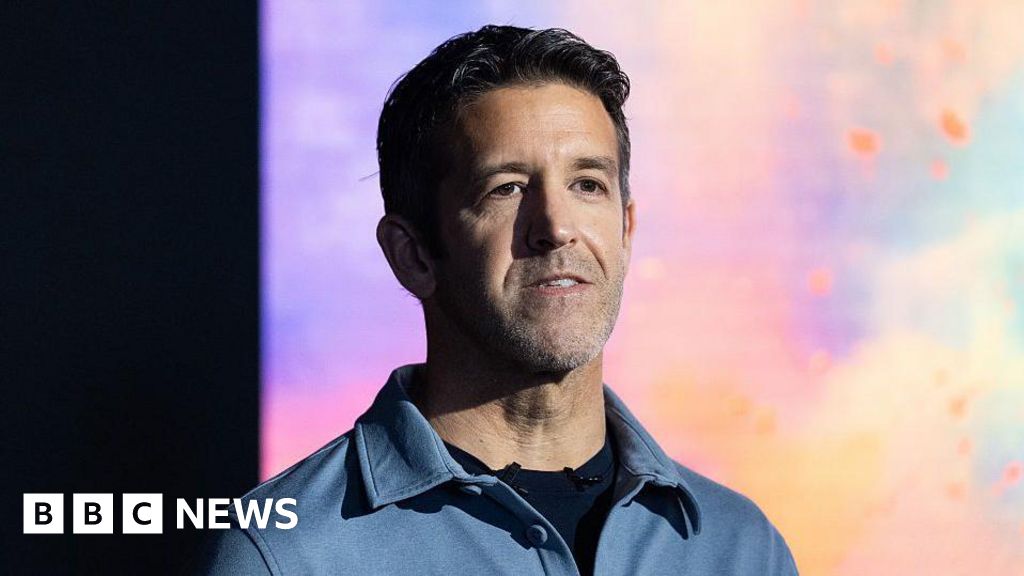
John Ternus will take over running the technology giant as Cook steps up to become executive chairman.
Source link
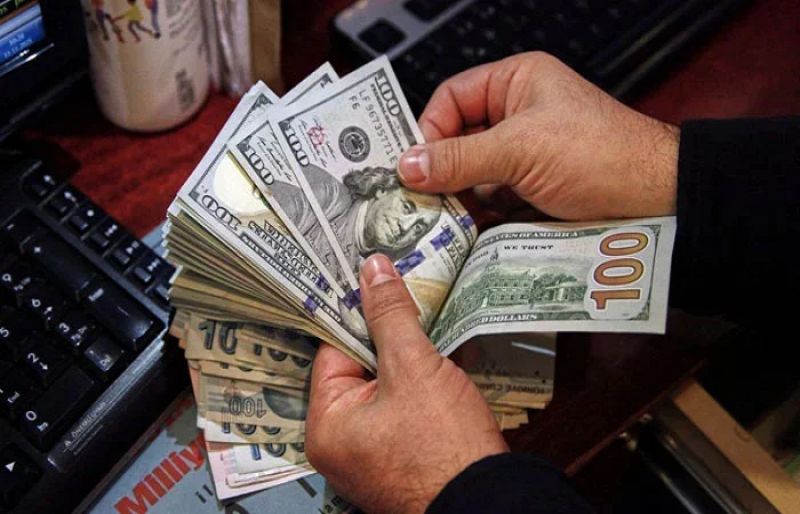
The State Bank of Pakistan (SBP) has received $1 billion from the Ministry of Finance of the Kingdom of Saudi Arabia, marking the second tranche of a $3 billion deposit agreed recently, the central bank said on Tuesday.
According to the statement issued by the central bank, the second tranche was received with a value date of April 20, 2026.
The first tranche of $2 billion had already been received on April 15, 2026, bringing the total inflows under the arrangement to $3 billion.
The development comes days after Prime Minister Shehbaz Sharif’s visit to Saudi Arabia, where he engaged in diplomatic efforts aimed at promoting regional peace.
During his visit, the premier met Crown Prince Mohammed bin Salman in Jeddah and expressed appreciation for the Kingdom’s continued support for Pakistan’s economic stability. He also conveyed solidarity with Saudi Arabia in light of recent regional developments.
Earlier on April 16, Finance Minister Muhammad Aurangzeb had announced that Saudi Arabia would provide $3 billion in additional financial support, with disbursement expected shortly.
He also noted that Riyadh had extended the tenure of its existing $5 billion deposit, removing the earlier annual rollover requirement.
The Saudi funding has strengthened Pakistan’s external position as it repaid $2 billion in debt to the United Arab Emirates (UAE).
The amount was kept with the central banks as a safe deposit.
Saudi Arabia has been a key financial partner for Pakistan, having provided support packages during previous economic challenges, including a $6 billion assistance programme in 2018 comprising deposits and oil facility arrangements.

Advocates attend a news conference about the “impact of incarcerating those charged with marijuana-related offenses,” and policy reform ideas, outside the U.S. Capitol on April 20, 2026.
Tom Williams | CQ-Roll Call, Inc. | Getty Images
A White House executive order on psychedelics, signed by President Donald Trump on Saturday, aims to speed up research on drugs like psilocybin, MDMA and ibogaine, helping to legitimize an industry that’s long lived largely underground.
But it also raises a broader question: Will psychedelics fall victim, like cannabis has, to a slow-moving federal process?
The latest executive order comes roughly four months after an effort by President Trump to reschedule cannabis, opening the door to greater research and investment opportunities. But since that directive, progress to reclassify cannabis has largely stalled, with the Drug Enforcement Administration review still ongoing and no final decision on moving marijuana from Schedule I to the lesser Schedule III.
The delay reflects how drug policy often slows once it enters interagency review, where scientific evaluation, legal standards and politics meet.
“The process has certainly been slow and frustrating for stakeholders when you consider they have spent decades fighting marijuana’s outrageous 1970s-era misclassification,” said Shawn Hauser, partner at cannabis law firm Vicente LLP.
Vicente LLP also serves as legal counsel for the National Compassionate Care Council, or NCCC, a coalition of health-care stakeholders focused on evidence-based cannabis policy.
The psychedelics order, however, focuses on research acceleration rather than legalization. It directs agencies like the U.S. Food and Drug Administration to expand clinical trials and “Right to Try” access for patients with serious mental health conditions, while leaving drug scheduling unchanged.
AtaiBeckley is among a number of psychedelics-focused drug developers whose stock is rallying since the order was signed over the weekend, up roughly 25% Monday. Several smaller-market cap stocks also jumped, including Compass Pathways, Definium Therapeutics and U.S.-listed shares of Cybin.
Hauser said the recent psychedelics order reflects a broader shift in Washington toward a medical-first framework and could mark a path forward for cannabis rescheduling.
“The science-, patient-, health-care-first approach is winning in Washington right now,” she said.
“The psychedelic pathway — built on physician-led protocols, clinical research and compassionate use frameworks — is actually a model cannabis advocates should be studying and adopting more aggressively,” Hauser said.
Safety first
Trump’s psychedelics measure has drawn particular attention for its inclusion of ibogaine, a powerful, naturally occurring psychoactive compound with long-standing safety concerns.
The drug is being studied for its applications with post-traumatic stress disorder, depression and addiction, but cardiac risks flagged by Nora Volkow of the National Institute on Drug Abuse remain a major barrier.
That tension is heightened by the expansion of “Right to Try” access, a federal law allowing patients diagnosed with life-threatening diseases or conditions to try experimental drugs when no other treatments work. This distinction typically applies only after Phase I trials are successful.
Ibogaine has struggled to meet that criteria, since most of the research into the drug has been conducted outside the U.S.
Psychedelic industry leaders say the order is meaningful, but the full impacts are still unknown until implementation catches up to prove scientific value.
“The opportunity now is not hype, it’s execution: rigorous science, disciplined safety standards, physician-led protocols and real-world outcome data,” said Tom Feegel, CEO of clinical neurohealth center Beond.
Beond, based in Cancun, Mexico, specializes in ibogaine therapy.
Feegel added that while the executive order signals legitimacy at the highest level of government, the next phase is critical.
Psychedelics still lack a commercial market, though clinical-stage developers, like AtaiBeckley, Compass and GH Research, are emerging. Many prioritize research around less controversial psychedelics like psilocybin and MDMA derivatives for mental health treatment.
U.S. states have been weighing the space, too. Colorado advanced regulated psychedelic access for its residents in 2022, while a Massachusetts ballot measure failed in 2024 with 56% of voters rejecting the access.
Cannabis, by contract, already has a multibillion-dollar adult-use industry across dozens of states, giving it a significant head start even as federal rescheduling remains unresolved.
Hauser argued the two industries are ultimately reinforcing one another.
“The two regulatory tracks aren’t in conflict,” she said. “Both are advancing the broader legitimacy of plant-based alternative medicines, and the infrastructure being built for one will inevitably support the other.”


UN Security Council denounces killing of French peacekeeper in Lebanon
Apple names new boss to replace Tim Cook after 15 years

India, US to resume BTA talks today

-

 Fashion5 days ago
France’s LVMH Q1 revenue falls 6%, shows resilience amid Iran war
-

 Sports1 week ago
The case for Man United’s Fernandes as Premier League’s best
-

 Entertainment1 week ago
Palace left in shock as Prince William cancels grand ceremony
-
 Business1 week ago
UK could adopt EU single market rules under new legislation
-

 Entertainment6 days ago
Is Claude down? Here’s why users are seeing errors
-

 Fashion1 week ago
Energy emerges as biggest cost driver in textile margins
-
 Business1 week ago
Delta Air Lines unveils first new Delta One suite in premium cabin arms race
-

 Tech1 week ago
A Lot of Shops Won’t Fix Electric Bikes. Here’s Why