

Fashion
Kering bets on China’s gold jewelry boom as Laopu’s sales soar


By
Bloomberg
Published
December 5, 2025
A new crop of Chinese gold jewelry brands are attracting investor interest in the wake of Laopu Gold Co.’s breakout success.
Hangzhou-based Borland, a gold jeweler specializing in traditional Chinese goldsmith technique known as “filigree”, said this week it has raised more than 100 million yuan ($14 million) from investors including Kering Ventures, the startup investment arm of Kering SA, and Shunwei Capital, a top Chinese venture capital firm co-founded by billionaire Xiaomi Corp. chairman Lei Jun.
Kering said the small minority interest in Borland through Kering Ventures enables the company to “participate in the development of a rapidly growing brand in the particularly buoyant 24-karat gold jewelry segment”.
Separately, Dayone Capital in recent days announced a strategic investment worth more than 100 million yuan in Lamchiu, a maker of hand-crafted bespoke pieces based in the northwest Chinese city of Lanzhou.
China’s high-end gold jewelry boom has been fueled by the surprise rise of Laopu, which has defied the weak performance seen among Western luxury rivals in China. Laopu’s revenue in the first half of 2025 soared more than 250% year-on-year to 12.4 billion yuan, on top of 168% sales growth the year before.
“Laopu has shown the market that this niche sector can continue to break out, and rising gold prices also help lift the overall buzz,” said Richard Lin, a consumer analyst with SPDB International Holdings Ltd. “The rising investment and financing enthusiasm for the heritage gold segment is clearly driven by confidence in the category’s long-term growth potential.”
Heritage gold jewelry refers to gold pieces rooted in Chinese culture and traditional goldsmith techniques, including filigree work. With stores in top-tier malls, Laopu’s clientele overlaps — and increasingly threatens — stalwarts from Hermès International SCA to Richemont-owned Cartier.
Still, while Borland and Lamchiu have official stores on e-commerce platforms like Alibaba Group Holding Ltd.’s Tmall and JD.com Inc., both have a limited physical presence — Borland operates just three mall outlets and Lamchiu, despite more than 1 million followers on ByteDance Ltd.’s TikTok-like Douyin, has only one Lanzhou storefront.
Borland said it will use the new funding to expand distribution and boost supply chain resilience. Dayone has formed a team to help Lamchiu with similar tasks.










Such industrial units can transfer gas load allocated under the captive power category to the industrial category within the same premises and ownership. But gas load from the industrial power category cannot be transferred to captive use.
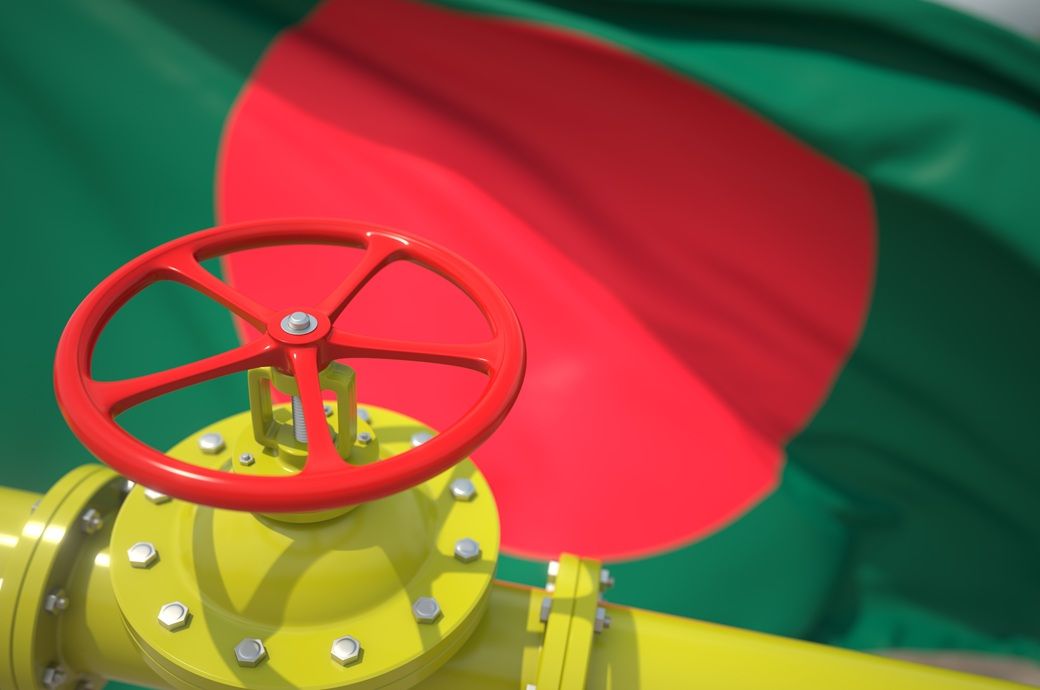
Bangladesh’s power, energy and mineral resources division has simplified the industrial gas distribution system, allowing factories within the same premises and ownership to transfer unused gas load with approval from the relevant gas company.
The aim is to improve service amid rising demand.
Industrial units can rearrange or replace gas equipment keeping the approved hourly load unchanged.
Industrial units can rearrange or replace gas equipment keeping the approved hourly load unchanged, according to a circular by the division.
Commissioning work must be carried out by contractors enlisted with the relevant gas company, while no permission from the gas distribution company will be required, the circular noted.
The aim is to improve service amid rising demand.
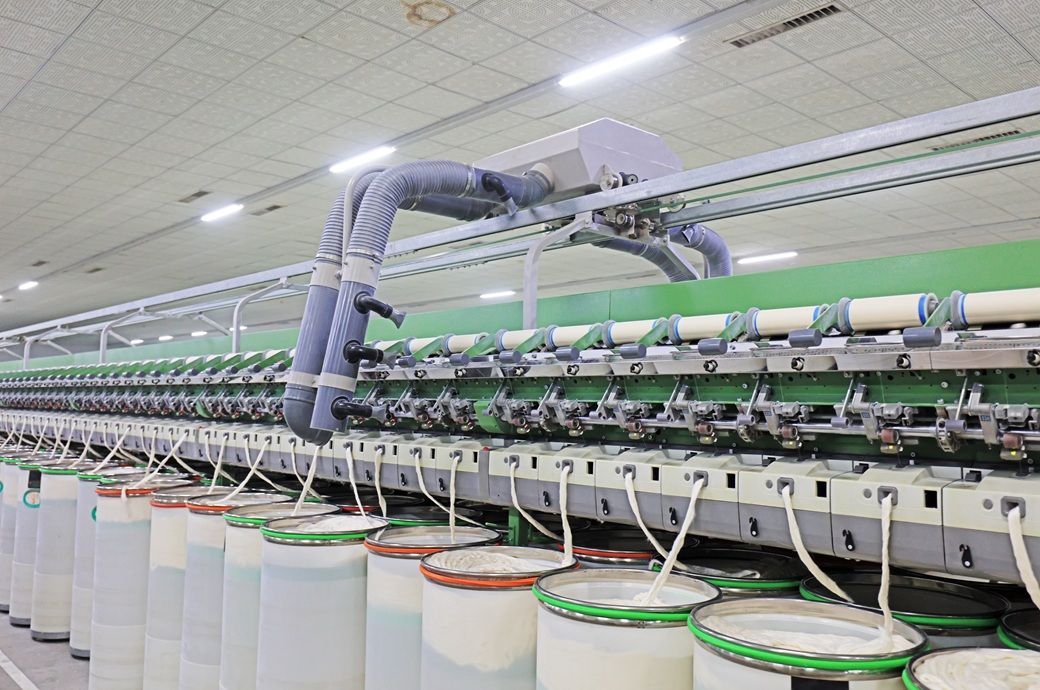
Textile mills lauded the move, saying the reforms would enhance productivity, reduce cost and streamline operations, particularly for energy-intensive textile and garment sectors, according to domestic media reports.
Fibre2Fashion News Desk (DS)
“These significant tariff increases cannot be absorbed by US brands and retailers, as margins are already tight and leave little room to offset such dramatic cost increases. As a result, these added costs would be passed on to consumers, hurting the affordability of clothes and shoes for American families,” Beth Hughes, AAFA vice president for trade and customs policy, wrote in a letter to the ITC.
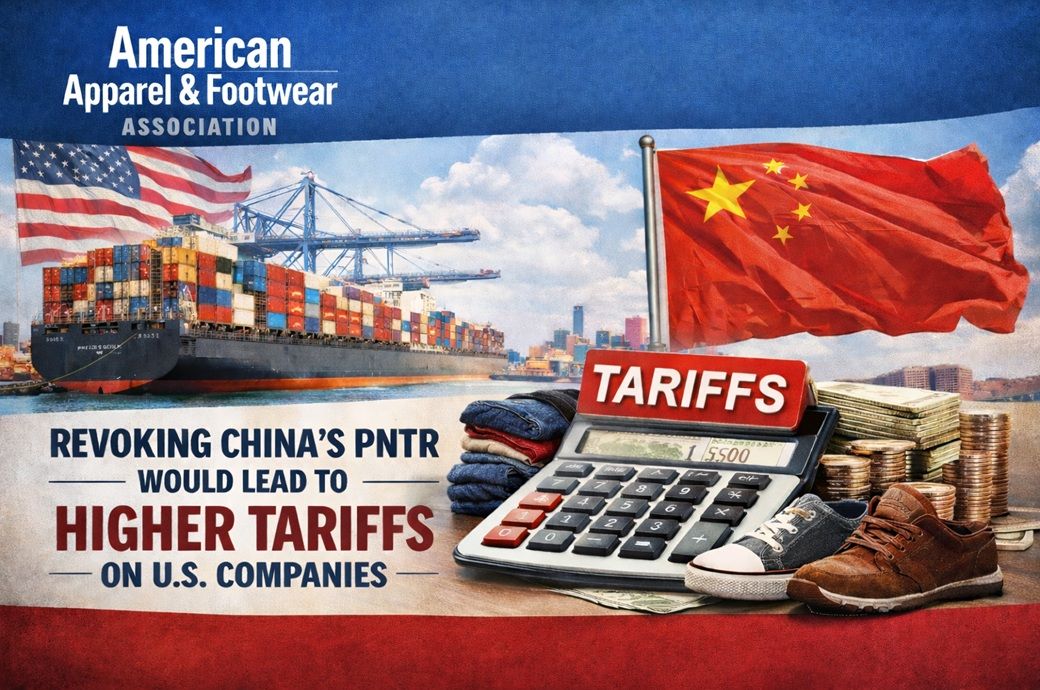
US trade body AAFA has urged the International Trade Commission not to revoke the permanent normal trade relations (PNTR) status granted to China as that would result in higher tariffs borne by US companies.
Higher tariffs on Chinese imports would constrain US firms’ ability to invest in innovation, expand operations and support US job growth, and would risk closing off commercial opportunities in China.
“At the same time, higher tariffs on Chinese imports would constrain US companies’ ability to invest in innovation, expand operations and support American job growth,’ he noted.
AAFA in its letter said that US manufacturers rely on Chinese raw materials and inputs to produce finished goods under ‘Made in USA’ initiatives. Certain textiles are only available from China at the scale required, with no viable alternatives available now.
China remains the largest supplier for the US apparel, footwear and travel goods industry, accounting for 27.26 per cent of apparel imports, 47.83 per cent of footwear imports and 36.62 per cent of travel goods imports in 2025.
“Revoking China PNTR would result in higher tariffs borne by US companies significantly raising costs, reducing Americans’ ability to purchase affordable clothing, footwear and travel goods, while straining limited US and global manufacturing capacity that cannot readily replace these imports and provoking potential retaliatory measures that could further harm US companies,” the letter read.
Many small businesses and employers may not be in a position to absorb those costs, it observed.
While these additionally costs might ultimately be manageable—by being passed along over time or addressed through other mitigation measures, including alternative sourcing—those measures take time and also involve costs, it said.
An entire class of companies would be eliminated by the existential nature of such high tariff costs.
China’s pattern of retaliation suggests that any US move to revoke PNTR would likely be met with swift and proportional countermeasures, the letter noted.
As China a major market for American goods, the loss of PNTR would not only raise prices and disrupt supply chains, but also risk closing off commercial opportunities in China, it added.
Fibre2Fashion News Desk (DS)
Ready-made garments remained the largest contributor, rising 2.9 per cent from ₹1,35,427.6 crore to ₹1,39,349.6 crore. Cotton yarn, fabrics, made ups and handloom products recorded marginal growth of 0.4 per cent, increasing from ₹1,02,002.8 crore to ₹1,02,399.7 crore. Man-made yarn, fabrics and made ups posted a stronger rise of 3.6 per cent, reaching ₹42,687.8 crore from ₹41,196.0 crore.
India’s textile exports grew 2.1 per cent to ₹3.16 lakh crore in FY26, led by garments and man-made textiles.
Growth across 120+ markets and policy support through export schemes and free trade agreements boosted performance.
Improved market access and diversification are expected to strengthen exports, investment and global value chain integration.
Among value-added segments, handicrafts excluding handmade carpets recorded the highest growth of 6.1 per cent, increasing from ₹14,945.5 crore to ₹15,855.1 crore.
Exports expanded across more than 120 destinations between April 2025 and February 2026, indicating broad-based geographical growth. Notable gains were seen in the United Arab Emirates (22.3 per cent), United Kingdom (7.8 per cent), Germany (9.9 per cent), Spain (15.5 per cent), Japan (20.6 per cent), Egypt (38.3 per cent), Nigeria (21.4 per cent), Senegal (54.4 per cent) and Sudan (205.6 per cent).
Government support through schemes like RoSCTL (Rebate of State and Central Taxes and Levies) and RoDTEP (Remission of Duties and Taxes on Exported Products) also helped exporters.
India’s free trade agreements (FTAs) also progressed significantly during FY 2025-26.
The India-UK Comprehensive Economic and Trade Agreement was signed in July 2025, followed by the India-Trade and Economic Partnership Agreement entering into force on October 1, 2025, the India-Oman Comprehensive Economic Partnership Agreement in December 2025, the India-New Zealand FTA announcement on December 22, 2025, and the India-EU FTA conclusion on January 27, 2026.
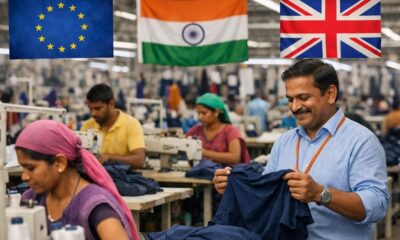
These developments are expected to enhance preferential market access, reduce tariff barriers, support supply-chain integration, and create new opportunities for textiles, apparel, handicrafts and technical textiles, strengthening exports, investment, technology partnerships and India’s integration into global value chains.
Fibre2Fashion News Desk (CG)


High street drug dealer sells cannabis to undercover reporter

Clearing Hormuz Strait mines could take six months: report

Mike Vrabel to miss Patriots’ final NFL draft day —here’s why

-

 Fashion1 week ago
France’s LVMH Q1 revenue falls 6%, shows resilience amid Iran war
-

 Entertainment1 week ago
Is Claude down? Here’s why users are seeing errors
-

 Tech1 week ago
The Deepfake Nudes Crisis in Schools Is Much Worse Than You Thought
-

 Sports1 week ago
PSL 11: Peshawar Zalmi win toss, opt to field first against Quetta Gladiators
-

 Tech1 week ago
Human-machine teaming dives underwater
-

 Fashion1 week ago
What no one is saying about the 2026 apparel slowdown
-
 Business1 week ago
Standard Life buys rival in £2b deal to create savings giant
-
 Business1 week ago
BP sees ‘exceptional’ oil trading result as Iran war sends crude costs soaring