

Tech
TAG Heuer Has Dropped New Polylight-Powered F1s

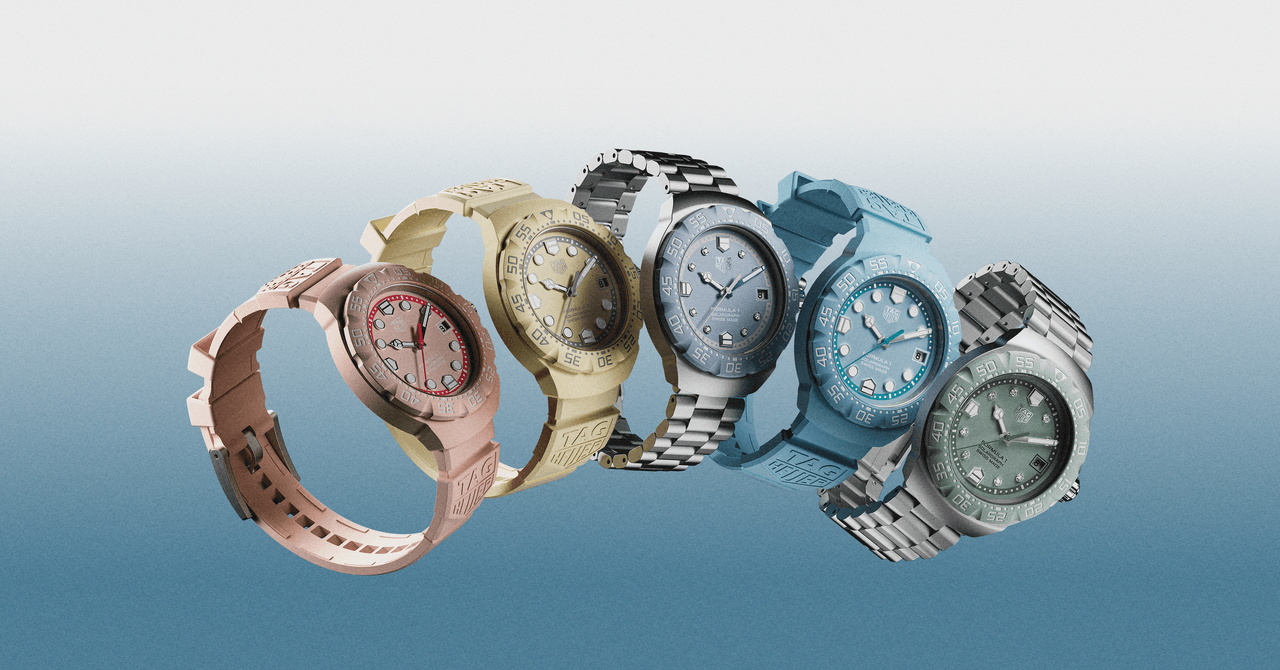
No doubt looking to find some breathing space after the hubbub of Watches and Wonders last week, TAG Heuer has dropped an update to its 2025 revamped collection of the brand’s iconic plastic-cased 1980s watch, the “Formula 1.”
The five new pieces are called the “pastel collection” by TAG, and all are built on the same solar-powered Formula 1 Solargraph 38 mm that launched in March last year. Two models feature a sandblasted stainless steel case, while the remaining three have cases made from TAG’s proprietary bio-polamide plastic, Polylight.
It’s these Polylight versions that, for WIRED, are the stars of the new mini collection. Coming in pastel blue, beige, and pink, and sporting case-matching rubber straps and bidirectional-rotating Polylight bezels, they reference classic F1 designs that made the line iconic in the first place.

The stainless steel models have a 3-link sandblasted steel bracelet and either a “pastel green” or “lavender blue” dial with matching Polylight bezels. The dials on both watches also see eight diamonds replace the circular hour markers. TAG says these models add “a touch of refinement for those seeking sophistication,” but considering these “luxury” F1s will retail at $2,800, as opposed to the already punchy $1,950 full Polylight versions, our pick is most definitely the plastic pieces.
Not only do these blue, beige, and pink versions pleasingly hark back to vintage F1 designs—though now 38 mm in size instead of the original 35 mm—but also, just like all F1 Solargraphs, they come equipped with screw-down crowns and casebacks, making for 100 meters of water resistance and ensuring these will serve well as dive and sports watches. My recommendation? Go for the pink, it looks superb on the wrist. The beige is a very close second.











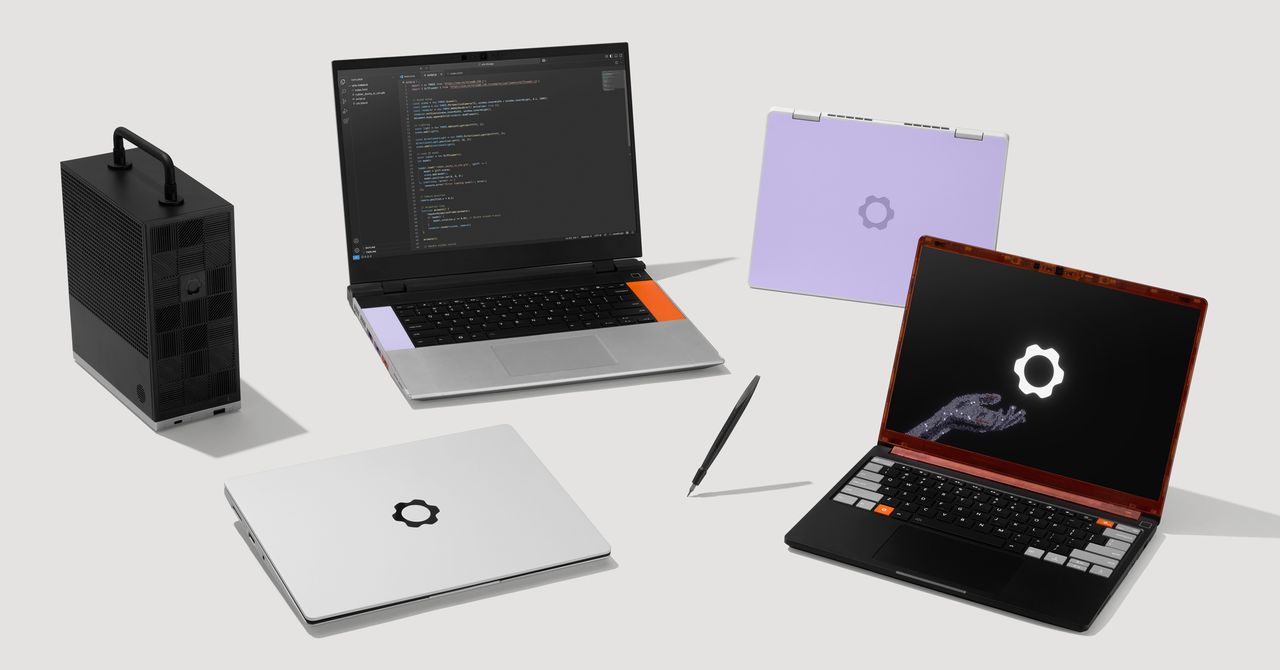
Framework, the company that makes laptops designed for optimal repairability, announced a new version of its main product, a 13-inch screen laptop. It’s called the Framework Laptop 13 Pro, and it has far better battery life, a touchscreen, a haptic touchpad, and is fitted with Intel processors.
At an event in San Francisco today, Framework CEO Nirav Patel showed off the company’s new tech, opening with a joke about making Framework AI—something the company is very much not doing. Framework’s whole thing, after all, is aiming to give users control over the physical tech they use.
“That industry is fighting for you to own nothing, and they own everything,” Patel said about the AI industry. “We’re fighting for a future where you can own everything and be free.”
Framework used the event to detail other updates coming to its 16-inch laptop. It also showed off previews of an official developer kit and a wireless keyboard for controlling your rig from the couch.
Framework 13 Pro
As the name implies, the 13 Pro is a step up from the company’s last version, the Framework 13. It’s also pricier, starting at $1,199 for a DIY Edition that requires assembling the computer yourself. Pre-built units start at $1,499 but can be upgraded with more features. Framework says it will start shipping the 13 Pro in June.
Framework’s signature move for its products is the ability to take the thing apart. The 13 Pro is made with that ethos in mind, so its parts can be easily swapped out, upgraded, or replaced. Four Thunderbolt 4 interfaces let you pick which ports (USB-C, HDMI, etc.) you want and then choose where to place them. Framework says it planned the laptop with cross-generation compatibility in mind, so current Framebook 13 laptop owners will be able to use new 13 Pro parts like the mainboard, display, and battery, and put them into their existing machine.
The big changes in the guts of the 13 Pro come from Framework’s shift away from using an AMD processor to Intel’s Core Ultra Series 3 processors, which Framework described in its press release as “just insanely efficient.” That efficiency, along with a bigger battery, translates to more than 20 hours of battery life while streaming 4K Netflix videos, at least that’s the claim. That’s almost 12 hours longer than the Framework 13.

Courtesy of Framework

Courtesy of Framework
OpenAI launched a new image generation AI model on Tuesday, dubbed ChatGPT Images 2.0. This model can generate more than one image from a single prompt, like an entire study booklet, as well as output text, including in non-English languages, like Chinese and Hindi. This release is available globally for ChatGPT and Codex users, with a more powerful version available for paying subscribers.
When any major AI company releases a new image model, it can revive interest and boost usage, especially if social media users adopt a meme-able trend, transforming images of themselves. Last year, Google’s launch of the Nano Banana model was a major moment for the company, especially when users started posting hyperrealistic figurines of themselves online. Earlier this year, ChatGPT Images made waves on social media as users shared AI-generated caricatures.
What’s Different?
Since the new model can tap into ChatGPT’s “reasoning” capabilities, Images 2.0 can search the internet for recent information and generate more than one image at a time. In essence, the bot can use additional steps to output more thorough generations from a single prompt. Images 2.0 also has a more recent knowledge cutoff date: December 2025.
This also means that outputs from the new model are more granular. For example, I generated an infographic with San Francisco’s weather forecast for the next day, as well as activities worth doing. The image ChatGPT generated included accurate weather details for the rainy day, along with accurate-looking drawings of the Ferry Building, Castro Theater, Painted Ladies houses, and Transamerica Pyramid.
Additionally, Images 2.0 is more customizable for users who want unique aspect ratios for image outputs. The new model can generate images, ranging from 3:1 wide to 1:3 tall, and users can adjust the image’s size as part of their prompt to the AI tool.
First Impressions
After a few hours of generating images with the new model, I was generally impressed with the text rendering capabilities, in English at least. Not that long ago, image outputs featuring text, from any of the major models, often included numerous malformed characters or words with errant extra letters. ChatGPT struggled to label images accurately two years prior, so the cleaner, more complex outputs from Images 2.0 are a sign of continued improvement. Google has also focused on improving image outputs featuring text in its recent iterations of Nano Banana.

Tech
Nation states responsible for ‘nationally significant’ cyber attacks against UK, says NCSC chief | Computer Weekly

The UK is facing a “perfect storm” in cyber security as attacks driven by hostile states, combined with advances in artificial intelligence (AI), create new risks to UK infrastructure, the head of the UK’s National Cyber Security Centre (NCSC) will warn on Tuesday.
Hostile nation states are now directly or indirectly responsible for the majority of “nationally significant” cyber security attacks against the UK, running at an average of four per week, Richard Horne, CEO of the NCSC, is expected to say.
A combination of technological change and rising geopolitical tension is creating “tumultuous uncertainty”, as well as opportunities in cyber security, he is expected to say at the NCSC’s CyberUK conference in Glasgow.
Lessons from the battlefield
Russia is taking cyber lessons learned during the war in Ukraine and is deploying “tactics and techniques honed in conflict” against western states, including the UK, Horne will tell conference attendees.
That has led to sustained “hybrid” attacks, which incorporate physical and cyber disruption, targeting the UK and Europe.
“Russia is taking the cyber lessons it has learnt in a theatre of war and is moving them beyond the battlefield,” he will say.
China’s intelligence and military agencies are capable of an “eye-watering level of sophistication” in offensive cyber operations.
The Chinese hacking group Volt Typhoon has targeted multiple operators of critical national infrastructure (CNI) in Asia and across the US, as it pre-positions for future attacks, which could rank among the most severe experienced to date, Computer Weekly has previously reported.
And Iran is “almost certainly” using cyber activity to support the repression of people in Britain who are seen as threats to the Iranian regime.
Iranian state-linked hackers were also identified as being behind the cyber attack on the US medical technology firm, Stryker, in March.
Cyber is an integral part of conflict
Horne is expected to warn that cyber attacks are now an integral part of conflict, and as much a part of modern warfare as drones and missiles.
Groups linked to Russian military and intelligence services were behind a series of cyber attacks on Poland’s energy infrastructure in December 2025, for example.
They targeted two combined heat and power plants and an energy management system for renewable energy.
Cyber security has become “integral to conflict” and will become a new “home front”, Horne is expected to say.
Ransomware without the ransom
In the event of conflict, or near conflict, the UK would likely face cyber attacks “at scale” that would cause similar disruption to ransomware attacks, but without the possibility of recovering data by paying a ransom.
Ransomware attacks on Jaguar Land Rover cost the UK an estimated £1.9bn, while attacks on Marks & Spencer and the Co-op had estimated costs of between £270m and £440m, according to the UK Cyber Monitoring Centre.
Horne will say that defending against such attacks will require every organisation to make cyber security part of their corporate mission and to “build defence in-depth” so that they can remain operational following a successful attack.
Risks from Mythos and frontier AI
Anthropic’s AI model, Mythos, has exposed widespread security vulnerabilities in legacy software that could be exploited by malicious attackers if they became known.
Horne will warn that such “frontier AI” will quickly show where the fundamentals of cyber security need to be addressed.
It will expose poor quality code shipped by software suppliers with significant vulnerabilities, organisations that are not patching their IT systems quickly or widely enough, and those that fail to replace outdated legacy computer systems.
But Horne is expected to argue that there is an opportunity for AI to be a net positive for cyber defence.
Cyber security in space
In the near future, organisations will need to expand cyber security to protect energy systems, production lines, robotics, space-based communications and autonomous AI agents.
Technology that is physically integrated into the human body, including medical devices, will also need to be protected.
Defending against cyber attacks requires a “cultural shift”, and for cyber security and resilience to be seen as a strategic investment, rather than a cost.


Duke lands John Blackwell, top guard in transfer portal

Museum heist mystery ends as Romania’s 2,500-year-old Golden Helmet returns home

Ranking the Top 20 Players in the Men’s College Basketball Transfer Portal

-

 Fashion6 days ago
France’s LVMH Q1 revenue falls 6%, shows resilience amid Iran war
-

 Sports1 week ago
The case for Man United’s Fernandes as Premier League’s best
-

 Entertainment1 week ago
Palace left in shock as Prince William cancels grand ceremony
-
 Business1 week ago
UK could adopt EU single market rules under new legislation
-

 Entertainment6 days ago
Is Claude down? Here’s why users are seeing errors
-

 Fashion1 week ago
Energy emerges as biggest cost driver in textile margins
-
 Business1 week ago
Delta Air Lines unveils first new Delta One suite in premium cabin arms race
-

 Fashion1 week ago
Asia claims largest share of markets on Kearney FDI Confidence Index