Connect with us

Business

India can lift exports to Russia from $5 bn to $35 bn! Why a modern rupee-rouble settlement system is needed – explained – The Times of India


Published

on

India can lift exports to Russia from  bn to  bn! Why a modern rupee-rouble settlement system is needed – explained – The Times of India


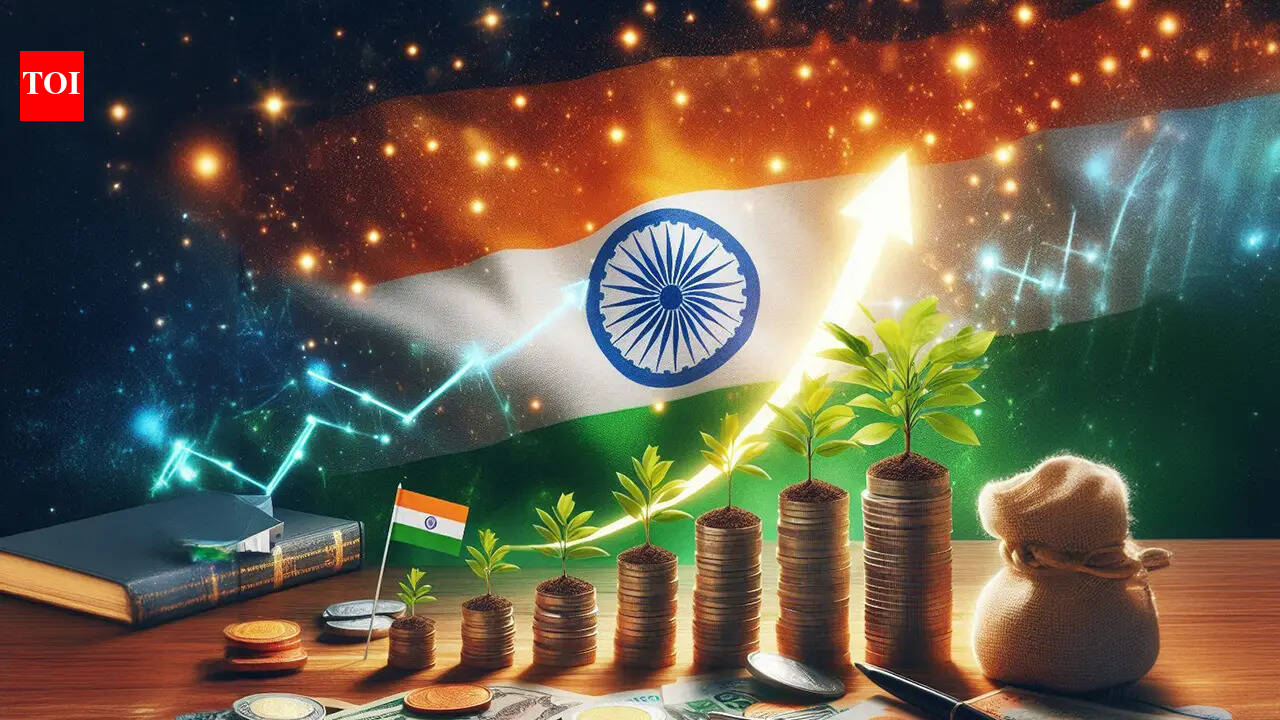
India has the potential to increase its merchandise exports to Russia seven-fold—from $5 billion to $35 billion by 2030—if it secures market access in food, pharmaceuticals, textiles and machinery, according to Global Trade and Research Initiative (GTRI) founder Ajay Srivastava. The report comes as President Vladimir Putin visits Delhi and as Moscow reiterates its goal of lifting bilateral trade to $100 billion by the end of the decade.Although total trade is now approaching $70 billion, India’s exports remain stuck below $5 billion, while imports—dominated by crude oil—continue to surge. In FY2025, India exported $4.9 billion worth of goods to Russia but imported $63.8 billion, leaving a $58.9 billion trade deficit. Crude oil alone accounted for $50.3 billion, underlining how bilateral commerce has become “an oil-heavy relationship rather than a balanced partnership,” as Srivastava noted.Where India is missing the Russian marketGTRI mapped sectors where Russia is a major global importer, India is a major global exporter, but India’s market share in Russia is below 5%.In 2024, Russia imported $202.6 billion worth of goods, but Indian shipments accounted for just $4.84 billion—a 2.4% share.The widest gaps appear in food and agriculture. Russia imported $4.34bn of fruits and nuts, $1.62bn of oilseeds, $1.21bn of edible oils, $889m of meat and $518m of dairy. India’s combined exports across these categories were under $250 million—despite being a major global exporter of meat ($3.95bn), oilseeds ($2.17bn) and fruits ($1.67bn).Processed food mirrors the same imbalance. Russia spent $689m on cereal-based preparations and $1.15bn on processed fruit and vegetables; India sold just $0.6m and $42.7m respectively. Tobacco imports stood at $966m, while India contributed $37.5m.Fast-moving consumer goods and chemicals show a similar gap. Russia imported $3.13bn of perfumery and essential oils and $1.07bn of soaps and detergents, but India exported only $21.8m and $29.1m. In inorganic chemicals, Russia imported $5bn, while India shipped $219m.Pharmaceuticals—India’s strongest globally—are also under-represented. Russia imported $11.8bn of medicines, while India exported $413.5m, a 3.5% share despite being a $23bn-plus global pharma supplier.Textiles and apparel present even sharper gaps. Russia imported $730m of man-made filaments, $566m of fibres and $740m of knitted fabrics—but India exported $25.6m, $9m and zero respectively. In clothing, Russia imported $3.65bn of knitwear and $3.03bn of woven garments; India supplied just $24m and $76m.Engineering and manufacturing display breadth without depth. Russia imported $3bn of iron and steel and $3.5bn of fabricated metal products. India exported $140m and $76m. In industrial machinery, Russia imported $37bn, while India supplied $1.1bn. Electrical equipment imports were $20.5bn, but Indian exports were $424m. In optical and medical instruments, Russia bought nearly $7bn, while India exported $130m.The gap is widest in consumer industries. Russia imported $29bn of vehicles, but India exported just $45m. In furniture, Russia imported $2.3bn, while India sent less than $4m. Toys and sports goods saw Russian imports of $1.9bn, while India exported $6m.Why exports are stuck: the payments problemGTRI stresses that the absence of a predictable, efficient payment system is the single biggest barrier to Indian exporters. With Russian banks cut off from SWIFT, transactions have become slow, costly, and uncertain, limiting exporters’ willingness to enter the market.“Without a modern rupee–rouble settlement system, Russia may remain India’s largest oil supplier—but not a serious export market,” Srivastava noted.In the Soviet era, India and the USSR used a fixed rupee–rouble mechanism where trade was settled at a pre-agreed exchange rate, bypassing dollar dependence. A modern equivalent, the report argues, is essential to:

  • reduce currency and settlement risks
  • restore predictability to payments
  • encourage long-term contracts
  • allow SMEs to enter the Russian market
  • expand sectoral trade beyond hydrocarbons

Alongside currency reform, the report calls for sector-specific buyer–seller meets, dedicated trade missions, and institutional support to push Indian goods into Russian supermarkets, factories and distribution networks.What India must build to reach $35bnTo deepen its foothold in a $202bn Russian import market, India needs a multi-pronged approach. This includes:

  • a reliable local-currency settlement system
  • stronger logistics and certification frameworks
  • targeted trade promotion for food, pharma and textiles
  • institutional mechanisms to support exporters navigating compliance, payments and distribution challenges

If these structural reforms are implemented, GTRI estimates India can lift exports from $5bn to $35bn by 2030, dramatically narrowing the trade deficit and expanding India’s economic footprint in Eurasia.





Source link

Business

The regulatory path ahead for a Netflix and Warner Bros. deal could get dicey

Published

on

The regulatory path ahead for a Netflix and Warner Bros. deal could get dicey


Logos of Netlfix and Warner Bros.

Reuters

The Netflix and Warner Bros. Discovery deal came together quickly — but its path to regulatory approval may not be so speedy.

Netflix stunned the media industry on Friday when it announced its proposed $72 billion deal to acquire the iconic Warner Bros. film studio and streaming service HBO Max. The combination brings together two of the most popular streaming platforms in the business. Netflix reported 300 million global subscribers as of late 2024, the last time it reported the metric. HBO Max had 128 million customers as of Sept. 30.

Netflix currently claims 46% of mobile app monthly active users in global streaming, according to data from market intelligence firm Sensor Tower. Combined with HBO Max, that share would rise to 56%, it found.

“This deal cements Netflix’s position as the premier streaming service for original content,” according to a research note from analysts at William Blair on Friday.

The size of the deal makes it ripe for scrutiny, from both industry insiders and U.S. lawmakers.

The Trump administration is viewing the merger with “heavy skepticism,” CNBC reported Friday, and Sen. Elizabeth Warren has already called for an antitrust review.

“This deal looks like an anti-monopoly nightmare. A Netflix-Warner Bros. would create one massive media giant with control of close to half of the streaming market — threatening to force Americans into higher subscription prices and fewer choices over what and how they watch, while putting American workers at risk,” Warren, a Democrat from Massachusetts, said in a statement.

The merger would also give Netflix control over the famed Warner Bros. film studio, further consolidating the cinematic space and raising concerns that the number or typical windowing of popular releases could shrink.

It’s typical in the days and weeks following a deal announcement of this scale for interest groups, politicians and corporate competitors to call foul on antitrust grounds.

The Department of Justice is most likely to review the deal, as it has other media mergers in the past, and it could take some time. DOJ reviews can take anywhere from months to more than a year.

Netflix said Friday it expects the transaction to close in 12 to 18 months, after Warner Bros. Discovery spins out its portfolio of cable networks into Discovery Global.

Netflix confidence

Ted Sarandos, co-chief executive officer of Netflix , attends the annual Allen & Co. Media and Technology Conference in Sun Valley, Idaho on July 11th, 2025.

David A. Grogan | CNBC

Netflix executives on Friday said they were “highly confident” the deal would win regulatory approval.

“You know, this deal is pro-consumer, pro-innovation, pro-worker, it’s pro-creator, it’s pro-growth,” Netflix co-CEO Ted Sarandos said during an investor call following the acquisition announcement.

“Our plans here are to work really closely with all the appropriate governments and regulators, but [we’re] really confident that we’re going to get all the necessary approvals that we need,” Sarandos added.

As part of the deal, Netflix has agreed to pay a $5.8 billion breakup fee to Warner Bros. Discovery if the deal were to get blocked by the government.

Netflix’s bid won out over competing offers from Paramount Skydance and Comcast.

Analysts at Deutsche Bank and William Blair were at least minimally convinced Friday of the potential for the deal to go through.

“A merger of Warner Bros. Discovery and any of the three bidders would probably succeed, even if the DOJ were to sue to block a proposed combination,” Deutsche Bank analysts wrote in a note on Friday, citing insights from a Department of Justice veteran who the analysts said “does not see any significant antitrust problems with any of the three scenarios.”

“However … we don’t know all of the detailed facts that will be collected and analyzed by the DOJ, nor do we know who the judge hearing the case will be, and both of these factors can have an impact on the outcome,” the Deutsche Bank analysts noted.

Paramount, for its part, has been fanning the flames.

Paramount’s lawyers sent a letter to Warner Bros. Discovery this week, first reported by CNBC, in which it argued the sale process had been rigged in Netflix’s direction. The Wall Street Journal reported that in a separate letter, Paramount said a Netflix transaction would likely “never close” because of regulatory headwinds.

Paramount was the only bidder looking to buy WBD’s massive portfolio of pay-TV networks — and it’s unlikely to walk away from the process quietly.

Not so fast

Oracle co-founder, CTO and Executive Chairman Larry Ellison (C), U.S. President Donald Trump, OpenAI CEO Sam Altman (R), and SoftBank CEO Masayoshi Son (2nd-R), share a laugh as Ellison uses a stool to stand on as he speaks during a news conference in the Roosevelt Room of the White House on January 21, 2025 in Washington, DC. Trump announced an investment in artificial intelligence (AI) infrastructure and took questions on a range of topics including his presidential pardons of Jan. 6 defendants, the war in Ukraine, cryptocurrencies and other topics.

Andrew Harnik | Getty Images

Wall Street expected President Donald Trump’s second term to usher in a windfall of dealmaking. However, economic uncertainty has slowed the process for some companies, and regulatory holdups have played a bigger role than anticipated.

“Under Donald Trump, the antitrust review process has also become a cesspool of political favoritism and corruption,” Warren said in Friday’s statement. “The Justice Department must enforce our nation’s anti-monopoly laws fairly and transparently — not use the Warner Bros. deal review to invite influence-peddling and bribery.”

Paramount’s merger with Skydance was left in limbo for more than a year before it finally won federal approval in July.

The Federal Communications Commission (which is unlikely to review the Netflix-WBD tie-up since it doesn’t involve a broadcaster) signed off on the $8 billion merger shortly after Paramount agreed to pay $16 million to Trump to settle a lawsuit over the editing of a “60 Minutes” interview with former Vice President Kamala Harris. Paramount had also ended its diversity, equity and inclusion policies earlier in the year after the FCC said it would investigate the company over its DEI programs.

In September, the newly combined Paramount Skydance, run by David Ellison, set its sights on Warner Bros. Discovery. The company is now considering whether to take a hostile bid straight to WBD shareholders and try to unseat Netflix as the would-be buyer, CNBC reported Friday.

Ellison’s billionaire father, Oracle co-founder Larry Ellison, is known to be close with Trump.

The argument for whether to clear Netflix’s proposed takeover of Warner Bros. would likely come down to questions around streaming — first, on pricing for consumers, and second, on how to define Netflix’s audience.

The pricing of streaming subscriptions has risen across the board in recent years. In 2022 Netflix instituted a cheaper, ad-supported model after years of resistance in an effort to beckon more customers. The following year, Disney followed with its own more-affordable plan.

Netflix is used to upending the legacy media industry. The company ended its DVD rentals business in 2023 and went all in on streaming. It’s since found massive scale and has taken over the zeitgeist with original series like “Squid Game,” “Wednesday,” “Stranger Things,” and “Bridgerton.”

Its maverick approach to media and its broadening foothold in the industry may be its saving grace in the eyes of regulators.

“My expectation on the regulatory side is Netflix is going to advocate and argue with their advisors for a very expansive definition of what their market is … so that would include broadcast, cable, subscription and ad-supported streaming,” said said Jeff Goldstein, a partner and managing director at AlixPartners, and co-lead of the U.S. Media group.

“And really, really, really importantly, that would include YouTube,” he said.

YouTube has come to dominate the industry when it comes to viewership. Nielsen once again reported in October than YouTube had the largest share of TV usage, with Netflix in sixth place and Warner Bros. Discovery in seventh place. Traditional media companies with linear networks — Disney, NBCUniversal, Fox and Paramount — filled the spots in between.

Critics of the deal will define Netflix’s reach more narrowly to try to demonstrate outsized dominance, said Goldstein.

“I believe that streaming is not a category. Television viewership is a category … you know, eyeballs might be a category,” media industry titan John Malone told CNBC in November when asked about antitrust questions surrounding the WBD sale process.

“But if you’re going to broaden the category to that, you got to take in YouTube and Facebook and the social networks, TikTok,” he said. “I mean, that’s really the question, is streaming a category? … Are studios a category … and is that going to get looked at hard? These regulatory things are a little bit difficult to predict.”

— CNBC’s Julia Boorstin contributed to this report.

Disclosure: Comcast is the parent company of NBCUniversal, which owns CNBC. Versant would become the new parent company of CNBC upon Comcast’s planned spinoff of Versant.


Source link

Continue Reading

Business

David Ellison’s hunt for WBD made David Zaslav richer — and it may not be over

Published

on

David Ellison’s hunt for WBD made David Zaslav richer — and it may not be over


Paramount Skydance CEO David Ellison speaks during the Bloomberg Screentime conference in Los Angeles on October 9, 2025.

Patrick T. Fallon | Afp | Getty Images

This isn’t exactly what David Ellison had planned in September.

Just a few months ago, the Paramount Skydance CEO sent a letter to the Warner Bros. Discovery board of directors arguing a combination of the two media and entertainment companies made sense. That letter was the first of several that offered increasingly higher prices to acquire the company along with arguments of why the assets were better together.

Paramount’s interest spurred a formal sale process — bringing Comcast and Netflix into the mix — which ultimately doubled the value of Warner Bros. Discovery shares and culminated, at least for the moment, in Paramount losing out in the bidding war it started.

On Friday, Netflix announced a deal to acquire HBO Max and the famed Warner Bros. film studio for $27.75 per share, or an equity value of $72 billion. WBD will move forward with a plan to separate out its pay-TV networks, such as CNN and TNT Sports, before the deal closes.

Instead of supercharging Paramount, just months after gaining control of the company through a merger with Skydance, Ellison effectively handed a prized jewel of the media and entertainment industry to its most dominant player, strengthening Netflix’s reach and stripping Paramount and Comcast’s NBCUniversal of an obvious merger target.

“It wasn’t for sale before, and they certainly hadn’t cleaned up the assets or separated the assets in the way they have right now,” said Netflix co-CEO Ted Sarandos in a conference call Friday morning after announcing the deal. “I think that kind of goes to the ‘why now.'”

Ellison jump-started a process that has made a lot of money for Warner Bros. Discovery CEO David Zaslav, WBD’s executive team and its shareholders.

Zaslav’s share

Zaslav currently owns more than 4.2 million shares of Warner Bros. Discovery, with another 6.2 million shares that would be delivered to him in the future via previously granted stock awards, according to Equilar. Zaslav also has a grant of almost 20.9 million options with an exercise price of $10.16, Equilar found.

Based on the Netflix-WBD transaction price of $27.75 per share, all of that adds up to more than $554 million for the WBD CEO.

Factoring in another 4 million shares that Zaslav is set to receive in January, according to a person close to the situation who declined to be named speaking about the executive’s holdings, the true total is closer to $660 million.

For shareholders, the sale process has brought a similar windfall. Warner Bros. Discovery stock closed at $12.54 on Sept. 10, the day before The Wall Street Journal reported Paramount was preparing a bid for the company.

On Friday morning, Warner Bros. Discovery shares were up almost 3% to more than $25 apiece. That’s more than double Warner Bros. Discovery’s unaffected sale process price and a return to 2022 levels when WarnerMedia and Discovery first merged.

That’s vindication for Zaslav, who has spent nearly four years coming under fire from Hollywood and investors for failing to deliver for shareholders. With Friday’s announcement, he’s effectively pulled victory from the jaws of defeat.

And still, Paramount is likely not done with its pursuit of buying all of Warner Bros. Discovery.

Paramount’s hostile play

Ellison has wasted no time at the helm of Paramount Skydance, transforming the company through deals and acquisitions.

Since the merger closed in August, Paramount has brought on C-suite executives and high-profile Hollywood talent such as the Duffer Brothers. It secured the rights to develop a live-action feature film based on Activision’s Call of Duty video game franchise and struck a $7.7 billion deal for UFC rights.

Ellison’s hunt for Warner Bros. Discovery was his biggest endeavor since taking control of the company.

Paramount’s lawyers sent a letter to Warner Bros. Discovery this week, first reported by CNBC, claiming the sale process had been rigged in Netflix’s direction. Paramount has accused Warner Bros. Discovery of failing to properly consider its offer of $30, all-cash, and instead selling to Netflix as a predetermined outcome.

Netflix made an initial bid for WBD’s studio and streaming assets of $27 a share, according to a person familiar with the matter. That trumped Paramount’s offer at the time and turned the trajectory of the sales talks in Netflix’s direction, said the person, who asked not to be named because the discussions were private.

Paramount was the only bidder interested in acquiring all of WBD’s assets — the film studio, streaming service and TV networks. It has maintained that its offer is superior.

Paramount’s executives and advisors valued the Discovery Global networks portfolio at close to $2 a share, based on its predicted trading multiple and estimated leverage ratio, according to people familiar with the matter, who asked not to be named because the discussions were private. Discovery Global would include the CNN, TNT Sports and Discovery channels.

Warner Bros. Discovery believes Discovery Global could have a value of $3 per share or more if it trades well in the public markets, according to other people with direct knowledge of the matter.

Paramount has also argued there are tax efficiencies for shareholders in acquiring the whole company rather than buying only a portion of it, and that Netflix’s bid comes with steeper regulatory risk. The Trump administration’s view of the proposed combination is one of “heavy skepticism,” CNBC reported Friday.

Paramount offered a break-up fee of $5 billion if the proposed deal didn’t get regulatory approval, according to the people familiar.

Netflix’s bid included a $5.8 billion break-up fee in case the deal doesn’t get regulatory approval, according to a Securities and Exchange Commission filing Friday.

Paramount is now weighing its options about whether to go straight to shareholders with one more improved bid — perhaps even higher than the $30-per-share, all-cash offer it submitted to WBD this week.

If it does, Netflix would have a chance to match that bid. The end result would mean even more money for WBD shareholders — and more money for Zaslav.

— CNBC’s Nick Wells contributed to this report.

Disclosure: Comcast is the parent company of NBCUniversal, which owns CNBC. Versant would become the new parent company of CNBC upon Comcast’s planned spinoff of Versant.


Source link

Continue Reading

Business

FPI rulebook revamp: Sebi proposes simplified registrations; clearer KYC rules, unified framework on cards – The Times of India

Published

on

FPI rulebook revamp: Sebi proposes simplified registrations; clearer KYC rules, unified framework on cards – The Times of India


Sebi on Friday proposed a comprehensive overhaul of the Foreign Portfolio Investor (FPI) framework, aiming to streamline registrations and introduce an abridged application option for related funds, even as the regulator seeks to ease compliance for global investors.In a consultation paper, the Securities and Exchange Board of India said the move is intended to enhance ease of doing business by simplifying procedures and creating a more unified rulebook, according to PTI.As part of the revamp, Sebi has suggested a complete update and simplification of the Master Circular for FPIs and designated depository participants (DDPs), consolidating all rules and circulars issued since May 2024 into a single, clearer document.According to the proposals, a simplified registration process is planned for select FPI categories — including funds managed by an investment manager already registered as an FPI, sub-funds of an existing master fund, segregated share classes, and insurance schemes linked to an already registered entity.Such applicants may choose to fill the entire Common Application Form (CAF) or use an abridged version requiring only information unique to the new entity, with the remaining details automatically populated. Custodians would obtain explicit consent to rely on pre-existing information and ensure unchanged details remain accurate.Once the application is submitted, custodians will update the CAF module, while DDPs will issue Sebi-generated registration certificates after verifying eligibility. Sebi has also outlined steps DDPs must follow, including due diligence, clarifications on incomplete forms, PAN verification, and country-of-residence and regulatory status checks.Beyond registration reforms, the updated circular proposes clearer rules on KYC and beneficial-owner identification. It specifies requirements for NRIs, OCIs and resident Indians, while introducing dedicated frameworks for FPIs investing exclusively in government securities, IFSC-based FPIs, banks, insurance entities, pension funds and funds with multiple investment managers.Sebi has also detailed procedures for renewal, surrender, transition and reclassification of registrations, along with uniform compliance and reporting standards for custodians and DDPs.The regulator has sought public comments on the proposals until December 26.


Source link

Continue Reading

Trending