

Business
India can lift exports to Russia from $5 bn to $35 bn! Why a modern rupee-rouble settlement system is needed – explained – The Times of India

India has the potential to increase its merchandise exports to Russia seven-fold—from $5 billion to $35 billion by 2030—if it secures market access in food, pharmaceuticals, textiles and machinery, according to Global Trade and Research Initiative (GTRI) founder Ajay Srivastava. The report comes as President Vladimir Putin visits Delhi and as Moscow reiterates its goal of lifting bilateral trade to $100 billion by the end of the decade.Although total trade is now approaching $70 billion, India’s exports remain stuck below $5 billion, while imports—dominated by crude oil—continue to surge. In FY2025, India exported $4.9 billion worth of goods to Russia but imported $63.8 billion, leaving a $58.9 billion trade deficit. Crude oil alone accounted for $50.3 billion, underlining how bilateral commerce has become “an oil-heavy relationship rather than a balanced partnership,” as Srivastava noted.Where India is missing the Russian marketGTRI mapped sectors where Russia is a major global importer, India is a major global exporter, but India’s market share in Russia is below 5%.In 2024, Russia imported $202.6 billion worth of goods, but Indian shipments accounted for just $4.84 billion—a 2.4% share.The widest gaps appear in food and agriculture. Russia imported $4.34bn of fruits and nuts, $1.62bn of oilseeds, $1.21bn of edible oils, $889m of meat and $518m of dairy. India’s combined exports across these categories were under $250 million—despite being a major global exporter of meat ($3.95bn), oilseeds ($2.17bn) and fruits ($1.67bn).Processed food mirrors the same imbalance. Russia spent $689m on cereal-based preparations and $1.15bn on processed fruit and vegetables; India sold just $0.6m and $42.7m respectively. Tobacco imports stood at $966m, while India contributed $37.5m.Fast-moving consumer goods and chemicals show a similar gap. Russia imported $3.13bn of perfumery and essential oils and $1.07bn of soaps and detergents, but India exported only $21.8m and $29.1m. In inorganic chemicals, Russia imported $5bn, while India shipped $219m.Pharmaceuticals—India’s strongest globally—are also under-represented. Russia imported $11.8bn of medicines, while India exported $413.5m, a 3.5% share despite being a $23bn-plus global pharma supplier.Textiles and apparel present even sharper gaps. Russia imported $730m of man-made filaments, $566m of fibres and $740m of knitted fabrics—but India exported $25.6m, $9m and zero respectively. In clothing, Russia imported $3.65bn of knitwear and $3.03bn of woven garments; India supplied just $24m and $76m.Engineering and manufacturing display breadth without depth. Russia imported $3bn of iron and steel and $3.5bn of fabricated metal products. India exported $140m and $76m. In industrial machinery, Russia imported $37bn, while India supplied $1.1bn. Electrical equipment imports were $20.5bn, but Indian exports were $424m. In optical and medical instruments, Russia bought nearly $7bn, while India exported $130m.The gap is widest in consumer industries. Russia imported $29bn of vehicles, but India exported just $45m. In furniture, Russia imported $2.3bn, while India sent less than $4m. Toys and sports goods saw Russian imports of $1.9bn, while India exported $6m.Why exports are stuck: the payments problemGTRI stresses that the absence of a predictable, efficient payment system is the single biggest barrier to Indian exporters. With Russian banks cut off from SWIFT, transactions have become slow, costly, and uncertain, limiting exporters’ willingness to enter the market.“Without a modern rupee–rouble settlement system, Russia may remain India’s largest oil supplier—but not a serious export market,” Srivastava noted.In the Soviet era, India and the USSR used a fixed rupee–rouble mechanism where trade was settled at a pre-agreed exchange rate, bypassing dollar dependence. A modern equivalent, the report argues, is essential to:
- reduce currency and settlement risks
- restore predictability to payments
- encourage long-term contracts
- allow SMEs to enter the Russian market
- expand sectoral trade beyond hydrocarbons
Alongside currency reform, the report calls for sector-specific buyer–seller meets, dedicated trade missions, and institutional support to push Indian goods into Russian supermarkets, factories and distribution networks.What India must build to reach $35bnTo deepen its foothold in a $202bn Russian import market, India needs a multi-pronged approach. This includes:
- a reliable local-currency settlement system
- stronger logistics and certification frameworks
- targeted trade promotion for food, pharma and textiles
- institutional mechanisms to support exporters navigating compliance, payments and distribution challenges
If these structural reforms are implemented, GTRI estimates India can lift exports from $5bn to $35bn by 2030, dramatically narrowing the trade deficit and expanding India’s economic footprint in Eurasia.

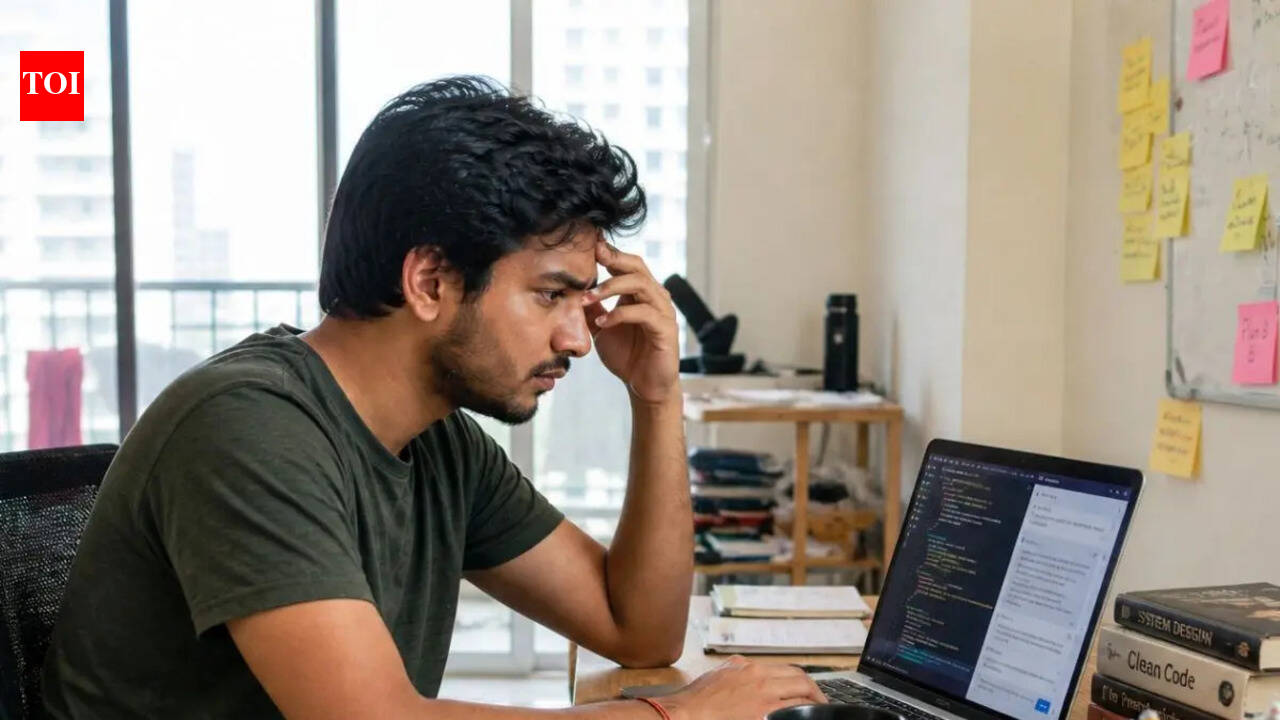
BENGALURU: India’s Gen Z workforce is embracing what experts describe as “portfolio careers” – balancing multiple professional identities and income streams simultaneously. New research from LinkedIn shows that 75% of Gen Z entrepreneurs in India now manage multiple income streams, significantly higher than the 62% among Gen X entrepreneurs. The findings point to a growing preference among younger professionals for flexibility, autonomy and diversified sources of income. “We’re also seeing the rise of the ‘portfolio era’, with more professionals creating multiple income streams and redefining what a career can look like. This shift is making entrepreneurship more accessible than ever before,” said LinkedIn India country manager Kumaresh Pattabiraman.Rather than depending on a single full-time role, many professionals are simultaneously building businesses, freelancing, consulting, creating online content and monetising specialised skills through digital platforms. The trend comes amid a broader rise in entrepreneurial activity in India. LinkedIn recorded a 104% year-on-year increase in members adding “Founder” to their profiles – the highest growth among all global markets.AI is also emerging as a major enabler of this shift. The report found that 85% of Gen Z entrepreneurs consider AI and digital tools important to their business operations.
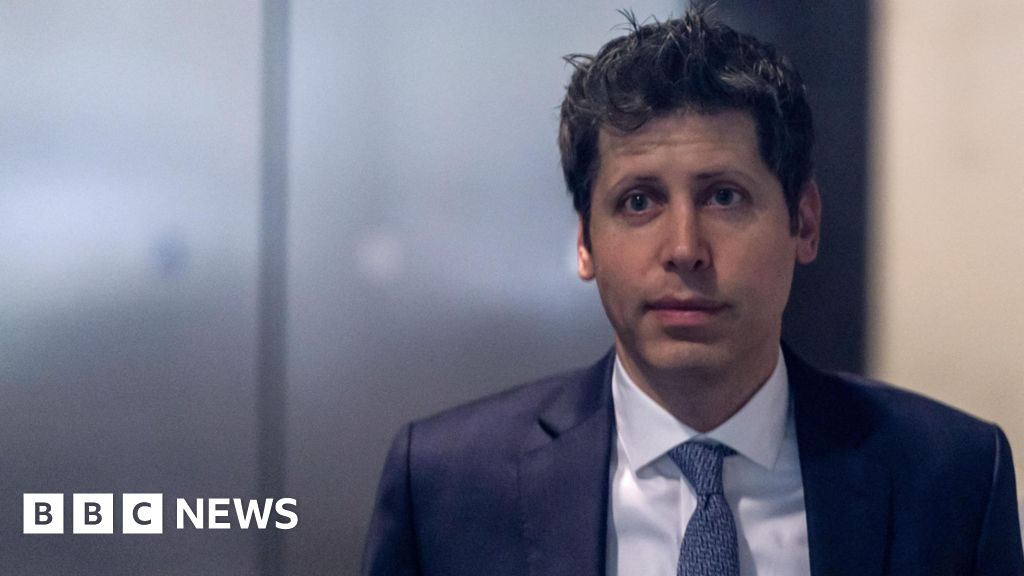
Sam Altman said Elon Musk tried many times for total control of OpenAI, which he’s now suing.
Source link

A United Airlines plane approaches the runway at Denver International Airport on March 23, 2026.
Al Drago | Getty Images
United Airlines flight attendants approved a new five-year labor contract with 31% average raises to base pay by August and other improvements, marking the last of the major carriers with unionized flight crews to reach a deal post-Covid.
The labor deal would give United’s roughly 30,000 flight attendants their first raises in close to six years. The company and the flight attendants’ union reached a preliminary deal in March. Crews had rejected a contract last year.
The union said the contract won 82% approval from the flight attendants, with close to 90% of them voting.
“The contract will immediately change the lives of United Flight Attendants, especially our thousands of new hires who have been hired since the pandemic,” said Ken Diaz, president of the United chapter of the Association of Flight Attendants.
The contract also includes boarding pay, or pay for when the aircraft’s door is open and travelers are getting on. Airlines had for years started flight attendants’ pay clock once the boarding door was closed.
The contract comes with a roughly 7% to 8% increase in compensation and $741 million in back pay, as well as quality-of-life improvements like restrictions on red-eye flights and “sit pay” during disruptions of more than 2½ hours.


South Korea reviews phased support for Strait of Hormuz security efforts

Elon Musk Had ‘Hair-Raising’ Idea of Passing OpenAI On to His Kids, Sam Altman Says

Kim Kardashian faces legal trouble by ‘innocent’ man

-

 Tech1 week ago
DHS Demanded Google Surrender Data on Canadian’s Activity, Location Over Anti-ICE Posts
-
 Business1 week ago
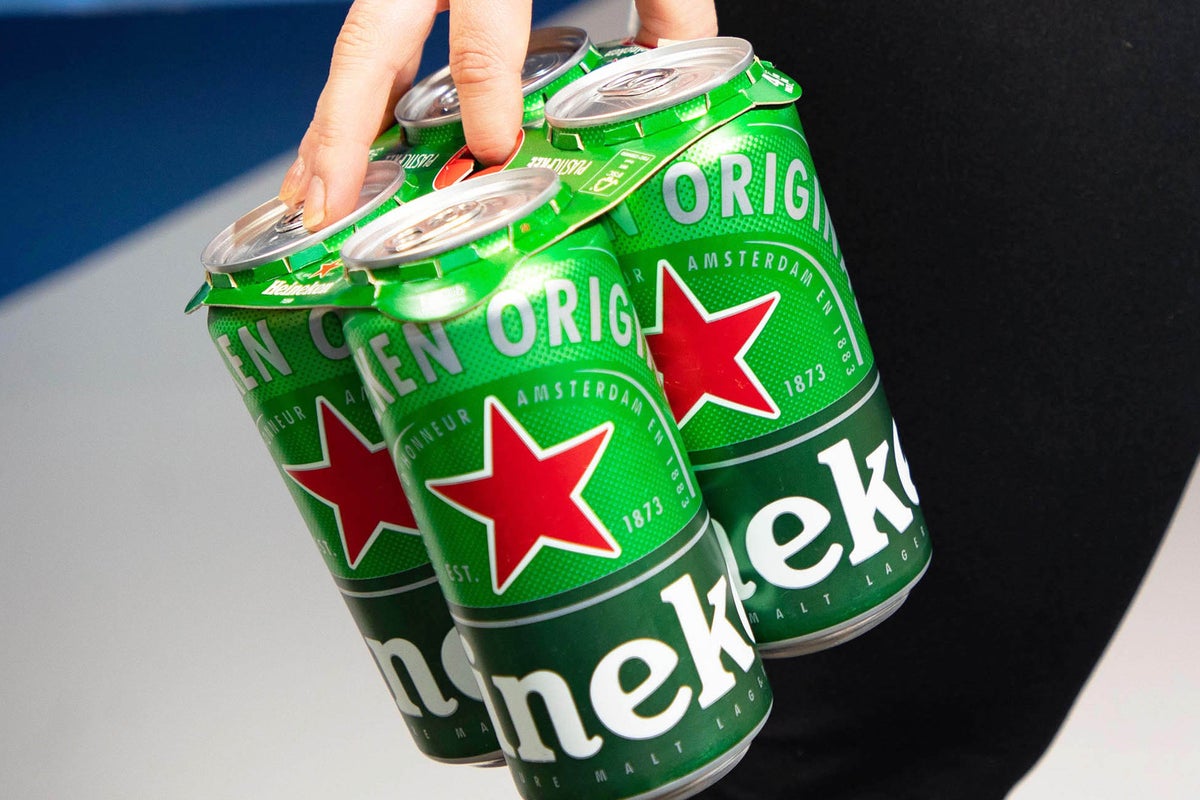
Heineken plans huge investment in hundreds of UK pubs ahead of World Cup
-

 Tech5 days ago
A new frontier: Identity stack evolves for agentic systems | Computer Weekly
-

 Tech4 days ago
‘Orbs,’ ‘Saucers,’ and ‘Flashes’ on the Moon: Pentagon Drops New UFO Files
-
 Business1 week ago
India among most resilient large EMs, better placed for future global shocks; policy reforms & strong buffers help: Moody’s – The Times of India
-
 Fashion5 days ago
New orders in German manufacturing up 5% MoM in Mar 2026: Destatis
-

 Tech5 days ago
What Microsoft Executives Really Thought About OpenAI in 2018
-

 Sports4 days ago
Shaheen Afridi achieves landmark feat during opening Test against Bangladesh