

Business
Elon Musk’s X bans European Commission from making ads after €120m fine

Laura CressTechnology reporter
 Getty Images
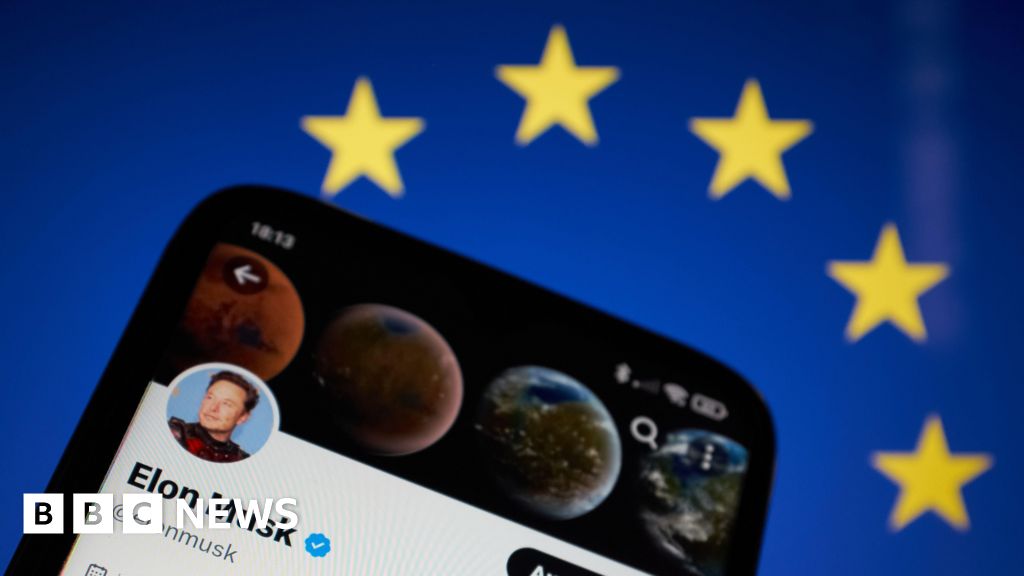
X has blocked the European Commission from making adverts on its platform – a move which comes a few days after it fined Elon Musk’s site €120m (£105m) over its blue tick badges.
Nikita Bier, who has a senior role at the social media site, accused the European Union (EU) regulator of trying to “take advantage” of “an exploit” in its advertising system to promote its post about the fine on Friday.
“It seems you believe that the rules should not apply to your account,” he said. “Your ad account has been terminated.”
A European Commission spokesperson told BBC News the Commission “always uses all social media platforms in good faith”.
X’s fine, issued on Friday, was the first under the EU’s Digital Services Act.
The EU regulator said the platform’s blue tick system was “deceptive” because the firm was not “meaningfully verifying users”.
“This deception exposes users to scams, including impersonation frauds, as well as other forms of manipulation by malicious actors,” it said.
It claimed X was also failing to provide transparency around its adverts, and was not giving researchers access to public data.
The social media platform has been given 60 days to respond to the Commission about concerns surrounding its blue checkmarks, or face extra penalties.
Following the fine, Elon Musk posted on his platform to say the EU “should be abolished”, and retweeted a response from another X user comparing it to fascism.
US Secretary of State Marco Rubio and the Federal Communications Commission (FCC) accused the EU regulator of attacking and censoring US firms, adding, “the days of censoring Americans online are over”.
‘Never been abused like this’
The dispute originated with Mr Bier, who accused the Commission of activating a rarely-used account “to take advantage of an exploit”.
He claimed it had posted a link which itself deceived users – tricking them into thinking it was a video “to artificially increase its reach”.
He said the “exploit”, which had “never been abused like this”, had now been removed.
Ad accounts on X are used by businesses to create and analyse paid advertising campaigns and run “promoted” posts on the site, separate from the users’ X profile.
In response, a European Commission spokesperson told BBC News that it was “simply using the tools that platforms themselves are making available to our corporate accounts”.
“We expect these tools to be fully in line with the platforms’ own terms and conditions, as well as with our legislative framework,” it said.
And it is not the first time there has been disagreement between X and global regulators.
In 2024, Brazil’s Supreme Court lifted a ban on X after it agreed to pay 28 million reais ($5.1m; £3.8m), and blocked accounts accused of spreading misinformation.
The previous year, Australia’s internet safety watchdog fined it A$610,000 ($386,000; £317,360) for failing to cooperate with a probe into anti-child abuse practices.


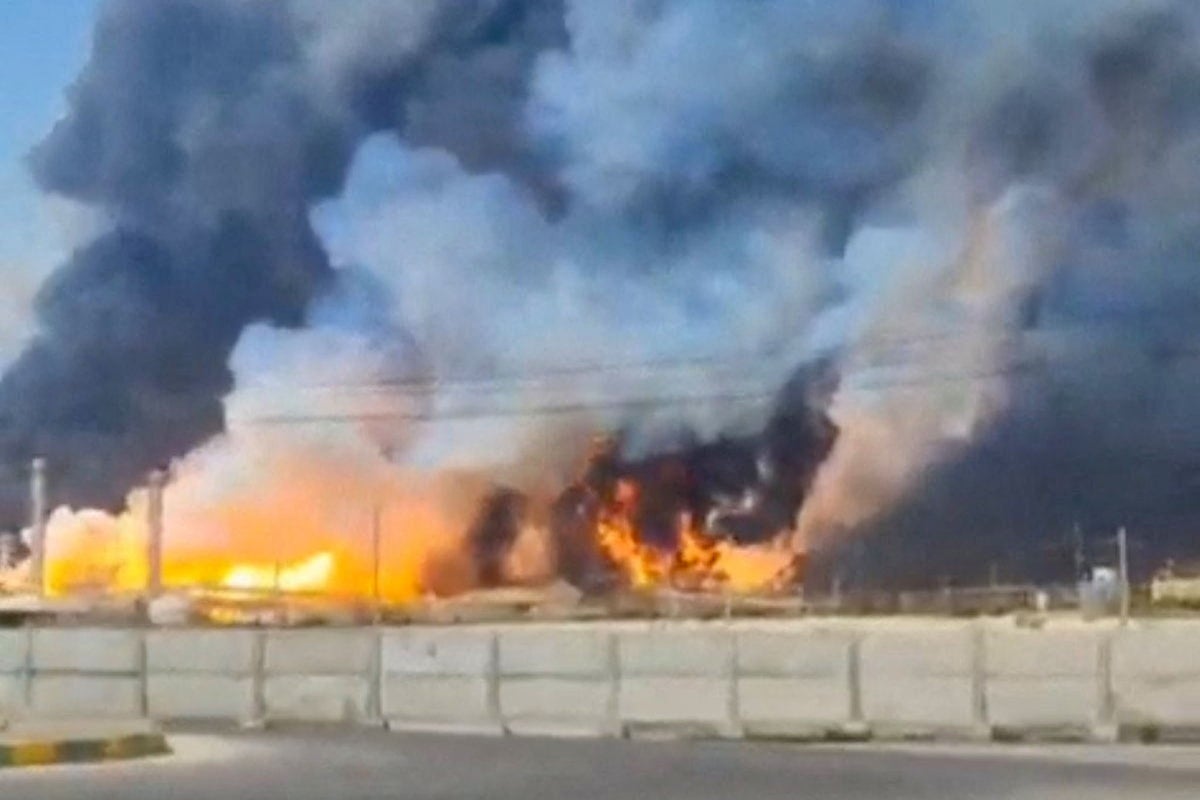
Britain is to “step up” defensive support for Gulf states after Iran attacked energy sites across the region in a “serious escalation” of the war that could push up inflation and interest rates.
The price of Brent crude climbed as high as $119 a barrel and European gas prices briefly surged by 35 per cent after Iran pounded Qatar’s Ras Laffan energy hub and other Middle Eastern oil and gas infrastructure with missiles.
Interest rates were held at 3.75 per cent instead of the previously expected cut, as the Bank of England warned that the war could push inflation as high as 3.5 per cent by July on the back of rising energy bills, and that rates could rise – creating misery for homeowners.
It came as:
- US defence secretary Pete Hegseth said “ungrateful” European allies should be thanking Donald Trump for the war
- Trump claimed he was unaware of Israel’s strike on Iran’s South Pars gas field
- Oman called the US/Israel attacks a “grave miscalculation”
- Europe’s biggest airlines warned of higher fares
Iran’s attacks were in retaliation to an Israeli strike on the vital South Pars gas field, which drew condemnation from the Gulf states as well as Tehran. It was the first attack of the war so far on an energy production facility. Tehran fired missiles at multiple energy sites across the Gulf, including a Saudi oil refinery, Qatari gas facilities and two more oil refineries in Kuwait.
While Sir Keir Starmer and Emmanuel Macron called for de-escalation, President Trump threatened to “massively blow up” the South Pars facility if Iran did not halt its retaliatory attacks, repeating his claim that US forces had “obliterated” Iran’s navy and military, adding that the war was “substantially ahead of schedule”. He denied that plans were being made to send more American troops to the region.
John Healey, the UK defence secretary, said Tehran’s tit-for-tat responses threatened to further destabilise the region and Europe’s economies. He called them a “serious escalation”, adding: “They further destabilise the region and we will step up the defensive support that we can offer to those Gulf states.”
British forces are already deployed to the Middle East, with RAF jets flying defensive sorties against Iranian drones across the Gulf and British air defence systems protecting critical infrastructure in Saudi Arabia. UK military planners have also joined US Central Command to help formulate proposals for opening the Strait of Hormuz, a critical trade route for the world’s oil and gas.But there were signs of growing frustration towards Washington’s war aims in the Gulf states, with Oman’s foreign minister claiming that the conflict was President Trump’s “greatest miscalculation”.
In the most scathing attack on Washington’s foreign policy yet by a Gulf state, Badr Albusaidi said “this is not America’s war” and criticised Mr Trump for supporting Israel. Writing in The Economist, he called on American allies to help extricate it from the conflict, which has continued for a third week despite failing to achieve the US and Israel’s stated aim of instigating regime change in Tehran or stopping its nuclear programme.
Meanwhile, the Bank of England has warned that it may have to put up interest rates if the war continues to drive up inflation and unemployment. Its governor, Andrew Bailey, said the impact was already being felt by consumers as petrol prices surge and that he is “ready to act as necessary to ensure inflation remains on track to meet the 2 per cent target”. That would pave the way for a rate hike as early as the end of April.
Bets on the financial markets suggest a 50/50 chance that Britain will face higher interest rates from next month – and the possibility of two more rises by the end of the year.
Danni Hewson, head of financial analysis at AJ Bell, said: “Markets are now pricing in an almost 50 per cent chance that April’s meeting will see rates rise to 4 per cent with the potential for two additional rate hikes by the end of the year. But no one has a crystal ball. No one knows how long the conflict will last or the amount of damage that could be inflicted on crucial energy infrastructure by the time it ends.”
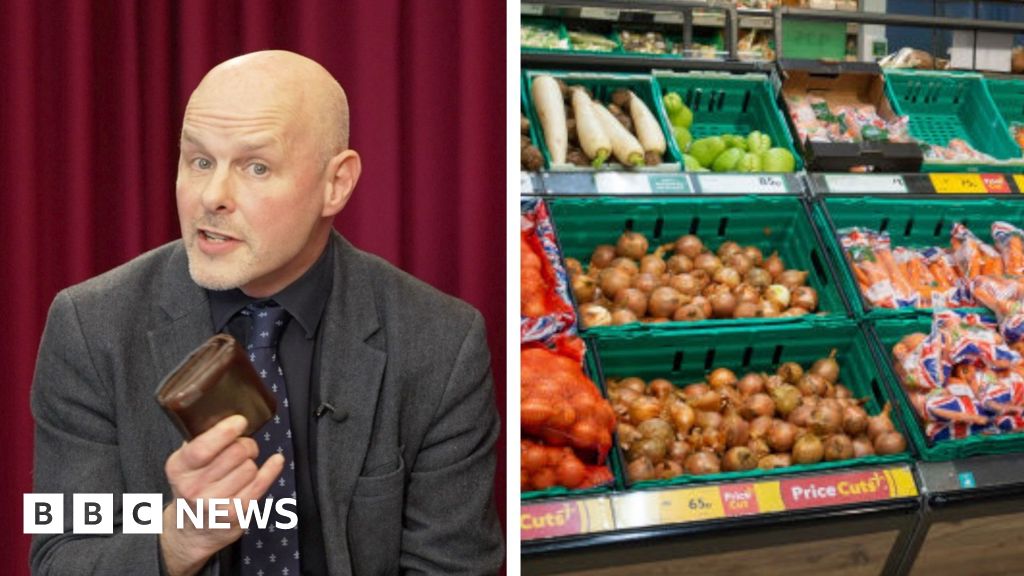
From fuel to mortgages, the BBC looks at how oil and gas prices could push up the cost of living.
Source link
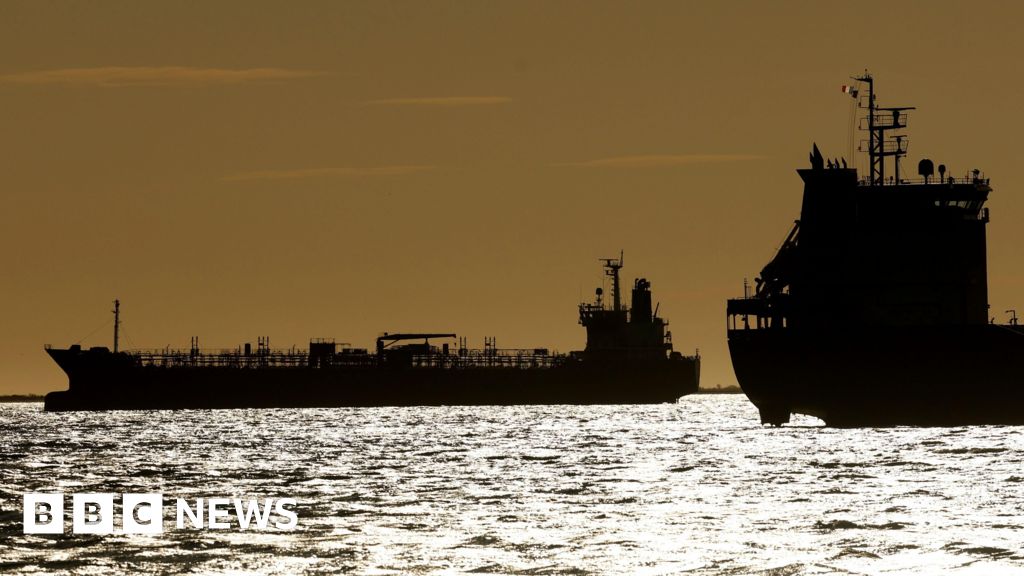
“To put it mildly, this is bananas,” said David Tannenbaum, director of Blackstone Compliance Services, a consultancy specialising in maritime sanctions. “Essentially we’re allowing Iran to sell oil, which could then be used to fund the war effort.”


TCU backs up its tough talk, bounces Buckeyes in 1st round

“The Bachelorette” season with Taylor Frankie Paul canceled after 2023 video surfaces, ABC says

‘Uncanny Valley’: Nvidia’s ‘Super Bowl of AI,’ Tesla Disappoints, and Meta’s VR Metaverse ‘Shutdown’

Stock market crash today (March 12, 2026): Nifty50 opens below 23,600; BSE Sensex down over 900 points on continuing US-Iran war – The Times of India

UK’s Topshop unveils Tolu Coker capsule collection
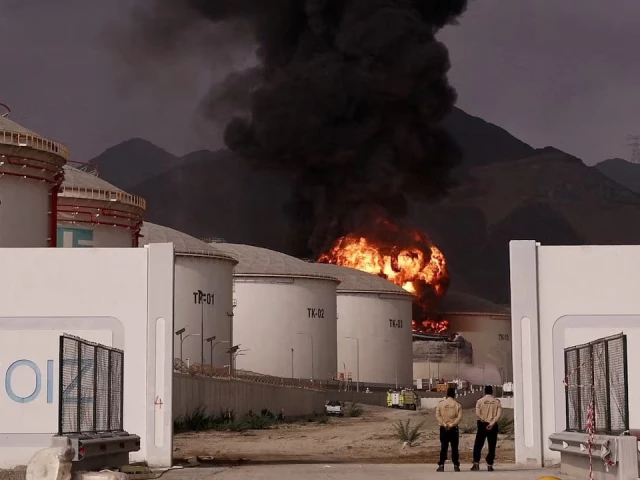
US ignites Iran war, but Gulf Arab states pay the price | The Express Tribune

-
Business1 week ago
Stock market crash today (March 12, 2026): Nifty50 opens below 23,600; BSE Sensex down over 900 points on continuing US-Iran war – The Times of India
-
 Fashion1 week ago
UK’s Topshop unveils Tolu Coker capsule collection
-
Business1 week ago
US ignites Iran war, but Gulf Arab states pay the price | The Express Tribune
-

 Fashion1 week ago
India’s textile recycling market may reach $3.5 bn by 2030: Report
-
 Tech1 week ago
Meta Developed 4 New Chips to Power Its AI and Recommendation Systems
-
 Sports1 week ago
Bangladesh crush Pakistan in ODI series opener | The Express Tribune
-
 Business1 week ago
8th Pay Commission: How Much Will Central Govt Employees’ Salaries Rise? What We Know So Far
-
 Entertainment1 week ago
Gas, food, household prices explained