

Politics
Thailand’s airstrikes against Cambodia reignite border tensions

- Thai army says one soldier killed in border clashes.
- Military facilities targeted in air strikes: Thai Air Force
- Ex-Cambodian leader urges forces to exercise restraint.
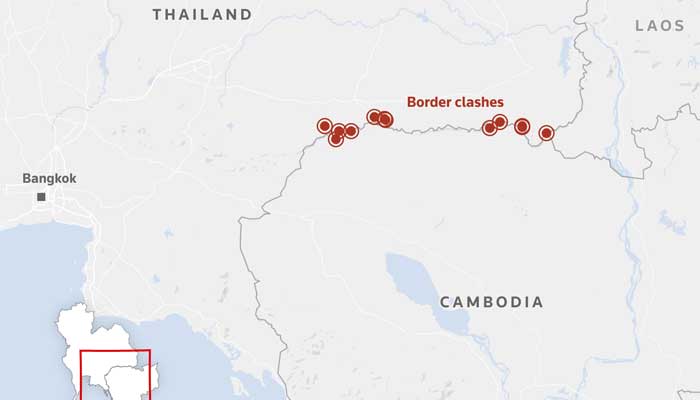
BANGKOK/PHNOM PENH Thailand said it launched airstrikes into Cambodia on Monday as fighting broke out in multiple areas along their disputed border, after both countries accused the other of breaching a ceasefire brokered by US President Donald Trump.
At least one Thai soldier had been killed and eight were wounded in the fresh clashes that intensified around 5am local time (2200 GMT), a Thai army spokesperson said, adding that air support was called in to hit Cambodian military targets.
Thailand’s Air Force said that Cambodia mobilised heavy weaponry, repositioned combat units and prepared support elements that could escalate military operations.
“These developments prompted the use of air power to deter and reduce Cambodia’s military capabilities,” it said in a statement.
Cambodia’s defence ministry said in a statement that the Thai military had launched dawn attacks on its forces at two locations, following days of provocative actions, and added that Cambodian troops had not responded.
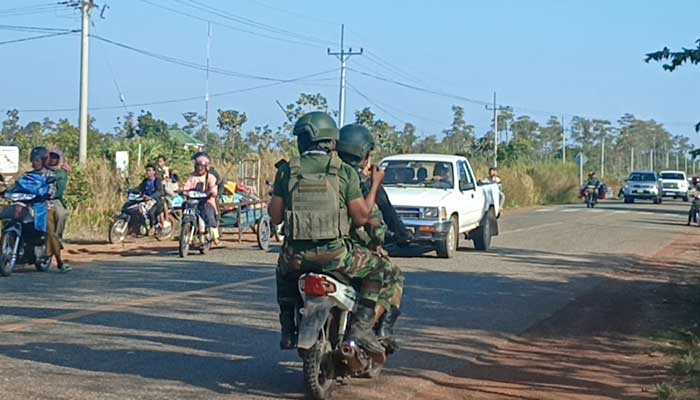
Cambodia’s influential former longtime leader Hun Sen, father of current premier Hun Manet, said Thailand’s military was “aggressors” seeking to provoke a retaliatory response and urged Cambodian forces to exercise restraint.
“The red line for responding has already been set,” Hun Sen said on Facebook, without elaborating. “I urge commanders at all levels to educate all officers and soldiers accordingly”.
Three Cambodian civilians have been seriously injured in the fighting so far, according to a senior provincial official. Cambodia’s defence ministry said its forces had not retaliated.
A simmering border dispute between the countries erupted into a five-day conflict in July, before a ceasefire deal brokered by Malaysian Prime Minister Anwar Ibrahim and Trump, who also witnessed the signing of an expanded peace agreement between the two countries in Kuala Lumpur in October.
Renewed fighting and risks
Anwar, chair of the Association of Southeast Asian Nations bloc, urged both sides to exercise maximum restraint and maintain open channels of communication.
“The renewed fighting risks unravelling the careful work that has gone into stabilising relations between the two neighbours,” Anwar said in a post on X.
Southeast Asian countries have rarely engaged in military clashes among themselves in recent decades, with the use of cross-border air strikes even rarer.
Phichet Pholkoet, a resident of Thailand’s Ban Kruat district which adjoins Cambodia, said he has heard gunfire since early Monday morning.
“It startled me. The explosions were very clear. Boom boom!” he said via telephone. “I could hear everything clearly. Some are heavy artillery, some are small arms.”
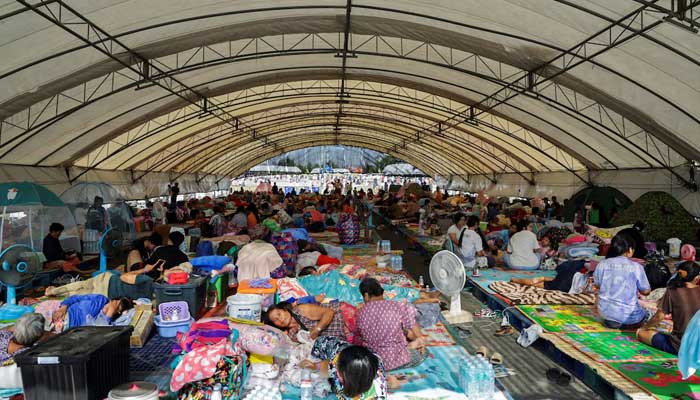
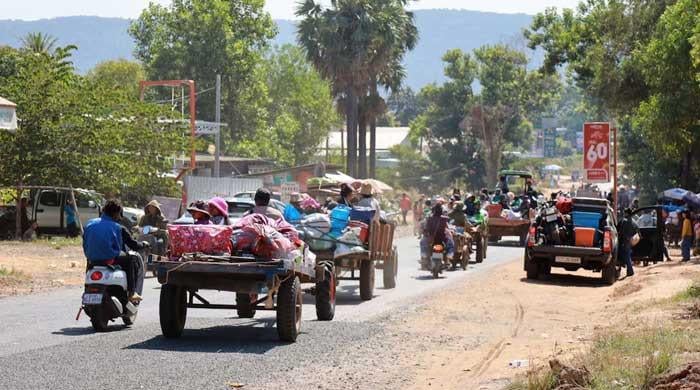
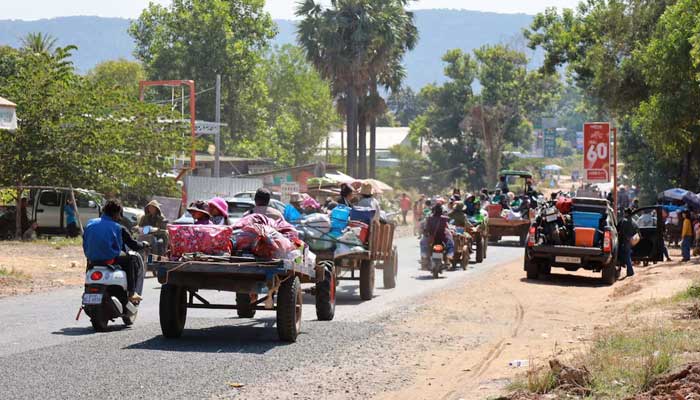
In Thailand, more than 385,000 civilians across four border districts were being evacuated, with more than 35,000 already housed in temporary shelters, the Thai military said.
Across the border in Cambodia, opposition politician Meach Sovannara said civilians were also moving away from the fighting along the frontier.
“I heard the artillery shelling,” he told Reuters in an audio message from Samroang town, the capital of Oddar Meanchey Province, which abuts Thailand.
More than 1,100 families in Oddar Meanchey had been evacuated, authorities there said.
At least 48 people were killed and an estimated 300,000 temporarily displaced during the July clashes, with the neighbours exchanging rockets and heavy artillery fire for five days.
Un-demarcated points along border
Thailand and Cambodia have for more than a century contested sovereignty at un-demarcated points along their 817-km (508-mile) land border, first mapped in 1907 by France when it ruled Cambodia as a colony.
The long-standing dispute has occasionally exploded into skirmishes, such as a weeklong artillery exchange in 2011, despite attempts to peacefully resolve overlapping claims.
Tensions began rising in May this year, following the killing of a Cambodian soldier during a brief exchange of gunfire, and steadily escalated into diplomatic spats and armed clashes.
Although Anwar and Trump were able to halt the fighting within days and then cemented a ceasefire agreement at a regional summit in October.
Thailand said it was halting the implementation of the truce with Cambodia last month, following a landmine blast that maimed one of its soldiers.
Thailand has repeatedly accused Cambodia of planting fresh landmines along parts of their disputed border, which have seriously injured at least seven Thai soldiers since July. Phnom Penh denies the charge.
Some of the mines found along the frontier were likely newly laid, Reuters reported in October, based on expert analysis of material shared by Thailand’s military.
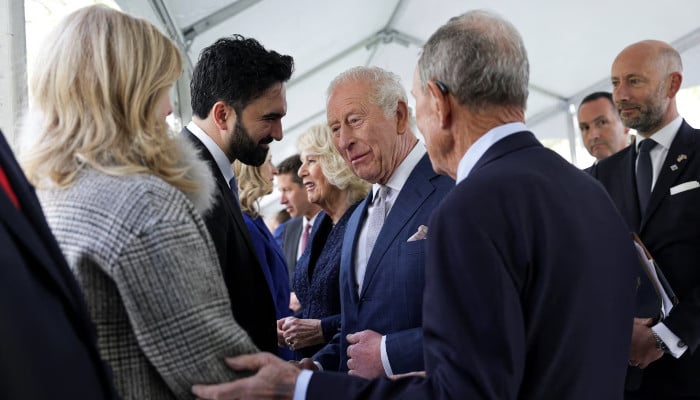
New York City Mayor Zohran Mamdani said on Wednesday he encourages Britain’s King Charles to return the Koh-e-Noor Diamond, with his comments coming during the British monarch’s ongoing US visit.
“If I were to speak to the king separately from that, I would probably encourage him to return the Koh-e-Noor Diamond,” Mamdani, who is Indian American, said when asked at a press conference hours before a ceremony that commemorated victims of the deadly September 11, 2001, attacks.
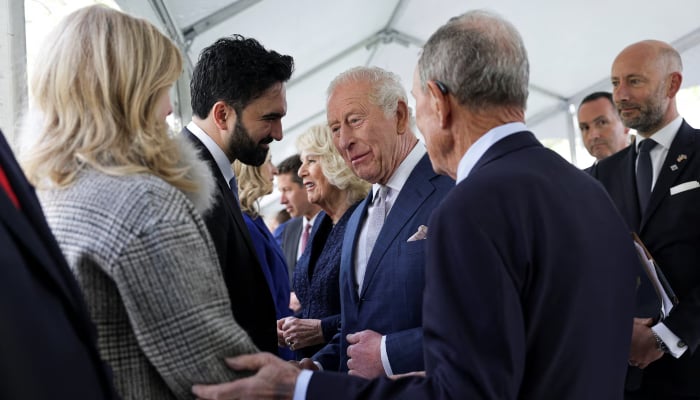
Later in the day, the king spoke with Mamdani at the ceremony. Buckingham Palace declined to comment. Mamdani’s office did not respond to a request to comment on whether Mamdani brought up the issue with the king.
India has previously repeatedly demanded that Britain return the 105-carat diamond.
Britain’s then colonial governor-general of India arranged for the huge diamond to be presented to Queen Victoria in 1850 after the East India Company had annexed the region of Punjab in 1849 and taken the diamond from a deposed Indian leader.
Charles on Wednesday commemorated victims of the September 11, 2001, attack on New York City, laying a floral bouquet at the memorial where the World Trade Centre’s twin towers once stood.
India received independence from British rule in 1947. The British colonisation of India and the widespread atrocities committed against people during that period remain sensitive issues in the country.
India has previously said the diamond was a “valued piece of art with strong roots in our nation’s history.” The diamond’s possession by the British is seen by many Indians as a symbol of colonial atrocities during British rule.
The diamond has been previously owned by India’s Mughal emperors, shahs of Iran, emirs of Afghanistan, and Sikh maharajas, according to the Historic Royal Palaces charity.
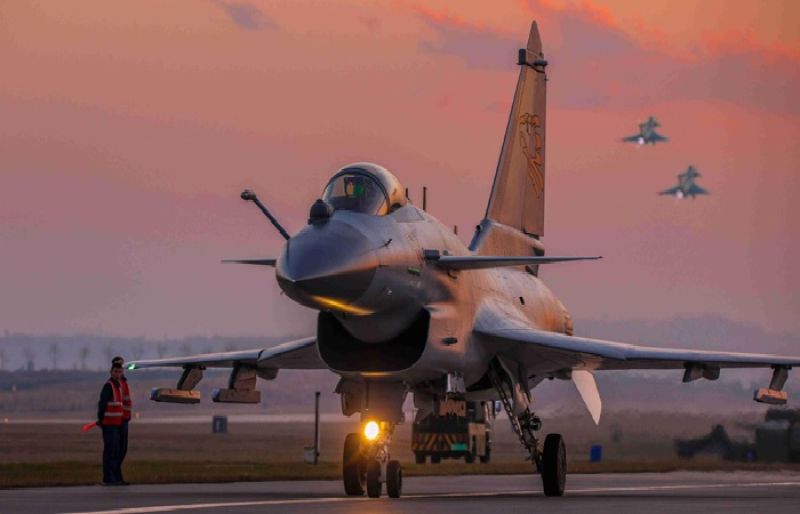
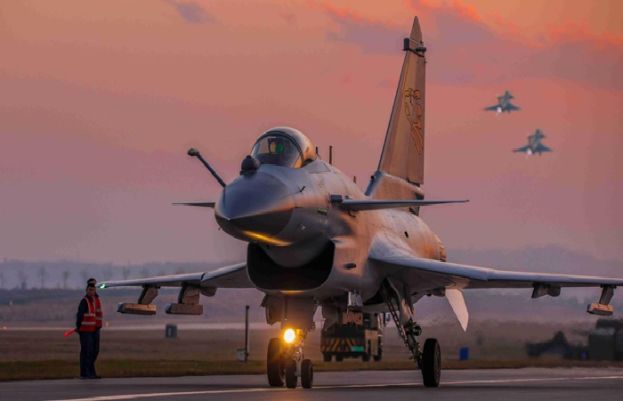
China’s AVIC Chengdu Aircraft Corporation, the maker of J-10C aircraft used by Pakistan to down India’s French-made planes in May last year, has reported a significant surge in profits, according a report by Bloomberg.
Revenue increased by 15.8% to 75.4 billion yuan ($11 billion) in 2025, with profit up 6.5% to 3.4 billion yuan in 2025, the publication cited the jetmaker as saying in a statement.
The numbers are the highest-ever for the company, Bloomberg reported, adding that Chengdu’s first-quarter sales rose almost 80% on year.
The Pakistan Air Force (PAF) inducted J-10C in March 2022, in a major boost to the country’s military capabilities to defend airspace.
At the time, the government said that the fighter jet could carry more advanced, fourth-generation air-to-air missiles, including the short-range PL-10 and the beyond-visual-range PL-15.
The fighter jet saw its first combat use in May 2025 when India launched an unprovoked attack on Pakistan on May 6, following an attack on tourists in the Indian Illegally Occupied Jammu and Kashmir.
Pakistan, during the 87-hour conflict, downed seven Indian fighter jets, including French-made Rafale, and dozens of drones.
The four-day war saw Pakistan successfully employing the Chinese-made HQ-9 air-defence system, PL-15 air-to-air missiles, and J-10C fighter aircraft, credited with downing multiple Indian aircraft.
The PAF also used its JF-17 Thunder jets to destroy India’s S-400 air defence system in Adampur by using hypersonic missiles.
The war between the two nuclear-armed nations ended on May 10 with a ceasefire agreement brokered by the US.
Months after the conflict, Inter-Services Public Relations (ISPR) Director-General (DG) Lieutenant General Ahmed Sharif Chaudhry praised the performance of Chinese-made weapons, saying they performed “exceptionally well. “Of course, lately, recent Chinese platforms, they’ve demonstrated exceptionally well,” Lt Gen Chaudhry said in an interview in October last year.
In November last year, a report presented to the United States Congress acknowledged Pakistan’s “military success over India” in the war.
The US-China Economic and Security Review Commission report — reviewing US-China security and foreign affairs — stated that Pakistan employed advanced Chinese weaponry to enhance its military edge over India.
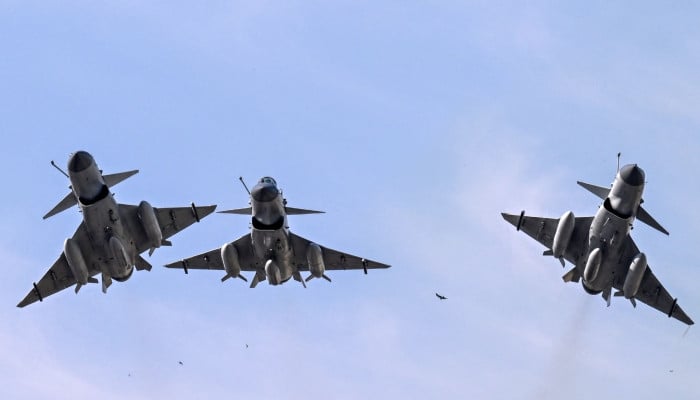
- Revenue up by 15.8% to 75.4 billion yuan in 2025: report.
- Company’s profits up by 6.5% to 3.4 billion yuan in 2025.
- Chengdu sales in first-quarter rose almost 80% on year.
China’s AVIC Chengdu Aircraft Corporation, the maker of J-10C aircraft used by Pakistan to down India’s French-made planes in May last year, has reported a significant surge in profits, according a report by Bloomberg.
Revenue increased by 15.8% to 75.4 billion yuan ($11 billion) in 2025, with profit up 6.5% to 3.4 billion yuan in 2025, the publication cited the jetmaker as saying in a statement.
The numbers are the highest-ever for the company, Bloomberg reported, adding that Chengdu’s first-quarter sales rose almost 80% on year.
The Pakistan Air Force (PAF) inducted J-10C in March 2022, in a major boost to the country’s military capabilities to defend airspace.
At the time, the government said that the fighter jet could carry more advanced, fourth-generation air-to-air missiles, including the short-range PL-10 and the beyond-visual-range PL-15.
The fighter jet saw its first combat use in May 2025 when India launched an unprovoked attack on Pakistan on May 6, following an attack on tourists in the Indian Illegally Occupied Jammu and Kashmir.
Pakistan, during the 87-hour conflict, downed seven Indian fighter jets, including French-made Rafale, and dozens of drones.
The four-day war saw Pakistan successfully employing the Chinese-made HQ-9 air-defence system, PL-15 air-to-air missiles, and J-10C fighter aircraft, credited with downing multiple Indian aircraft.
The PAF also used its JF-17 Thunder jets to destroy India’s S-400 air defence system in Adampur by using hypersonic missiles.
The war between the two nuclear-armed nations ended on May 10 with a ceasefire agreement brokered by the US.
Months after the conflict, Inter-Services Public Relations (ISPR) Director-General (DG) Lieutenant General Ahmed Sharif Chaudhry praised the performance of Chinese-made weapons, saying they performed “exceptionally well,” The News reported, citing Bloomberg.
“Of course, lately, recent Chinese platforms, they’ve demonstrated exceptionally well,” Lt Gen Chaudhry said in an interview in October last year.
In November last year, a report presented to the United States Congress acknowledged Pakistan’s “military success over India” in the war.
The US-China Economic and Security Review Commission report — reviewing US-China security and foreign affairs — stated that Pakistan employed advanced Chinese weaponry to enhance its military edge over India.


Chinese team visits Bangladesh, discusses FDI in textile sector

FDA proposes excluding Novo, Lilly weight loss drugs from bulk compounding list in win for the companies

Drake Maye voices support for Patriots coach Mike Vrabel as off-field controversy continues to swirl
Us-India Trade Talks: US–India trade deal: Where do talks stand & what to expect – explained – The Times of India

PSL 11: Hyderabad Kingsmen opt to field after winning toss against Multan Sultans

Trump administration in advanced talks for a rescue package for Spirit Airlines, source says

-
Business1 week ago
Us-India Trade Talks: US–India trade deal: Where do talks stand & what to expect – explained – The Times of India
-
 Sports1 week ago
PSL 11: Hyderabad Kingsmen opt to field after winning toss against Multan Sultans
-
Business1 week ago
Trump administration in advanced talks for a rescue package for Spirit Airlines, source says
-
 Business1 week ago
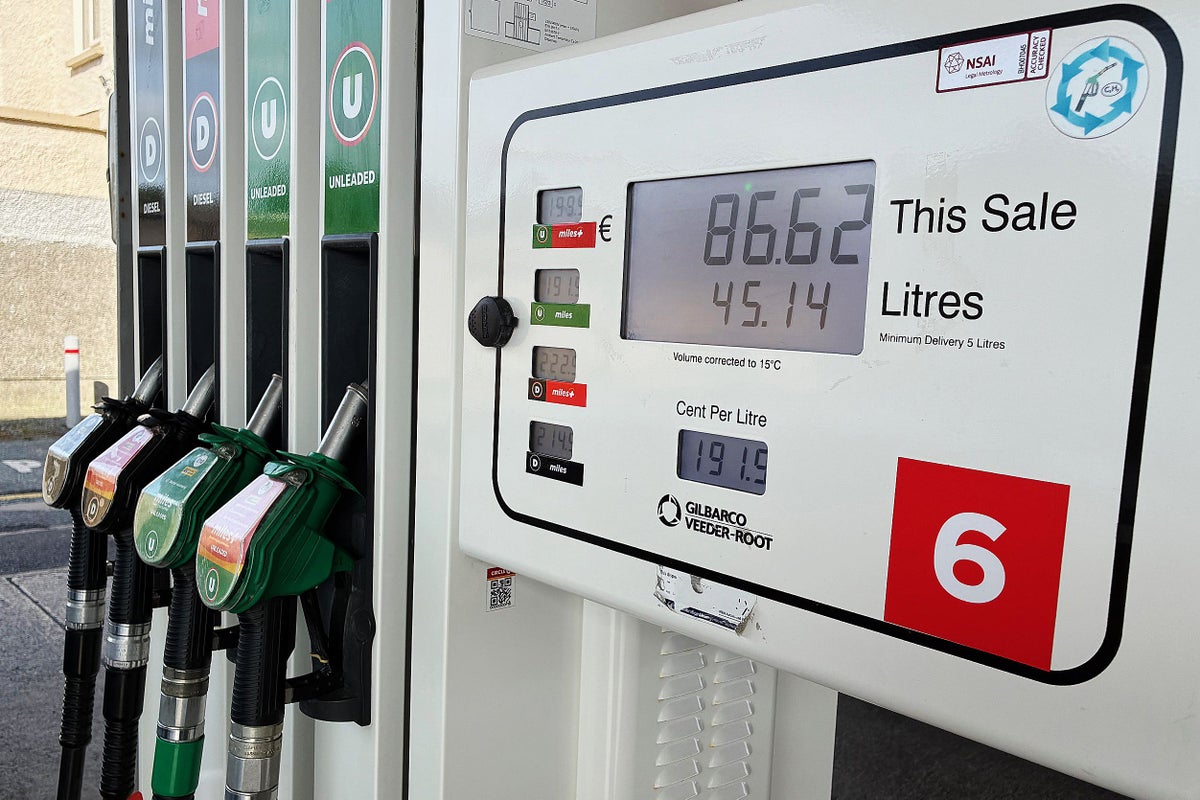
UK inflation accelerates after Iran war drives sharp rise in fuel prices
-

 Tech1 week ago
Nation states responsible for ‘nationally significant’ cyber attacks against UK, says NCSC chief | Computer Weekly
-

 Tech1 week ago
Microsoft faces court battle in £2bn Windows Server class action | Computer Weekly
-

 Entertainment1 week ago
Anne Hathaway shares major news about ‘Princess Diaries 3’
-

 Tech1 week ago
Blackbox replaces two racks of HPE storage with 8U of Everpure | Computer Weekly