

Fashion
EU a step closer to extending GSP for 10 more years

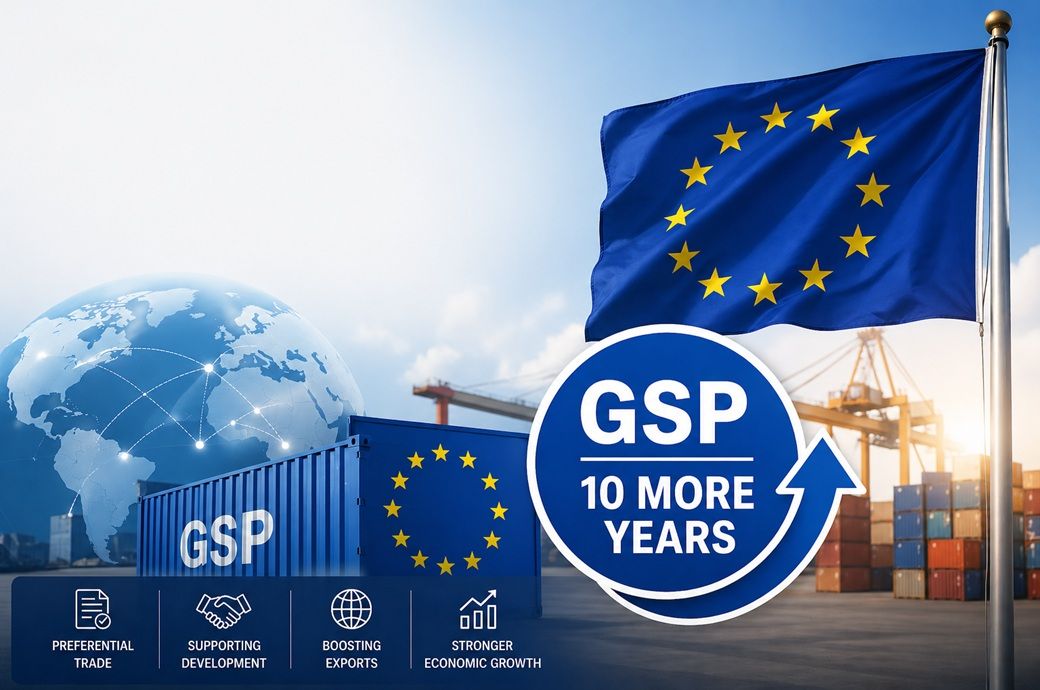
The updated rules, passed with 459 votes in favour, 127 against and 70 abstentions, allow vulnerable developing countries to export goods to the European Union (EU) with low or no tariffs.
The European Parliament recently adopted the renewed regulation on the generalised system of preferences (GSP).
The updated rules allow vulnerable developing countries to export goods to the EU with low or no tariffs.
Once formally adopted by the Council, the legislation will be signed and published in the official Journal of the EU.
It will then enter into force and apply for a period of 10 years.
Several international human rights and environmental conventions have been added to the list of international treaties that participating countries must ratify to benefit from trade preferences. These include the Paris Agreement, the Convention on the Rights of Persons with Disabilities, and the Convention on the Rights of the Child, according to an official release.
Parliament members managed to include a series of stricter criteria that will need to be fulfilled before GSP countries see their preferential tariffs withdrawn for continued non-cooperation on the readmission of irregular migrants.
These criteria include a longer evaluation procedure and mandatory engagement of at least 12 months with the countries concerned. There will also be a two-year delay for the least developed countries in the application of the readmission conditionality.
Once formally adopted by the Council, the legislation will be signed and published in the official Journal of the EU. It will then enter into force and apply for a period of 10 years.
The GSP has been the EU’s preferential trade arrangement with developing countries since 1971. It offers developing countries reduced duties when exporting to the EU with the aim of eradicating poverty, promoting sustainable development, and better integrating these countries in the world economy.
The GSP system covers more than 60 countries and 2 billion people around the world.
Fibre2Fashion News Desk (DS)










One of the first visible changes arrives with the EU’s ban on the destruction of unsold textiles, taking effect on 19 July 2026, less than three months from now, for large companies under the Ecodesign for Sustainable Products Regulation (ESPR). While the rule focuses on what happens to unsold goods, its implications reach much further upstream. Brands facing restrictions on overproduction now have an immediate commercial incentive to improve demand planning, tighten order volumes, increase inventory accuracy, and reduce discrepancies across the supply chain. As a result, data quality and traceability at the production level are becoming a matter of regulatory compliance, not just operational efficiency.
EU rules are shifting sourcing from certificates to data-driven verification.
ESPR and upcoming Digital Product Passports demand structured, traceable product data.
Factories offering real-time, item-level visibility gain a clear edge over audit-based peers.
With RFID adoption still limited, early movers can strengthen competitiveness and secure future orders.
Alongside this, the EU is developing the Digital Product Passport (DPP) framework, which will introduce structured data requirements for products placed on the EU market. Textiles are a priority category, with specific delegated acts and implementation timelines expected to be finalised in the near future. This follows the Omnibus I Directive, which already entered into force in March 2026. While the final DPP requirements are still being defined, the direction is clear: Standardised product data, greater supply chain transparency, and the ability to share information across systems and stakeholders.
This regulatory direction is already influencing how brands evaluate suppliers. According to a recent EcoVadis study, sustainability clauses in supplier contracts are evolving into enforceable governance tools. Traditional compliance tools such as certifications and audit reports remain important, but they are no longer sufficient on their own. They are increasingly complemented by expectations around digital data availability, traceability across production stages, and structured formats that integrate into brand systems.
In practice, digital traceability is not about a single technology, but about combining several elements: Unique product identifiers such as QR codes, RFID, or NFC; data capture at key production and logistics stages; and platforms that structure and share this data across the value chain. Together, these elements enable products to carry a digital identity that links physical items to their associated information.
This is where factory-level infrastructure becomes increasingly important. Solutions such as SML’s Factory Care Solutions (FCS) are designed to capture production data at source, enable on-demand RFID encoding and labelling, validate shipments, and reduce discrepancies. They create a reliable data foundation during manufacturing.
Importantly, these solutions do not replace a brand’s Digital Product Passport system; Rather, they act as the essential data capture and verification layer that feeds into DPP platforms and brand systems.
“Factories have always been evaluated on their ability to meet quality and compliance standards,” says Nanna Ingemann Dalsgaard, VP Sustainability, Digital ID & Marketing at SML Group. “What’s changing now is that brands increasingly expect that compliance to be backed by structured, verifiable data. The factories that can provide that data seamlessly are not just meeting requirements – they are making it easier for brands to operate in a more regulated environment.”
To see the commercial impact of this shift in action, consider two factories competing for a Spring/Summer 2027 order. Both hold the same sustainability certifications. However, Factory A submits quarterly audit summaries by email, while Factory B provides real-time, item-level digital traceability for every garment, verifiable through RFID. By delivering the seamless data Nanna describes, Factory B transforms a regulatory baseline into a decisive operational advantage, making it the obvious choice for the brand.
At the same time, adoption of item-level digital identification is still far from universal. According to IDTechEx, RFID tagging currently reaches only around 40 per cent of the total addressable market for apparel. This creates a significant window of opportunity for manufacturers to build capabilities ahead of regulatory deadlines, align more closely with evolving brand requirements, and strengthen their position in future sourcing decisions.
The regulatory timeline is moving fast, and the direction is consistent: More transparency, more structured data, and greater accountability across the value chain. For manufacturers, the key question is no longer whether these requirements will materialise, but how quickly they can build the capabilities needed to support them.
Certifications will continue to signal commitment. But increasingly, it is the ability to translate that commitment into reliable, shareable data that will win the order.
Note: The headline, insights, and image of this press release may have been refined by the Fibre2Fashion staff; the rest of the content remains unchanged.
Fibre2Fashion News Desk (MS)
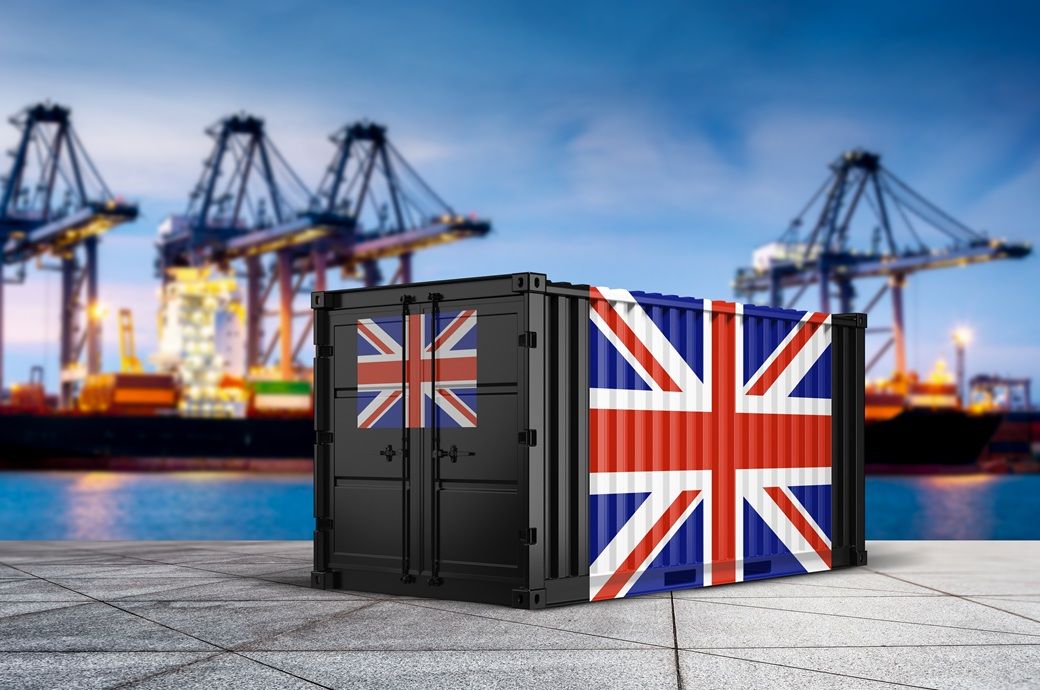
Total UK certificates of origin fell 10 per cent year-on-year, from 39,457 in March 2025 to 35,533 in March 2026. However, exports to Arab League markets recorded a steeper 20 per cent fall, declining from 15,437 to 12,360 over the same period. In contrast, certificates for non-Arab markets slipped by just 4 per cent, from 24,751 to 23,785.
UK exports to Middle East markets fell 20 per cent in March 2026, far outpacing the 4 per cent dip in non-Arab trade, signalling a clear region-specific disruption.
Overall export certificates dropped 10 per cent YoY, reflecting delays, rerouting and shipment losses.
Rising freight, insurance costs and longer lead times are straining SMEs.
The divergence suggests a region-specific disruption rather than a broad slowdown in global demand. A fall in certificates indicates goods are being delayed, rerouted, or not shipped, highlighting the immediate impact of instability across key Middle East trade corridors.
“Our documentation data shows a clear and immediate shock to UK trade flows linked directly to disruption across the Middle East,” said Steven Lynch, Director of International Trade at the BCC.
He noted that firms are facing longer and more expensive shipping routes, rising insurance costs, and extended lead times, with small and medium-sized enterprises particularly affected. While some trade may be delayed rather than permanently lost, Lynch warned that the operating environment has fundamentally changed.
In response, the BCC has launched a Diplomatic Advisory Hub with the UK Foreign Office to provide businesses with real-time guidance on overseas trade risks.
Fibre2Fashion News Desk (MS)
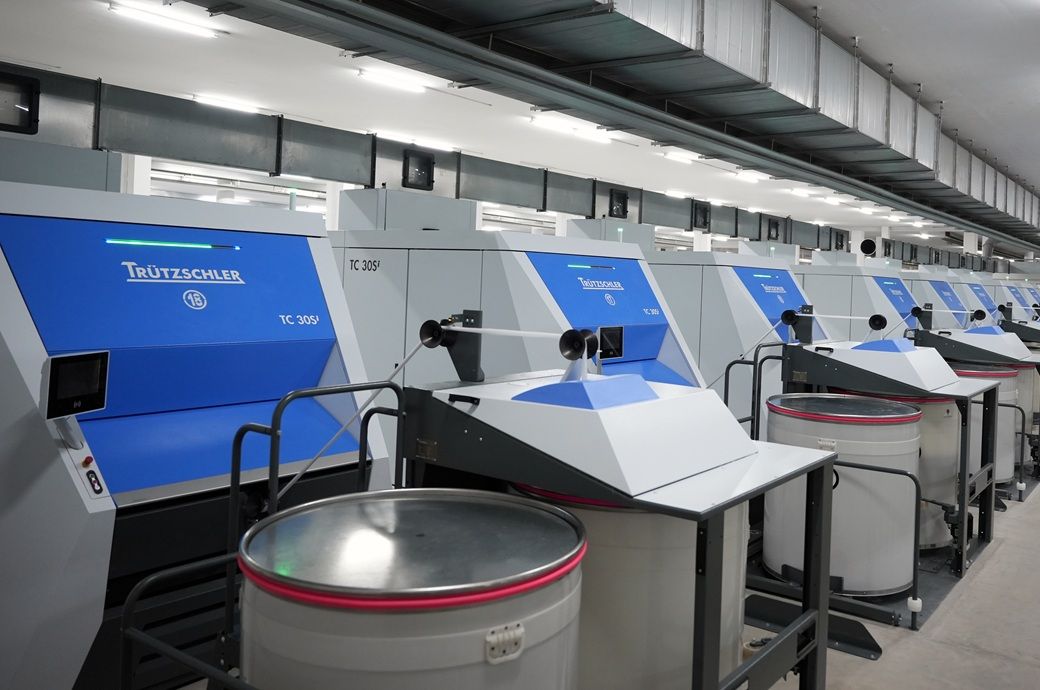
Trützschler Spinning
Trützschler Spinning will focus on technologies that enable highly efficient, stable, and resource-saving spinning preparation, with a strong emphasis on automation and direct spinning. At the heart of our booth, visitors will experience Trützschler’s latest automation highlight: T-CAN – a smart system that intelligently combines self-driving cans with AGV technology and an intuitive software interface. In this way, T-CAN significantly reduces manual handling. The result is lower operational costs, minimized downtime, as well as consistent and reliable material allocation. Developed in response to rising labor costs and increasing labor shortages in the global textile industry, T-CAN represents a key step towards more automated, efficient, and future-ready spinning mills.
Trützschler will present advanced spinning, card clothing and nonwovens solutions at ITM 2026 in Istanbul, Türkiye.
Highlights include the automated T-CAN system, TC 30i card, IDF 3 draw frame and TCO 21XL comber.
The company will also feature digital platforms and sustainable innovations aimed at improving efficiency, productivity and fibre processing performance.
A further highlight is the combination of the next-generation card TC 30i and the integrated draw frame IDF 3, which together form a perfect match for direct spinning. The TC?30i achieves up to 40% higher productivity, while maintaining or even improving yarn quality. Its intelligent feature T-GO enables extremely precise carding gap settings far beyond what is achievable manually. The only proven automatic gap optimizer has successfully demonstrated its value in several thousand customer operations worldwide. The IDF 3 provides a shortened spinning preparation process for rotor and airjet applications without compromising on quality. It is highly valued for its user-friendly operation. A new can changing system increases card efficiency by up to 3%, while advanced measuring devices support more homogeneous slivers and improved yarn quality.
The powerful combination of TC 30i and IDF 3 delivers high productivity, stable yarn parameters, and efficient processing of blends with high short fibre content or recycled materials.
Experts will also be available to discuss Trützschler’s latest advancement in combing technology: the TCO 21XL. This innovation increases productivity by about 50% because it operates twelve heads instead of a typical eight head setup, while delivering the same excellent sliver quality and, at the same time, requiring less energy per head. Equipped with the COUNT CONTROL function, the TCO 21XL further enhances quality assurance in the combing process. The result is a permanently constant sliver count for first-class yarn quality.
Beyond machinery, service and digital solutions will complete our presence at the fair. With local service and technology support teams, local spare parts and wire stocks and Trützschler repair stations, customers can rely on fast assistance and minimized downtime in Türkiye and globally. Our service team will present possibilities to upgrade existing machinery and the latest service tools. In addition, visitors can explore MyMill, Trützschler’s cloud-based platform for monitoring and optimizing spinning mill operations. MyMill is one of several digital services available via the My?Trützschler platform, which serves as the central digital access point for Trützschler customers. My?Trützschler bundles all digital services in one place and provides seamless access to applications such as MyMill, Training and Spare Parts Shop, offering valuable insights and support across the entire Trützschler ecosystem.
Trützschler Card Clothing
At ITM 2026, Trützschler Card Clothing (TCC) will unveil a new flat top, designed for spinning mills that aim for reliability and long-term performance in modern spinning preparation. Engineered for robustness and durability, this innovation is designed to support consistent performance over an extended service life. Fully recyclable and seamlessly compatible with Trützschler’s intelligent carding systems, the new flat top reflects TCC’s commitment to durability, efficiency, and sustainable design in card clothing.
Trützschler Nonwovens
With the T-SUPREMA needle-punching concept, successfully implemented with Texnology, Trützschler Nonwovens targets producers of technical nonwovens with flexible, proven solutions for geotextiles, filter media and other durable applications. The concept is complemented by the new NC-Xe card, a fit-for-purpose and cost-efficient solution that meets strong demand from cost-conscious investors while delivering proven Trützschler product and process quality.
Another focus is Trützschler Nonwovens’ proven carding technology for supersoft air-through bonded (ATB) hygiene nonwovens. With special designs, tailored configurations and dedicated component executions, the NC-X card reliably processes the finest bicomponent microfibres down to 0.4 denier. This enables the formation of highly voluminous, uniform and exceptionally soft webs, ideally suited for high-quality diaper backsheet and topsheet applications.
Globally proven Carded/Pulp and Wet-Laid/Spunlace line solutions for the production of lightweight nonwovens for disposable wipes and moist toilet tissue complete the Trützschler Nonwovens portfolio.
Connect with us in Istanbul!
Whether it’s advanced spinning preparation with T-CAN, TC 30i, IDF 3 and TCO 21XL, a powerful new card clothing innovation, or future-oriented nonwoven technologies – ITM 2026 brings all of our key innovations together. Our experts are looking forward to welcoming you at Hall 7, Booth 714A. Together, we take your fibre processing performance to the next level – boosting productivity, efficiency and cost-effectiveness.
Note: The headline, insights, and image of this press release may have been refined by the Fibre2Fashion staff; the rest of the content remains unchanged.
Fibre2Fashion News Desk (JP)


EU laws push APAC factories towards data over certificates

EU a step closer to extending GSP for 10 more years

Govt approves major reforms to ease passport issuance

Us-India Trade Talks: US–India trade deal: Where do talks stand & what to expect – explained – The Times of India

PSL 11: Hyderabad Kingsmen opt to field after winning toss against Multan Sultans

Trump administration in advanced talks for a rescue package for Spirit Airlines, source says

-
Business1 week ago
Us-India Trade Talks: US–India trade deal: Where do talks stand & what to expect – explained – The Times of India
-
 Sports1 week ago
PSL 11: Hyderabad Kingsmen opt to field after winning toss against Multan Sultans
-
Business1 week ago
Trump administration in advanced talks for a rescue package for Spirit Airlines, source says
-
 Business1 week ago
UK inflation accelerates after Iran war drives sharp rise in fuel prices
-

 Tech1 week ago
Nation states responsible for ‘nationally significant’ cyber attacks against UK, says NCSC chief | Computer Weekly
-

 Tech1 week ago
Microsoft faces court battle in £2bn Windows Server class action | Computer Weekly
-
 Business1 week ago
Gold prices in Pakistan Today – April 23, 2026 | The Express Tribune
-

 Entertainment1 week ago
Anne Hathaway shares major news about ‘Princess Diaries 3’