

Business
Moody’s Call IndiGo Fight Cancellations ‘Credit Negative’, Says Firm Will Face Financial Damage

Last Updated:
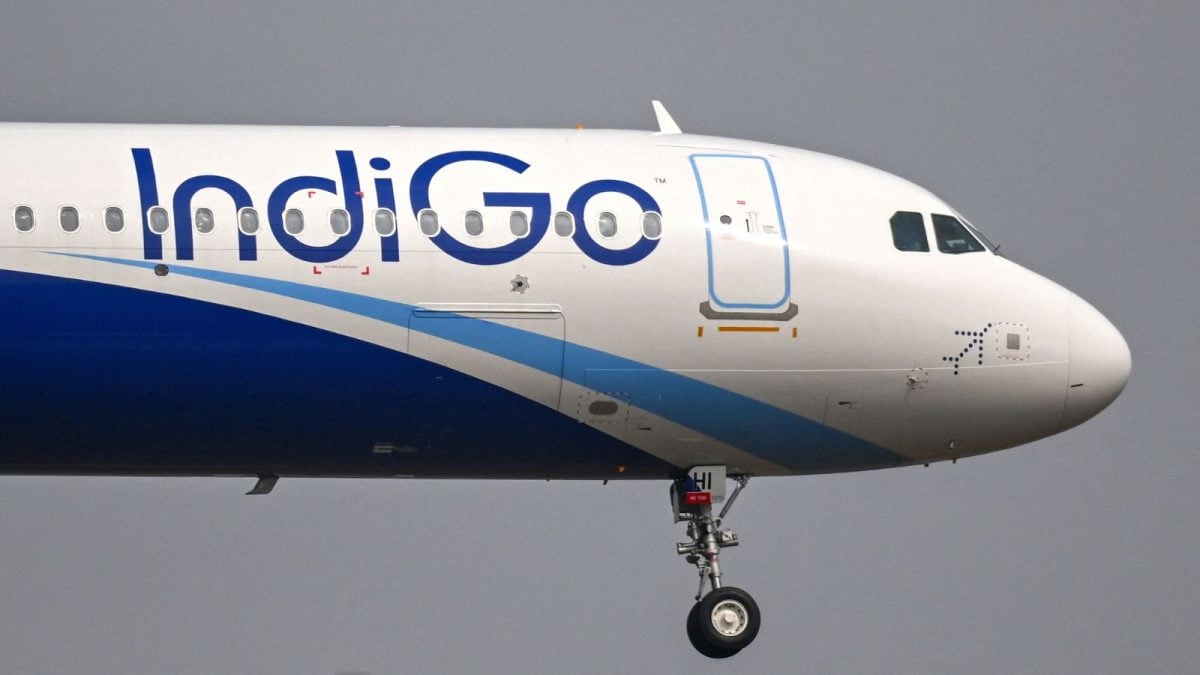
Moody’s says IndiGo faces financial and reputational damage after 1,600 flight cancellations due to poor planning for aviation regulations, calling the disruptions credit negative.
Moody’s cited IndiGo’s “significant lapses in planning, oversight and resource management” as the primary cause.
The disruptions and cancellations in IndiGo flights due to airline’s failure to plan for aviation regulations communicated to industry more than a year in advance could result in financial damage from loss of revenue as well as potential penalties for cancellations, Moody’s Ratings said on Monday.
PTI quoted a note by Moody’s stating that the disruptions are “credit negative” for the airline. “Despite temporary reprieve, failure to effectively plan for new aviation regulations is credit negative.”
The flight cancellations started on December 2. The disruptions, which took place amid peak winter schedules, caused over 1,600 flight cancellations on December 5, after similar operational issues in November left more than 1,200 flights grounded. Over 500 flights were cancelled on Monday.
“The disruptions are credit negative because IndiGo could face significant financial damage from loss of revenue because of flight cancellations, refunds and other compensation to affected customers, along with potential penalties imposed by DGCA,” Moody’s said.
It further stated airline’s “significant lapses in planning, oversight and resource management” as the primary cause while pointing out that the regulations were communicated to the industry more than a year in advance.
“The airline’s lean operations, which provide cost efficiencies in stable times, lacked the resilience needed for this change in regulations, leading to the need for a system-wide reboot that led to cancellation(s),” Moody’s said.
“We have downgraded IndiGo’s issuer category score for human capital to 4 from 3, reflecting the adverse impact of slower hiring on the airline’s operations. Although IndiGo does not have employee unions, its pilots, through broader pilot associations in India, possess significant collective bargaining power. IndiGo’s governance issuer category score of 3 for management track record captures management’s lack of judgment and preparedness for the impending regulatory changes,” it said.
Moody’s further stated that there will be some reputational damage for IndiGo, which may hurt the company, especially in its code-sharing arrangements.
“However, quantitative impact of the disruption remains uncertain at this point as the scale and profitability of IndiGo’s operations evolve following adjustments to comply with FDTL regulations,” the rating agency added.
 Click here to add News18 as your preferred news source on Google.
 December 08, 2025, 22:03 IST
Read More






Ferrari technicians inspect supercars on the production line inside the company’s factory in Maranello, Italy, October 2, 2025. REUTERS/Remo Casilli/File Photo
Remo Casilli | Reuters
DETROIT — Ferrari on Tuesday beat Wall Street’s first-quarter earnings expectations and reconfirmed its guidance for the year, weeks ahead of the sports car maker revealing its first all-electric vehicle.
Here’s how the company performed in the first quarter compared with average estimates compiled by LSEG:
- Earnings per share: 2.33 euros (US $2.72) adjusted vs. 2.27 euros expected
- Revenue: 1.85 billion euros vs. 1.81 billion euros expected
Ferrari’s revenue was up more than 3% compared with 1.79 billion euros during the first quarter of 2025, while its operating profit and adjusted earnings increased 1.1% and 4.2% year-over-year, respectively.
The company’s 2026 guidance includes 7.5 billion euros in net revenues and an adjusted operating profit of at least 2.22 billion euros, or 9.45 euros adjusted EPS. Its industrial free cash flow is targeted at 1.5 billion euros or more for the year.
Those results were despite deliveries being down 4.4% year-over-year to 3,436 units, as the sports car maker said it slowed production to “ease the execution of the planned model change-over.”
The company said deliveries “were not impacted by the surge of hostilities in the Middle East, as Ferrari leveraged its geographical allocation flexibility, bringing forward certain deliveries to other regions.”
Ferrari’s results come weeks before the scheduled debut of the Luce, its first fully electric vehicle, on May 25.
“With only twenty days to the world premiere of the Ferrari Luce, the sense of anticipation has never been so high. The Ferrari Luce brings together so much extraordinary technologies and the passion of so many people. It is the evidence of how tradition and innovation can come together to create something unique,” Ferrari CEO Benedetto Vigna said in a statement Tuesday.
Business
India among most resilient large EMs, better placed for future global shocks; policy reforms & strong buffers help: Moody’s – The Times of India

Amid the ongoing Middle East conflict, a recent report by Moody’s Ratings says that recent global shocks have shown India’s resilience among emerging economies to withstand pressures. The report credits the resilience to timely policy measures and the buildup of robust buffers.“India and Thailand are the sovereigns better placed to manage future global shocks. In both cases, the key policy choices that support stability were made well before the recent stress period,” Moody’s says.In its latest study on emerging-market sovereigns, the agency notes that India has ranked among the more resilient economies since 2020, based on multiple indicators such as sovereign bond spreads, domestic yield movements, and exchange-rate stability.The report highlights the following points of strength:Monetary policy frameworks are clear and predictable, inflation expectations are better anchored, and exchange rates are allowed to adjust when needed. This reduces the risk that currency moves turn into persistent inflation or force abrupt policy shifts.
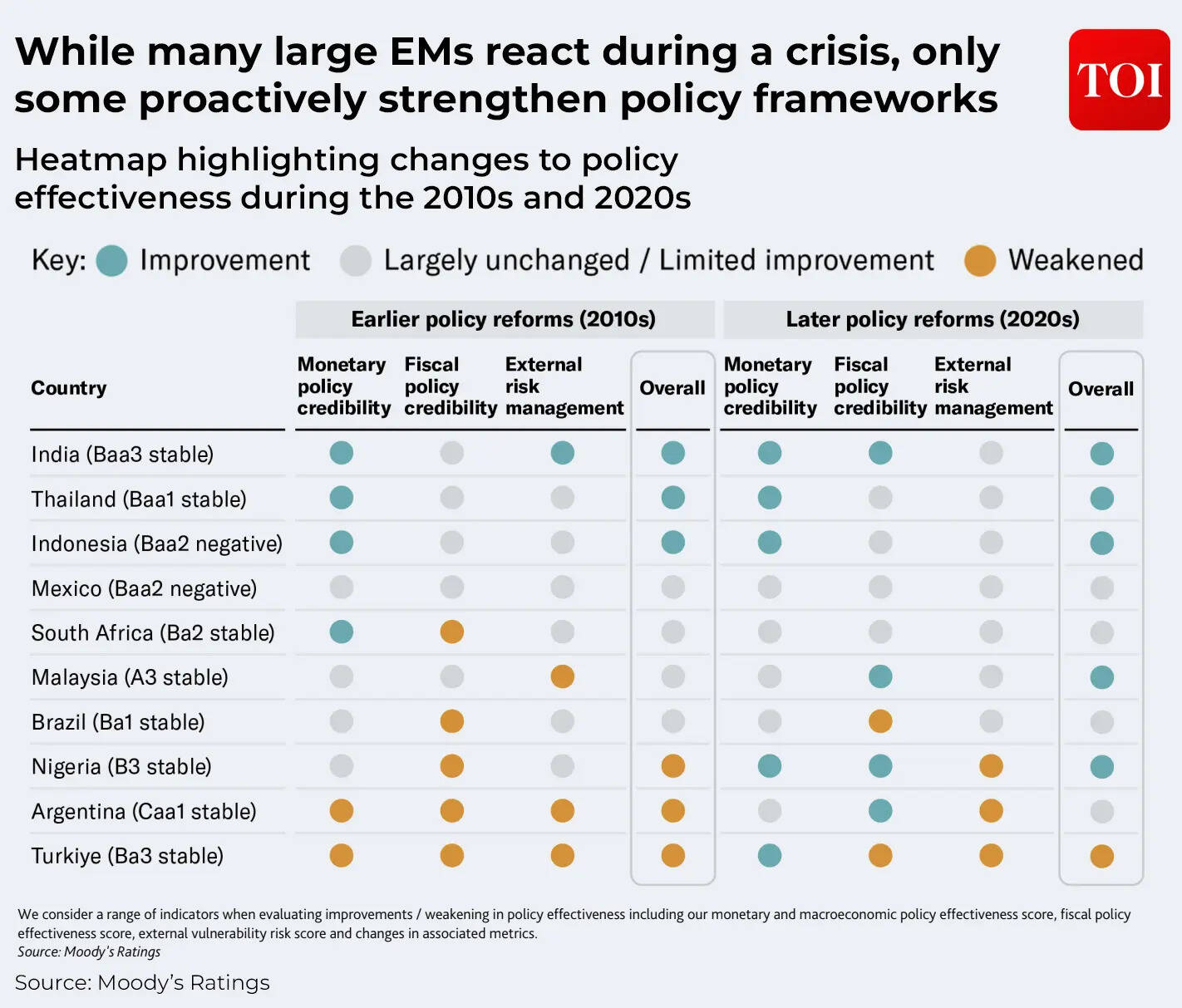
Both countries should also enter future periods of stress with strong and accessible buffers. India’s reliance on domestic funding is balanced by deep local markets and sizeable reserves, the report says.However it notes that India’s relatively high debt burden and weak fiscal balance limit the amount of space available to respond to successive shocks, while Thailand’s rising debt burden risks reducing resilience over time.The report points out that India has consistently demonstrated notable strength during periods of global volatility. Movements in credit spreads have been limited and short-lived, currency depreciation has remained controlled, and fluctuations in local bond yields have been orderly. These factors have helped the country retain uninterrupted access to financial markets even during turbulent phases.
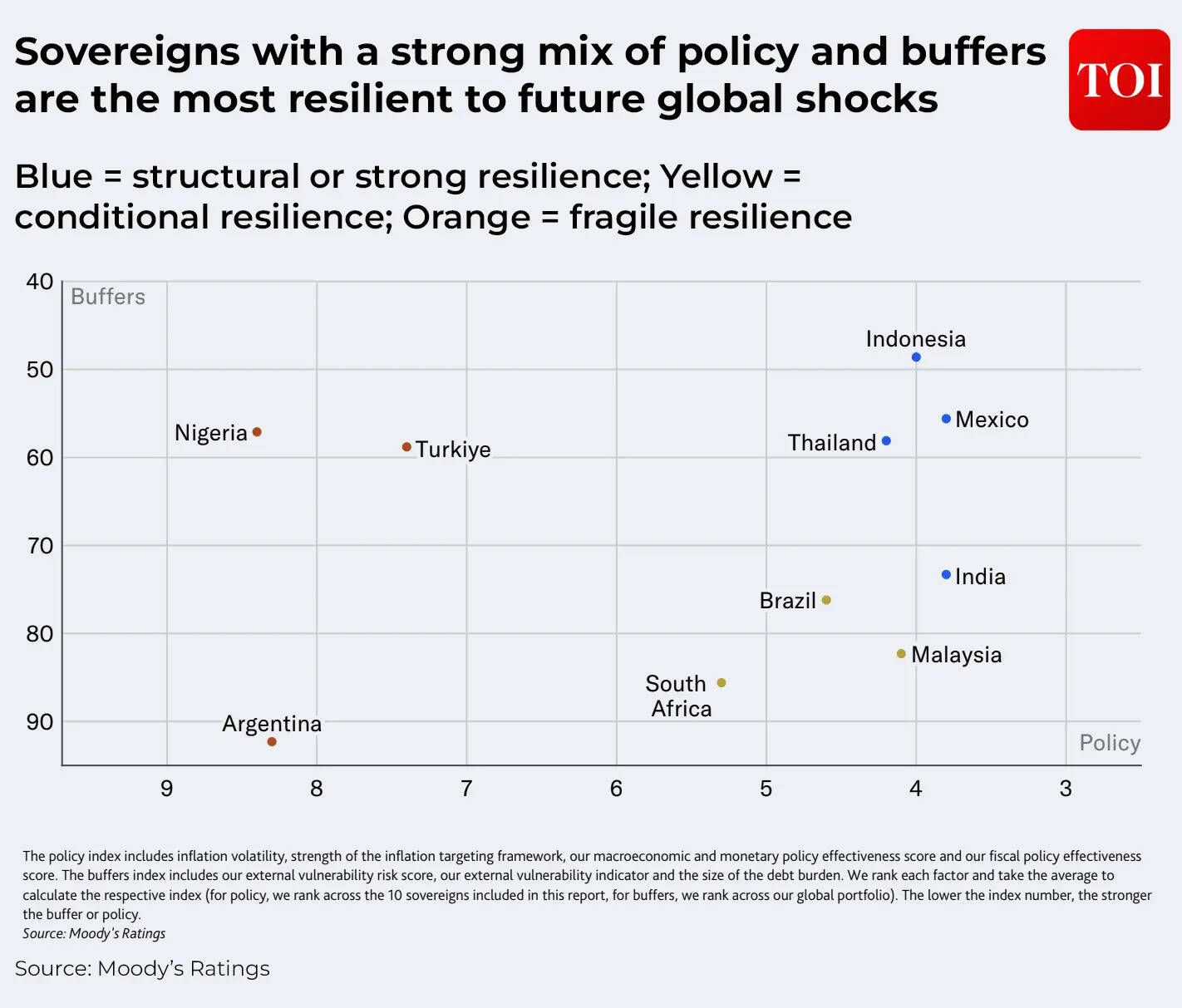
It underscores the role of India’s sizeable foreign-exchange reserves, which have helped stabilise the currency and maintain investor confidence during episodes of global stress, setting it apart from more vulnerable peers.Another key factor has been the presence of a transparent and consistent monetary policy framework. The adoption of inflation targeting well before recent global disruptions has ensured that inflation expectations remain anchored, thereby improving the economy’s ability to absorb external shocks.When compared with relatively more fragile economies such as Türkiye, Argentina and Nigeria, India has largely managed shocks through adjustments in prices rather than prolonged financing stress. This has been supported by deeper domestic financial markets and stronger policy credibility.
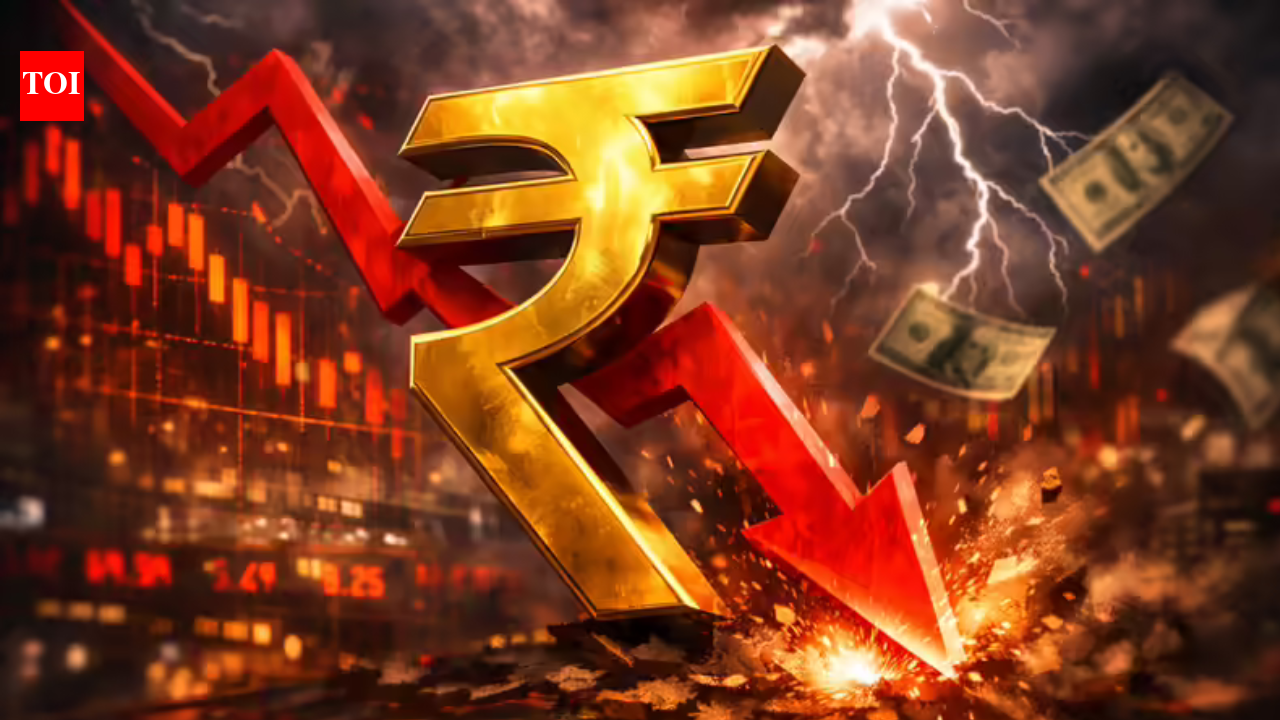
Rupee tumbled to a record low of 95.40 against US dollar in early trade on Tuesday, falling another 17 paise after already ending the previous session at its weakest-ever closing mark. Previously on Monday, the currency had declined sharply by 39 paise to close at 95.23 against the greenback.This comes as global uncertainty continues to be fueled by intensifying Middle East tensions, dragging down financial markets. Crude oil prices have remained elevated, intensifying concerns around inflation and slowing economic growth. During Monday’s trade, rupee opened at 94.95 in the interbank foreign exchange market before sliding throughout the session to settle at 95.23.The cautious sentiment was reflected on Dalal Street as well as benchmark indices tumbled in red. BSE Sensex was trading at 77,090.12, down 179.28 points or 0.23% as of 9:40 am. NSE Nifty50 also dipped to 24,036.95, down 63.85 points or 0.26%.Dilip Parmar, Senior Research Analyst, HDFC Securities told PTI, “The Indian rupee has hit a record low as the dollar recovered and crude oil prices held firm. This ongoing surge in oil prices, combined with foreign fund outflows, is putting a visible strain on India’s trade balance and broader economy. Persistent dollar demand is expected to keep the pressure on the rupee in the short term, driving the USD/INR higher toward the 95.35 and 95.70 levels.“Foreign Institutional Investors remained net buyers in equities worth Rs 2,835.62 crore on Monday, based on exchange figures. In the commodity market, oil prices continued to soar. Crude oil prices were trading at nearly $113 per barrel on May 5 as fresh attacks in the Strait of Hormuz heightened fears over the stability of the US-Iran ceasefire.


Vietnam attracts $18.24 bn FDI in January-April 2026, trade up
Ferrari tops Wall Street’s first-quarter expectations ahead of EV debut

Hantavirus outbreak on cruise ship prompts WHO to issue evacuation orders

-

 Tech1 week ago
A Brain Implant for Depression Is About to Be Tested in Humans
-
 Business1 week ago
‘I had £20,000 stolen and had to fight a 13-month fraud reporting rule to get it back’
-

 Tech1 week ago
Almost 90% of women leave tech industry within 10 years | Computer Weekly
-

 Sports7 days ago
Pro wrestling star Steph De Lander reveals how colleague’s advice helped lead her to title triumph at ACW
-
 Business1 week ago
Pakistan’s oil market is fuelling the crisis | The Express Tribune
-

 Entertainment1 week ago
Norway joins Type 26 Frigate Programme to boost NATO naval power
-

 Entertainment1 week ago
Melania Trump says ABC should ‘take a stand’ on late-night host Kimmel
-

 Tech1 week ago
This Ambitious Laptop Doesn’t Leave Much Room for Your Hands