

Fashion
US retailers split on holiday prospects amid consumer caution

By
Reuters
Published
August 20, 2025
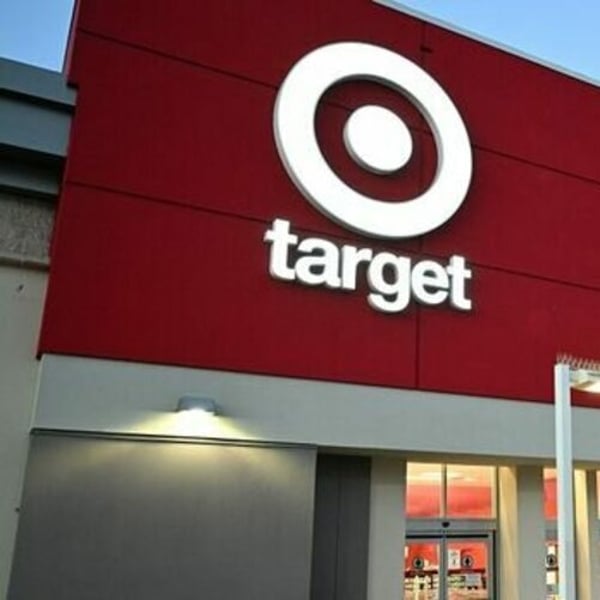
Mixed sales and profit forecasts from major US retailers such as Target and Home Depot have prompted investors to question if this year’s crucial holiday season will yield the windfall typically associated with a year-end shopping surge.
Rising costs driven by US President Donald Trump‘s import tariffs and subdued consumer spending have given rise to fresh worries about the resilience of the American shopper. “We are planning cautiously for the back half of the year, given continued uncertainty and volatility,” Target’s chief commercial officer, Rick Gomez, said on Wednesday.
Consumer and retail companies have also been among the worst hit by tariffs. The unpredictable nature of Trump’s trade policies has contributed to a decline in US consumer sentiment, as shoppers expect tepid economic growth and higher inflation in the coming months.
Overall inflation in the United States has been trending higher and economists are concerned that higher prices could be in store for consumers after a recent spike in wholesale-level inflation. Over the past few weeks, Adidas said it could launch new products at higher prices in the US, Levi Strauss said it would cut back on promotions, while Under Armour is considering bumping up prices for consumers who have the pricing power to tackle tariffs.
“We are learning a lot about the health of the consumer. They are still interested in spending, but not splurging. Some of the comments companies gave months ago about not hiking prices due to tariffs… (are) proving to be more lip-service than reality,” Brian Jacobsen, chief economist at Annex Wealth Management said.
While the broader stock market has performed well in 2025 – the S&P 500 is up more than 8% – consumer discretionary stocks have lagged, gaining only about 1%. On the other hand, TJX, parent of T.J. Maxx and Marshalls, touted a “strong start” to the second half of the year. Home Depot posted disappointing quarterly results, citing consumer hesitation on big-ticket purchases, but maintained its forecasts.
“Value is very top of mind for consumers right now. They’re looking to stretch their budget; they’re looking to navigate inflation and uncertainty around tariffs,” Target’s incoming CEO Michael Fiddelke said. Target reiterated that it would hike prices as a “last resort,” while Lowe’s said it would remain “price competitive”.
Target shares slumped nearly 8% on Wednesday after the company named Fiddelke as its new CEO and kept its forecasts intact. Lowe’s managed to beat earnings estimates but acknowledged that home improvement demand remains soft due to high borrowing costs. The company will continue to face challenges in the back half of the year due to high mortgage rates and cautious consumers, executives said in a post-earnings call.
The Reuters global tariff tracker shows that of the more than 300 companies that have reacted to the tariffs in some manner since February 1, about 38 consumer companies have withdrawn or cut their forecasts, while about 42 have mentioned price hikes.
© Thomson Reuters 2025 All rights reserved.







China will step up building a higher-level China-Vietnam community with a shared future that carries strategic significance, Chinese President Xi Jinping said while holding talks with visiting Vietnamese President To Lam.
China and Vietnam are accelerating efforts to navigate bilateral trade towards a more balanced and sustainable course.
President Xi Jinping recently held talks with visiting Vietnamese President To Lam.
During the visit, Vietnamese Minister of Industry and Trade Le Manh Hung called for a restructuring of production, trade and supply chains alongside stronger investment cooperation.
Xi said both countries should work together in their modernisation drive, accelerate the alignment of development strategies and prioritise infrastructure connectivity.
While meeting Chinese Minister of Commerce Wang Wentao during the state visit, Vietnamese Minister of Industry and Trade Le Manh Hung called for a restructuring of production, trade and supply chains alongside stronger investment cooperation.
Wang said both sides should focus on implementing the high-level common perceptions, including raising bilateral trade turnover to $500 billion in future.
Hung urged China to expand imports of Vietnamese goods, broaden the list of products eligible for tariff preferences and further open its market. He also called for the mutual recognition of quarantine results for agro-forestry-fishery products, facilitation of Vietnamese exports via cross-border e-commerce, and expansion of Vietnam’s trade promotion offices across Chinese localities, according to a Vietnamese news agency.
China will continue to support Vietnam in setting up additional trade promotion offices, following those already established in Chongqing, Hangzhou and Haikou, Wang responded.
China also expressed readiness to support Vietnam’s stronger exports through cross-border e-commerce, encouraging greater visibility of the Vietnam National Pavilion on Chinese e-commerce platforms beyond JD.com to better promote Vietnamese products to Chinese consumers.
China has consistently been Vietnam’s largest trading partner and second-largest export market, while Vietnam continues to be China’s biggest trading partner in the Association of Southeast Asian Nations (ASEAN).
Fibre2Fashion News Desk (DS)
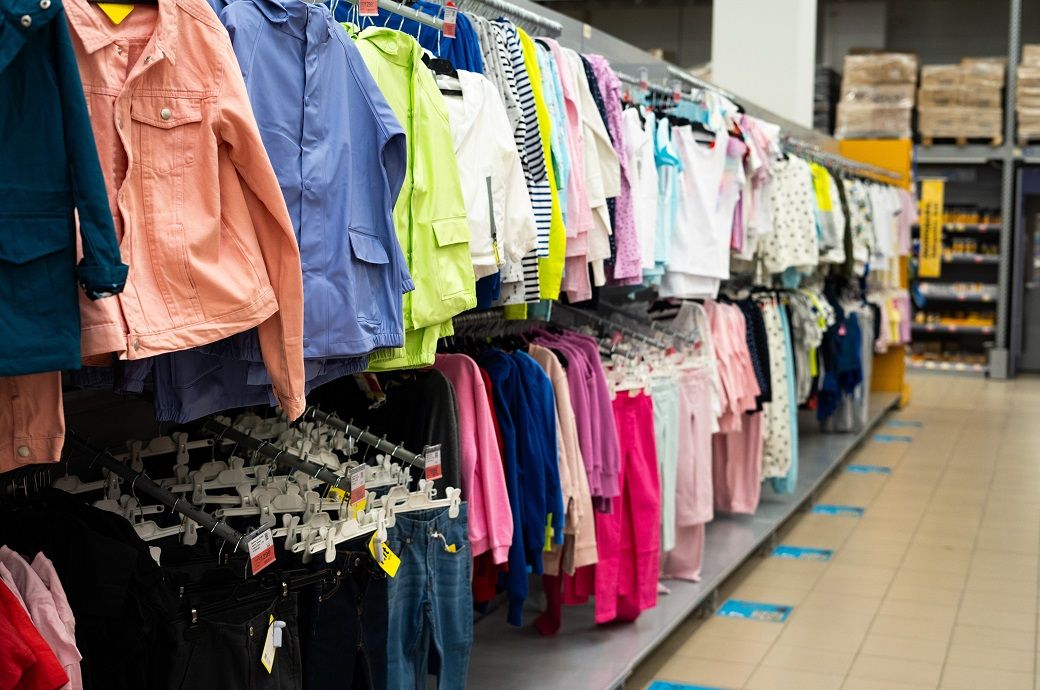
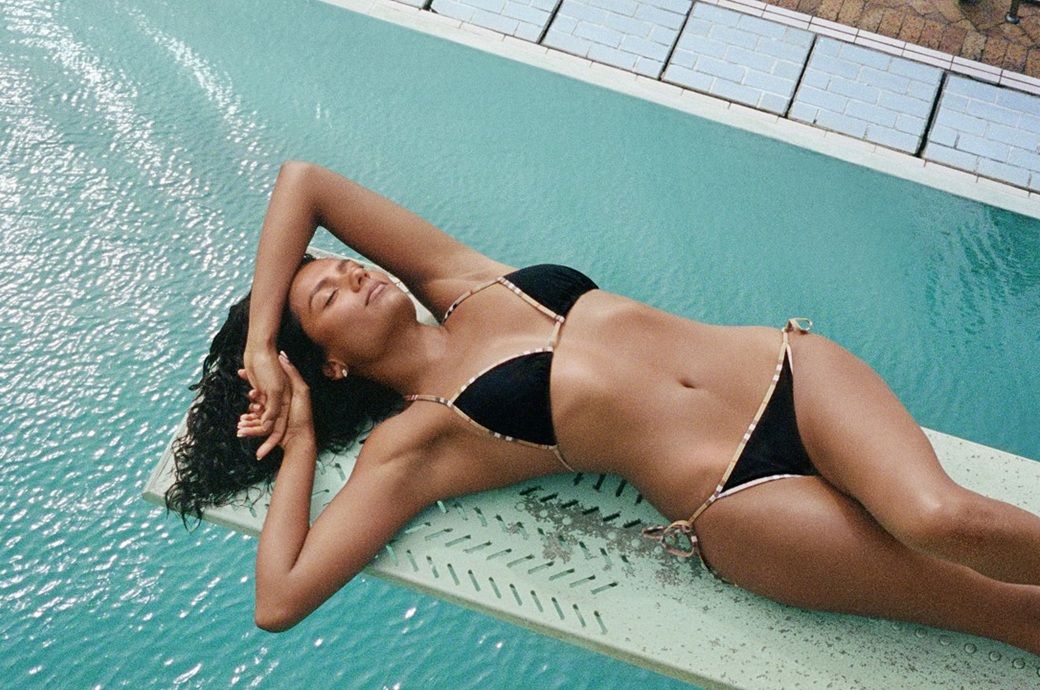
British actors Simone Ashley and Tom Blyth star alongside models Alva Claire, Babacar N’Doye and Sacha Quenby and a cast of synchronised swimmers and divers.
Burberry’s High Summer 2026 campaign captures Britain’s nostalgic lido culture through a sunlit film featuring Simone Ashley and Tom Blyth.
Blending heritage check with pastel tones, the collection spans swimwear, relaxed tailoring, raffia bags and lightweight layers, evoking effortless, poolside summer style.
Directed by Francis Plummer, the campaign reflects a warm, communal British summer mood.
The campaign film is directed by Francis Plummer and shot by photographer Ryan McGinley. The cameras move from loungers to diving boards, catching mid-air dives and friends stretched out in the hazy afternoon light. Before long, the best spots by the pool are claimed with a Burberry towel. Summer has begun. The film is underscored by the TONE remix of ‘Beating’ by Tirzah.
‘A lido holds a particular kind of nostalgia for the British. The moment the sun comes out, we make the most of the weather. We wanted to bring to life a warm summer’s day spent in and around the water’s edge with friends.’ said Daniel Lee Chief Creative Officer, Burberry.
Key styles
The High Summer 2026 collection features the Burberry Check in heritage-inspired sand beige and pastel shades of aubergine purple and cornflower blue.
The iconic Burberry Check bikini is the beach essential, alongside matching swimsuits and men’s swim shorts trimmed with check.
Poolside separates include tops, skirts and shirts cut from cotton voile, plus cover-up dresses woven with a tonal Burberry Check and deckchair-inspired stripes. Ruffled trims and ties at the neckline capture the floaty, effortless feel of the collection. Festival
tank tops in ribbed cotton jersey are trimmed with check straps, while looks are wrapped in lightweight wool silk scarves.
For men, collared shirts and shorts are tailored to relaxed lines and finished with fresh interpretations of the Burberry Check, from textural weaves to intricate embroidered designs. The co-ord set is crafted from lightweight cotton poplin printed with a playful seahorse pattern in honeysuckle pink.
The classic cotton piqué polo shirt comes in a spectrum of vivid and neutral colours. Burberry Check is subtly placed at the placket and trims the collar of T-shirts in soft cotton jersey.
Lightweight hooded jackets are ideal for cooler evenings and unexpected showers, the new-season designs woven in aubergine purple and cornflower blue check.
In shoes, the new Knight Runner sneakers offer a streamlined, low-profile shape for summer. Sandals are elevated in the form of the whipstitched leather Baez and check-trimmed suede Urchin styles, while Burberry Check slides and Pavilion sandals are made for the beach.
Lightweight Margate bags are handcrafted in Madagascar from locally sourced raffia palm leaves, dyed in signature sand beige Burberry Check. Accessories include crocheted bucket hats and wraparound sunglasses, designed to shield from the sun.
Note: The headline, insights, and image of this press release may have been refined by the Fibre2Fashion staff; the rest of the content remains unchanged.
Fibre2Fashion News Desk (JP)


Jacob Elordi spotted calling someone special amid Kendall Jenner rumours

King Charles shatters Prince Harry’s hope of face-to-face meeting

Iran navy ready to inflict ‘new bitter defeats’ on enemies: Mojtaba Khamenei

-

 Politics1 week ago
Indian airlines hit hardest after Dubai limits foreign flights until May 31
-

 Entertainment6 days ago
Palace left in shock as Prince William cancels grand ceremony
-

 Sports5 days ago
The case for Man United’s Fernandes as Premier League’s best
-

 Politics1 week ago
Chinese, Taiwanese will unite, Xi tells Taiwan opposition leader
-
 Business5 days ago
UK could adopt EU single market rules under new legislation
-
 Entertainment1 week ago
Dua Lipa hits major career high ahead of wedding with Callum Turner
-
 Business1 week ago
The FAA wants gamers to apply for air traffic control jobs
-

 Sports1 week ago
Lamar Jackson hits back at critics with faithful message on social media