

Politics
Famed Jerusalem stone still sells despite West Bank economic woes

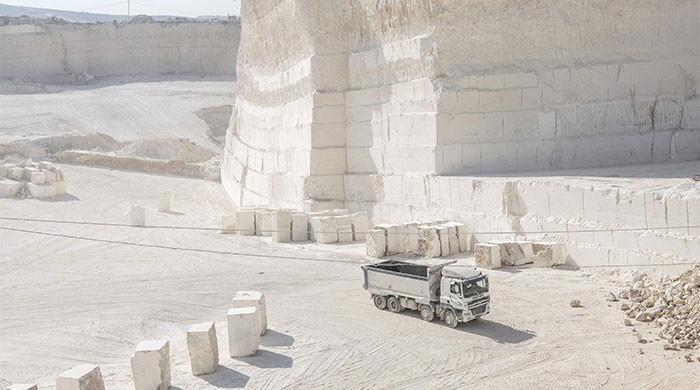
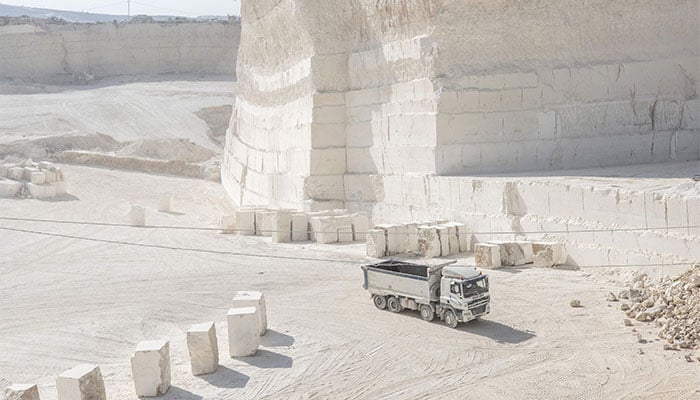
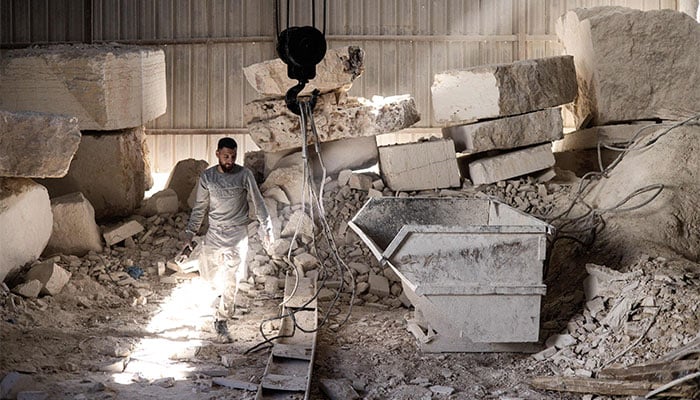
Despite the catastrophic state of the Palestinian economy, Faraj al-Atrash, operator of a quarry in the occupied West Bank, proudly points to an armada of machines busy eating away at sheer walls of dusty white rock that stretch into the distance.
“This here is considered the main source of revenue for the entire region”, Atrash said at the site near the town of Beit Fajjar, close to the city of Hebron.
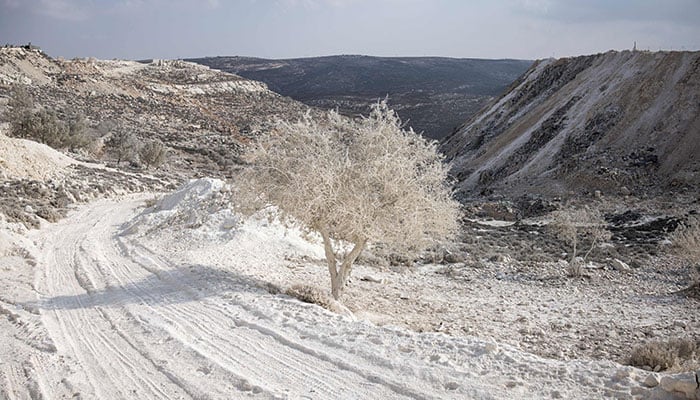
The quarry is a source of Jerusalem stone, the famed pale rock used throughout the Holy Land and beyond for millennia and which gives much of the region its distinctive architectural look.
But Atrash, in his fifties, said “our livelihood is constantly under threat”.
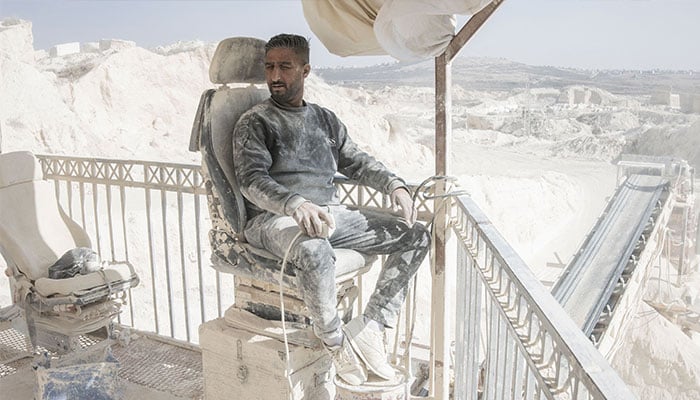
“Lately, I feel like the occupation (Israel) has begun to fight us on the economic front,” he said.
Atrash fears the confiscation of the quarry’s industrial equipment, the expansion of Israeli settlements and the Palestinian financial crisis.
The war in Gaza, triggered by Hamas’s October 2023 attack on Israel, dealt a severe blow to a Palestinian economy that was already in poor shape.
The Palestinian territories are “currently going through the most severe economic crisis ever recorded,” according to a report by the United Nations Conference on Trade and Development presented in late November.
Israel, which has occupied the West Bank since 1967, has recently set up hundreds of new checkpoints across the territory, paralysing commercial transport.
Beyond restrictions on freedom of movement, a halt in permits for West Bank Palestinians seeking work inside Israel has also had a severe impact.
Soaring costs
“There are problems with exports and market access because we used to export most of the stone to Israel, and after October 7, we ran into difficulties,” explained Ibrahim Jaradat, whose family has owned a quarry for more than 40 years near Sair, also near Hebron.
The Palestinian Authority, which exercises partial civilian control over some of the West Bank, is on the brink of bankruptcy.
Public services are functioning worse than ever, Atrash said, adding that fixed costs such as water and electricity had soared.
Quarries account for 4.5% of Palestinian GDP and employ nearly 20,000 workers, according to the Hebron Chamber of Commerce.
Around 65% of exports are destined for the Israeli market, where some municipalities mandate the use of Jerusalem stone.
“The people who buy the stones from us to resell them to construction sites are mostly Israelis,” said Abu Walid Riyad Gaith, a 65-year-old quarry operator.
He lamented what he said was a lack of solidarity from Arab countries, which he said do not buy enough of the rock.
‘Afraid to build’
Other threats hang over the industry.
Most of the roughly 300 quarries in the West Bank are located in Area C, land which falls under full Israeli authority and covers the vast majority of its settlements.
“Many (Israeli) settlers pass through here, and if Israel annexes Palestine, it will start with these areas,” said one operator, speaking on condition of anonymity.
Some members of Israel’s government, one of the most right-wing in the country’s history, openly discuss plans to annex parts or all of the West Bank.
Israeli settlements in the West Bank are illegal under international law.
They are expanding at the fastest rate since at least 2017, when the United Nations began tracking such data, according to a recent report by the UN chief.
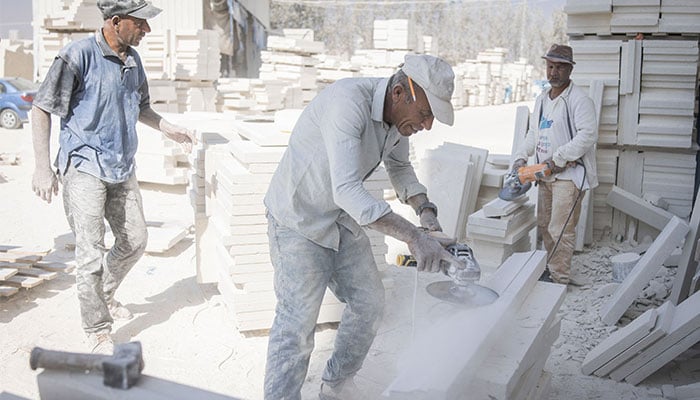
The physical demands of working in a quarry are intense, but for many Palestinians there are few other options as the West Bank’s economy wilts.
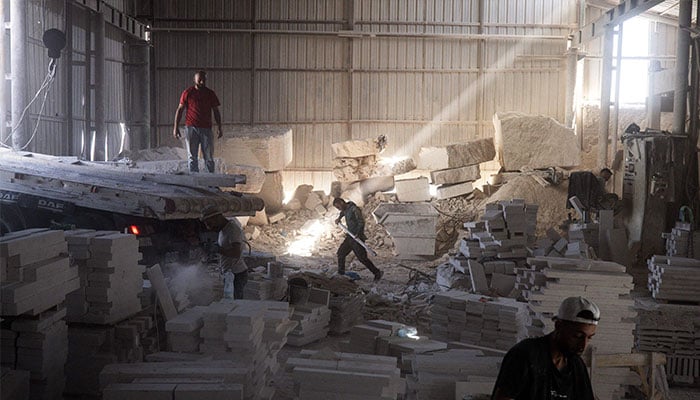
“We are working ourselves to death,” Atrash said, pointing to his ten labourers moving back and forth in monumental pits where clouds of dust coat them in a white film.
In the neighbouring quarry, blinking and coughing as he struggled with the intense work was a former geography teacher.
With the Palestinian Authority’s budget crisis meaning he was no longer receiving his salary, he had looked for work in the only local place still hiring.
All the labourers AFP spoke to said they suffered from back, eye and throat problems.
“We call it white gold,” said Laith Derriyeh, employed by a stonemason, “because it normally brings in substantial amounts of money”.
“But today everything is complicated; it’s very difficult to think about the future.”
“People have no money, and those who do are afraid to build,” he added.
- Iran dismisses US escort plan as counterproductive initiative.
- Dar reiterates diplomacy as only path forward.
- Tehran reviews US response via Pakistani mediators.
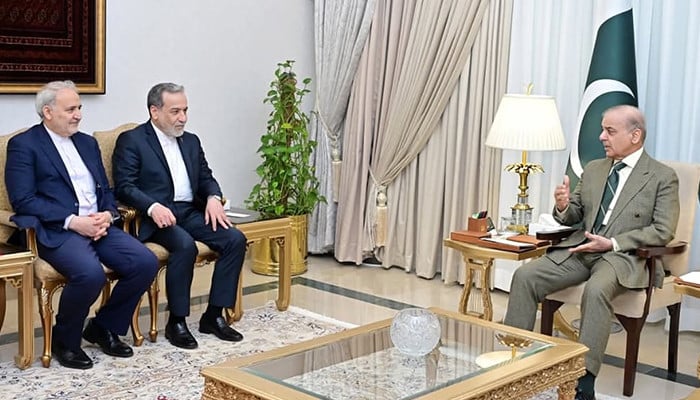
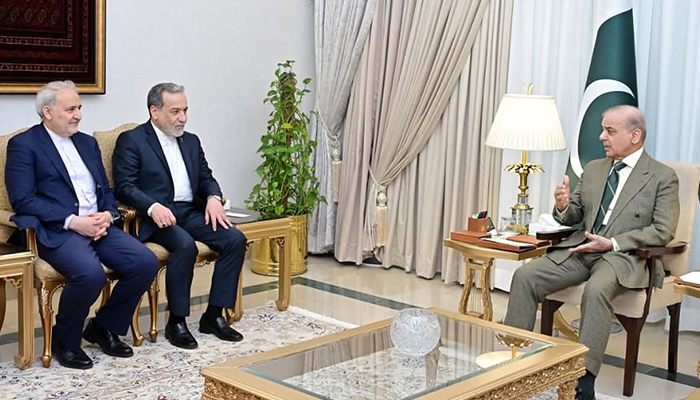
Iranian Foreign Minister Abbas Araghchi on Monday night said talks with the United States were making progress with Pakistan’s “gracious effort,” while cautioning Washington against being drawn into further escalation amid a standoff over the Strait of Hormuz.
The statement comes after US and Iran launched new attacks in the Gulf on Monday as they wrestled for control over the Strait of Hormuz with duelling maritime blockades, shaking a fragile truce.
US President Donald Trump launched a new effort to get stranded tankers and other ships through the strait, the vital energy-trade chokepoint that has been virtually closed since the US and Israel began attacks on Iran in February, a war that has killed thousands of people across the region.
Trump gave scant details about his new effort, which he called “Project Freedom,” to help stuck ships travel through the strait when he announced it on social media, two days after a legal deadline under US law had passed for him to get authorisation from Congress for the war. Trump told Congress the war was “terminated” and the deadline was moot, a claim disputed by some lawmakers.
It was the first apparent attempt to use military force since last month’s ceasefire announcement to unblock the world’s most important energy shipping route, which Iran’s Islamic Revolutionary Guard Corps has said can only happen with its permission.
The cost of shipping insurance has also rocketed. For weeks, the US Navy has blockaded Iran’s trade by sea, which Iran says is itself an act of war.
But Trump’s latest move, at least initially, appeared to have backfired, bringing no surge of merchant ship traffic while provoking a promised show of force from Iran, which has threatened to respond to any escalation with new attacks on its neighbours hosting US soldiers. Major shipping companies said they were likely to wait for an agreed end to hostilities before trying to cross the strait.
Meanwhile, Iranian FM Araghchi said Monday’s events showed there was no military solution to the crisis. He said peace talks were progressing with Pakistan’s mediation while warning the US and the UAE against being drawn into a “quagmire by ill-wishers.”
Criticising the US initiative aimed at escorting vessels through the Strait of Hormuz, Araghchi said: “Project Freedom is Project Deadlock.”
Nonetheless, the US military said two US merchant ships made it through the strait, without saying when, with the support of Navy guided-missile destroyers. While Iran denied any crossings had taken place in recent hours, Maersk said the Alliance Fairfax, a US-flagged ship, exited the Gulf via the Strait of Hormuz accompanied by the US military on Monday.
The commander of U.S. forces in the region said his fleet had destroyed six small Iranian boats, which Iran also denied. Admiral Brad Cooper said he “strongly advised” Iranian forces to keep clear of U.S. military assets carrying out the mission.
Iranian authorities released a map of what they said was an expanded sea area now under their control, extending far beyond the strait to include long stretches of the UAE’s coastline.
‘Dialogue and diplomacy’
A day earlier, Deputy Prime Minister and Foreign Minister Ishaq Dar held a telephonic conversation with his Iranian counterpart, during which both sides discussed the evolving regional situation and Pakistan’s ongoing diplomatic efforts.
According to the Foreign Office, Araghchi appreciated Pakistan’s constructive role and mediation efforts, while Dar reaffirmed Islamabad’s commitment to promoting dialogue and engagement.
He stressed that diplomacy remained the only viable path to achieving lasting peace and stability.
Negotiations between Washington and Tehran have remained stalled since a ceasefire took effect on April 8, with tensions centred on Iran’s blockade of the Strait of Hormuz following US-Israeli strikes. The move has disrupted global flows of oil, gas and fertiliser, while the United States has responded by imposing a counter-blockade on Iranian ports.
Pakistan has emerged as a key intermediary in efforts to revive dialogue, hosting high-level engagements between the two sides in Islamabad last month, though a second round of talks has yet to materialise.
— With additional input from Reuters
- Hunan fireworks factory blast kills 21, injures 61.
- Xi orders thorough probe into deadly factory explosion.
- Nearly 500 rescuers deployed after Hunan explosion.
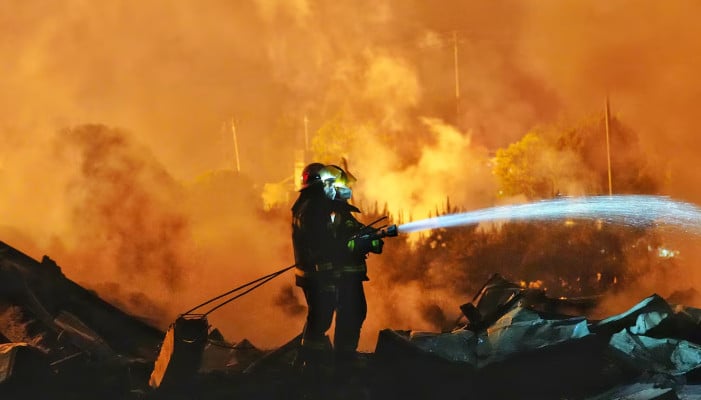
HONG KONG: A blast at a fireworks factory in China’s Hunan province has killed 21 people and injured 61, prompting President Xi Jinping to call for a thorough investigation, state media reported on Tuesday.
The blast in Hunan’s capital city of Changsha, home to a hub for fireworks manufacturing, occurred on Monday around 4:40pm (0840 GMT), according to reports by CCTV and Xinhua.
Videos on Chinese internet platforms showed thick smoke billowing from a large site with collapsed buildings and debris strewn around the area. Reuters could not verify the footage.
Nearly 500 firefighters, rescuers and medical personnel attended the scene, according to the South China Morning Post.
The blast happened at Huasheng Fireworks Manufacturing and Display Company, media said. Reuters could not find a telephone listing for the company to seek comment.
Xi called for a speedy investigation to determine the cause of the blast and strict accountability for the incident, Xinhua reported.
Last year, China exported $1.14 billion worth of fireworks, more than two-thirds of global sales, data from the Observatory of Economic Complexity shows.
Xi also ordered authorities to strengthen risk screening and hazard control in key industries, enhance public safety and ensure the safety of people’s lives and property.
Last week, he urged a nationwide upgrade in China’s disaster response capacity.
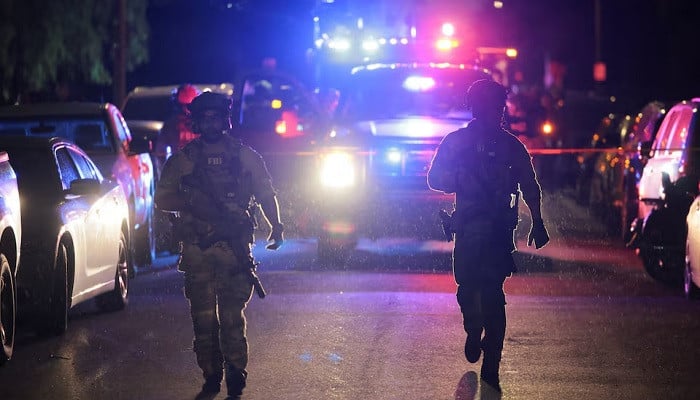
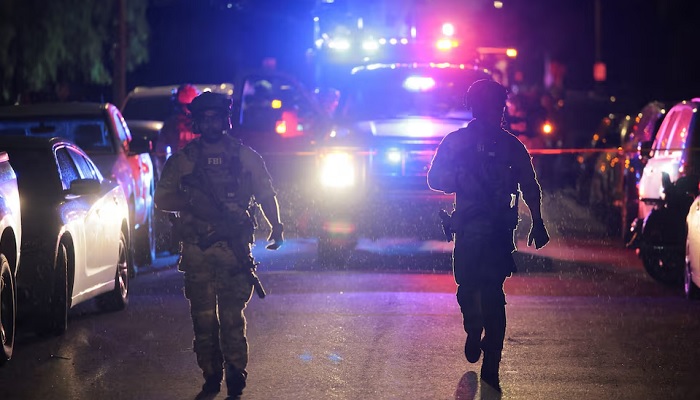
The US Secret Service said on Monday it was on the scene of an officer-involved shooting in Washington in which one person was shot by law enforcement.
“US Secret Service personnel are on the scene of an officer-involved shooting at 15th Street and Independence Avenue in Washington, D.C. One individual was shot by law enforcement; their condition is currently unknown,” the Secret Service said in a statement on X. The White House was briefly locked down on Monday afternoon.
The DC Police Department said police were on the scene of the probe.
“The scene is secure. Avoid the area as roads will be closed for several hours,” police said in a statement.
Law enforcement agents have been on alert in recent days in the US capital following a shooting at the White House Correspondents’ Association Dinner late last month, over which a suspect has been arrested.
This is a developing story, and it is being updated with new developments.


Vietnam attracts $18.24 bn FDI in January-April 2026, trade up

Ferrari tops Wall Street’s first-quarter expectations ahead of EV debut

Hantavirus outbreak on cruise ship prompts WHO to issue evacuation orders

-

 Tech1 week ago
A Brain Implant for Depression Is About to Be Tested in Humans
-

 Tech1 week ago
Almost 90% of women leave tech industry within 10 years | Computer Weekly
-
 Business1 week ago
‘I had £20,000 stolen and had to fight a 13-month fraud reporting rule to get it back’
-

 Sports7 days ago
Pro wrestling star Steph De Lander reveals how colleague’s advice helped lead her to title triumph at ACW
-
 Business1 week ago
Pakistan’s oil market is fuelling the crisis | The Express Tribune
-

 Entertainment1 week ago
Norway joins Type 26 Frigate Programme to boost NATO naval power
-

 Entertainment1 week ago
Melania Trump says ABC should ‘take a stand’ on late-night host Kimmel
-

 Tech1 week ago
This Ambitious Laptop Doesn’t Leave Much Room for Your Hands