

Business
Consumers are feeling gloomy about the economy. Here’s why they’re spending anyway


Shoppers carry Macy’s bags outside of Macy’s flagship store on Black Friday in New York, US, on Friday, Nov. 28, 2025.
Adam Gray | Bloomberg | Getty Images
Andre Lewis said he’s “anxious 364 days of the year.” Yet the rideshare and delivery driver wants to make it a special holiday season for his 7-year-old daughter.
“I told myself I’d keep it modest,” said the 31-year-old, who lives in New York City. But he said his daughter wants a pink keyboard that lights up, and he’ll buy it for her — “even if it’s a little over budget.”
“Christmas is the one day I let myself stop worrying,” he said.
For many U.S. consumers like Lewis, economic worries have cast a cloud over an otherwise cheery season. Consumer sentiment fell to its lowest level in more than three years in early November, close to its all-time low, according to University of Michigan’s monthly survey. The metric posted a slight uptick in December.
Yet so far, that downbeat backdrop hasn’t stopped shopping this year or dragged down the typical kickoff of the holiday season. That apparent contrast has left investors and economists wondering whether — and when — jitters over high costs of living, increased tariffs and a tepid job market will start to emerge more in spending data.
Across the country, nearly 203 million U.S. shoppers hit retailers’ stores and websites during the five-day stretch from Thanksgiving Day through Cyber Monday — the highest turnout in at least nine years, according to the National Retail Federation, which surveys shoppers to calculate the annual estimate.
Big-box and club retailers, including Walmart, Best Buy and Costco, topped Wall Street’s quarterly sales expectations, and executives said they saw an encouraging start to the crucial shopping season. Meanwhile, discretionary retailers like Gap, Abercrombie & Fitch and American Eagle also exceeded quarterly estimates, and company leaders said consumer demand has been steady.
“I know everybody’s looking for cracks in consumer health,” Walmart CFO John David Rainey told CNBC in late November. “It feels pretty consistent to us.”
Some executives also said lower-income consumers, who have felt economic pressures most acutely over the last year, have kept spending.
“The headline is that we feel very good about the lower-income customer,” Burlington Stores CEO Michael O’Sullivan said when the company quarterly results last month. “This customer has been very resilient. When we look at our stores in lower-income trade areas, they continue to outperform the chain.”
Some key dynamics have supported U.S. consumer spending, even as concerns about an AI investment bubble and layoffs by companies including Verizon and Target cloud the 2026 economic outlook. Unemployment numbers are still low, though the labor market has slowed as the private sector unexpectedly lost jobs in November, ADP figures show. The government will provide the clearest picture of the job market in months on Tuesday when it releases November data delayed by the government shutdown.
Higher-income consumers, in particular, have propped up retail sales as they benefit from rising home values and stock market gains. And holiday spending, in particular, tends to be insulated since families across incomes prioritize the season, even if that means sacrificing other kinds of spending or racking up the credit card bill.
Marcus Feldman, a biotech project manager from Cambridge, Mass., said he will spend about 15% more this year on the holidays. He and his wife plan to take their 9- and 12-year-old sons on a skiing trip, and splurge on nicer gifts.
“It’s partly because we can and partly because life’s short and the boys are only little once,” he said.
And, he added, he’s noticed others spending freely.
“Every headline says people are scared to spend,” he said. “Then I walk down [one of Boston’s major shopping streets] Newbury Street on a Saturday and it’s shoulder-to-shoulder.”
On a call with reporters in early December, National Retail Federation CEO Matthew Shay said “there’s a bit of a moat” around holiday spending, a time when emotions fuel demand.
“One of the key drivers here is that for many Americans and many families, holiday spending and holiday shopping is an essential part of the budget,” he said on the call.
Plus, as interest rates remain high, consumers have put off some of the priciest purchases they typically make, such as new houses and cars. That’s freed up money for spending on goods, said Naveen Jaggi, who leads retail transaction and advisory services at commercial real estate services firm JLL.
Black Friday signage at a Target store ahead of Black Friday in Jersey City, New Jersey, US, on Tuesday, Nov. 25, 2025.
Michael Nagle | Bloomberg | Getty Images
Still, warning signs loom over the economy. Nearly every retailer has said consumers continue to be selective about spending and are looking for deals to stretch dollars. Shoppers’ hunt for deep discounts fueled strong turnout and growth during the sales days known for promotions, including Black Friday and Cyber Monday, according to Adobe Analytics.
Some of the retail spending growth has come from price hikes, which have persisted even as the rate of inflation eases.
After being hit by higher prices for groceries, electricity and housing, consumers are seizing upon sales to get ahead of further price increases.
Eugenio Aleman, chief economist for equity research firm Raymond James, attributes lower consumer sentiment to price hikes. He said that’s accelerated some purchases because shoppers worry prices will keep going up.
“Even though they feel bad, they say, ‘Okay, I have to do whatever it takes to buy now,'” he said.
The say and do gap
The contrast between spending data and consumer sentiment captures a head-scratching gap between what consumers are saying and what they are doing.
That divergence dates back to 2021, soon after the Covid pandemic, when surveys of consumer spending intentions became less predictive of their behavior, said Ali Furman, the U.S. consumer markets industry leader for consulting firm PwC.
In particular, she said PwC has seen higher-income households and those on the East and West Coasts more likely to keep spending, even as they report a low sentiment.
That gap influenced PwC’s own holiday forecast. Its consumer survey during late June and early July indicated that holiday shoppers planned to pull back on purchases from last year, with Gen Z consumers especially slashing their budgets.
Based on that survey, PwC projected that consumers’ average spending on holiday gifts, travel and entertainment would decline 5% from the year-ago period.
Yet in late October, it surveyed consumers again and reversed its projections. PwC now expects consumers across age groups will spend 3% to 4% more on the holidays year over year.
Furman said consumers may have felt a little better in the fall, as some worries about higher tariffs faded and they saw retailers’ holiday merchandise start to hit the shelves.
The durability of consumer spending has even surprised the National Retail Federation, the industry’s major trade group. For the vast majority of months this year, retail sales have climbed nearly or more than 4% year over year, according to U.S. Census Bureau retail figures.
That’s higher than the 2.7% to 3.7% annual year-over-year growth that the trade group predicted.
Companies tread cautiously
It’s not just consumers: Businesses have shown caution about their spending. Holiday hiring by retailers is expected to be the lowest in at least 15 years, according to the NRF, as companies try to manage higher costs from tariffs.
Retailers have also stressed the unpredictability of consumer behavior, even when posting otherwise strong results.
Macy’s, for example, earlier this month reported its strongest growth in more than three years as it made progress on its turnaround strategy. Still, it disappointed Wall Street with a cautious forecast for the holiday quarter. CEO Tony Spring told CNBC that the “customer is hanging in there,” but is still spending selectively.
Costco CFO Gary Millerchip said the warehouse club, which has benefitted from consumers seeking value, has seen “bumpy” trends that have muddied a consistent pattern of consumers spending more and seeking value, quality and new items.
“When you look at month by month, there’s definitely been some lumpiness in the individual monthly sales results that we’ve posted,” he said on an earnings call on Thursday.
The buzzwords retail executives have used in public comments underscore how confusing the consumer backdrop has become. CEOs in recent years have repeatedly called shoppers “choiceful” about their spending.
Yet retailers have also started to describe consumers as “resilient.” In the most recent round of earnings calls, leaders from Macy’s, Burlington Stores, Tapestry, Abercrombie & Fitch and Ralph Lauren all used the word to describe their customers.
At some companies, it’s unclear if healthy results have come from individual execution or a strong economy. The retail industry has been more starkly divided between winners and losers over the last year, and those that are executing well have won the dollars of selective shoppers.
For example, Gap’s Old Navy, which primarily caters to low- and middle-income shoppers, had an “incredibly strong” third quarter, CEO Richard Dickson said. The apparel brand’s comparable sales rose 6%, far better than the 3.8% increase analysts had expected, according to StreetAccount.
Dickson said shoppers responded to value across all income groups, as the brand saw “consistency and strength in our customer behavior.” Still, Gap has been in the midst of a major turnaround and only started posting stronger results after Dickson took over.
Trading down and looking for deals
Black Friday signage inside a Walmart store on Black Friday in Columbus, Ohio, US, on Friday, Nov. 28, 2025.
Brian Kaiser | Bloomberg | Getty Images
Even as U.S. consumers have shown resilience, there have also been clues that they’re making tradeoffs and trying to get more for their money.
Value-oriented retailers including Walmart and Dollar General have attracted more high-income shoppers. Off-price chains like TJX-owned T.J. Maxx and mall names like Gap have also drawn in wealthier shoppers who are looking for home decor and clothing.
Luc Wathieu, a professor of marketing at Georgetown’s McDonough School of Business, said the disconnect between sentiment and spending is a “paradox,” but added shoppers and retailers have left behind a trail of breadcrumbs to explain it. He said holiday season has gotten off to a strong start because people are shopping early around events like Black Friday and Cyber Monday to save money.
Retailers have been able to meet that demand and keep offering deals because of the extra inventory they bought earlier this year to avoid tariffs. Many experts expect companies to sell through those items by the end of the year.
For those reasons, “we should see a very good beginning of the season” but “a pretty bad end of the season,” said Wathieu, the research director of the NRF Business of Retail Initiative at Georgetown.
Consumers also feel like they don’t have control over what’s happening around them during an indulgent season, which is fueling spending despite their negative outlook, Wathieu said.
“It’s a little bit like dancing on the Titanic before it collapses, right?” he said. “We don’t know what’s going to happen. We might as well live our life in the meantime.”
Plus, industry growth so far this season may be more related to inflation than actual strong demand, said Omair Tariq, the founder and CEO of Cart.com, which provides logistics, fulfillment and other services for retailers including Eddie Bauer, Adidas and Guess.
Tariq told CNBC more than half of Cart’s customers confirmed they were raising prices this year, and those companies’ volumes fell after the hikes took effect.
“Conversion dropped, order volume dropped,” Tariq said. “What we saw was that even during Black Friday, Cyber Monday, while there was obviously some growth, it was in in the low single digits.”
In Salesforce’s Cyber Week results, the company found the average selling price over the Thanksgiving selling weekend was up 6% compared to the year-ago period. Meanwhile, volumes only grew 2% globally and 1% in the U.S.
Lewis, the rideshare and delivery driver, shopped at Brookfield Place in downtown Manhattan last week. Income is up and down with his job, he said, but a wave of holiday visitors to New York has boosted business for now. He bought a pair of Nike shoes for his daughter while at the mall.
Yet to make sure he has enough for her, he’s trimmed back in other ways. He’s put off shoe purchases for himself, postponed a phone upgrade and hasn’t taken a trip in over a year.
“I want her to feel like the world is full of possibility,” he said.
— CNBC’s Luke Fountain contributed to this report.




Joni Lamb, the president of Daystar Television Network, a televangelism broadcaster she founded with her husband, Marcus Lamb, turning their family into stars of Christian entertainment, died on Thursday. She was 65.
In an announcement posted on Daystar’s website, the company described the cause as “serious health matters” exacerbated by a recent back injury. It did not say where she died.
On a trip to Jerusalem in 1983, shortly after the couple married, Mr. Lamb visited the Mount of Olives and felt God telling him to move to Montgomery, Ala., and start a Christian TV station. He and Ms. Lamb poured their energy and modest finances into the effort and began appearing on the air two years later.
By the time they founded Daystar — in Texas in 1997 — they were experienced entrepreneurs and performers. After just a few years, they owned 24 stations around the country. By 2010, they had become the second-largest Christian broadcaster, after Trinity Broadcasting Network, and were reaching more than 200 countries, The Dallas Morning News reported.
Compared with other televangelists, the Lambs “are younger and come across as more ordinary folks,” David Clark, the president of a rival Christian broadcaster, told The Fort Worth Star-Telegram in 2001. “They come across as being sincere.”
Mr. Clark added: “Marc is sharp, and his wife, Joni, is a big asset.”
The Lambs frequently appeared on their own network in a talk show format, discussing the pleasures and challenges of domestic life in a Christian idiom. Ms. Lamb, who liked to break into song, was Daystar’s leading talk show host, over the decades moderating shows like “Taking a Break With Joni” and “Joni Table Talk.” She would often be surrounded by other female regulars, putting questions to a male guest who had wisdom to impart.
The prominent pastor Jentezen Franklin visited earlier this year, for example, to discuss his new book, “The Power of Short Prayers.” The conversation slipped easily into evangelism.
“For someone watching right now: You’ve been listening; God’s opened your heart,” Ms. Lamb said. “In fact, your heart’s already been opened for some time, as you’ve been looking, searching, and you tried everything else. Always say, ‘Why don’t you try Jesus?’ A simple prayer: That will change your life for eternity.”
During the episode she was flanked, as she often was, by her two daughters, Rachel Lamb Brown and Rebecca Lamb Weiss, and referred to her husband by his first name, as if the viewers at home were family friends.
In 2021, Mr. Lamb died, at 64, of Covid-19, after having frequently suggested that people should pray instead of getting vaccinated. Ms. Lamb announced his death on air.
The travails of the Lamb family were often incorporated into the station’s programming. In 2010, Mr. Lamb admitted on live TV to an extramarital affair and described an attempt to extort millions of dollars in blackmail.
“Christian TV took a soap opera turn,” The Dallas Morning News wrote of the episode.
In 2020, Daystar returned a $3.9 million Paycheck Protection Program loan after the CBS program “Inside Edition” investigated the company’s purchase of a Gulfstream jet used by the Lamb family for beach and golf trips.
Four years later, a panel of Ms. Lamb’s talk show regulars questioned her on air about an accusation by her son, Jonathan, that there had been a coverup of a family member’s sexual molestation of his infant daughter. Ms. Lamb denied that any abuse had occurred, and after an investigation, no charges were filed.
Joni Lynn Trammell was born on July 19, 1960, in Greenville, S.C., where she grew up. Her father, Billy Frank Trammell, worked for a local refrigeration and heating company and would evangelize with friends he made playing basketball. Her mother, Sandra (Hudson) Trammell, competed in the Miss Greenville beauty pageant.
The Lambs met at a Greenville church in 1980, when Mr. Lamb, a traveling Pentecostal preacher, was visiting. They married in 1982.
Their early investments in TV stations came fortuitously, at a time of deregulation that The Star-Telegram would describe as “market bottom.” They later made money buying and selling small broadcast towers, and selling airtime to ministries and churches.
In 2023, Ms. Lamb married Doug Weiss, a sex therapist who became a co-host on Daystar. He survives her; other survivors include her three children and several grandchildren.
On air earlier this year, Ms. Lamb told viewers that the Christian faith guaranteed a posthumous reward.
“When you pray that prayer, and you receive Jesus, he forgives your sins,” she said. “When you die, you’re going to heaven.”
Business
US consumer price inflation hits 3.8% in April, highest in nearly 3 years as Iran war fuels energy costs – The Times of India
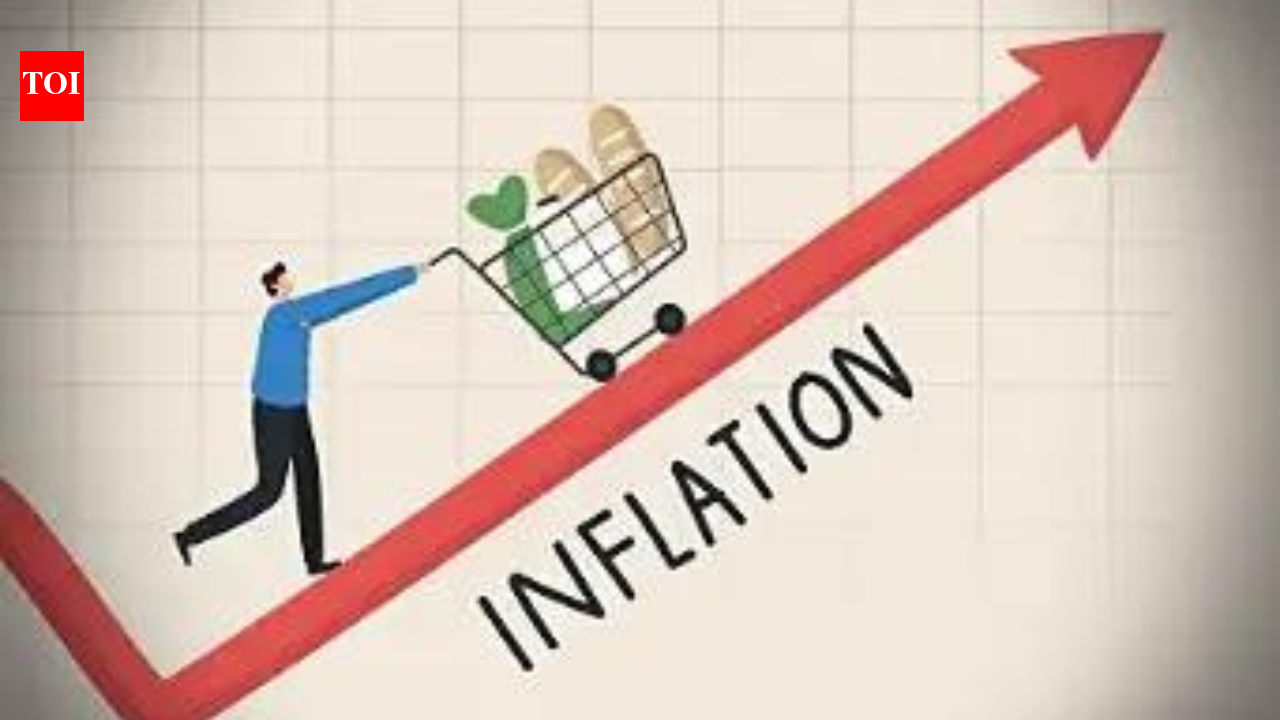
US inflation rose in April to 3.8 per cent as surging fuel costs amid the ongoing Iran-US conflict drove up consumer prices, hitting a three-year high complicating the Federal Reserve’s path on interest rates.Data released by the Labor Department on Tuesday showed the Consumer Price Index (CPI) increased 0.6 per cent in April after a 0.9 per cent jump in March, the biggest monthly rise since June 2022. On an annual basis, inflation accelerated to 3.8 per cent, marking the highest year-on-year increase, since May 2023.Petrol prices in the US are now more than 28 per cent higher than a year ago, according to official data. AAA estimates show average gasoline prices have crossed $4.50 per gallon, roughly 44 per cent above year-ago levels, squeezing household budgets and raising concerns about broader economic fallout.The spike in energy prices follows the escalation of hostilities between the US, Israel and Iran earlier this year. Markets were rattled after Tehran blocked access through the Strait of Hormuz — a critical global energy route that handles nearly one-fifth of the world’s oil and liquefied natural gas supplies.Core inflation, which excludes food and energy prices, remained relatively contained. Core CPI rose 0.4 per cent month-on-month and 2.8 per cent annually, suggesting that higher fuel costs have not yet fully spread across the wider economy.Food prices also edged higher in April. Grocery costs rose 0.7 per cent from March, led by increases in meat prices after a slight decline in the previous month.The latest inflation reading adds to uncertainty for the Federal Reserve, which had earlier been expected to begin cutting interest rates in 2026. Policymakers are now signalling caution amid fears that prolonged geopolitical tensions and elevated oil prices could trigger another wave of inflation.US President Donald Trump has repeatedly criticised the Fed for not lowering borrowing costs faster to support economic growth. Attention is now turning to Kevin Warsh, Trump’s nominee to succeed outgoing Federal Reserve Chair Jerome Powell, whose Senate confirmation is expected this week.Higher fuel costs are also beginning to weigh on corporate America. Appliance maker Whirlpool Corporation said last week that quarterly revenue fell nearly 10 per cent, warning that the war-driven economic slowdown had severely dented consumer confidence.
EBay has turned down a 56 billion US dollar (£41.4 billion) takeover move from GameStop, labelling the proposal as “neither credible or attractive”.
GameStop boss Ryan Cohen launched an unsolicited offer of 125 dollars (£92.40) per share – half in cash and half in GameStop stock – to eBay shareholders last week.
However, the online marketplace’s board confirmed on Tuesday that it had now rejected the move.
In a letter, eBay chairman Paul Pressler said it reviewed the offer but believes that eBay is a “strong, resilient business”.
He added: “We have sharpened our strategic focus, strengthened execution, enhanced our marketplace and seller experience, and consistently returned capital to shareholders.
“With its differentiated global marketplace and a clear strategy, eBay’s board is confident that the company, under its current management team, is well-positioned to continue to drive sustainable growth, execute with discipline, and deliver long-term value for our shareholders.”
GameStop, which runs around 1,600 shops around the US, said it started accumulating eBay shares earlier this year and currently has a 5% stake.
Mr Cohen had previously indicated he would take his proposal directly to eBay shareholders if the company’s board rejected the deal.

[CinePlex360] Please moderate: “Ever Seen A Sar

Who could replace Keir Starmer as Britain’s prime minister?
WPForms

-

 Politics1 week ago
Iran weighs US reply delivered via Pakistan as Trump signals opposition to deal terms
-

 Tech1 week ago
DHS Demanded Google Surrender Data on Canadian’s Activity, Location Over Anti-ICE Posts
-
 Business1 week ago
Heineken to invest £44.5m in hundreds of pubs creating 850 jobs
-

 Entertainment1 week ago
Jelly Roll reacts to daughter Bailee Ann’s major life milestone
-
 Business1 week ago
Heineken plans huge investment in hundreds of UK pubs ahead of World Cup
-

 Tech4 days ago
A new frontier: Identity stack evolves for agentic systems | Computer Weekly
-

 Tech4 days ago
‘Orbs,’ ‘Saucers,’ and ‘Flashes’ on the Moon: Pentagon Drops New UFO Files
-

 Tech5 days ago
What Microsoft Executives Really Thought About OpenAI in 2018