

Business
Oil prices rise as fragile US-Iran talks sustain supply worries | The Express Tribune

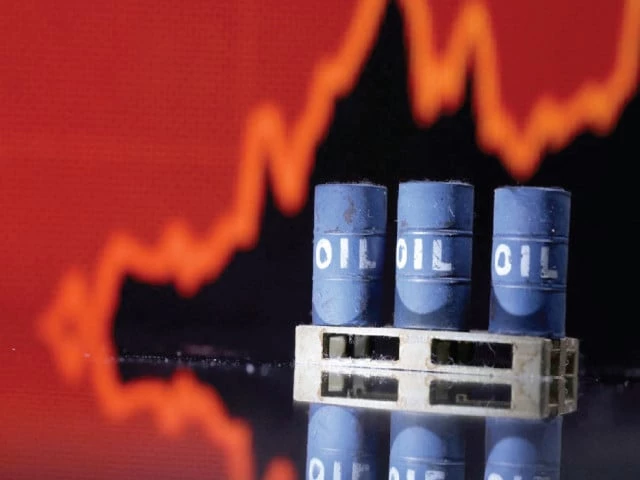
Oil climbs as Iran peace deal fades; Hormuz tensions keep Brent above $105 and $115 in sight
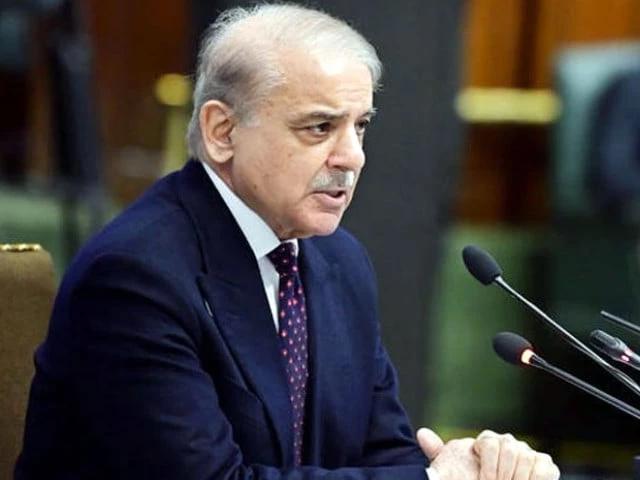
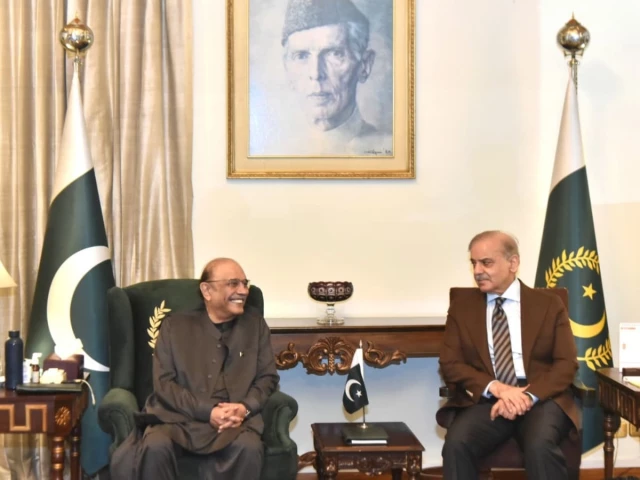
By helping the world reduce oil prices from the $150-$200 range and saving hundreds of billions in import bills and high interest expense, Pakistan has earned its seat at the table. photo: REUTERS
Oil prices rose nearly 1% on Tuesday as talks to end the US-Israeli war on Iran appeared fragile, with Tehran’s response to a Washington proposal highlighting stark differences that have kept supply concerns alive.
Brent crude futures were up 86 cents, or 0.8%, at $105.07 per barrel, while US West Texas Intermediate gained 99 cents, or 1%, to $99.06 at 0411 GMT. Both benchmarks increased nearly 2.8% on Monday.
US President Donald Trump on Monday said the ceasefire with Iran was “on life support,” pointing to disagreements over several demands, such as the cessation of hostilities on all fronts, the removal of a US naval blockade, the resumption of Iranian oil sales and compensation for war damage.
Tehran also emphasised its sovereignty over the Strait of Hormuz, through which about a fifth of global oil and liquefied natural gas flows.
Read: Aramco CEO warns 1 billion barrels lost will slow oil market recovery
“Optimism regarding an imminent (peace) deal seems to be fading again, and if we don’t see a deal by the end of May, then upside risks for oil prices are definitely on the table,” said DBS Bank energy sector team lead Suvro Sarkar.
Disruptions linked to the near-closure of the strait have prompted producers to curtail exports, with a Reuters survey on Monday showing OPEC oil output in April fell to its lowest level in more than two decades.
“A genuine breakthrough toward a peace deal could trigger a sharp $8-$12 correction, while any escalation or renewed blockade threats would quickly push Brent back toward $115+,” said Tim Waterer, chief market analyst at KCM Trade.
Saudi Aramco CEO Amin Nasser on Monday warned that disruptions to oil exports through the strait could delay a return to market stability until 2027, with the loss of about 100 million barrels of oil per week.
Read More: Oil shock, falling investment threaten growth outlook
Elsewhere on the supply front, US crude stocks were forecast by analysts in a Reuters poll to be down by around 1.7 million barrels in the previous week.
The draw comes against “a backdrop of continued strong net waterborne export flows for crude and products, across the next several weeks,” said Walt Chancellor, an energy strategist at Macquarie Group.
Meanwhile, market participants were also keeping a close eye on Trump’s planned meeting with Chinese President Xi Jinping on Wednesday, after Washington imposed sanctions on three individuals and nine companies for facilitating Iranian oil shipments to China.





David Malpass also said that Beijing’s claim to be a developing nation is no longer credible.
Source link

Struggling retailers are hoping for a bumper World Cup to boost the high street and improve consumer confidence.
Footfall figures, which measure trips rather than expenditure, already suggested that many shoppers have all but abandoned the UK high street.
The latest sales figures from the British Retail Consortium (BRC) show that sales fell 3 per cent in April compared to growth of 7 per cent in the same month a year ago.
That’s partly because Easter was in March this year, but even adjusting for that, the figures are disappointing for retailers.
Food sales decreased by 2.5 per cent year-on-year in April, against a growth of 8.2 per cent in April 2025. This was below the 12-month average growth of 3.5 per cent.
Helen Dickinson, chief executive at the BRC, said: “April’s sales fall was largely driven by the Easter shift, with food hit hardest. But weak consumer confidence also played a role as fears about the Middle East conflict driving up living costs led shoppers to rein in.
“Big-ticket purchases fell, with the recent recovery in furniture losing steam, and uncertainty around summer holidays hitting discretionary spend. With the World Cup coming, retailers hope it will provide a lift, and early signs show demand for TVs and sound systems picking up.”
Retailers have already warned about the effects of the Iran war on consumer spending, as food and fuel prices are forced upwards.
The BRC has asked the government to delay various regulatory burdens, including energy policy levies and packaging taxes.
According to the British Beer and Pubs Association, the World Cup could give the pub trade a £275m boost if England make it to the final. An extra 55 million pints would be drunk, the trade body said.
Pubs are currently closing at the rate of two a day, putting the future of the British boozer at risk.
Linda Ellett, UK head of consumer, retail and leisure at KPMG, said: “It was a disappointing April for the retail sector, even factoring in an earlier Easter shifting some spending into March. Bar marginal growth for beauty, health and jewellery, retail sales fell across all other categories.
“Consumer confidence has been further dampened by rising prices due to the Iran conflict, with consumers cautious about potential ongoing effects. As a result, the retail sector is facing a challenging start to spring/summer, but there is hope that holiday demand and the World Cup still manage to unlock spending in the weeks and months ahead.”

NEW DELHI: India cannot afford to remain a passive consumer in the AI era and must urgently build its own frontier-scale artificial intelligence models if it wants to shape global technology rules, according to Pratyush Kumar, co-founder of Sarvam AI.Speaking at the CII Business Summit, Kumar said Sarvam is now preparing to train its first trillion-parameter AI model within next nine months, marking what could become a major milestone for the country’s indigenous AI ambitions.“We can rent it for now until we don’t have it, but you have to build it. You have to own the destiny around that,” Kumar said, arguing that India must move beyond debates around whether it should build its own AI models and instead focus on creating long-term strategic capability.Kumar said AI would become the defining intelligence layer across industries, governance, science and manufacturing, making ownership of foundational models critical for economic value creation. He warned that India risks repeating mistakes made during earlier technological revolutions.“What we saw with steam engine, steel making and the internet, in all these eras, we became users and frankly lost out on key value creation,” he said. “This is now the start of a new era, which is going to play out quarter by quarter.” The Sarvam AI co-founder revealed that the company has already demonstrated a proof of concept showing India can build large-scale AI systems end-to-end, using domestic capabilities across data, algorithms, research and infrastructure. He also stressed that India would need significantly larger investments in AI infrastructure and research talent to compete globally. “The intelligence layer will accrue the value,” he said. “It requires infrastructure, but it requires R&D talent to build these models.” Warning against policy drift, Kumar said India still lacks a clear national AI direction.


FESPA launches 2026 Print Census, unveils 2025 findings

Noman Ali becomes oldest player to complete 100 Test wickets

King Charles Office issues message for doctors amid ongoing cancer treatment

-

 Politics1 week ago
Iran weighs US reply delivered via Pakistan as Trump signals opposition to deal terms
-

 Tech1 week ago
DHS Demanded Google Surrender Data on Canadian’s Activity, Location Over Anti-ICE Posts
-
 Business1 week ago
Heineken to invest £44.5m in hundreds of pubs creating 850 jobs
-

 Entertainment1 week ago
Jelly Roll reacts to daughter Bailee Ann’s major life milestone
-

 Tech1 week ago
I Lugged the Best Travel Totes on Work Trips, Weekends, and More
-

 Politics1 week ago
Two women die on migrant boat seeking to reach UK
-
 Business1 week ago
Heineken plans huge investment in hundreds of UK pubs ahead of World Cup
-

 Tech4 days ago
‘Orbs,’ ‘Saucers,’ and ‘Flashes’ on the Moon: Pentagon Drops New UFO Files